

Choosing the right SEO tool can feel overwhelming, especially when Ahrefs’ price tag or feature set doesn’t quite fit your needs. I’ve seen many marketers and agencies struggle with high monthly costs, missing features, or interfaces that just slow things down.
If you’re searching for a platform that matches your workflow, budget, or support expectations, you’re not alone. There are plenty of robust alternatives—some offer smarter automation, friendlier dashboards, or even fully managed, AI-powered solutions.
In this article, I’ll break down the ten best Ahrefs competitors, comparing their strengths, pricing, and unique features. You’ll get a clear look at which tools excel at backlink analysis, keyword research, technical audits, and content optimisation—plus where each one stands out or falls short.
By the end, you’ll know exactly which platforms are worth your attention, whether you’re a freelancer, agency, or business ready to level up your SEO without overspending or getting lost in complexity.
What are Ahrefs competitors?
Why users seek Ahrefs competitors
Ahrefs has built its reputation as a go-to SEO platform, particularly trusted for in-depth backlink analysis, keyword discovery, website audits, and content optimisation. That said, plenty of users still find themselves looking elsewhere—often with very good reasons.
Pricing is the first big hurdle. Right now, even the most basic Ahrefs Lite plan comes in at $99 per month (as of June 2024), and at the top end, you’re looking at a staggering $999 monthly bill. For solo freelancers, fresh startups, or small agencies, that’s simply out of reach. That’s why tools offering free trials or low-cost starter plans can seem much more enticing.
Essential SEO tools for analysis and tracking represent a significant hidden cost, with monthly expenses ranging from $100 to several thousand dollars.
But cost isn’t the only reason people test out Ahrefs alternatives. Sometimes, it’s about features and workflow gaps. Maybe you need more advanced on-page optimisation, or want help automating reviews—things Ahrefs can’t always deliver. Some alternatives focus hard on new tech, like AI-driven audits or semantic analysis, which create whole new workflows you just won’t find on Ahrefs.
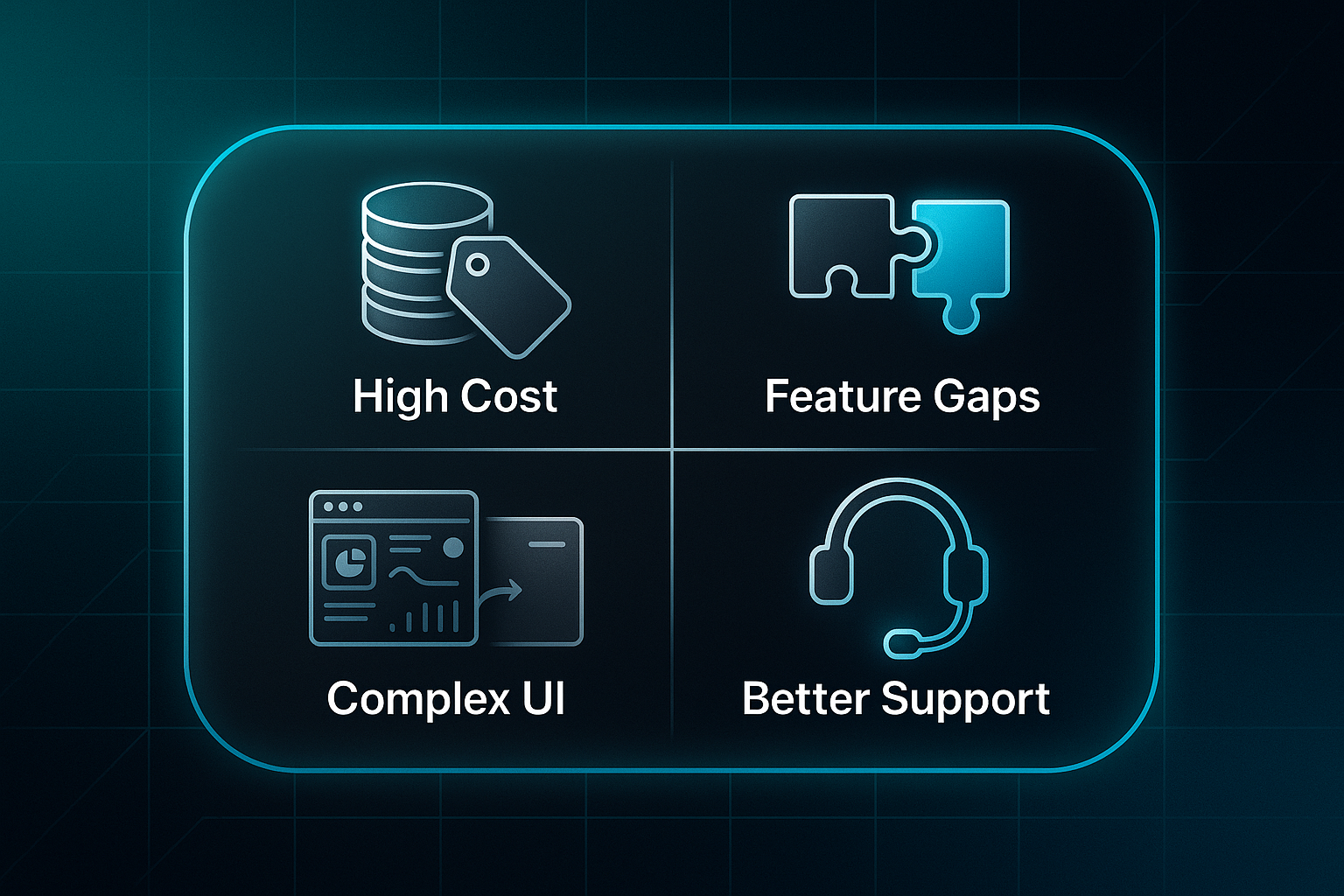
And let’s be honest: for the less experienced, an interface packed with data and options can actually slow you down. That’s why tools with friendlier dashboards or the option to customise your workspace have a certain appeal to users who just want to cut through the noise.
Visualizing SEO data through customizable dashboards helps beginners quickly identify trends and performance issues without getting lost in spreadsheets, turning raw numbers into actionable insights.
Service matters, too. While Ahrefs gives users standard support, some competitors step this up with real-time chat, personal account managers, or hands-on onboarding. If you’re new or need guidance at short notice, that kind of high-touch help can make a big difference.
Then, there’s growing demand for all-in-one, managed solutions—especially those enhanced with AI. For example, SEOSwarm delivers agency-led, AI-backed strategies for users who’d rather hand off the heavy lifting, instead of managing everything solo on a self-serve platform.
Core SEO functionalities covered by Ahrefs and its competitors
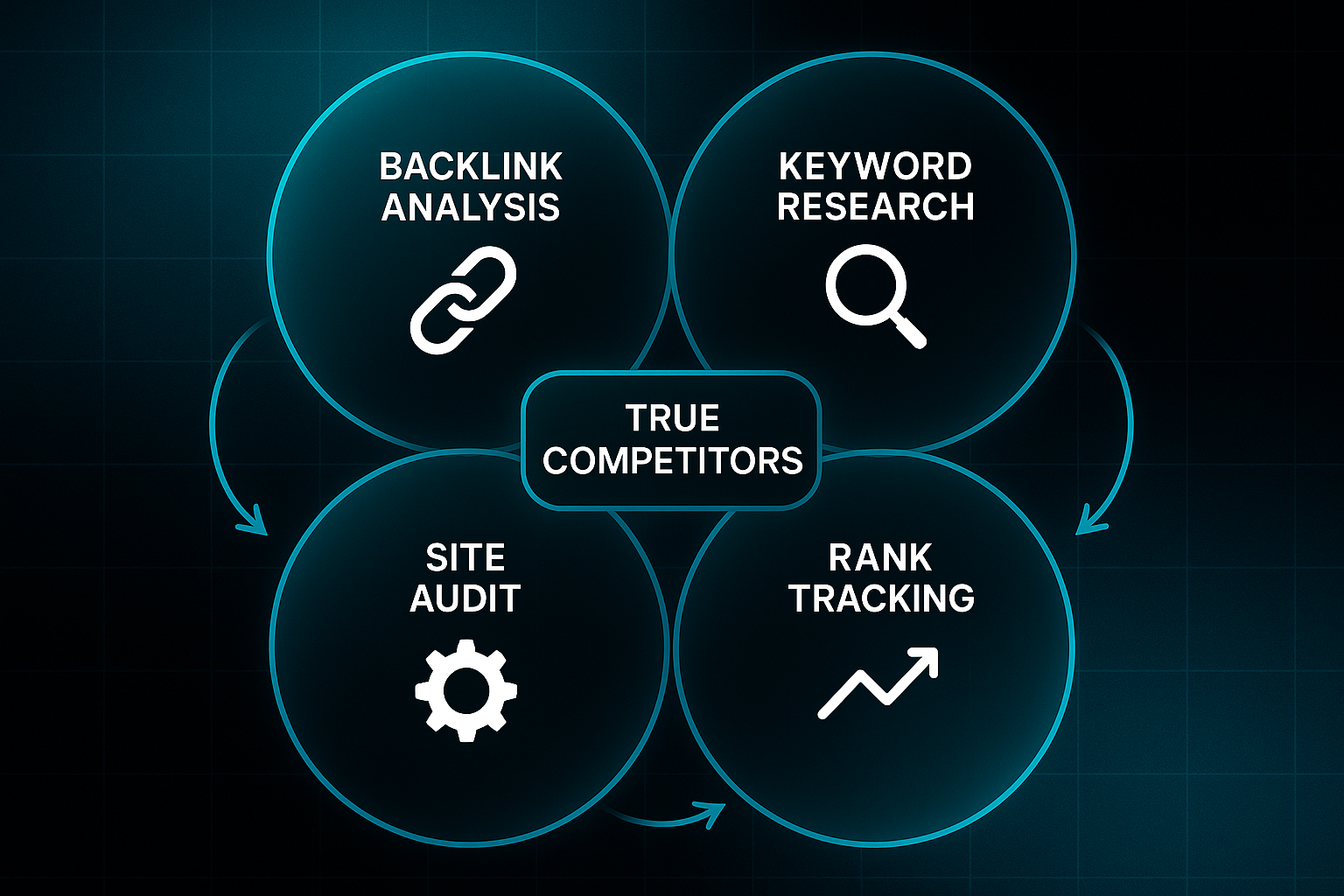
So, what “counts” as a real Ahrefs competitor? In short, any platform that checks off four main SEO capabilities:
- Backlink analysis
Tracks and evaluates inbound links for effective link-building, flags spammy sources, and benchmarks against the competition. Ahrefs’ backlink database is massive—over 35 trillion live links by early 2024. - Keyword research
Surfaces search volumes, competition level, search intent, and uncovers content gaps. Competing tools like SEMrush and SE Ranking put heavy emphasis on tracking rival keywords and revealing long-tail opportunities. - Site audit/technical SEO
Spots issues like crawl errors, broken links, and slow loading times. The best competitors rival Ahrefs when it comes to audit depth and let you link up with platforms including Google Search Console. - Content optimisation
Assesses your pages for keyword use, semantic relationships, and engagement signals. Some rivals go further than Ahrefs here, offering smarter AI or NLP-powered suggestions way beyond basic gap reports.
What is not an Ahrefs competitor (and why)
Let’s be clear on what doesn’t make the list. This article’s focus is only on broad, self-serve SaaS or digital platforms. That means agencies and consultants who use tools like Ahrefs behind the scenes are out. These services deliver bespoke, human-run execution—not the user-facing platforms we’re comparing here.
We’re also not including browser extensions, plugins, or single-feature tools, like stand-alone rank trackers. If a service can’t offer a broad, regularly updated suite of SEO essentials, or isn’t being developed anymore, it doesn’t qualify as a true competitor.
Evaluation criteria snapshot
Want to know how each tool stacks up? These are the key factors guiding our comparison:
- Pricing and scalability
Plans for every stage, plus trial access and easy upgrades. - Breadth/depth of features
Comprehensive coverage across core SEO disciplines. - Data quality and historical access
Fresh, sizeable databases and the ability to look back at trends. - Workflow efficiency/ease of use
Intuitive interface, actionable reports, and helpful automations. - Customer support and third-party integrations
Responsive help and easy linking with your existing toolkit.
Together, these give you a clear, apples-to-apples way to judge the platforms in the deep dives to follow. So, what’s out there beyond Ahrefs? Let’s get into it.
What to look for in an Ahrefs competitor: Key criteria for choosing an SEO tool
Essential features to evaluate
Choosing between Ahrefs competitors? The big things to consider are database power, actionable reporting, and overall usability.
Managing SEO for clients requires tools that offer more than just basic metrics—they need to provide clear, actionable insights.
Let’s start with backlink data. Ahrefs is known for its 35 trillion links, but tools like Semrush and Majestic offer impressive and regularly refreshed databases too.
Keyword research comes next. Semrush shines here, offering massive keyword libraries plus intuitive filters for intent, search volume, and SERP features. That helps everyone—from first-timers to SEO pros—find gaps they can own.
Technical SEO can get tricky, but the top platforms make it manageable. Automated crawls, error detection, and clear fix recommendations are hallmarks of SEMrush, SE Ranking, and Ubersuggest, making audits far less daunting.
Dashboards and custom reports let you work smarter. With Semrush and SE Ranking, you get customisation, white-label options, and quick exports—no wasted effort.
Integrations also matter. SEO PowerSuite and Semrush both let you easily connect with Google Analytics or Search Console, smoothing your workflow.
Transparent, fair pricing is a must. Ubersuggest and SE Ranking offer this: clear plans with no surprise costs, plus free trials.
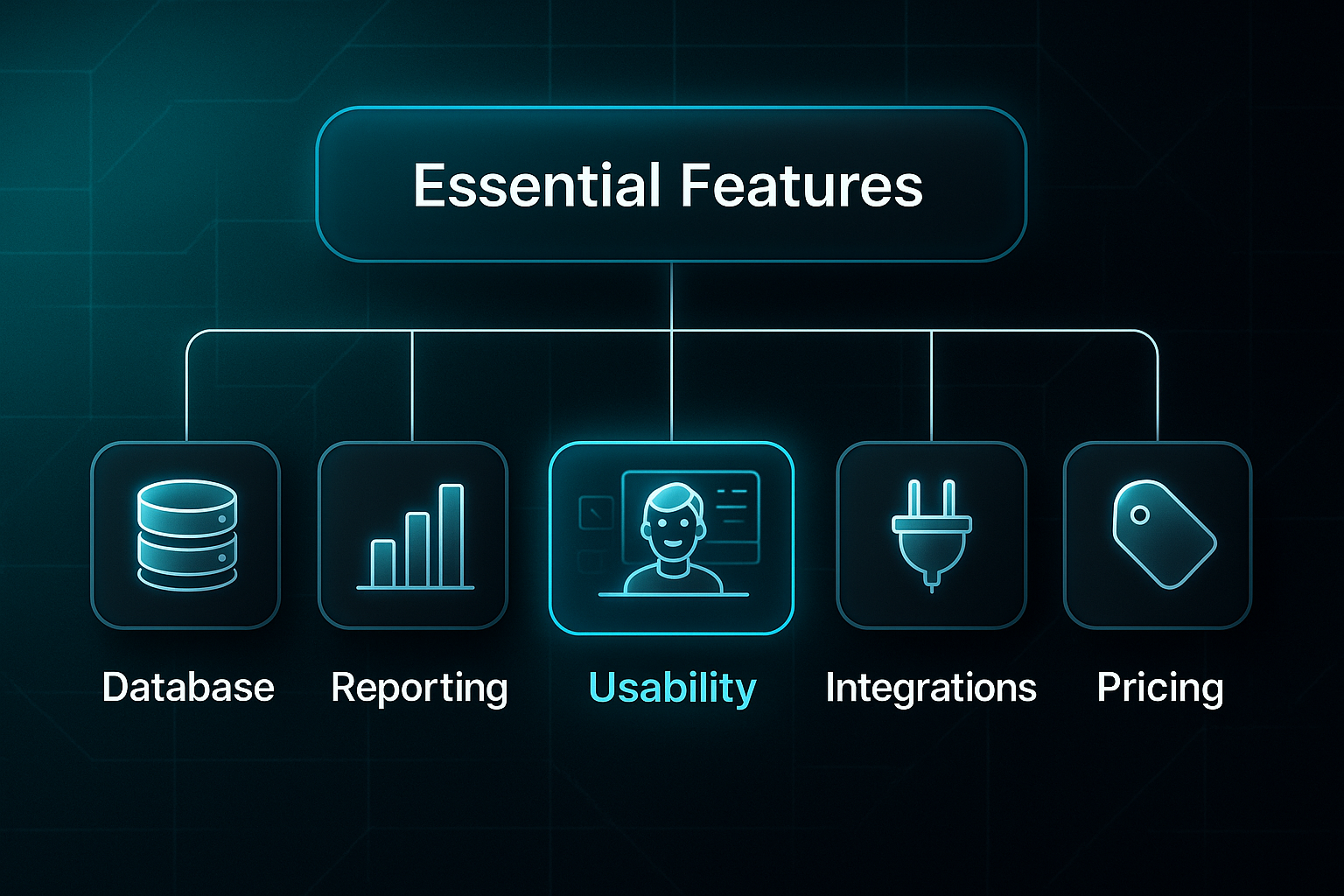
Key feature snapshots
- Backlink database
Extensive, updated, accurate for better link analysis. - Keyword depth
Huge libraries and smart filters for every skill level. - Audit tools
Automated crawls highlight errors, suggest clear solutions. - Custom reporting
Tailored, exportable, white-label dashboards. - Integrations
Simple, sturdy syncing with Google and reporting tools. - Fair pricing
Straightforward plans, try before you buy—no hidden extras.
Advanced considerations for specialists and agencies
For agencies, bulk operations and role controls make all the difference. White-labelled reports and automated permissions streamline work at scale. Semrush and Majestic stand out with APIs for advanced integration and workflow automation.
- Bulk operations
Audit and report in batches, fast. - White-label controls
Branded reports and permission customisation. - API/automation
Feed data right into your BI tools.
Usability and support
The simplest tools win more fans. Mangools makes it easy to get started, while SEMrush and Moz stand out for helpful guides and live, responsive support.
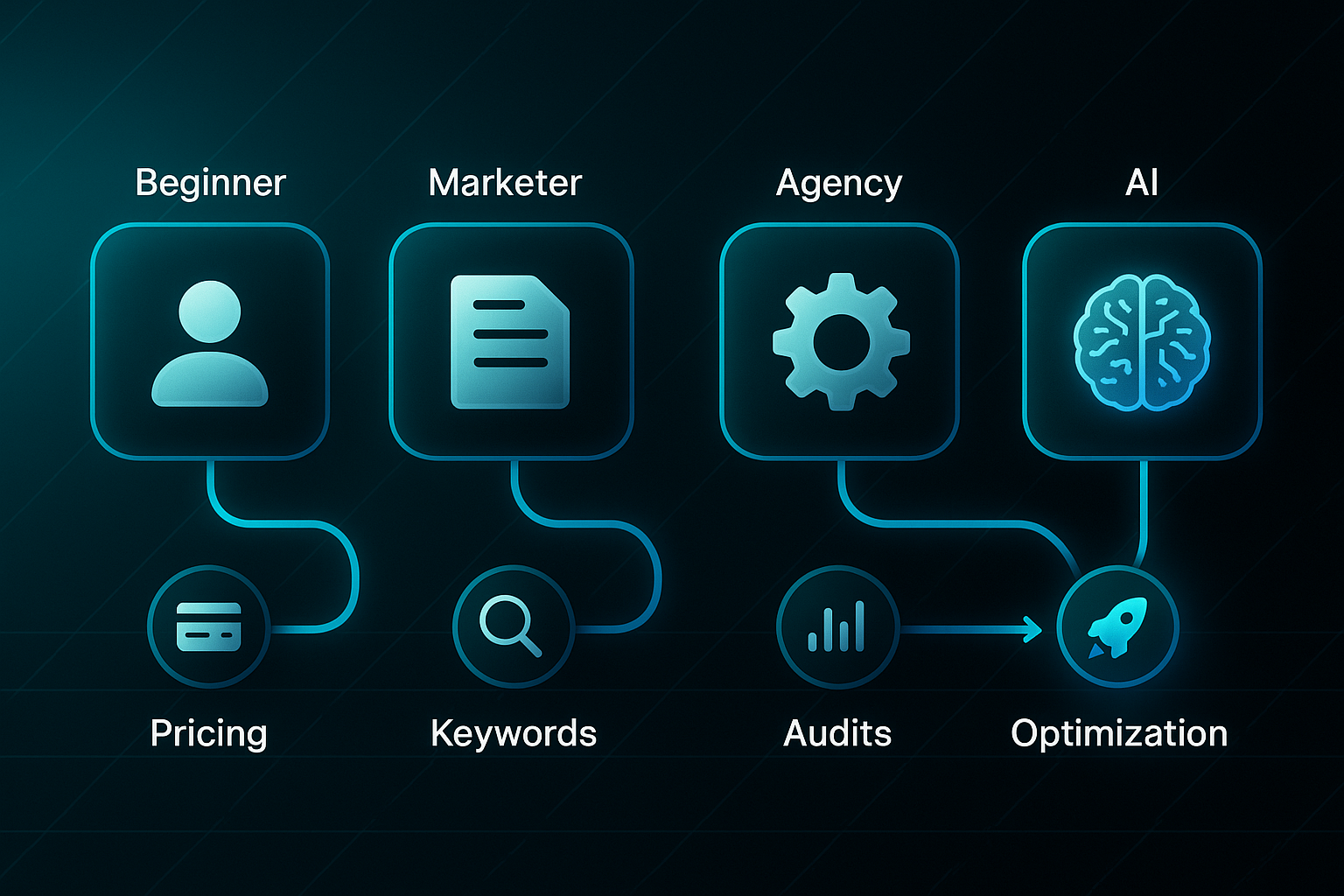
Tailoring your choice
Beginners need simple pricing and friendly interfaces. Content marketers focus on powerful keyword functions. Agencies and technical SEOs want audit depth and automation. For full-service, AI-powered optimisation, SEOSwarm is a top pick.
SEMrush
Overview and unique selling points
SEMrush is much more than just an SEO tool—it packs in PPC, content marketing, and social analytics alongside all the standard essentials. The big draw? Everything works together under one roof.
You’ve got backlink analysis, keyword data, site audits, and daily rank tracking that link seamlessly with campaign management for both organic and paid channels.
For agencies and marketing teams, this kind of synergy means it’s easier to manage and measure every part of your digital presence in one place.
- Comprehensive marketing toolkit
SEO, PPC, content, and social tools for streamlined campaigns. - Proprietary metrics & AI tools
Authority Score, Toxic Score, and EyeOn help you track competitors in real time. - Frequent data refresh & analytics
Rapidly updated keyword, backlink, and traffic data so you stay ahead.
Pricing, trials, and value proposition
Let’s talk numbers. The Pro plan starts at $139.95 per month, Guru is $249.95, and Business tops out at $449.95—each step adds more features and reporting.
Each plan supports one user, with extra seats from $45 to $100 monthly. Crucially, you get a 7-day free trial with full feature access.
Unlike Ahrefs, SEMrush drops credit restrictions—plans offer unlimited actions, making life easier for busy teams needing scale and flexibility.
Pros, cons, and best fit use cases
SEMrush excels at advanced analytics, unified campaign workflows, and bulk management—perfect for agencies and large digital teams juggling SEO, paid campaigns, and content.
But it’s not for everyone. There’s a notable learning curve, and the cost jumps for extra users or features, so freelancers may find it more than they need.
- Major strengths vs. Ahrefs
Unified tools, bulk actions, advanced analytics, API, and white-label reporting. - Potential drawbacks
Steep learning curve, higher cost for multiple seats. - Best fit
Agencies and digital teams handling multi-channel campaigns at scale.
Moz Pro
Overview and unique selling points
Moz Pro is a go-to SEO platform for beginners, freelancers, and small businesses looking for accessible optimisation tools. Its signature metrics—Domain Authority (DA) and Page Authority (PA)—are recognised across the industry and allow quick assessments of site strength.
With the MozBar Chrome extension, those DA and PA insights are always at your fingertips for real-time SEO checks, turning browsing into instant research. The platform’s interface is straightforward, with guided onboarding that means even newcomers can manage link analysis and competitor research without feeling lost.
Moz also brings a vibrant sense of community. There’s an active Q&A forum, but the real heartbeat is the Whiteboard Friday videos and Moz Academy courses—staples for anyone wanting reliable SEO education and troubleshooting.
Pricing, free trial, and value
One of Moz Pro’s biggest advantages is affordable pricing. The Starter plan is just $49/month, noticeably cheaper than Ahrefs for entry-level users. The $99/month Standard plan provides more generous usage limits, with additional plans to suit expanding agencies or teams.
All plans include full access to platform features, comprehensive reporting, and the entire Moz education library. A 30-day free trial gives users a risk-free chance to explore and practise, which is ideal for anyone budgeting carefully or keen to develop their SEO skills.
Pros, cons, and best fit use cases
The user-friendly interface, trusted DA/PA metrics, and rich educational content all play to Moz Pro’s strengths. It is perfectly suited for newcomers, solo marketers, and local SEO efforts, giving them the tools and training they need.
There are limits: Moz Pro's backlink and keyword databases are smaller and updated less frequently than Ahrefs, so those needing the latest international or technical data might want something more powerful. For everyday SEO learning and campaigns though, Moz Pro’s approachable package stands out.
SE Ranking
Overview and Standout Features
SE Ranking is a budget-friendly all-in-one SEO platform, popular with agencies, freelancers, and SMBs who need straightforward rank tracking, white label branding, and automation to streamline daily work. Custom dashboards and workflow automation save time—essential for managing many clients.
Here’s the catch: its backlink and keyword databases are much smaller and get refreshed less often than Ahrefs. If you depend on exhaustive link audits or deep international research, you’ll notice those boundaries.
Key Features
- Flexible rank tracking
Track 500–15,000 keywords (by plan), filter by location/device, and get sharp SERP snapshots. - White label management
Branded dashboards and tailored client access come with higher plans. - Workflow automation
Automated reports, user roles, and collaboration reduce manual work. - Agency tools
Manage clients, add lead gen widgets, and enhance teamwork—mainly on premium plans. - Unlimited reporting
Every plan offers unlimited reports, with more customisation on higher tiers.
Core Limitations
- The backlink database is much smaller (3 trillion vs. Ahrefs’ 35 trillion, 2024) with less keyword depth.
- Advanced agency tools and reporting need paid add-ons.
Pricing, Tiers, and Access
| Plan | Monthly (USD) | Annual (USD) | Keywords | Projects | API Access |
|---|---|---|---|---|---|
| Essential | $65 | $52 | 500–750 | 5–10 | No |
| Pro | $119 | $95.20 | 2,000–10k | 30+ | No |
| Business | $259+ | $207.20+ | 5k–15k | Unlimited | Yes |
You get a 14-day free trial with no card required. Modular add-ons mean you only pay for extra features when needed.
Blog-in-one-minute
Add a fully SEO-optimised blog to your website with just 2 lines of code.
Learn more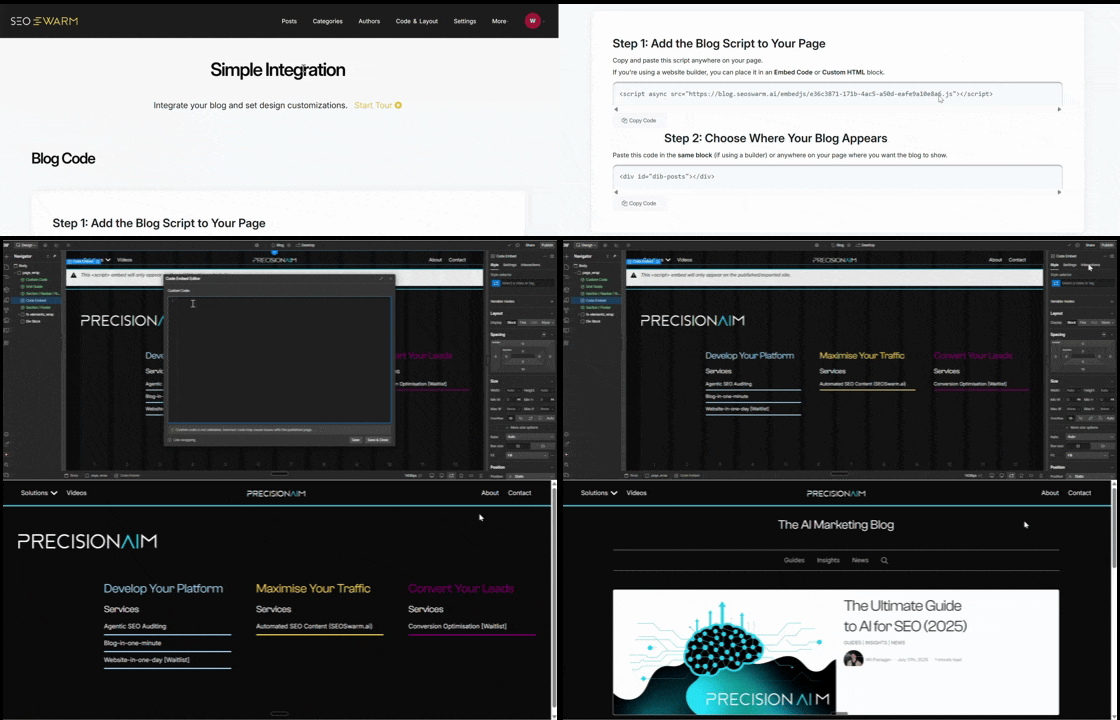
Pros, Cons, and Fit
- Pros
Affordable entry, spot-on rank tracking, unlimited reporting, and agency-ready features. - Cons
Smaller, less-fresh databases; top tools and API sit behind premium plans. - Best fit
Freelancers, SMBs, and agencies needing affordable daily reporting—just note the database limits.
Majestic
Overview and distinct capabilities
Majestic is all about backlink analytics—nothing else distracts from that focus. Its home-grown web crawlers fuel an original link database, giving SEO pros access to data competitors might never uncover.
You get two main indexes. The Fresh Index updates daily, spotting new links as they land, while the Historic Index highlights years of backlink wins and losses. That open-book history is a goldmine if you’re tracing link-building trends, mapping authority, or unpicking a competitor’s strategy.
Majestic’s signature metrics—Trust Flow, Citation Flow, and Topical Trust Flow—dig deeper than standard authority scores. Instead of a vague number, you see link quality, quantity, and topical relevance, especially handy for agencies managing campaigns at scale. The platform also makes bulk analysis easy: scan hundreds of URLs instantly, or a million by file upload.
With its independent index and unique metrics, Majestic’s perspective can reveal valuable link insights you might miss elsewhere—making it a “second opinion” tool for serious link builders and digital PRs.
Pricing and feature access
Majestic keeps pricing simple. The Lite plan at $49.99/month gets you core features. The Pro plan ($99.99/month) adds the Historic Index, bigger bulk tools, and advanced comparisons.
Need exports or integrations? The API plan starts at $399.99/month. No free trial, but Lite and Pro users have a 7-day money-back guarantee. Their Chrome extension offers only a taster.
Against Ahrefs, Majestic is more affordable for backlink research, but remember you’re getting pure link data—sans keywords, site audits, or ranking features.
Pros, cons, and best fit use cases
- Benefits for link specialists
Granular backlink audits, history trends, bulk exports, and topical authority analysis. - What’s missing vs. all-in-ones
No keyword, audit, or ranking tools—best for specialists, not generalists. - Ideal users
Link builders, PR teams, and topical SEOs. For a broader SEO approach, go all-in-one.
Ubersuggest
Overview and simplicity benefits
Ubersuggest is made for anyone wanting SEO basics without the hefty price or time sink. You get keyword research, site audits, rank tracking, competitor insights, and a handy backlink explorer—all in a user-friendly layout.
Everything is streamlined for speed. Beginners will find it a breath of fresh air, while even seasoned marketers appreciate how the Chrome extension pulls up keyword and backlink stats in Google or across other sites.
- Accessible feature set
Core SEO actions—keyword ideas, on-page tips, and site checks—for quick results. - Popular Chrome extension
View keyword and backlink data immediately as you browse or research competitors.
Pricing, free trial, and budget appeal
Want something affordable? Ubersuggest’s plans start at just $29 a month (as of June 2024), with agency tiers reaching $99. There’s even a lifetime deal from $290—pay once and skip ongoing charges.
Nervous about long-term spends? Test every premium feature free for seven days, or stick with the basic forever-free plan if you only have light needs. These options make trying Ubersuggest low-risk compared to pricier subscription-only competitors like Ahrefs.
- Low-cost subscriptions and lifetime access
From $29/month or a one-off lifetime deal—no recurring bill. - Free trial and free-forever tier
Seven-day premium trial or use the ongoing free plan for lighter use.
Pros, cons, and best fit use cases
Freelancers, bloggers, and small teams will find Ubersuggest ideal for learning SEO or launching new projects. It’s easy to set up and simple to navigate.
But, its databases are smaller and slower to update than Ahrefs, plus there’s no API or advanced automation. Heavy-hitting agencies might find it a bit basic.
- Best for small teams and beginners
Excellent for quick SEO checks and content ideas. - Limitations vs. premium competitors
Smaller databases and fewer advanced tools. - Key differentiators
Lifetime pricing, instant setup, and truly simple design.
Screaming Frog
Overview and technical audit features
Screaming Frog SEO Spider is a desktop crawler designed for advanced, technical SEO audits. Unlike cloud suites such as Ahrefs, it runs locally, offering full control and privacy for sensitive projects.
You can customise crawl depth, user agents, and schedules, targeting tricky pages or diagnosing complex issues without cloud restrictions. The paid version’s JavaScript rendering is a standout for Single Page Applications or dynamic sites—something most cloud tools can’t match.
With XPath, CSS selectors, or regex, custom extraction delivers granular data: from schema and product info to niche meta tags. Visualisation tools quickly map redirects, internal links, duplicates, and orphan pages, spotlighting audit bottlenecks.
Want to see how technical findings align with actual users? Screaming Frog integrates with Google Analytics, Search Console, and PageSpeed Insights, letting you match crawl results against traffic or performance data. The upshot: fixes target real user impact, not just technical stats.
Pricing, limitations, and value
There’s a free edition for up to 500 URLs—ideal for trials or smaller websites. The paid licence (roughly $259/year) removes limits and unlocks advanced features.
Here’s the catch: it’s entirely desktop-based. Audits, data, and schedules hinge on your device, with no cloud dashboard or real-time multi-user sharing. Reports require manual export, which can feel restrictive for agencies with ongoing teamwork.
But if you prioritise privacy and hands-on control, this set-up is tough to beat.
Pros, cons, and best fit use cases
- Technical advantages
Local control, JavaScript SEO, custom data extraction, privacy. - Key limitations
No keyword or backlink tools, lacks cloud features, device reliant. - Best fit
Tech SEOs, agencies handling launches, migrations, JS-heavy sites. - Integration approach
Excellent for combining crawl and analytics data; less ideal for cloud teams.
SpyFu
Overview and competitor intelligence focus
SpyFu is made for marketers who want real competitor research—focusing tightly on SEO and PPC strategy intelligence over the usual “all-rounder” approach.
Why SpyFu? Its database, updated weekly, tracks 7 billion search results and 109 million domains (2024), letting you uncover keyword rankings, Google Ads spending, and long-term domain-level shifts. You can pull up every keyword a rival has bought on Google Ads over 18 years and flick through archived ad copy. For agencies tracking campaigns or anyone obsessed with strategic shifts, it’s like a window into your competitors’ playbooks.
- Signature PPC research features
Monitor Google Ads budgets, retrieve historic ad copy, and view keywords bid on since 2006. - Historical keyword/ad analysis
Review up to 18 years of ranking and PPC records. - Unlimited data exports
Export everything you need—no restrictions, whatever your plan.
Pricing and value
SpyFu keeps pricing simple: Basic at $39/month, Professional at $79/month, Team at $299/month (June 2024). Basic serves a single user, but Team supports five.
Unlike Ahrefs, every plan gives unlimited exports and search results—massive for agencies handling bulk reports. Instead of a free trial, there’s a 30-day money-back guarantee if it doesn’t fit.
Pros, cons, and best fit use cases
SpyFu’s highlights? PPC intelligence, robust history, and unlimited export freedom. If you need to mine huge lists or trace Google Ads spend, this is your tool.
But it lacks technical SEO tools, deep backlink audits, and global support (most features favour US and UK searches).
- Who benefits most
Agencies, SMBs, and PPC/SEO pros after deep competitor research. - When it falls short
Technical SEOs, global users, or those chasing richer backlink or audit data. - Core value proposition
Affordable, export-friendly competitor intelligence with strategic depth.
Serpstat
Overview and value proposition
Serpstat stands out as an all-in-one SEO and PPC platform designed for growing teams and agencies handling multiple clients or campaigns. Think of it as your digital Swiss Army knife—offering keyword research, site audits, competitor analysis, rank tracking, backlink analytics, content insights, and social media stats for a genuinely integrated strategy.
But here’s what really makes Serpstat shine: team collaboration tools take centre stage. You get multi-user access, granular project sharing, role-based permissions, and white-label reporting—essentials for agencies chasing smooth teamwork and professional client handoffs. The Advanced and Enterprise plans step this up, with controlled access and high-grade deliverables at scale.
- Agency workflow automation
Extra seats are affordable, dedicated API access is available, and automated report exports simplify client management. - Yandex and local SEO focus
Rich regional keyword/domain databases and deep Yandex integration appeal to Eastern Europe and CIS users, with growing global support.
Pricing and trials
Cost is clear-cut. The Lite plan (from $69/month) covers basics. Standard ($149/month) expands your project slots and tracking. Advanced ($299/month) unlocks the API, more user seats, and white-label options. Enterprise is custom (up to $499/month), adding dedicated support. Annual billing means a 20% discount.
You can try everything free for seven days, no commitment—so you know what’s available before deciding.
Pros, cons, and best fit use cases
- Best for agencies and scaling teams
Scalable collaboration, affordable pricing, workflow automation, and 24/7 support make it easy to serve more clients. - Key limitations vs. Ahrefs
Smaller backlink and keyword databases, slower updates, and less depth for broad international work. - Ideal audience
Agencies or teams in Eastern Europe or Russia, Yandex-first campaigns, or anyone after multi-user SEO management at a sensible price.
CognitiveSEO
Overview and unique capabilities
CognitiveSEO is that digital “forensic analyst” you call in when penalty whispers or suspicious links make you nervous. Focused on link risk assessment, penalty detection, and smart content audits, it’s built for agencies and businesses who can’t afford guesswork when rankings vanish.
Instead of surface-level overviews, CognitiveSEO goes deeper—pinpointing what triggered drops or penalties. If you’re tackling risky link histories or cleaning up after bad actors, this is a platform designed for recovery.
Link risk and penalty features
- Unnatural Link Detection
Flags risky backlinks likely to cause Google penalties—especially handy after unexpected ranking drops. - Risk scoring & visualisation
Pinpoints danger in your backlink profile and generates easy Google disavow files. - Perfect for
Sites hit by manual actions, those operating in high-risk niches, or anyone worried about old link-building tactics.
Content and audit tools
- AI/NLP-powered content audits
Compares your pages to the top competition for context, natural language, and depth. - Bulk analysis
Agencies quickly review multiple portfolios—avoiding the headache of repetitive work. - Database limits
Smaller, less-frequently updated link index than Ahrefs, so not ideal for spotting newest links.
Pricing, trial, and fit
- Subscription options
Starter, Professional, and Enterprise tiers unlock features like white-label reporting and deep collaboration. - Free trial
Seven days—all features, no card required. - Best fit
Agencies or SEOs handling complicated penalty recovery, risky portfolios, or in-depth audits.
Pros, cons, and who benefits
- Strengths
Best-in-class link risk detection, AI-driven insights, agency-focused reporting. - Limitations
Smaller link database, higher learning curve, and premium pricing. - Who wins
Agencies, forensic SEOs, and businesses facing risky backlink headaches or those that need scalable, branded reports.
Similarweb
Overview and market intelligence angle
Similarweb sits in a league of its own when it comes to market intelligence. Rather than sticking to classic SEO metrics, it offers a panoramic view of the digital landscape—think site traffic, market share, competitor analytics, and insights into digital audiences across both desktop and mobile.
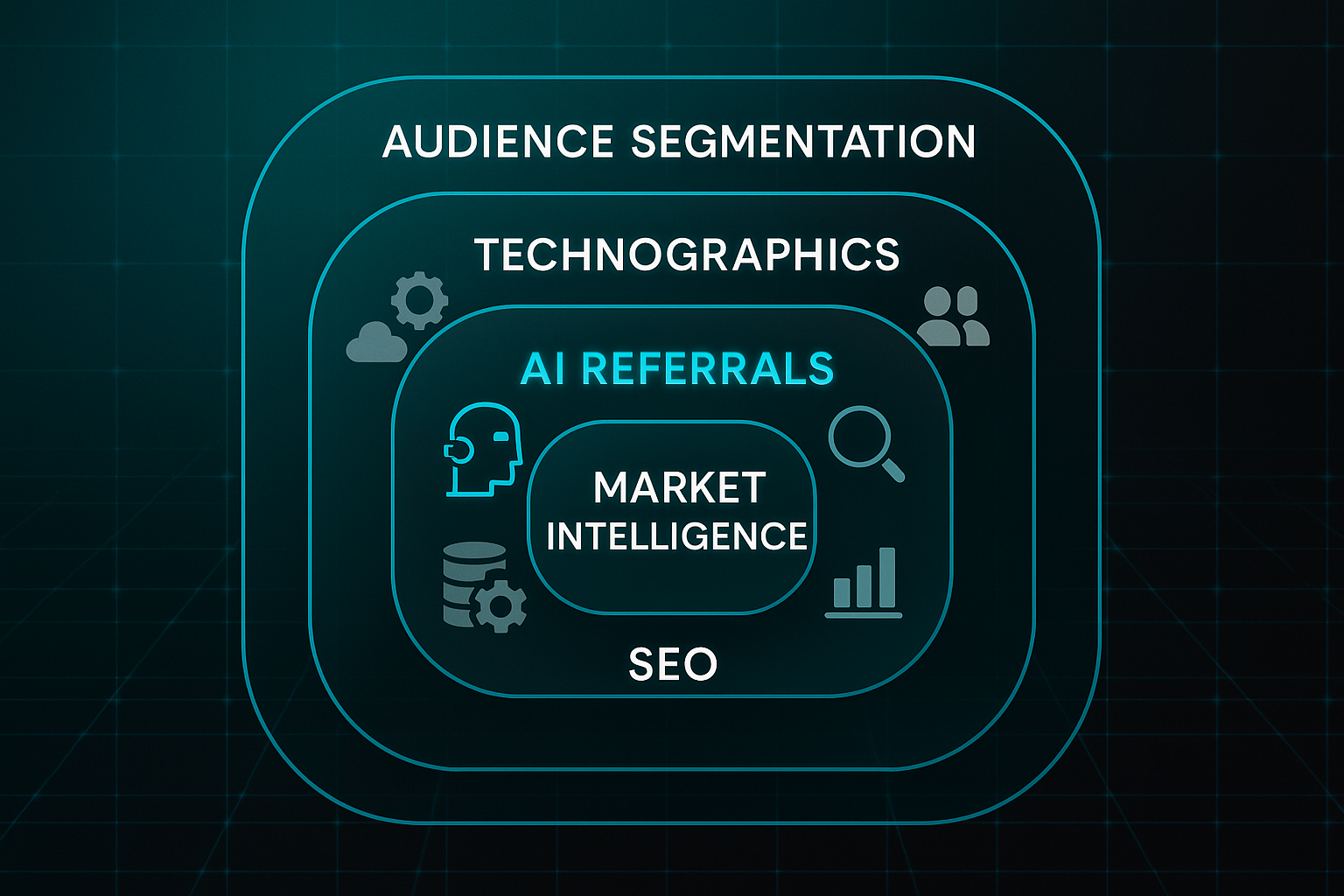
And here's what sets it apart in 2024: Similarweb can monitor referral traffic coming from AI chatbots like ChatGPT, Gemini, and Perplexity. Marketers can actually see which content gets surfaced, recommended, or linked by these AI systems. That’s a game-changer for anyone looking to optimise pages for the rapidly expanding channel of AI-driven discovery.
A comprehensive analysis of research on AI Chatbots reveals their growing potential to impact customer acquisition and purchase decisions, making visibility on these platforms a key consideration for strategic marketers.
Technographics and segmentation
What makes Similarweb fascinating is the scope of its segmentation. It doesn't just break down users by device or location; it examines their behaviour and even analyses which technology stack a competitor uses—like their CRM or CMS. This “technographics” intelligence, combined with audience demographics and revenue estimates, takes B2B prospecting to another level.
It's no surprise agencies and big marketing teams rely on these features for qualifying partnerships and orchestrating sharp outreach strategies. That sort of granular insight just isn’t part of most standard SEO platforms.
Pricing, access, and scope
Similarweb rolls out a free plan for basic data, but if you want the real depth, you move up to paid tiers—Starter starts at $199/month, with Pro, Team, and Enterprise plans stepping up data granularity and segmentation power. If you’re after advanced analytics and AI referral insights, those sit behind the premium packages designed for agencies and enterprise users.
There’s a free trial, but expect limitations until you upgrade; broader analytics and historical tracking only come with the paid options.
Limitations for traditional SEO use
But there’s a catch. For day-to-day SEO, Similarweb falls short on backlink tracking, deep keyword analysis, and technical audits. Precision drops off for niche or smaller sites, and those hands-on SEO diagnostics you’d get elsewhere aren’t part of the package.
Pros, cons, and best fit use cases
Advantages
- Cross-channel analytics
spanning web, mobile, and AI chatbot referrals for rich market intelligence - Technographics
and detailed segmentation support powerful B2B targeting - Industry benchmarking
beyond typical SEO suites
Limitations
- Fewer advanced backlink and audit tools than SEO-first platforms
- Main features locked behind pricey plans
- Less precise data for smaller or niche sites
Best fit
So who should use it? Agencies, enterprise marketers, or research teams needing digital benchmarking and a window into AI-driven content discovery. For daily SEO or deep link and keyword analysis, think of Similarweb as the perfect complement—not a complete replacement.
SEOSwarm
Overview and platform differentiators
Human-led research and AI-driven, fully managed service
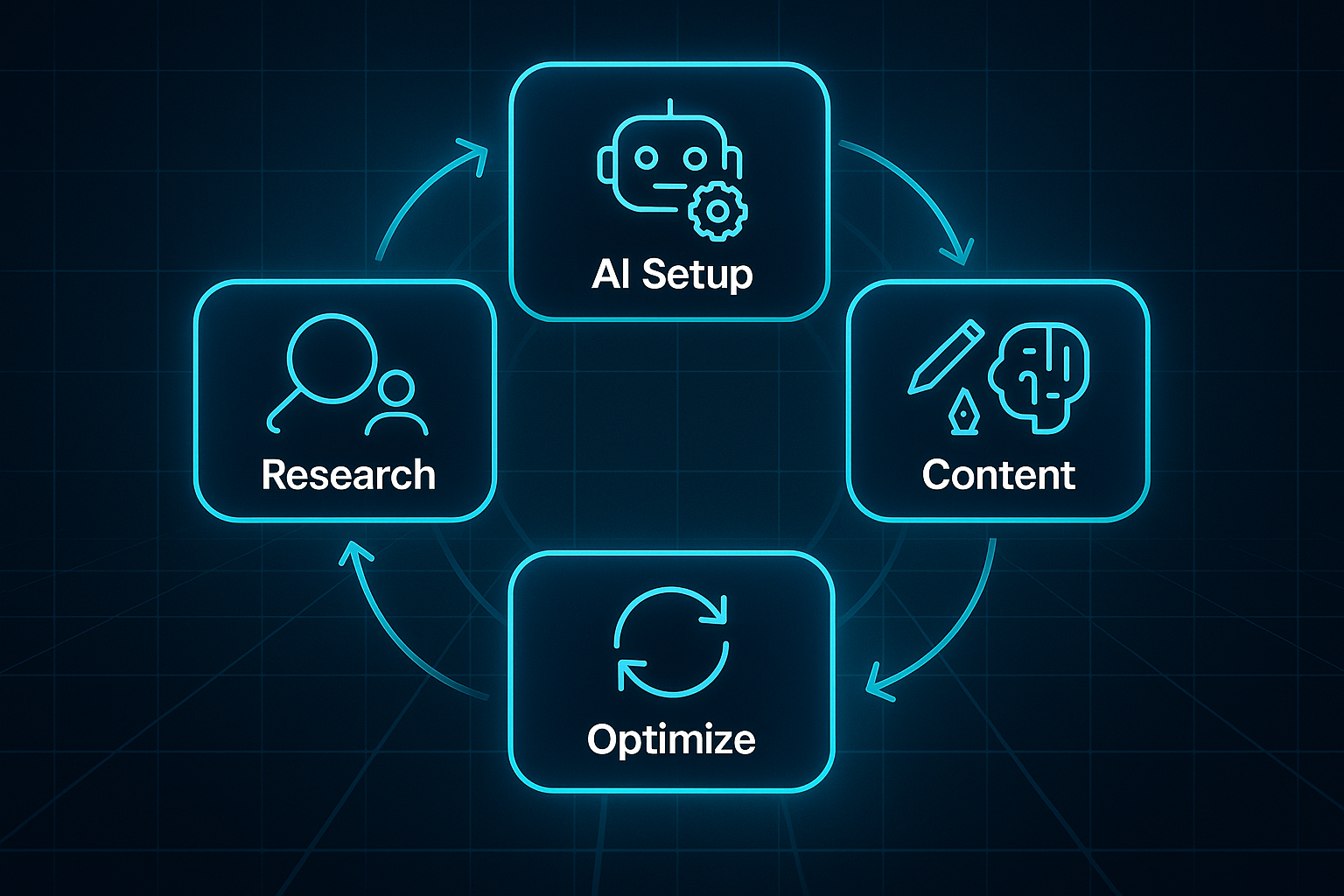
SEOSwarm’s approach is simple: you outline your business priorities, then let their human analysts carry out a market and brand review. After that, SEOSwarm’s AI agents step in, running every detail—setup, content creation, optimisation, and publishing—so you don’t have to lift a finger.
What sets this apart from platforms like Ahrefs or regular SaaS suites? There’s no need for manual research, constant update cycles, or dashboard admin on your side. Compared to agencies, SEOSwarm skips project logjams and brings far more automation to the workflow.
Continuous SEO and marketing optimisation
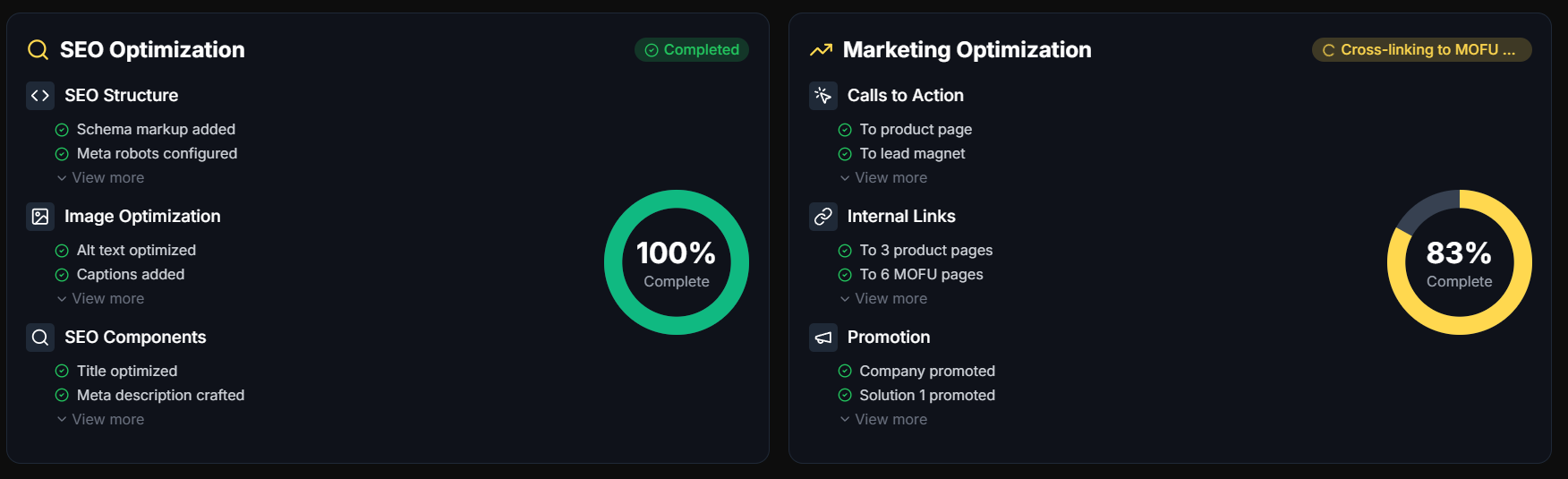
Here’s where the AI truly shines. As search trends or ranking algorithms shift, SEOSwarm quietly updates your published content in real time. Sweeping changes—like new meta tags or fresh internal links—happen behind the scenes, sparing you the usual waiting around.
If you’ve used SaaS tools or agencies, you know updates rely on scheduled or manual cycles. The continuous automation here means your site adapts the moment things change, not weeks later.
Ongoing analytics and automated blog maintenance
Proactive analytics and upkeep are built in. Instead of wrangling spreadsheets or building your own reports, you get real-time updates and actionable recommendations straight to your inbox. All the technical health checks and site fixes run in the background—no supervision needed.
Contrast that with Ahrefs, where ongoing reporting and management is your job, or agencies, who send updates on a fixed schedule and may miss critical windows.

AI-Powered
SEO Content Strategy
See the AI platform that's replacing entire content teams
(with better results).

Key features and add-ons
- End-to-end content strategy
Manages strategy, research, topics, production, publishing, and live refreshes—no platform-juggling for clients. - Blog-in-One-Minute add-on
Instantly deploys a blog with automatic SEO, schema, internal links, and Cloudflare hosting—much faster than agency or SaaS site builds.
Pricing and value discussion
- No public subscription pricing
Every managed project is custom-quoted after onboarding, instead of fixed SaaS tiers or agency packages. - Blog-in-One-Minute separately priced
The add-on is its own subscription, usable independently without the full managed service. - Value advantages
Delivers rapid scaling, ongoing updates, and no retraining hassle—ideal for brands running big portfolios.
Pros, cons, and best fit use cases
- Core advantages
Continuous optimisation, instant AI-led changes, and dual human/AI quality control—unique among competitors. - Limitations
Not for DIY SEOs craving daily access or teams on inflexible, static budgets. - Best fit
Multi-location brands, high-volume agencies, and anyone seeking zero-touch, always-optimised management with no extra effort.
Choosing the Right Ahrefs Competitors for You
Most SEO tools promise the world, but the real edge comes from choosing what actually fits your workflow, budget, and goals. No single platform—Ahrefs included—can be everything to everyone, and that’s why alternatives thrive. The smartest marketers I know treat their SEO stack as something to refine, not just set and forget.
Here’s my advice: List your must-have features, set a realistic budget, and test-drive two or three contenders from this list. Pay close attention to database freshness, reporting clarity, and how each tool handles your daily tasks. If you’re managing multiple sites or clients, prioritise automation, white-label options, and responsive support.
SEO success isn’t about chasing the biggest brand—it’s about building a toolkit that evolves with your needs. The right alternative isn’t just a replacement for Ahrefs; it’s your competitive advantage in a crowded digital world.
- Wil