

Staring at a blank page can feel like the hardest part of blogging. I’ve been there—ideas dry up, and motivation slips away fast.
If you’ve ever struggled to come up with fresh topics or felt stuck in a rut, you’re not alone. Writer’s block hits everyone, whether you’re new to blogging or have years of posts behind you.
In this article, I’ll break down what makes a blog idea truly actionable and show you how to build a reliable pool of prompts. You’ll get practical tips for beating creative paralysis, plus over 130 specific blog ideas—sorted by niche, trend, and experience level—to keep your content pipeline flowing.
I’ll also share proven brainstorming frameworks, tech tools, and strategies for finding unique angles that set your blog apart. By the end, you’ll have everything you need to spark creativity and publish with confidence, even on your toughest days.
What are blog ideas?
Definition and scope of blog ideas
Let’s break down what blog ideas really are. They’re not just vague topics or general themes; the best ones are focused, actionable prompts designed to guide you straight to a complete blog post. Imagine them as clear signposts, stopping you from wandering aimlessly when writing.
Strong blog ideas work because they target your audience’s interests or problems directly. Instead of simply tossing out “healthy eating” and hoping for the best, you get something like “10 Quick Vegetarian Breakfast Recipes.” Now, you know exactly who you’re helping, what type of content you’ll deliver, and how readers will benefit. That shift from broad to specific is what gives actionable prompts their value.
Instead of trying to cover a broad range of topics, focus on a specific niche that you’re passionate and knowledgeable about. By narrowing your focus, you can establish yourself as an expert in that area and attract a loyal following of readers who are interested in what you have to say.
Think of it like this: “Personal finance tips” isn’t much to build on, but “How I Paid Off £10,000 of Debt in One Year” sets up a clear story, problem, and outcome. One wanders; the other delivers a journey and a solution.
Here’s a quick comparison to show the difference:
| Generic Prompt | Actionable Blog Idea | Actionability Explanation |
|---|---|---|
| Healthy eating | 10 Quick Vegetarian Breakfast Recipes | Clear audience, meal type, and outcome for post creation. |
| Personal finance tips | How I Paid Off £10,000 of Debt in One Year | Personal experience, defined timeframe, encourages narrative detail. |
| Home organisation | 5 Decluttering Hacks for a Small Flat | Direct solution, targeted problem, and practical advice. |
This guide zeroes in on content creation prompts—not business, technical, design or monetisation themes. Knowing how to craft an actionable blog idea helps you consistently write posts people want to read. That’s the foundation for a thriving blog.
Why having a strong pool of blog ideas matters
Here’s the thing: A solid pool of blog ideas keeps your audience coming back and your content pipeline moving. With a reliable bank of prompts, it’s easier to choose topics quickly, react to seasonal trends, or address fresh interests.
Ever face writer’s block? A strong idea bank acts as your safety net, providing structure and sparking inspiration when creativity stalls. Having those clear prompts handy lets you keep publishing, even when energy is low.
Keep a running list of ideas...Whenever you get an idea, jot it down. Even if it’s just a single word. When you’re feeling blocked, go to your list. Sometimes just seeing that one word will spark a whole post.
Using this pool also shapes your blog’s voice, boosts authority, and helps build trust with readers. Consistent quality means higher search visibility and a wider audience.
In short, actionable blog ideas allow you to stay creative, post regularly, and keep your blog relevant—even when inspiration seems out of reach.
Overcoming writer’s block: Quick wins to reignite creativity
Common causes of blog idea block
Writer’s block isn’t picky—it strikes every type of blogger sooner or later. Sometimes, perfectionism gets in the way, making you edit endlessly instead of just hitting publish.
Other times, burnout rolls in after pushing yourself too far. Suddenly, the blank page seems a mile wide.
There’s also the fear of criticism. That voice in your head claims someone will tear your work apart, so you stall and second-guess every sentence.
Then there’s a lack of direction, where you’re not sure what your readers actually want. Drafts pile up half-finished.
Maybe you feel disconnected from your audience. When you’re not convinced your content matters, even starting can feel pointless.
So here’s a quick question: what’s really stopping you right now? Pinpointing your obstacle is the first step towards the right fix.
Immediate actions for breaking creative paralysis
Here’s a secret: a tiny change can make a huge difference. Move your laptop to another room.
Scribble ideas by hand instead of typing. Sometimes just swapping your environment shakes things up enough to get back on track.
Freewriting for 10 minutes—messy grammar and all—can be surprisingly liberating. You’re not aiming for perfect, just letting words flow.
This strategy works wonders when perfectionism is holding you back. If inspiration’s dried up, look outside yourself.
Scroll through comments or old feedback—recurring questions and themes often make brilliant blog prompts. And don’t forget content repurposing.
Turn a how-to into a checklist, update an old favourite, or revisit a subject from a new angle. Choose what fits your challenge. That’s how you go from stuck in the mud to real momentum.
Matching solutions to block types
It’s not just about doing something—it’s about doing the right thing for your kind of block. Matching your particular hurdle to a remedy saves so much time.
Here’s a simple table to help pinpoint a fast fix:
| Block Type | Symptoms | Best Solution |
|---|---|---|
| Perfectionism | Endless editing, delayed publishing | Try freewriting or work to a timed draft |
| Burnout | No creative energy, blank page | Take breaks, change up your environment |
| Fear of criticism | Self-doubt, unwilling to start | Write privately or publish a rough draft |
| Lack of direction | Unfinished drafts, shifting focus | Poll your audience, pick one clear theme |
| Audience disconnect | Low engagement, lost confidence | Repurpose or expand successful posts |
Check the table, spot your block, and try the matching fix. With a targeted action, you’ll break through—and open the door to new, diverse blog ideas in the next section.
Starter blog ideas: Universal prompts for new bloggers
Beginner-friendly prompts
Taking that first step into blogging? It always feels a bit daunting, but here’s the good news—some topics are ideal icebreakers. With the right beginner-friendly prompts, you can stop overthinking and finally start writing.
These ideas are designed to take the pressure off—so even if you’re brand new, you’ll find something that feels natural to create. Want to know what works best for new bloggers? Here are a few tried-and-tested starters:
- Personal introductions & origin stories
Share who you are, why you started the blog, and what motivates you. Readers connect quickly when they get a glimpse of your real story. - Lessons learned & personal growth
Admit mistakes or surprises you’ve encountered. “What I wish I knew before…” posts show genuine growth and make your journey relatable. - How-to guides for common problems
Break down simple solutions to challenges you’ve just conquered. Step-by-step or “how I started…” formats help readers learn alongside you. - Product, book, or movie reviews
Offer your honest thoughts on things you’ve tried or watched. Highlight recommendations, caution against pitfalls, or share practical takeaways. - Day-in-the-life & behind-the-scenes posts
Let readers peek into your daily routine, workspace, or creative process—it’s a chance to build trust and demystify content creation. - FAQ compilations for your audience
Gather common questions from your niche or community and answer them openly. Use reader feedback or basic research as your prompt source.
So why do these prompts work so well? Introducing yourself lets readers immediately see your motivation. When you share early lessons or surprises, you create trust and authenticity—both crucial for a lasting audience.
Your audience wants to connect with a real person, not a faceless brand. Don’t be afraid to share your personal stories, struggles, and successes. This vulnerability can make you more relatable and trustworthy.
Maybe you’re only one step ahead of your reader; that’s all you need for a valuable how-to post. Reviews and recommendations keep the conversation flowing, opening the door for others to chime in with their experiences.
There’s something refreshing about showing your actual process, too. Sharing day-in-the-life or behind-the-scenes moments lowers the pressure to be perfect—making your content more accessible.
Blog-in-one-minute
Add a fully SEO-optimised blog to your website with just 2 lines of code.
Learn more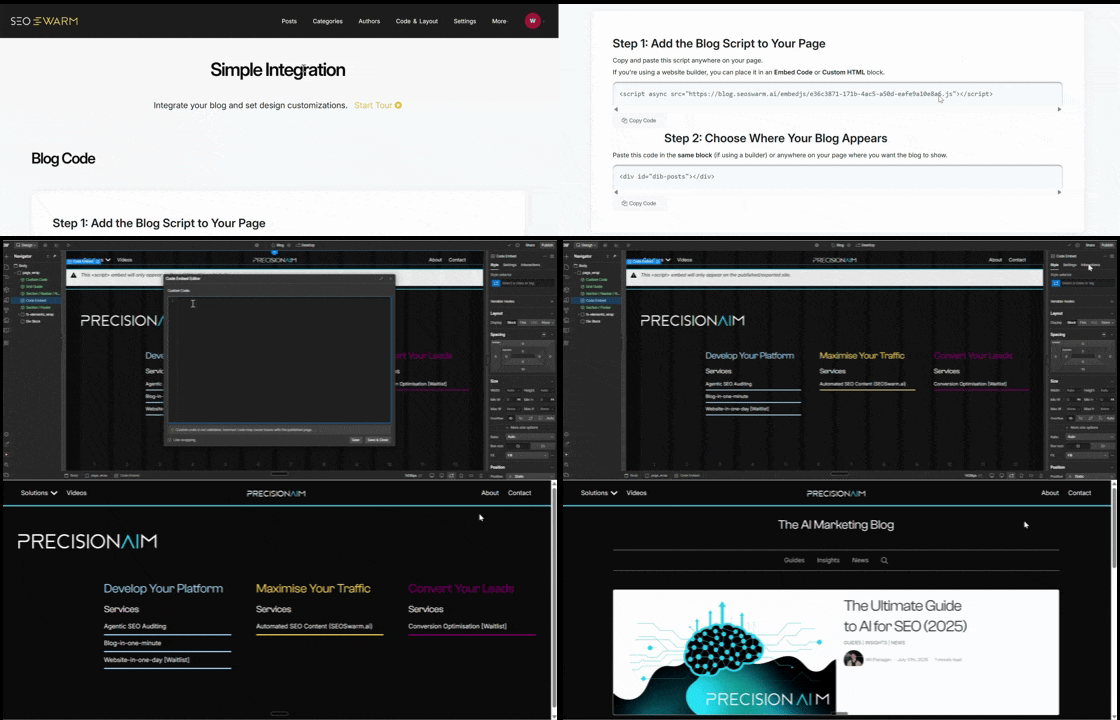
And if you answer FAQs straight away, you become the go-to guide right from the start. That’s a strong way to launch your blogging journey and draw readers in.
Niche blog ideas for every interest area
Food and recipe ideas
Food blogs remain a favourite with audiences, thanks to their visual allure, strong communities, and excellent search potential. This year, something interesting is happening—hyper-local topics, seasonal themes, zero-waste cooking, global cultural explorations and even AI-driven meal planning all weave through the most successful content.
So, what's shaping this surge? For starters, AI-powered meal planning tools—like Yummly’s updated platform—have genuinely changed the game. Their early 2024 launch caused a 34% jump in user engagement, as readers now expect not only personalisation but smart, time-saving content. The ripple effect? Bloggers see longer visits and return rates spiking.
But there’s more. Local recipe focus and zero-waste ideas—teaching people to savour home-grown produce or use up every scrap—are rocketing in popularity. Sustainability-related search volumes have shot up 60% year-on-year, while on social centres like Pinterest, zero-waste food pins are not just trending—they're doubling or even tripling engagement rates.
Another twist? Personal, slightly messy storytelling is having a moment. Take Tieghan Gerard’s "Imperfect Kitchen" series from January 2024—her honest kitchen stories brought her a 22% increase in returning visitors. People want to see real kitchens, not just magazine-perfect photo shoots, and readers respond in droves.
All these shifts invite both newbie and seasoned food bloggers to get creative. Let’s start with simple prompts that make it easy for beginners to jump in and tap into these trends.
- 5-Ingredient Recipes for Busy Weeknights
Quick, fuss-free recipes give instant search traffic and support first-time cooks chasing simplicity and speed. - Student Meal Prep 101
Stepwise guides help students and beginners stretch their budget and reduce waste—a search trend growing fast. - Pantry Challenge: Transforming Cupboard Staples
Interactive posts inspire readers to cook from their own shelves, supporting zero-waste and sustainable cooking themes. - Starter Gluten-Free or Allergy-Friendly Desserts
Accessible treats for common allergies and dietary needs, catching the wave of health-conscious searches.
Starting simple sets you up for traction, but what if you’re ready for deeper dives or want to stand out as an expert? Here’s where advanced prompts really draw in loyal followings.
- Fermentation Projects (Kimchi, Sourdough, Kombucha)
Detailed guides, troubleshooting and safety advice build a trusting, geek-out community. - Modern Food Photography & Storytelling
Explore styling, lighting, editing and share strategies to grow social profiles through visual impact. - Exploring Global Culinary Techniques
Focus on lesser-known traditions or regional favourites, adding credibility and curiosity for readers hungry to discover. - Molecular Gastronomy at Home
Teach hands-on science experiments for the kitchen, thrilling creative or technical audiences. - Comparing AI-Powered Meal Planning Tools
Review the newest apps and gadgets launched in 2024, offering honest, up-to-date insight for tech-savvy foodies.
Now, tackling technical topics can feel overwhelming for some readers. Here’s a tip—break complex ideas into manageable multi-part guides. Add printable workflow charts or quick-reference cheat sheets. Step-by-step video demos make tricky skills like sourdough or molecular cooking feel doable. Authentic case studies—say, overcoming a food allergy or sourcing everything locally—make specialised advice relatable and boost SEO credibility.
And don’t underestimate the sheer power of blending tech, trend, and a local angle. Whether you’re using AI-generated meal plans, celebrating zero-waste living, or launching a local produce series, these methods win more shares, longer reads, and stronger traffic. The 2024 numbers reveal it plainly: localised, tech-driven, and trend-forward posts consistently attract an engaged, ever-growing audience eager for fresh inspiration.
So, what does this mean for you? If you’re building a food blog, weaving in these elements is practically a recipe for stand-out SEO and reader loyalty. It’s all about combining clarity, authenticity, and curiosity in every post. That’s how you turn casual browsers into true fans—one well-chosen idea at a time.
The great part is, whether you’re experimenting with pantry staples or cutting-edge AI meal tools, every niche within food blogging offers a unique entry point. And thanks to this evolving landscape, there’s never been more room for innovation, connection, and personal flair.
Trending and seasonal blog ideas for timely inspiration
Seasonal and event-based ideas
UK blogging in 2024 is all about nailing seasonal planning and catching trends. Bloggers map out major holidays, local events and seasonal shifts on sharp editorial calendars.
BuzzSumo and Google Trends help them time posts just right. So, “Best Farmers Markets to Explore in the UK” or “Affordable Easter Dresses” appear right before demand peaks.
Lifestyle blogs like Blogger Tuesday and The Smallest Light refresh their guides and bucket lists each year—updating products, expert quotes, and images so readers keep coming back.
High-impact holiday guides or seasonal bucket lists stand out when paired with trend data and interactive tools. For key local events, pre-event guides, live short updates and post-event highlights all drive extra engagement and longer visits.
Trending and news-based ideas
How do bloggers catch sudden trends or breaking news? Rapid-response blogging—newsjacking—is their answer.
Penfriend AI’s templates help track breaking headlines and link them to your audience, enabling quick guides or interviews. The Guardian’s lifestyle desk saw a 22% traffic jump during travel chaos, and BBC Good Food hit the #1 search spot for British Tomato Shortage recipes.
BuzzSumo and Penfriend AI spot viral stories fast. Short Q&As or commentary add instant authority. Blending evergreen guides into trending content makes each traffic spike last longer in search.
Content format variations to re-energise your blog
Switching your format keeps things fresh. Try video, polls, listicles or group posts. The Smallest Light saw time-on-page rise 37% with local event videos.
Strikingly reports blogs with interactive or video content reach up to 40% higher engagement rates. Keep tracking what resonates and update your calendar to raise retention.
Blending timely posts, trends, and new formats ensures your blog stays relevant, engaging and ready to shine through every season.
Intermediate and advanced blog idea prompts for standing out
Feeling ready to take your blog up a notch? Once you’ve mastered the essentials, it’s time to explore techniques that genuinely help you stand out. Think deeper technical insights, niche expertise, bold perspectives, and lively, interactive posts—these are what set advanced bloggers apart.
Technical and B2B niche prompts
Bloggers in specialist industries or seeking business audiences need to go further than basic tips. You’ll want posts filled with real-world frameworks, standout case studies, and practical takeaways.
- Industry compliance breakdowns
Analysis of the EU AI Act 2024: Practical checklist for martech teams. - Emerging tech case studies
Quantum computing’s impact on SME supply chains—CTO interview excerpts. - Lessons from failed launches
What went wrong with our zero-trust prototype: Corrective actions and insights.
Real data makes these posts instantly credible—for example, “AI onboarding reduced client setup times by 42% in Q1 2024”. Documenting your mistakes builds trust with readers who value honest, evidence-based advice.
Micro-niche and hyper-local blog ideas
Sometimes, the smaller the focus, the bigger the results. Micro-niche and hyper-local posts build loyal communities and are great for SEO. Studies show regional guides and focused interviews attract more links and repeat visitors than broader posts.
- Regional expert spotlights
Cornwall’s AI startups: Profiles, local impact, and 2024 business trends. - Hyper-focused solution posts
Productivity hacks for freelance engineers adapting to new UK regulations. - Local sustainability drives
SME green initiatives spotlighted in Edinburgh’s tech sector.
Specific topics draw local leaders and professionals, helping to strengthen your regional authority and drive genuine engagement.
Contrarian and controversial blog angles
Want to spark debate and increase shares? Go against the grain, as leading blogs like HubSpot and Salesforce did in 2024 with contrarian, well-backed perspectives and myth-busting features.
- Myth-busting features
Why AI won’t replace human sales engineers: Contrasting experience with current forecasts. - Contrarian trend analysis
Low-code platforms in regulated sectors: Cost, pitfalls, and expert opinions. - Sensitive issues
Burnout in creative fields: Data-driven prevention strategies and recovery stories.
Tackling divisive topics gets people talking. But keep everything grounded in evidence—strong opinions are respected when they’re paired with solid facts.
Series, experiments, and audience-driven ideas
How do you make readers stick around? Try multi-part series, experiments, or audience-led projects. This approach brings your community right into your creative process.
- Experiment-driven posts
Thirty days with AI assistants: Productivity results and workflow changes. - Crowdsourced tips
Top workflow hacks from remote developers—curated audience submissions. - Reverse engineering viral posts
What makes competitors’ highest-traffic SaaS content work: Patterns and advanced topic breakdowns.
Analytics tools such as Ahrefs or Semrush show what truly works elsewhere. Surveys and comment feedback reveal fresh directions directly from readers.
Combining technical depth, niche topics, bold thinking and reader involvement transforms your blog into a standout authority hub. That’s how you’ll build a lasting following—and keep your post calendar packed with outstanding ideas.
Creativity frameworks for generating endless blog ideas
Beginner-friendly brainstorming methods
Struggling to come up with blog topics? That’s where having a few trusty frameworks makes all the difference.
Mind mapping is a beginner’s favourite. You start with one idea and watch it branch into fresh subtopics. Tools like MindMeister or Canva make this visual approach easy for anyone. When blogger Lottie Baker began mind mapping, her monthly post count jumped by 40%—that’s the power of structured planning.
If speed is more your style, try rapid listing: set a timer, write down every blog idea you can think of, and don’t judge as you go. It’s all about quantity first—refine later.
Starbursting helps you dig deeper. Take each idea and interrogate it with “Who? What? Where? When? Why? How?” Suddenly, one prompt becomes a cluster of potential posts.
The real secret is using these methods together. UK bloggers who blend rapid listing, mind mapping and Starbursting see up to twice as many actionable ideas every week.
But inspiration doesn’t just come from your own imagination. Audience-sourcing is a game changer—scan feedback, run polls or dive into your comments. Emily Patel’s finance blog saw a 65% surge in topic suggestions after doing just that.
Advanced and team-based ideation frameworks
Looking to level up? Team-friendly frameworks unlock even bigger idea pools.
SCAMPER stands out for remixing old content. Ask how you can Substitute, Combine, Adapt, Modify, Put to another use, Eliminate or Reverse elements in what you've published. When Alex Stowe applied SCAMPER to legacy marketing posts, his retention rates rose by 29%.
The Lotus Blossom technique is brilliant for groups. Place your main idea in the centre, then branch out subtopics in a grid. Online platforms like Miro and Lucidchart make this collaborative. It’s how CareerFoundry built five ‘remote work’ blog series in a single sprint.
For silent collaboration, brainwriting lets everyone add ideas on a shared board, round by round. University of Birmingham research showed a 38% increase in original suggestions with this approach.
Tech-assisted and AI-powered ideation tools
Now, let technology do some heavy lifting. AI and analytics tools can highlight trending topics in seconds.
Try HubSpot’s Blog Topic Generator or Jasper AI for a flood of blog prompts. But for best results, follow Sian Evans’ lead and merge AI’s output with your own frameworks—like mind mapping and Starbursting—for truly original content.
Competitor insight tools such as SEMrush and Ahrefs identify rising keywords and untapped themes. According to Statista, 73% of bloggers using analytics tools create more high-traffic posts in just three months.
For unpredictable inspiration, random prompt apps like Brainsparker will toss out wildcards—perfect for stepping outside your comfort zone.
Combining frameworks for sustained ideation
Top bloggers combine these approaches for a scalable workflow that keeps ideas flowing. Beginners might pair rapid listing with FAQ mining, while advanced creators stack up Lotus Blossom, SCAMPER, and analytics.
Experiment until you find the right mix—forging a steady stream of fresh topics is what sets lasting blogs apart.
Micro-niches, contrarian angles, and data-driven blog idea strategies
Finding 'blue ocean' blog ideas
Ever feel like the blogging world is overrun with recycled content? That’s where ‘blue ocean’ blog ideas can really set you apart—think low-competition topics that no one else is covering. But cracking into these areas isn’t down to luck.
The pros blend competitor analysis, trend tracking, and a deep dive into their audience’s motivations. It’s a bit like gold-panning: patient, strategic, and sometimes a little surprising.
Here’s how the best do it:
- Competitor gap analysis workflows
SEMrush, Ahrefs, and BuzzSumo help you spot keywords and topics others are missing. HubSpot’s approach in 2024 uncovered overlooked content, generating 67% more leads and launches a speedy 68% faster. - Trend spotting and voice search adaptation
Spot trends early with Google Trends or Exploding Topics, and optimise for voice search. NerdWallet saw 35% revenue growth in 2024 by targeting conversational snippets, even when traffic dipped. - Personalisation through reader psychographics
Survey your readers’ motivations with Typeform or Google Forms. Backlinko’s tailored posts for true search intent lifted organic traffic 29% and boosted session length by 22% in sixty days.
Repurposing and multi-platform ideation
Struck gold with a strong idea? Don’t just leave it as a single post—maximise its reach by adapting it across platforms. This keeps your pipeline full and audience engaged.
- Identifying and repurposing high-performing assets
Track evergreen hits in analytics. Buffer transformed top blogs into LinkedIn carousels, driving engagement up 2.3x and increasing comment rates by 48%. - Sequels, series, and ongoing expansions
Find posts ready for a deeper dive. BuzzFeed’s 'Gen Z Money Diaries' series pulled in 4.1 million readers and 38% longer sessions, while Moz’s series boosted YouTube subs by 19%. - Remixing content for new audiences and platforms
Rework winning posts for TikTok, Instagram, or LinkedIn. Buffer’s 2024 carousels grew LinkedIn click-through by 31%.
Bringing these strategies together ensures a steady flow of micro-niche and contrarian ideas—keeping your blog relevant, original, and always ahead of the curve.
Best solutions and tools for generating and managing blog ideas
Overview of popular blog idea generation tools
Let’s face it—every blogger runs out of ideas sometimes. That’s where smart platforms come in. SEMrush Topic Research, Ahrefs Content Explorer, HubSpot Blog Ideas Generator, StoryChief, and AnswerThePublic use AI or real search data to spark relevant inspiration.
- SEMrush Topic Research
Groups trending topics and competitor gaps for smarter planning. - Ahrefs Content Explorer
Highlights shared posts and keyword gaps for new angles. - HubSpot Blog Ideas Generator
Quick prompts from any keyword—great when you’re stuck. - StoryChief
Manages calendars and team workflows to streamline brainstorming. - AnswerThePublic
Surfaces real searcher questions for untapped long-tail ideas.
If you’re new, free tools like HubSpot Blog Ideas Generator and AnswerThePublic make brainstorming easy—no fuss. SEMrush and Ahrefs offer advanced research for deeper dives, while StoryChief makes teamwork and planning smooth as you grow. Most have free starting tiers and let you unlock more as your blog expands.
DIY tools give you maximum control, letting you pick direction and pace. The trade-off? Research and scheduling take time. Team platforms help with collaboration and analytics but can be pricier and a bit more complex.
Hands-off, managed ideation: SEOSwarm
Wish you could set blog content on autopilot? SEOSwarm does exactly that. It’s a full-service system—strategy, ideation, writing, optimisation, and analytics get handled for you. AI generates post drafts, then human editors refine and update—keeping your content fresh.
You’ll find built-in calls-to-action and internal linking as standard, plus a “blog-in-one-minute” setup. Just drop in two lines of code: your blog hub is ready, no technical skills needed.
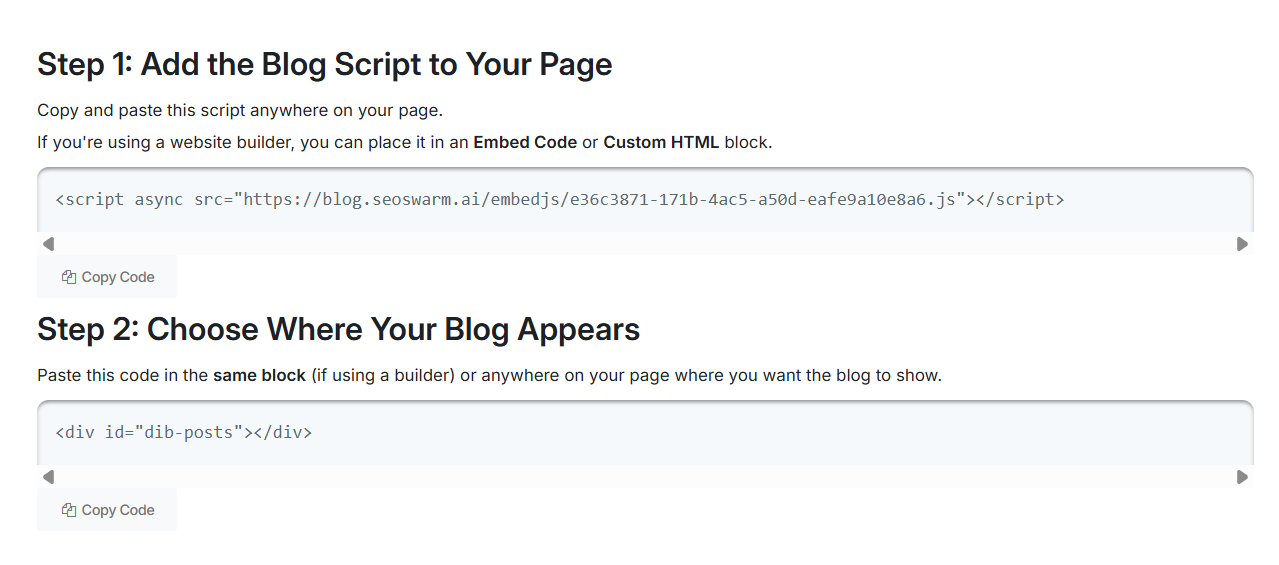
For agencies or brands, SEOSwarm means blog management is sorted—your pipeline stays consistent, while your team can focus elsewhere.

AI-Powered
SEO Content Strategy
See the AI platform that's replacing entire content teams
(with better results).

Selecting the right tool/service for your workflow
So—how do you choose? It depends on your workflow and ambitions. DIY tools are best for solo creators chasing low cost and creative control. Managed solutions like SEOSwarm shine when you need consistent output with minimal effort.
| Profile | Best Fit Solutions | Key Benefit |
|---|---|---|
| Solo creator | HubSpot, AnswerThePublic, StoryChief | Low cost, creative control, rapid ideas |
| Small team | StoryChief, SEMrush, Ahrefs | Collaboration and advanced research |
| Agency/brand | SEOSwarm | All-in-one, hands-off content management |
Choose the right approach, and you’ll always have blog ideas—no matter your experience or team size.
My Final Thoughts on Blog Ideas
Creativity isn’t a lightning bolt—it’s a habit built on structure and smart prompts. The difference between staring at a blank page and publishing consistently often comes down to having a reliable bank of actionable blog ideas. I’ve seen that even the most seasoned writers hit walls, but the right frameworks and tools make all the difference.
Here’s my advice: Don’t wait for inspiration to strike. Build your own idea pipeline using a mix of brainstorming frameworks, audience feedback, and tech-powered tools. When you hit a block, match your solution to the real cause—whether that’s perfectionism, burnout, or just a lack of direction. Keep your list of prompts close, and revisit it often.
Blogging success isn’t about never running out of ideas—it’s about knowing how to spark the next one, every single time. The best creators aren’t luckier; they’re simply better prepared.
- Wil