

AI-generated SEO content promises speed and scale, but it’s not without its trade-offs. Many teams feel the pressure to publish more, faster, and for less—yet worry about quality, compliance, and brand reputation slipping through the cracks.
In my experience, the real challenge is balancing efficiency with originality and trust. I’ve seen businesses gain a competitive edge with AI, only to stumble when generic or error-prone content undermines their authority or search rankings.
This article breaks down the main benefits—like rapid content production, cost savings, and consistent optimisation—alongside the most pressing drawbacks, from originality risks to legal headaches and compliance pitfalls. You’ll get a side-by-side look at DIY tools versus agency-managed platforms, plus practical criteria for choosing the right approach for your needs.
By the end, you’ll know exactly where AI-generated SEO content shines, where it falls short, and how to avoid the common mistakes that can cost you rankings and trust.
What is AI Generated SEO Content?
Definition and Scope
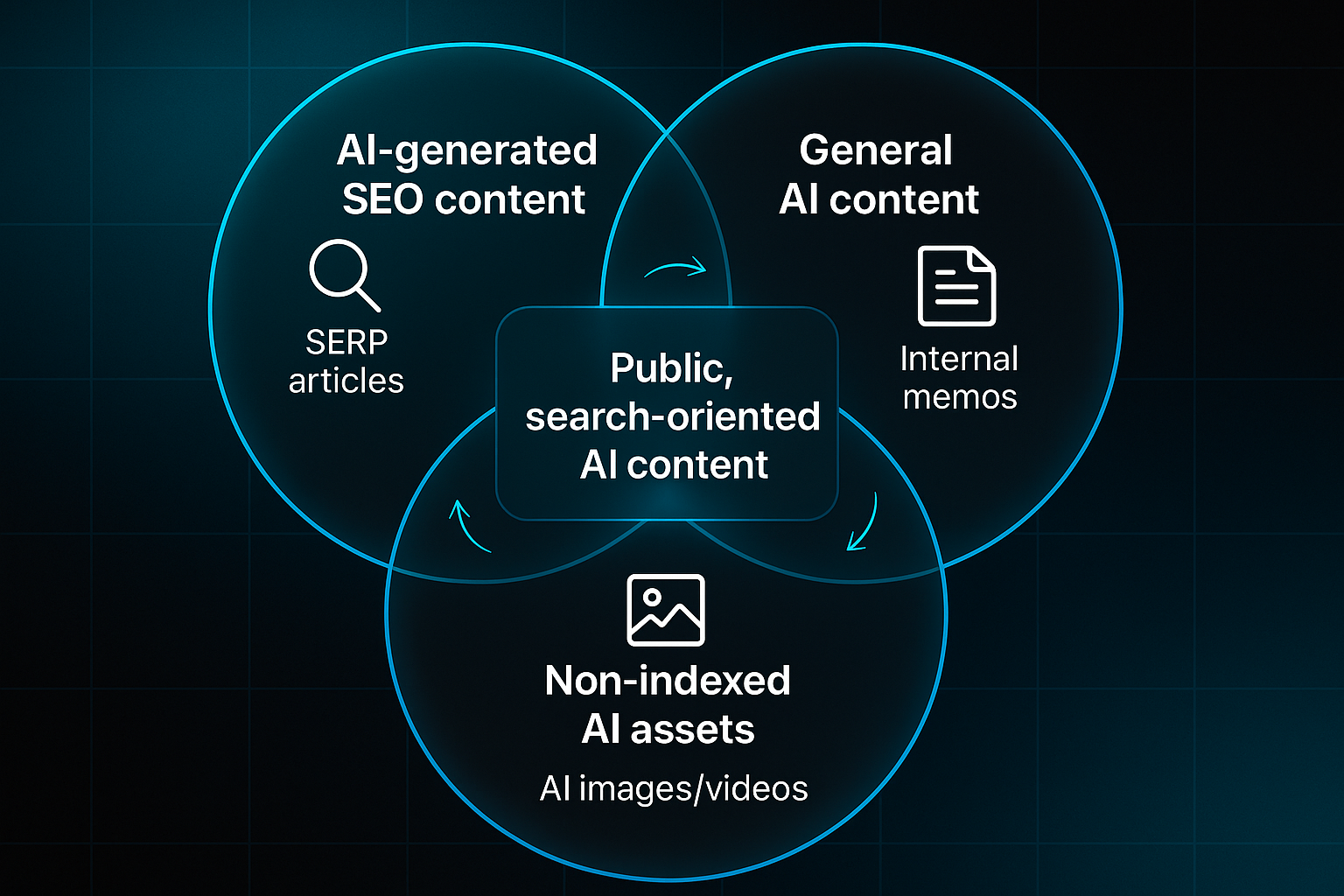
AI-generated SEO content is digital material crafted or enhanced by artificial intelligence, all with the aim of improving a website’s search ranking and visibility. Unlike general AI content—think internal memos or creative stories—this is built for public eyes and search engine indexing.
Let’s break down what this usually looks like.
- Blog articles
Informational posts optimised around target keywords to build topical authority. - Landing pages
Designed for commercial, transactional, or lead-generating search phrases. - Product descriptions
E-commerce content embedded with search-ready, relevant phrases. - FAQs/Knowledge bases
Long-tail answers that help expand your site’s reach and authority. - Meta elements
Page titles, meta descriptions, alt text, and markup that boost search clarity. - Localized content
Pages targeting new markets through region or language specificity. - Ongoing updates
Refreshes and maintenance to keep existing content SEO-relevant.
Internal documents, private pages, or AI-generated images and videos without indexing intent—those fall outside this scope. Here, the focus is on public, search-oriented assets.
Main Approaches: DIY Tools vs Agency/Hybrid Platforms
So, how do teams actually create this kind of content? There are two main models.
DIY Tools Model
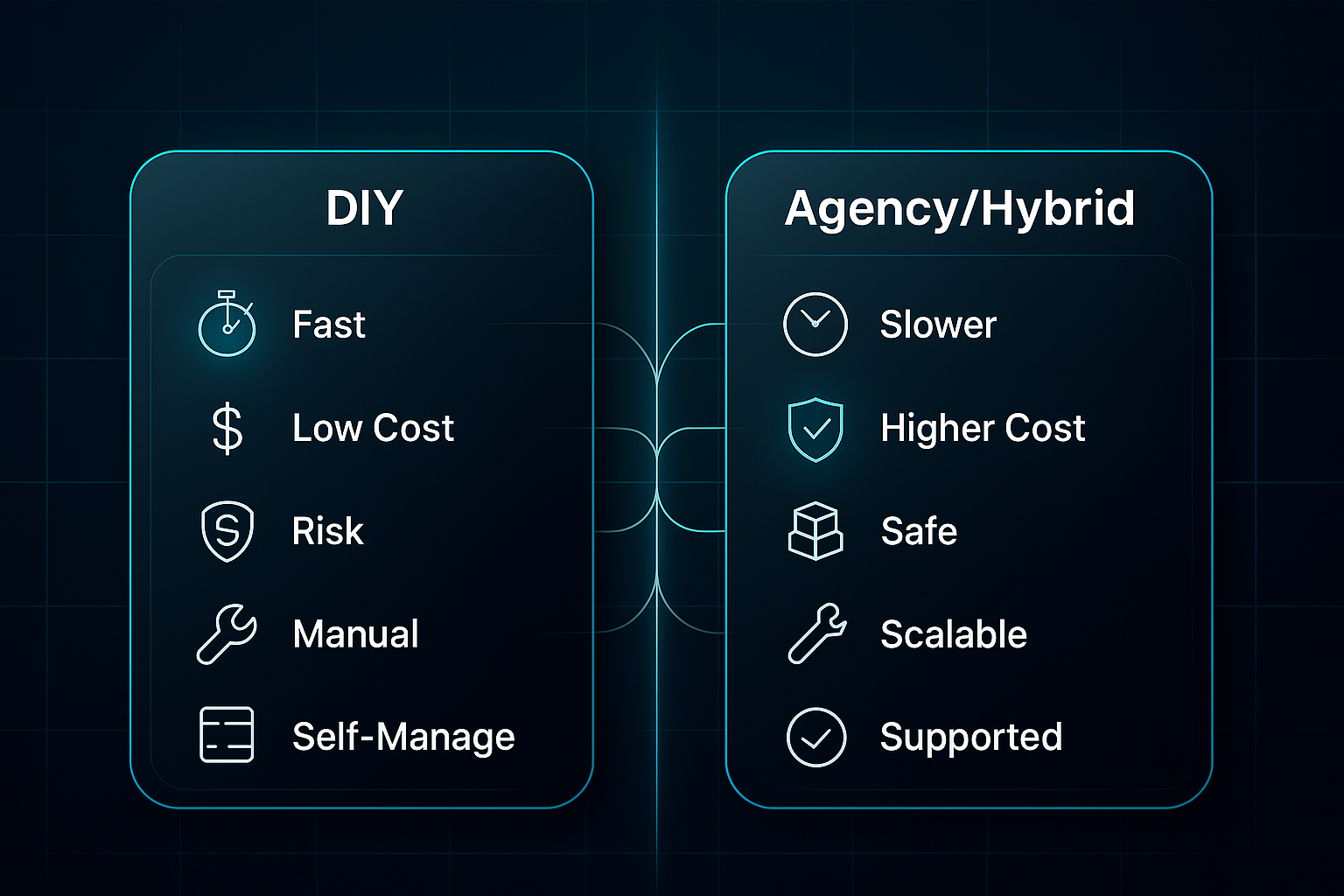
This approach puts individuals or in-house teams in control. Tools like Jasper or Writesonic help with drafting, keyword discovery, and optimisation. You get speed, affordability, and direct oversight. But, as you’d expect, content quality and compliance become your responsibility alone.
Agency/Hybrid Platforms Model
Here, agencies combine AI automation with human review. Platforms such as SEOSwarm handle everything—from initial strategy and AI prompts to final editorial checks and publishing.
It’s the go-to for businesses prioritising regulatory compliance and consistency, though it usually costs more and involves structured onboarding.
DIY tools appeal to SMEs or skilled in-house teams, while larger firms or regulated sectors lean towards managed services.
Why AI-Generated SEO Content is Relevant Now
Demand for high-performing SEO content is soaring as search competition, user intent, and compliance standards increase. Google’s advances—like the Search Generative Experience and E-E-A-T—have made authentic, updated content vital.
That’s why scalable AI solutions, whether self-serve or managed, are now at the core of modern SEO strategy.
How should you evaluate AI-generated SEO content solutions?
Key Evaluation Criteria
Looking for the right AI SEO content platform? With Google’s EEAT standards getting stricter, it’s more important than ever to choose wisely.
Quality and originality of outputs
Quality really is the game-changer. The solution needs to create original, accurate content that genuinely engages. If it’s bland or rehashed, expect your rankings and reputation to take a hit.
Creating SEO content with AI - A WARNING (& Best Practices)
The biggest risk of using AI for content creation is the potential for producing unoriginal or factually incorrect information. This can not only harm your SEO efforts but also damage your brand’s credibility and trustworthiness.
Most platforms include plagiarism checks, but a human double-check is indispensable for sensitive sectors like health or finance.
On-page SEO and technical optimisation
Top solutions sort out headlines, meta elements, and structure for you. DIY puts the technical work in your hands, which means you need to know your stuff to avoid slip-ups.
Hybrid or agency models automate much of this, reducing your manual workload.
Compliance with Google guidelines and EEAT
Stray from Google’s rules—especially if you’re tackling YMYL (Your Money or Your Life) subjects—and you could find your SEO derailed. The strongest platforms include clear author attribution, reputable sources, and routine audits.
Scalability and speed
Need to scale up content creation? Prioritise tools with batch publishing and language options. DIY is quick but means juggling more.
How I Use AI to Create Content That Generates Millions of Clicks (FULL Workflow)
Agency or hybrid solutions streamline bigger projects, saving time and stress.
Ongoing content maintenance and support
You can’t just publish and forget. Good platforms monitor analytics, prompt necessary updates, and sometimes automate content refresh. DIY means catching everything yourself, while managed solutions like SEOSwarm handle ongoing optimisation for you.
Resource requirements (internal vs. agency-managed)
If you’re DIY, you’ll rely on in-house SEO and writers. Agency or hybrid platforms lighten the load when resources are stretched.
Lifecycle costs and onboarding friction
Agency setups take longer to start but save on headaches and hidden costs later. DIY is fast to launch but can drain resources as you scale.

Source: jasper.ai
Which trade-off works for you—speed now, or value over the long haul?
What are the benefits of using AI for SEO content production?
Speed: Content at Lightning Pace
Producing SEO content the traditional way can be painfully slow. Brainstorming, drafting, reviewing with your team—weeks can go by before anything goes live.
But with AI-powered platforms, what once took days now takes minutes.
You simply type in a target keyword and a bit of guidance, and you’ll get a draft that’s ready for a human polish—often before you’ve finished your tea. That fast turnaround lets marketing teams launch far more rapidly.
If news breaks or an algorithm update hits, you’re not scrambling for resources. Fast can finally become your standard mode, not a mad rush.
Scale: Reaching More Without More People
Speed is great, but the real superpower is scalability. AI platforms help you publish dozens or hundreds of content pieces—sometimes all at once.
A single SEO specialist can oversee massive campaigns, targeting many different search intents, topics, or regions.
Need twenty localised landing pages, or want to support four languages? It’s doable—without months of hiring or briefing freelancers. AI takes care of the groundwork, and human editors can focus on nuance and detail.
Instead of picking a handful of priorities, you can now go broad and ambitious.
Cost Efficiency: Do More for Less
When budgets are stretched, AI-generated SEO content feels like a secret weapon.
Compared to hiring writers, or relying on agencies, even the best AI platforms cost a fraction in the long run.
This means smaller teams can out-publish their bigger rivals. If you’re a large business, it’s easy to shift more spend into creative or promotional work while AI covers your basics.
The result? ROI jumps and barriers to entry fall, letting anyone compete with the big names.
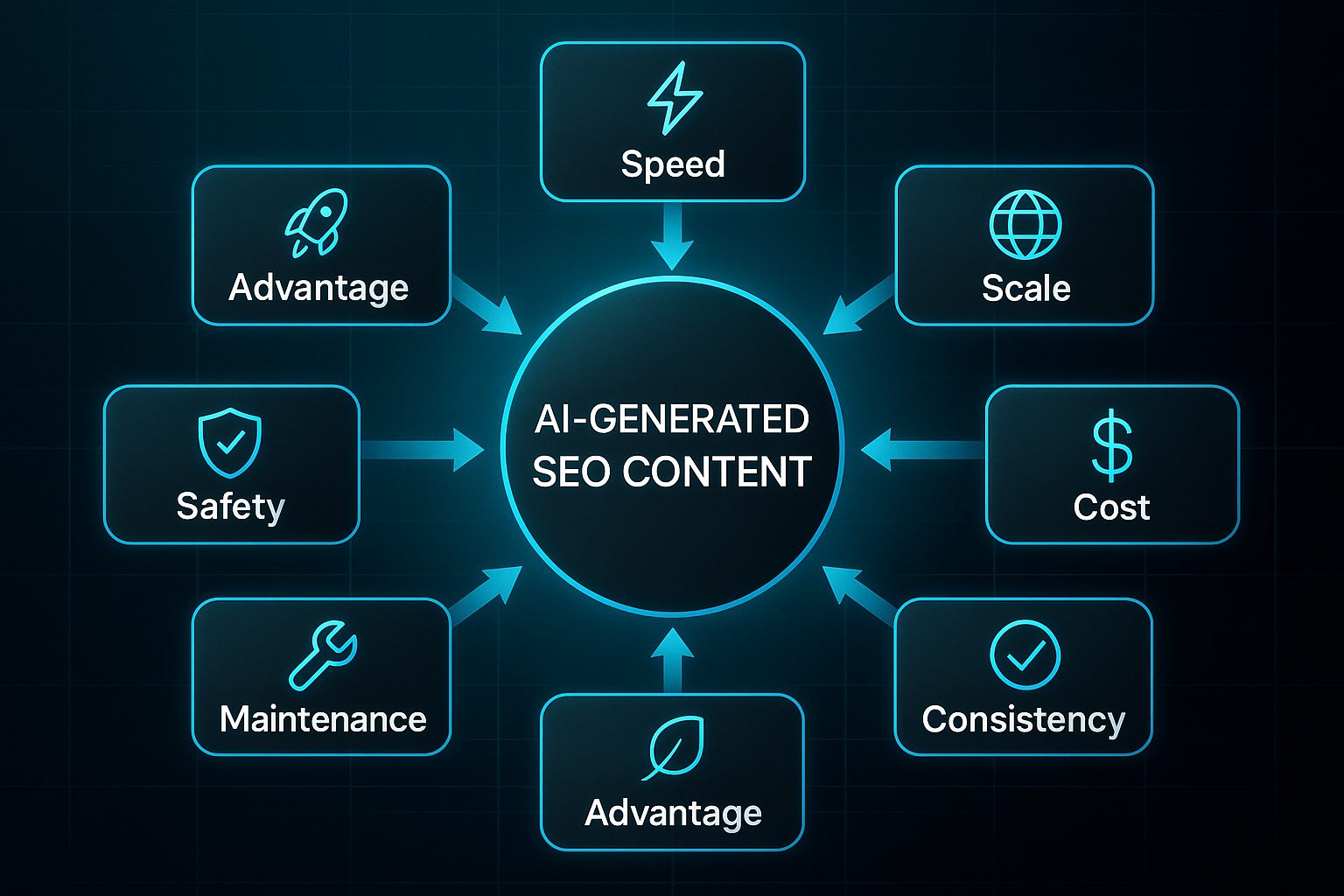
Consistency and Optimisation: Quality at Scale
AI platforms have a knack for reliability. They’ll stick to your brand guidelines, deliver the right headlines and metadata, and never forget a structured heading or leave a call-to-action out.
Humans can lose steam or slip up over time, but AI is endlessly patient and tuned for optimisation.
The best platforms offer live SEO guidance as you work—flagging missing keywords or suggesting internal links, so you’re never publishing content that misses the mark.
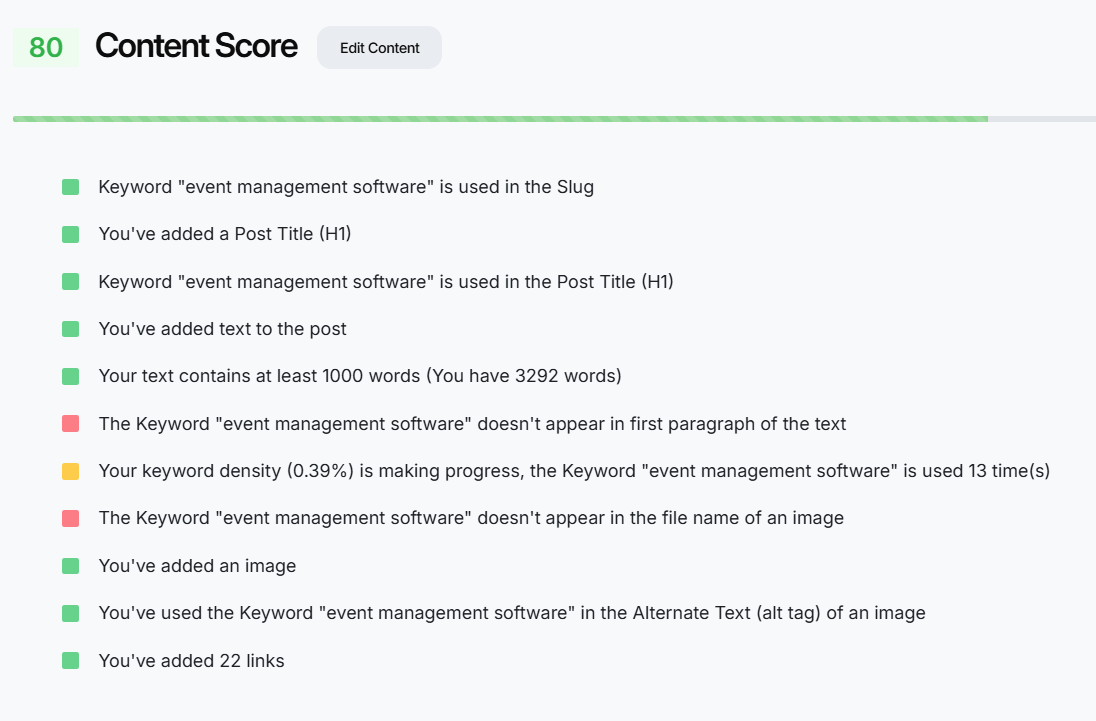
Mistakes and typos? Much less likely.
Maintenance and Refreshes: Content That Stays Fresh
People often assume AI’s main benefit is speed. But the cool part is ongoing maintenance.
If product specs change or Google’s rules shift, AI can flag or draft the required updates.
Instead of panic-editing old pages, you get notified—and sometimes even handed a draft—that keeps your materials fresh and compliant.
Routine content refreshes become built in. This is a lifesaver for sectors needing proof of currency and compliance.
Agency/Hybrid Platforms: Strategic and Safe
Looking for that extra layer of confidence? Agency or hybrid models—where humans and AI partner up—let you brief your requirements, approve messaging, and offload all the hands-on production.
Human editors specialise in compliance, nuance, or depth on tricky topics, while AI brings the scale and speed.
For brands in regulated space (finance, health, legal), that blend gives you confidence—without sacrificing rapid execution.
Plus, agency platforms often track performance, automate workflows, and ensure you’re never left checking a live page by hand.
Emerging and Competitive Advantages
There’s more to AI content than just what’s on your blog.
AI platforms can identify new keyword gaps and surface hidden opportunities before your competitors spot them—almost like having an insider’s perspective on the SERPs.
And with A/B testing automation, you quickly learn which headlines, calls-to-action or layouts actually drive results.
Each campaign you run feeds more data into the loop, so your performance only improves.
Side-by-Side Comparison: Main AI SEO Content Benefits
| Benefit | DIY AI Tools | Agency/Hybrid Platforms |
|---|---|---|
| Speed | High | High |
| Scale | Medium-High | Very High |
| Cost Savings | High | Medium |
| Consistency | Medium | High |
| Ongoing Maintenance | Low-Medium | High |
| Human Review | Low | High |
| Compliance | Low | Very High |
So, which model fits you best? For some, the DIY route offers enough muscle; for others, hybrid platforms bring peace of mind and results without the drama.
The bottom line is simple: AI-driven SEO content means faster campaigns, smarter spend, and less manual slog. The competitive edge? That’s built right in.

AI-Powered
SEO Content Strategy
See the AI platform that's replacing entire content teams
(with better results).

Key drawbacks and risks of AI generated SEO content
Quality and Originality Limitations
Let’s face it—so much AI-generated SEO content, especially that churned out through DIY or automated systems, ends up pretty generic or just plain repetitive.
The knock-on effect? You sacrifice real SEO value and lose that all-important differentiation from your competition. Without human creativity, you miss out on brand personality and genuine storytelling, which are crucial for audience connection and domain authority.
There’s plenty of evidence to back this up. Think back to Google’s March 2024 core update targeting low-value AI content. The site Bonsai Mary is a prime example—after mass-publishing hundreds of AI-written articles, it saw a 95% organic traffic drop almost overnight due to deindexing.
They weren’t alone. Stryng.io’s study confirmed that sites over-reliant on AI, with hardly any human review, lost 60%–90% of their indexed pages and suffered steep revenue hits. Even established brands like CNET and Bankrate weren’t immune: CNET’s Q1 2024 traffic dropped by 22%, while Bankrate faced a 31% surge in negative mentions online after relying on AI-generated articles. Reputational harm from bland content can ripple far beyond lost rankings, eroding trust across all digital touchpoints.
There are legal headaches, too. In January 2025, the U.S. Copyright Office clarified that purely AI-generated content cannot be copyrighted. That means, unless meaningful human input is added, your content may not be protected—and anyone could reuse it. Since 2023, DMCA takedowns and copyright disputes related to AI-written SEO content have climbed sharply, hitting businesses financially and, sometimes, publicly embarrassing them.
Globally, things aren’t much clearer. For example, a Beijing court in late 2023 granted copyright to AI images only with proof of significant human input, causing confusion for international content teams.
What about duplicate content? When several companies lean on similar AI tools and prompts, nearly identical articles can crop up everywhere. The result is keyword cannibalisation, wasted crawl budgets, and diluted site authority. In Google’s March 2024 Helpful Content Update, 38% of sites flagged for thin, duplicate AI content lost at least 30% of their top rankings within two weeks. This damages not just SEO performance, but also undermines internal linking and PageRank flow, putting site structure at risk.
And let’s talk about engagement. Users just don’t stick around for generic content. In 2024, ContentKing found that AI-generated landing pages had a bounce rate of 72%—a huge leap over the 49% rate for comparable human-verified pages. BuzzFeed’s Q1 2024 trial of AI travel guides saw a 19% bounce-rate hike and a 27% drop in session time, leading to that experiment’s quick cancellation. Red Ventures’ switch to AI product reviews triggered a 15% fall in newsletter opens and a 12% dip in affiliate conversions, before they reversed course.
AI-generated content also struggles to meet Google’s E-E-A-T standards—Experience, Expertise, Authoritativeness, Trustworthiness. It seldom provides unique insights or clear author signals. One 2024 Ahrefs study showed AI-driven pages missing credible authors lost an average 41% of organic visibility after a major Google update. These losses don’t happen in a vacuum: they lower referral traffic, disrupt “pillar” rankings, and can set your recovery back months.
A foundational principle for content that performs well in search is that it should be 'written by humans for humans,' highlighting the critical role of human experience and oversight in the age of AI.
There’s a subtle, but powerful, risk too. Brands relying too heavily on generic AI output see distinctiveness and trust fade. Return visitor rates tumble—often by 20–35% compared to sites with strong editorial review—and broader brand engagement starts sliding as well.
So, what’s the practical takeaway here? Even perfectly optimised, AI-produced pages can miss the mark if you’re not layering in skilled human review and creative adaptation. The “set and forget” mentality just doesn’t cut it for long-term success.
Left unchecked, you’re risking traffic collapse, legal exposure, and a slow erosion of your reputation. Teams that blend the best of AI speed with thoughtful human oversight are far more likely to safeguard rankings—and build trust that lasts. For anyone serious about SEO or protecting a brand, human input isn’t just nice to have—it’s non-negotiable.
DIY AI tools vs agency/hybrid AI SEO platforms: Which is right for you?
How DIY AI Tools Work
Let’s break it down—DIY AI SEO tools like Jasper, Writesonic, ChatGPT, and Koala AI make content creation quick and accessible.
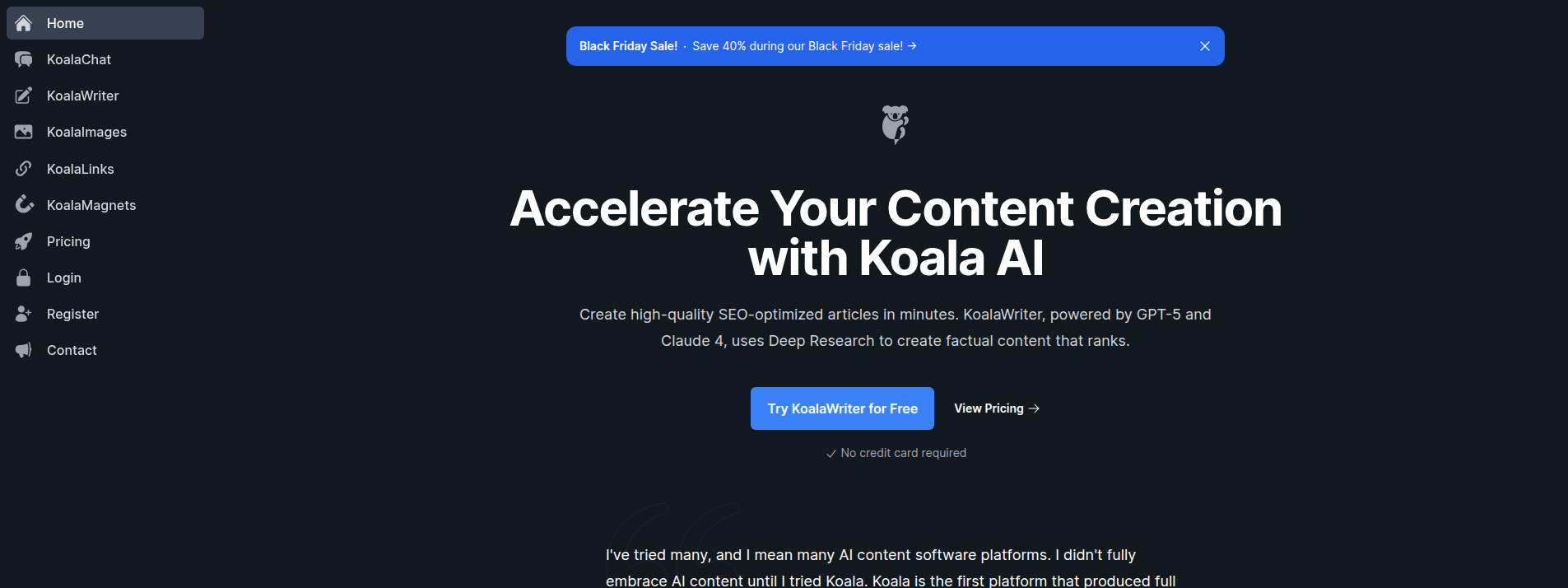
Source: koala.sh
Open a dashboard, set your keywords and tone, fill out a template, and you’ve got a draft in minutes.
Perfect for blog fillers, FAQs, product descriptions, and meta tags, these tools let you move at speed.
There’s instant setup, low cost, and complete control—everything’s in your hands.
Most offer CMS integrations and straightforward analytics so you can publish new content with ease.
But here’s the trade-off.
DIY tools often turn out generic or repetitive text.
It falls on you to keep things fresh, check for originality, and ensure your work is on-brand and up to scratch for technical SEO and regulations.
You’re not just writing—you’re the final editor, compliance officer, and gatekeeper.
DIY is best for startups, small businesses, or any team with proper in-house SEO skills.
It’s the go-to when your needs are high-volume but low-risk—essentially, for less sensitive content where speed matters most.
How Agency/Hybrid AI Platforms Operate
Agency and hybrid AI platforms go a step further.
They start with collaborative planning, keyword research, and establishing your goals before drafting anything.
AI gets the first round done, then human experts step in—refining for brand, compliance, and the technical intricacies that Google and regulators require.
Agencies handle technical optimisation, publishing, and ongoing updates so you don’t need to worry about the details.
Quality controls, regular audits, and analytics come as standard.
Services like SEOSwarm run the full process—from keyword research, AI writing, and human review, to formatting, analytics, and direct publishing.
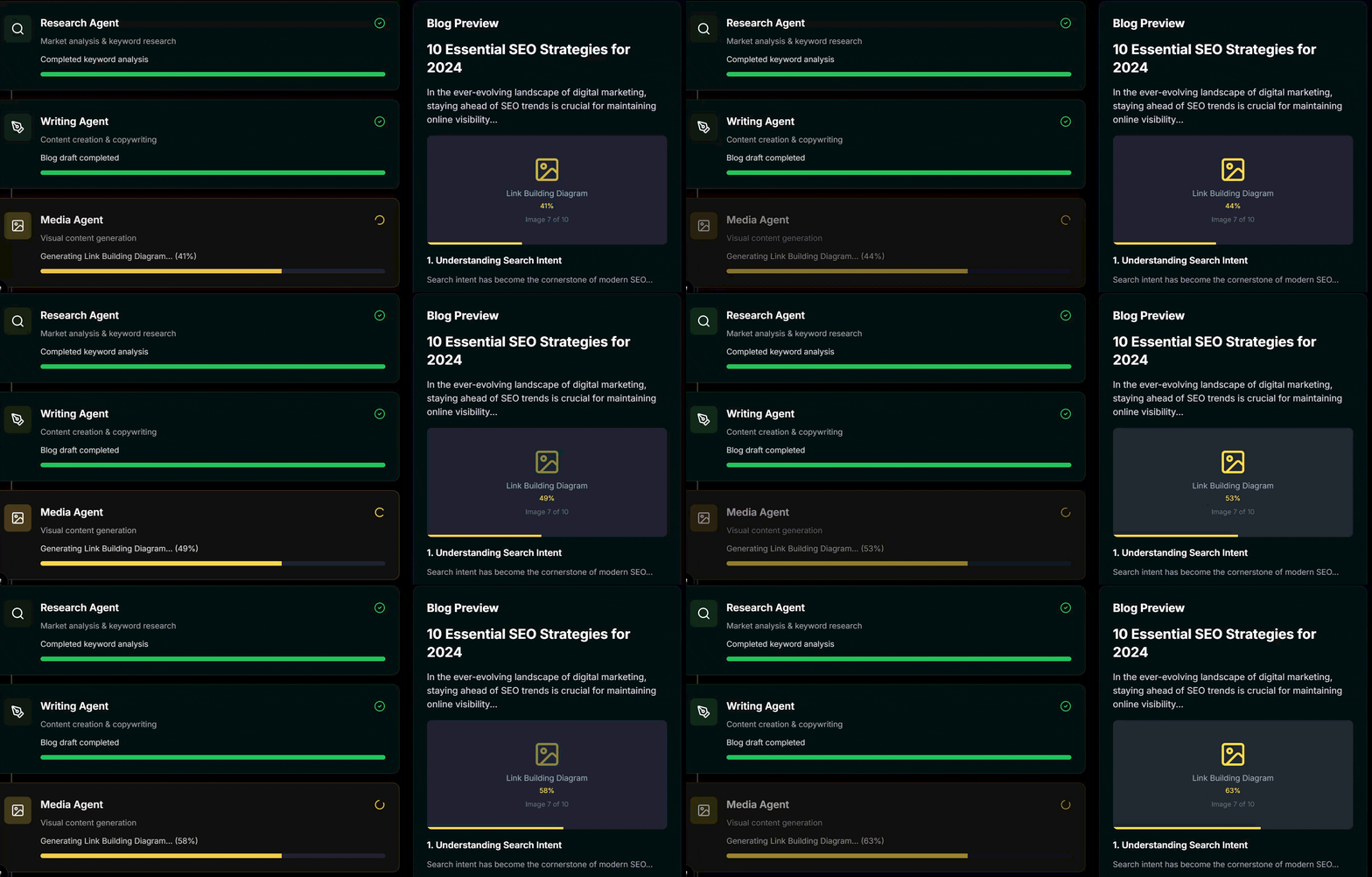
Once your initial strategy is set, the agency takes over, giving you more time and less hassle.
Comparative Analysis: When to Use Each Model
So, when should you pick one over the other?
DIY shines in low-risk situations where your in-house team can guarantee quality—say, for evergreen FAQs or simple product listings.
If compliance, technical depth, or high volume is paramount—think finance, health, or multi-platform publishing—agency or hybrid solutions are the safer bet.
DIY might feel cheaper at first, but as your demands climb, so does the time you’ll need for editing, compliance, and maintenance.
Agencies need more up-front commitment, but they save you resources in the long run through automation and risk management.
For regulated or complex needs, long-term ROI and reduced stress usually favour agencies.
Decision Matrix: Selecting the Best Model for Your Needs
Let’s make this practical.
| Criteria | DIY AI Tools | Agency/Hybrid Platforms |
|---|---|---|
| Compliance | User responsibility | Built-in editorial and regulatory checks |
| Scale | Moderate, manual | High, fully managed |
| Brand Voice | User-maintained | Human-edited for accuracy |
| Integration | Basic (CMS, edits) | Advanced (publishing, analytics, APIs) |
| Maintenance | Manual | Ongoing, agency-managed |
| Cost | Low start, high resource | Higher start, low long-term workload |
When choosing, ask yourself:
- Is regulatory or Google compliance essential for your business?
- Do you need content in different regions or languages?
- Do you already have skilled editors or SEO staff?
- How vital is ongoing freshness and technical soundness?
- Would you rather control the details or focus elsewhere?
Match your answers to your resources, risk, and business goals.
The right model means fewer headaches, better compliance, and content that keeps pace with your ambitions.
Blog-in-one-minute
Add a fully SEO-optimised blog to your website with just 2 lines of code.
Learn more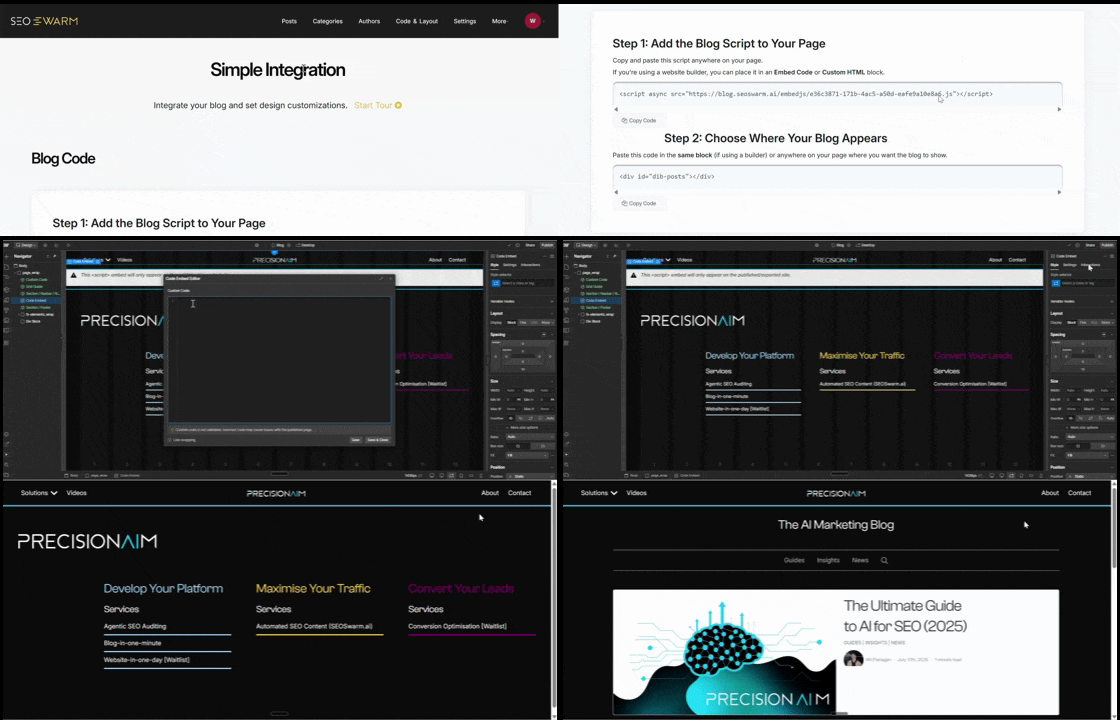
Future Directions: What’s Next for AI SEO Content and Choosing the Right Path
The Shift Towards Agency and Hybrid Models
It’s clear the world of AI SEO content isn’t standing still. We’re watching a real shift unfold—away from pure DIY tools towards agency and hybrid models that blend automation with skilled human oversight.
That’s not just anecdotal. There’s real momentum here: 69% of mid-sized and enterprise brands now favour managed or hybrid platforms for crucial SEO campaigns. What’s behind this? Teams are realising that as content ambitions grow, so do worries about compliance, volume, and the need for stronger brand trust.
DIY tools helped break down barriers at first. But now, quality and regulatory peace of mind have become as important as speed.
Pain Points Pushing the Change
So why are companies changing up their approach? Remember those headaches we talked about earlier—bounce rates spiking, thin content flagged, or automation missing the mark?
After Google’s 2024 updates, sites packed with generic AI content lost ground fast. One e-commerce brand, for example, leaned too hard on instant-publish tools and saw a 24% hike in bounce rates, ghosting organic sales almost overnight. Their product pages blurred together—proof that unchecked automation can sting later on.
Thin, repetitive content doesn’t just affect rankings; it erodes brand credibility and makes compliance a minefield.
Spotting the Best Tools for the Future
But not every new solution is created equal. If you’re mapping out where to go next, there are a few things you absolutely need.
You want built-in automation—so batch content, metadata management, and intelligent keyword tools are standard, not bolt-ons. Equally crucial? Visible human review, editorial scoring, and compliance checks that you can actually see and control.
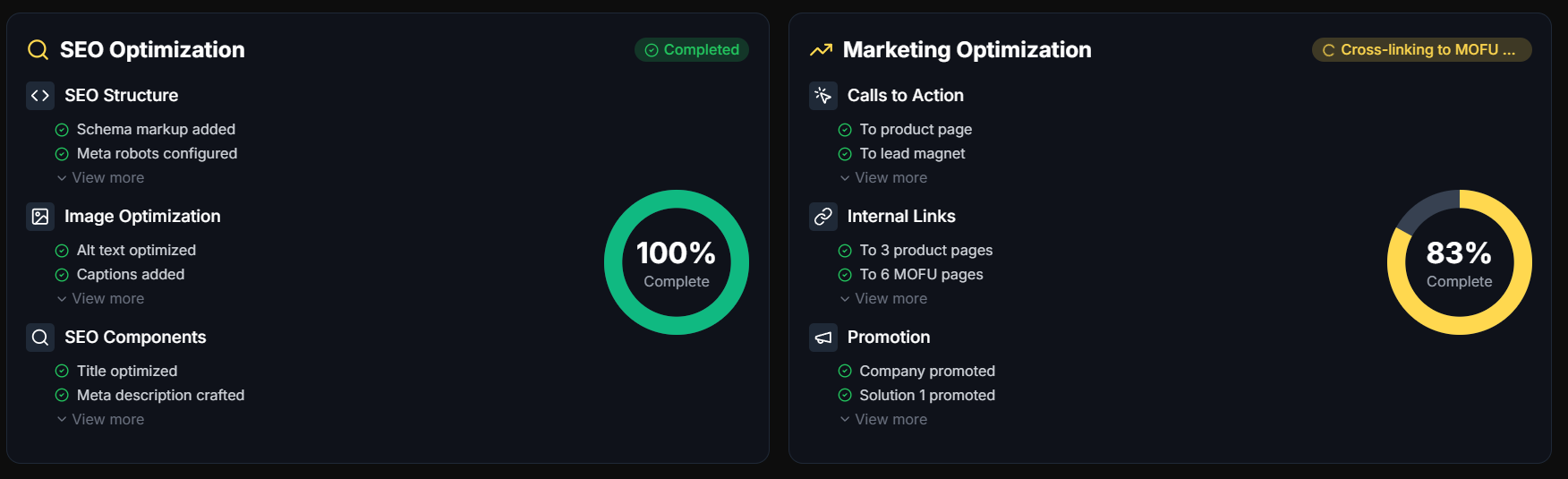
Think of it as your “content supply chain”—from keyword idea to ongoing performance. You need every step monitored for both speed and substance.
Accessibility and Instant Publishing: Opportunity or Trap?
Lots of platforms now promise instant publishing. Sounds effortless, but there’s a snag. Just because you can go live in seconds, doesn’t mean you always should.
Take the e-commerce story: fast launches backfired without review stages, leading to poor user experience and lost revenue. The lesson? Look for platforms that bake in those vital “pause and check” moments right before publishing.
So, What’s Next?
The direction for AI SEO content is set: the winners will master the blend of scale with human oversight. Small team or enterprise, it doesn’t matter—what counts is picking a system that’s fast, compliant, and builds trust as much as traffic.
The quick fix? That era’s already passing. The smart move now is all about balance: speed meets scrutiny, automation meets expertise.
My Take on AI-Generated SEO Content
Speed and scale are tempting, but I’ve seen too many brands stumble when they treat AI-generated SEO content as a shortcut instead of a strategy. The real edge comes from blending automation with human oversight—using AI for efficiency, but relying on people for creativity, compliance, and brand trust.
If you’re considering your next move, here’s my advice: map your needs against your resources. For low-risk, high-volume basics, DIY tools work. But if your reputation, compliance, or technical depth are on the line, agency or hybrid platforms are worth the investment. Don’t let the promise of instant publishing blind you to the risks of generic, unchecked output.
The future belongs to those who treat AI as a partner, not a replacement. In SEO, it’s not about how fast you can publish—it’s about how well your content stands out and endures.
- Wil