

Getting your brand noticed by AI-powered search engines is a whole new challenge. Traditional SEO tactics aren’t enough when Google AI Overviews, Bing Copilot, and ChatGPT are pulling answers straight from the web.
I’ve seen many brands struggle to appear in these AI-generated responses, even with well-optimised websites. The problem usually comes down to missing entity clarity, outdated schema, or content that just isn’t structured for machine extraction.
In this article, I’ll break down the ten most effective SEO strategies for boosting your visibility in AI-driven search. You’ll get actionable tactics for content structuring, schema automation, prompt monitoring, and using AI visibility tools to track your brand’s presence across platforms.
Expect practical examples, tool recommendations, and step-by-step workflows. By the end, you’ll know exactly how to adapt your SEO for the new era of AI-powered answers—and keep your brand in front of motivated users.
What are the best SEO strategies for AI visibility tools?
The evolution of SEO: From traditional SERP to AI-powered search
SEO has had a serious makeover. Instead of fighting for a place in a list of blue links, brands now have to think about appearing in AI-generated answers—the concise, conversational responses offered up by Google AI Overviews, Bing Copilot, ChatGPT, and others.
The game isn’t ruled by keywords or link-building any more. It’s about showing genuine expertise, having well-organised content, and matching what real people are searching for. AI platforms, though, have a unique obsession: entities. This means people, brands, products, and concepts all must be clearly defined for a brand to have any real shot at inclusion in these AI summaries.
Google and Bing don’t just point users to websites now. They’re extracting and displaying the information users need directly in answer boxes, pulling citations from a range of sources. Getting picked up means your content has to explain who you are and what you offer in unmistakable terms.
In the era of AI-powered search, a brand's digital presence must be managed holistically, integrating services like Search Engine Optimization and Reputation Management to establish the entity clarity and authority that new algorithms require.
Here’s a curveball—even the best-optimised content for Google might not cut it for Bing or ChatGPT. Your content needs to be consistent, full of entities, and clearly marked up so all of these platforms can recognise your brand.
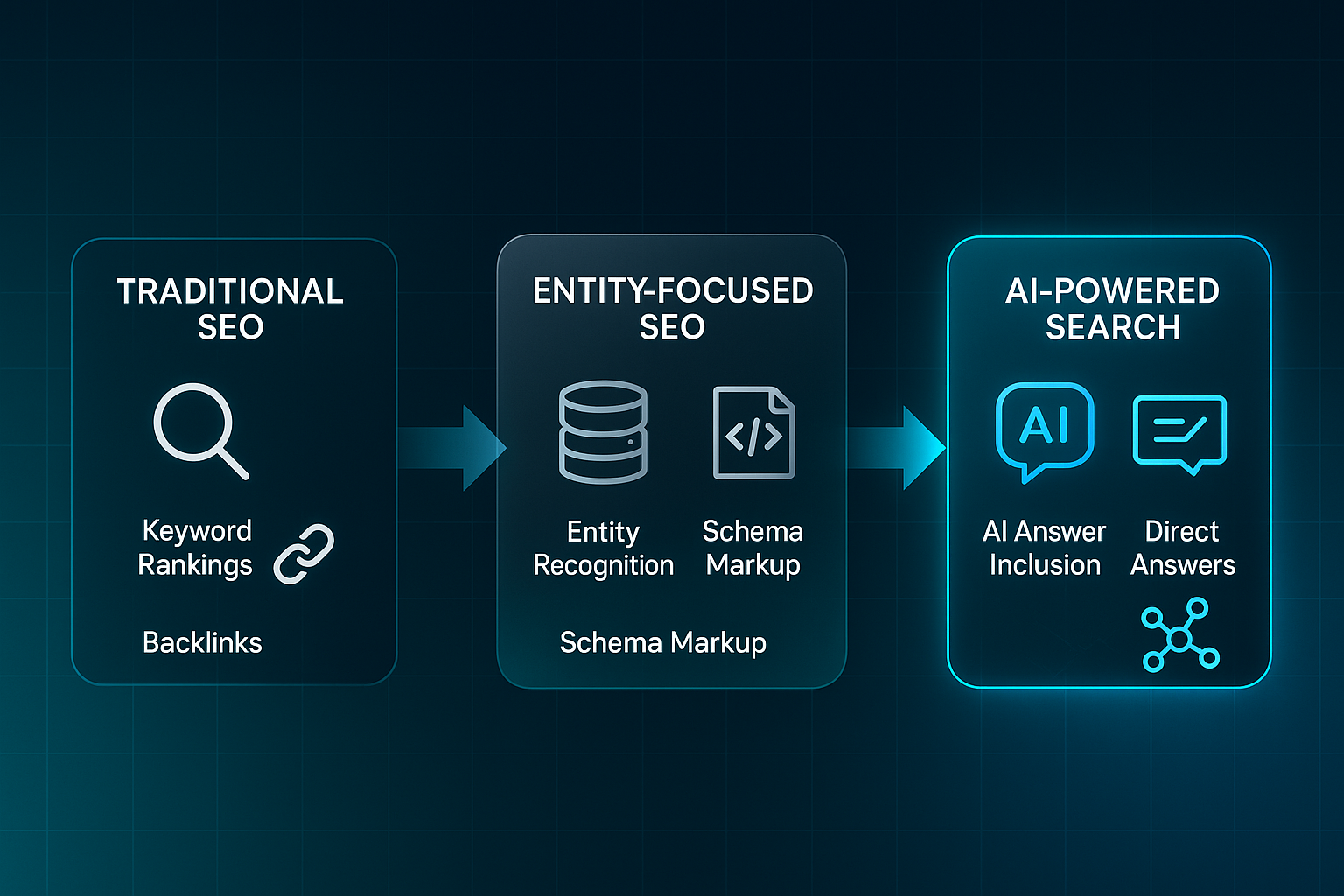
Key concepts: AI visibility tools and AI-optimised SEO
So, what do AI visibility tools actually do? In essence, they watch how your brand shows up in the world of AI-powered search.
- Monitoring AI citations
Check where and how often your brand appears in AI-generated responses. - Analysing share-of-voice
Compare your visibility to competitors in generative answers. - Tracking sentiment context
See whether those citations are positive, negative, or just neutral.
Unlike standard SEO tools, these are built for generative search—tracking your actual presence in answer boxes rather than web rankings.
How Does AI Visibility Optimization Differ From Traditional SEO
If you want to optimise for AI, focus on defining your entities well, adding robust schema markup like Product or FAQ tags, and writing to answer real, conversational questions. AI visibility tools give you quick feedback so you know what’s working and where you could improve.

How to Test Your Brand Visibility on Google, ChatGPT, Gemini & Claude (Using AI Search Experiments)
Value of AI-centric SEO strategies
Old-school methods like keyword stuffing or endless backlinks just won’t impress AI engines. What they want is entity-driven, clear, and authoritative content that gets genuine user questions answered.
Brands that get cited in AI answers earn more trust, bigger share-of-voice, and better visibility with motivated users. Tracking citation frequency, sentiment, and your competitors—using these new tools—is crucial as this search landscape keeps shifting.
Research demonstrates a 'brand trust transfer' effect in voice AI; consumer trust in the AI assistant itself positively influences both trust and engagement with the brands it recommends.
Keep evolving your entities, markup, and monitoring processes. That’s how you’ll stay visible as AI search continues to reshape SEO.
What makes a strategy effective for AI visibility tools?
Core strategy criteria for AI-centric SEO
Let’s be clear: the old SEO approach just doesn’t cut it in today’s landscape. AI-powered search engines like Google AI Overviews, Bing Copilot, and ChatGPT are all about recognising entities and understanding structured information—not counting keywords or links. If you want to be featured in those quick, AI-generated answers, your focus needs to be on robust entity definitions, solid markup, and ongoing monitoring.
So what’s the actual value of AI visibility tools in effective strategies? Imagine them as your dashboard for spotting where your brand is lighting up—or missing out—across AI results.
- Prompt-level and citation monitoring
Spot when and why your brand shows up in AI answers, giving you a heads-up on what’s working or where you’re missing out. - Real-time dashboards and analytics
Access instant data on conversational mentions so you can respond quickly to shifts in search or citation trends. - AI-first content design
Create question-based headings and sharp FAQ sections that make it easy for generative AI to find and cite your facts. - Robust schema markup & entity clarity
Add structured data like FAQPage or Product, guiding AI to exactly what your brand knows best. - Automated monitoring & optimisation workflows
Automate checks and schema updates to keep your AI SEO approach current and scalable. - Addressing AI “blind spots”
Uncover missing citations, activate alerts for sudden visibility drops, and link these changes to broader marketing results.
With the rapid rollout of AI-powered search—especially when you see Google AI Overviews launching for all US users in May 2024—manual approaches become pointless. The winning formula is continuous monitoring, answer-friendly content, and structured data, all driven by automation. Stick with these core principles, and your brand won’t just keep up—it’ll lead as generative AI rewrites the rules.
1. Optimise content for AI overviews and direct answers
Structuring content to be cited in generative AI results
When you want your content to grab the spotlight in generative AI results—think Google AI Overviews or Bing Copilot—you need to make it easy for the machine to extract answers. That means presentation and structure matter hugely.
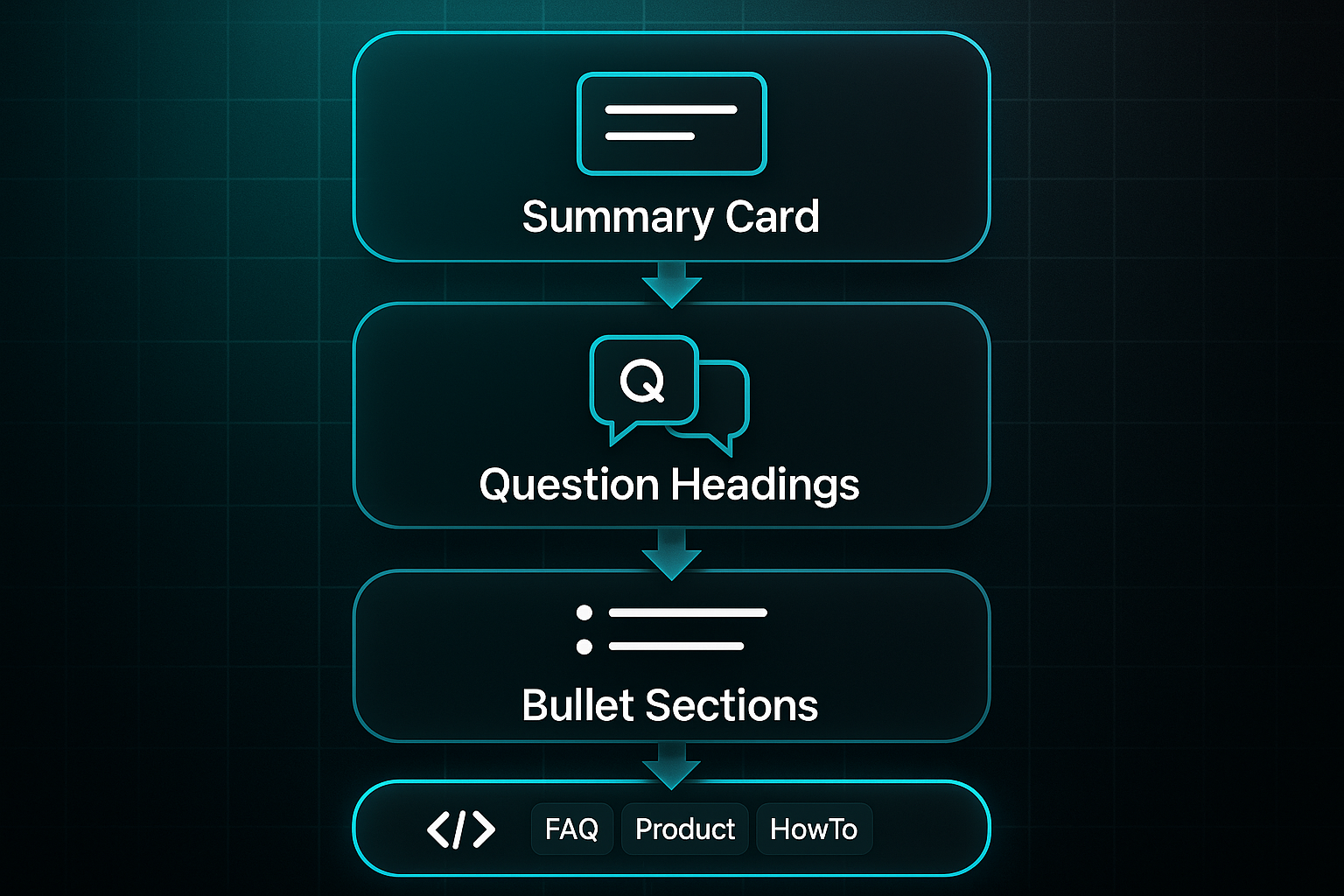
Here’s where a summary-first approach really stands out. Healthline switched up their format by placing prominent summary blocks right at the start of articles, boosting their featured snippet visibility by 38%. Add bullet lists and structured Q&A sections, and suddenly your pages become prime candidates for citation.
What makes a difference? Question-based headings for everything from H2s to H3s. Structuring your content like a conversation—posing and answering questions—makes it more appealing to both readers and AI. In fact, a SEMrush study analysing over 20,000 queries found that this approach leads to a 15% increase in passage extraction rates compared to unstructured content.
Even a simple ‘summary card’—just two or three sentences at the top answering the main query—can have a major impact. For AI models, it’s like a neon sign saying, “Here’s the answer,” making them more likely to cite your content directly. It’s effective for human readers, too, who want a quick payoff.
And let’s not skip the importance of schema markup. FAQPage schema works brilliantly for pages addressing several user questions, while HowTo schema fits stepwise guides. Product schema comes in for e-commerce, helping clarify specifications and reviews for both users and AI. These can be added via JSON-LD or microdata supported by Schema.org.

How To Add And Create FAQ Page Schema Markup For Your Articles
The impact is clear: NerdWallet adopted FAQPage and HowTo schema for 80% of their money advice pages, which led to a 22% rise in visibility in Google’s AI Overviews in early 2024. With tightly focused, clearly defined blocks, your content becomes a series of extractable units that AI loves to reference.
For AI-driven search, it’s all about structure, clarity, and building content that answers questions directly—in both format and substance.
2. Deploy robust schema and entity linking sitewide
Schema types and entity properties critical to AI search
If you want your site to be visible in AI-powered search, comprehensive schema markup is non-negotiable. The most influential types? Article, FAQPage, Product, LocalBusiness, Review, NewsArticle, and BlogPosting top the list.

What is Structured Data and How It Impacts SEO and AI Search | AI SEO Series
You’ll unlock the real benefits by nailing their key properties. For Article and BlogPosting, always define headline, author, datePublished, and publisher. With Product, make sure you include price, availability, and reviewRating. Running FAQPages? Cover both question and acceptedAnswer.
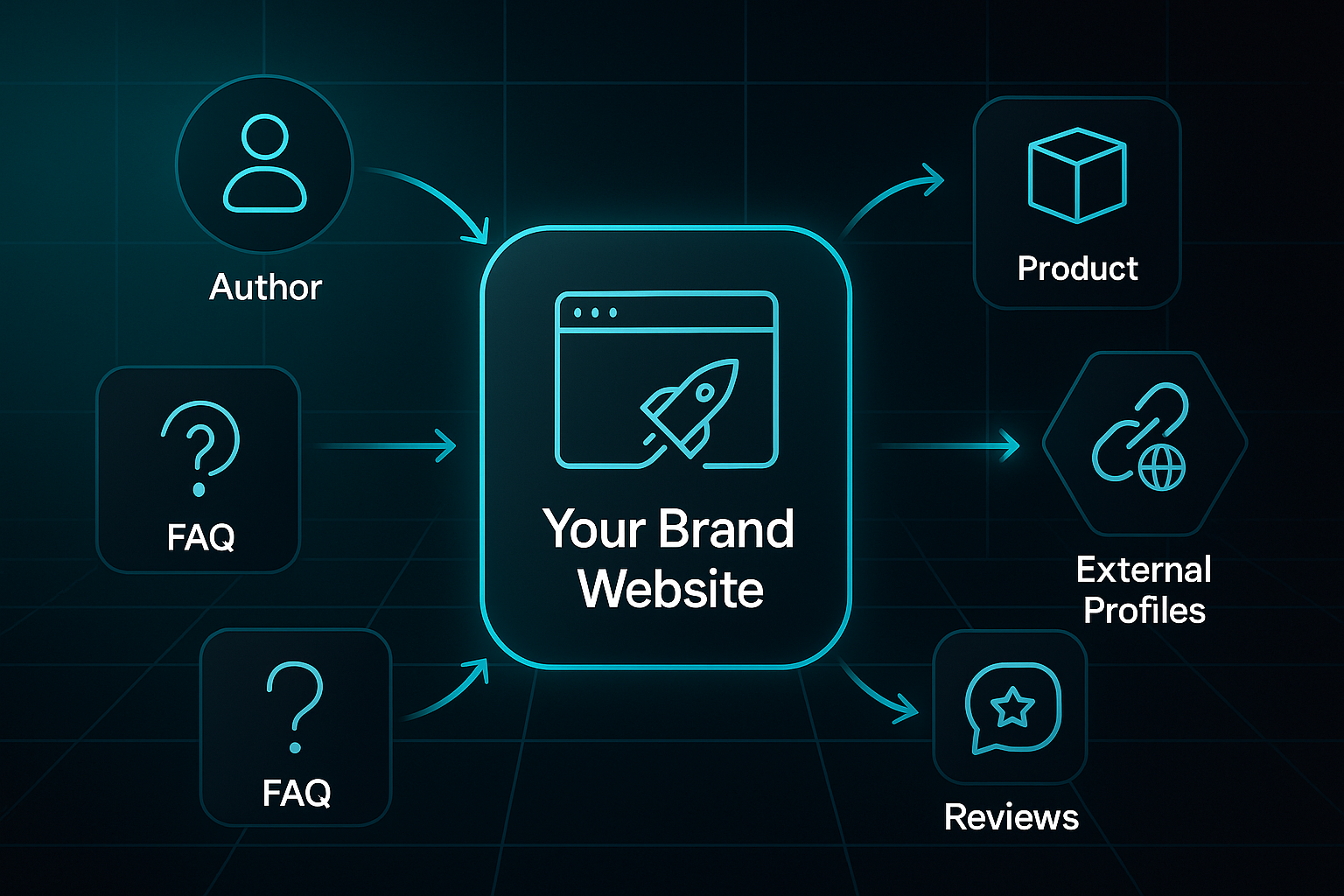
Here’s a detail that boosts trust: use the @id property to link entities like an Article’s author to their Person schema, and sameAs to external sources—Wikipedia, LinkedIn, and so on. Structured links clarify who’s who for large language models, helping your entities stand out (and get cited) in AI answers.
Tool-driven schema automation and auditing
Manually maintaining schema just isn’t viable for dynamic, modern sites. Automation tools really drive results here. Schema App makes large-scale deployment and auditing feasible—The Home Depot rolled it out across thousands of product pages and saw a 31% leap in rich result impressions within 90 days.
Source: schemaapp.com
Automation can wire up schema to your content fields as sites evolve. Entail AI helped a US healthcare network keep over 400 location pages accurate, boosting AI-generated citations by 22% in half a year. SEOSwarm focuses on automated entity linking and schema enhancement—CloudSync achieved a 19% rise in Google AI Overview citations after automating these processes. Quarterly schema audits with validation mean your markup stays up to date and AI-friendly.

AI-Powered
SEO Content Strategy
See the AI platform that's replacing entire content teams
(with better results).

Impact of entity optimisation
What does all this achieve? Strong entity linking—with @id and sameAs throughout—lets AI build a clear, machine-readable map of your site. This web of trust helps models resolve ambiguity, bolsters authority, and reliably surfaces your brand in AI answer engines. As AI-driven discovery grows, this foundation gives you a defensive, sustainable edge.
3. Leverage AI visibility tools for prompt and citation monitoring
Why prompt and citation monitoring is essential in AI-driven search
AI-powered search is changing the game. It’s not just about web rankings now—it’s about how often and where your brand pops up in answers from Google AI Overviews, Bing Copilot, or ChatGPT.
Here’s the twist: each platform manages citations differently. Google drops references right beneath answers, Bing slips them into inline links or footnotes, and ChatGPT works sources into conversational asides. That means you need platform-specific tracking—otherwise, you never know your true level of brand authority in these new answer boxes.
Monitoring prompts and citations in generative search environments
Ever wondered which user prompts are earning your brand those highly sought-after citations? This is exactly where AI visibility tools do their magic.
They show you which queries deliver mentions, clarifying whether you’re the main source, a supporting reference, or just a background footnote. Top citations—those that appear first—have serious value: more eyes see them, and they usually carry positive sentiment.
With many tools, you can see at a glance whether mentions are positive, negative, or neutral. So you’re not just counting citations, but truly understanding their impact.
Tools and workflows for prompt/citation analytics
Platforms such as ZipTie, Peec AI, Profound, and AthenaHQ simplify monitoring from start to finish. Just pop in your page’s key prompts, and they automate searches across top AI platforms, tracking when and how you’re cited.
Source: ziptie.ai
User-friendly dashboards flag new or lost citations with clear summaries, making precise monitoring accessible—even for those who aren’t technical.
Using monitoring data to update content and strategy
Here’s where things get actionable. With this data, you’ll spot visibility gaps, negative sentiment, or those times when competitors sneak ahead.
This insight leads brands to refresh content, improve schema and entities, or attract new reviews. One SaaS company even jumped from footnotes to top citation spots by iteratively tuning content and FAQ schema in response to monitoring data.
Benchmark progress regularly, so you keep your visibility gains as AI-driven search keeps evolving.
4. Use AI-driven keyword and topic research
Why classic keyword research misses the mark for AI visibility
You might have noticed that sticking with old-school, high-volume keyword tactics just doesn’t cut it anymore. In today’s world of AI-powered search, engines like Google AI Overviews and Bing Copilot are hunting for something deeper—they use semantic analysis to see if your content actually covers related ideas and key entities, not just keyword lists.
Here’s where things get interesting: industry data from Backlinko and Semrush shows brands creating interconnected topic clusters—think multiple, linked articles around a core theme—get noticeably more traction in generative search. That’s because topic clusters show real expertise and match user intent, making it more likely for AI to grab your content as a trusted source.
Content clustering is about creating interconnected content ecosystems that AI search engines can easily understand, navigate, and cite with confidence.
Plus, phrasing content around real questions and everyday language has shot up in importance for those coveted citations.
How to conduct effective AI-centric keyword analysis
So, how do you get started? AI-driven tools, like Surfer SEO, Magai, Semrush AI Toolkit, and SEOSwarm, build maps of related topics and high-value entity clusters.
Source: surferseo.com
Surfer SEO’s Content Planner, for instance, gives you supporting article ideas to strengthen a theme. Magai is brilliant for uncovering local clusters and fresh conversational queries, which are perfect for voice and trending topics.
Zendesk actually boosted its AI snippet visibility by 14% after using Semrush’s AI Toolkit for gap analysis. And for scale, SEOSwarm empowers agency-managed clients with wide-reaching cluster and entity networks.
Even Shopify gained a 23% increase in snippet appearances after fine-tuning their “how-to” hub using entity cluster analysis. If you’re doing competitor gap analysis with any of these AI tools, you’ll spot subject areas you’ve overlooked.
Spotting and targeting content gaps surfaced by AI
Ever wonder which topics you’re missing? That’s where AI visibility tools shine—they pinpoint ‘information gain’ gaps, areas where users’ or AI’s questions go half-answered.
When you map out poorly served questions, you give your SEO team a crystal clear roadmap for new, targeted content. HubSpot used topic cluster mapping to spot neglected subjects, filled those with FAQ-packed pages, and saw a 17% lift in AI-cited responses.
Workflows to translate insights into optimised content
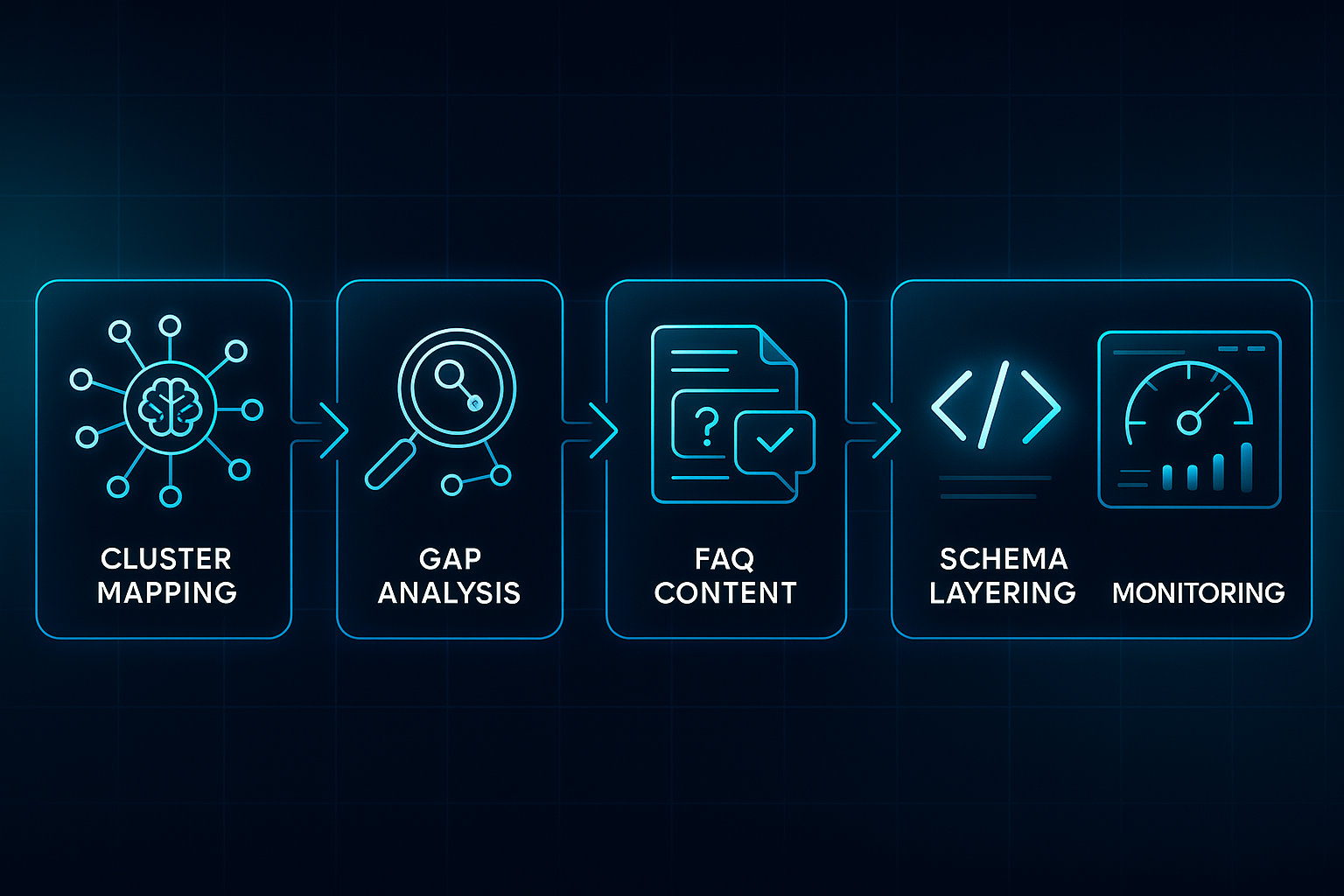
Kick off with cluster mapping and gap analysis using AI tools. Then, craft fresh FAQ-rich pieces and interlink them within your cluster.
Remember to layer in structured schema—like FAQPage or HowTo—so AI engines can pick up your content more easily. Keep an eye on topic dashboards in tools like Semrush AI Toolkit or SEOSwarm to routinely review citation performance, so your site is always adapting to what AI search really wants.
This workflow isn’t just a one-off; it’s your blueprint for staying ahead as the AI landscape evolves.
5. Scale content efficiently with agency+AI hybrid platforms
How hybrid platforms automate and enhance content strategy
Ever feel like you’re drowning under content updates and technical checks? That’s exactly where agency+AI hybrid platforms change the game. Humans focus on campaign priorities, brand voice, market adaptation, and those crucial editorial reviews.
Here’s the clever part: AI handles all the heavy lifting. It takes care of bulk jobs, like large audits, competitor and keyword research, and real-time performance monitoring. Automated agents are always on the lookout for schema gaps, technical SEO mistakes, and missed internal links—so your content stays constantly AI-optimised with far less manual effort.
BrightEdge is a great example. It flags issues, handles technical checks, and keeps an eye on your competitors as things change. SEOSwarm blends that agency-first approach with non-stop AI automation—handling entity linking, smart schema setup, and all-over audits, while experts review and revise on a schedule.
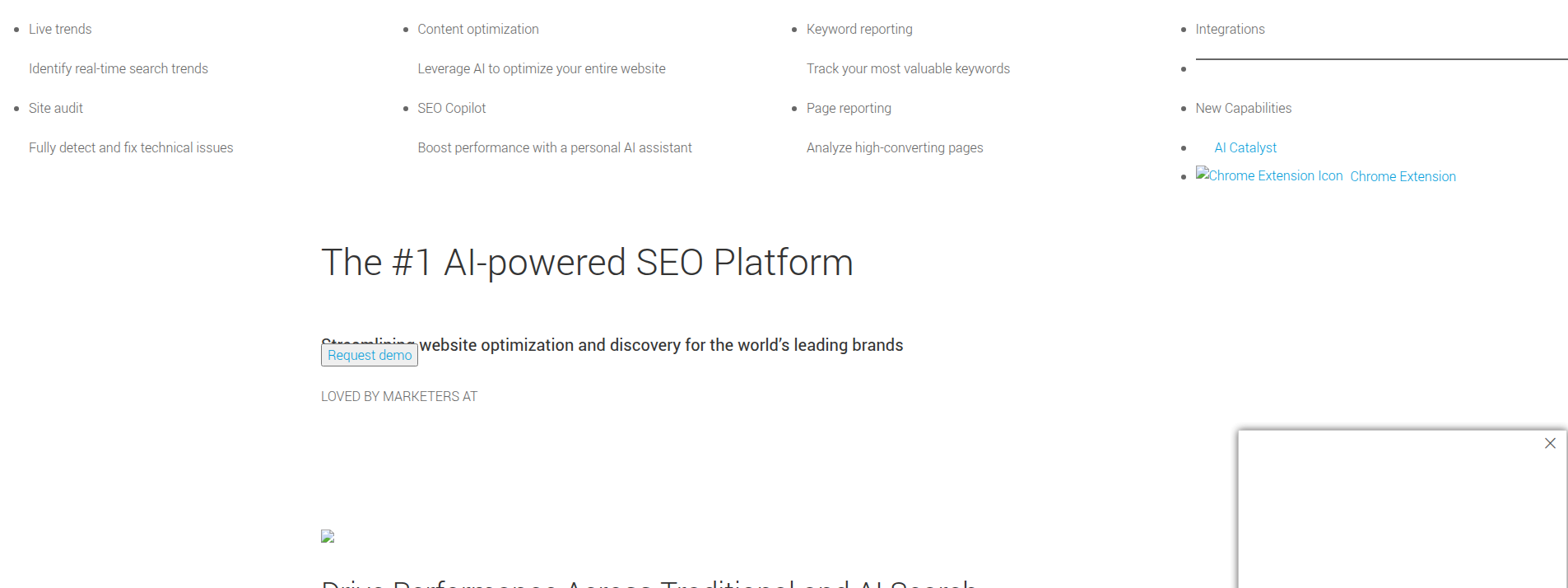
Source: brightedge.com
The result? Faster, sharper optimisation with as much as an 80% reduction in manual work compared to doing it all by hand.
Use cases: Scaling output and quality
So who benefits most from hybrid platforms? Agencies managing multiple clients. Big brands with complex sites. Publishers constantly updating volumes of content. Agencies using BrightEdge’s workflow have actually managed to increase output and boost SEO after automating technical routines.
SEOSwarm provides a similar edge. Agencies roll out new, SEO-friendly blogs much quicker. Platform agents do everything technical—schema, research, audits—while editors get prioritised checklists to cut down revision time.
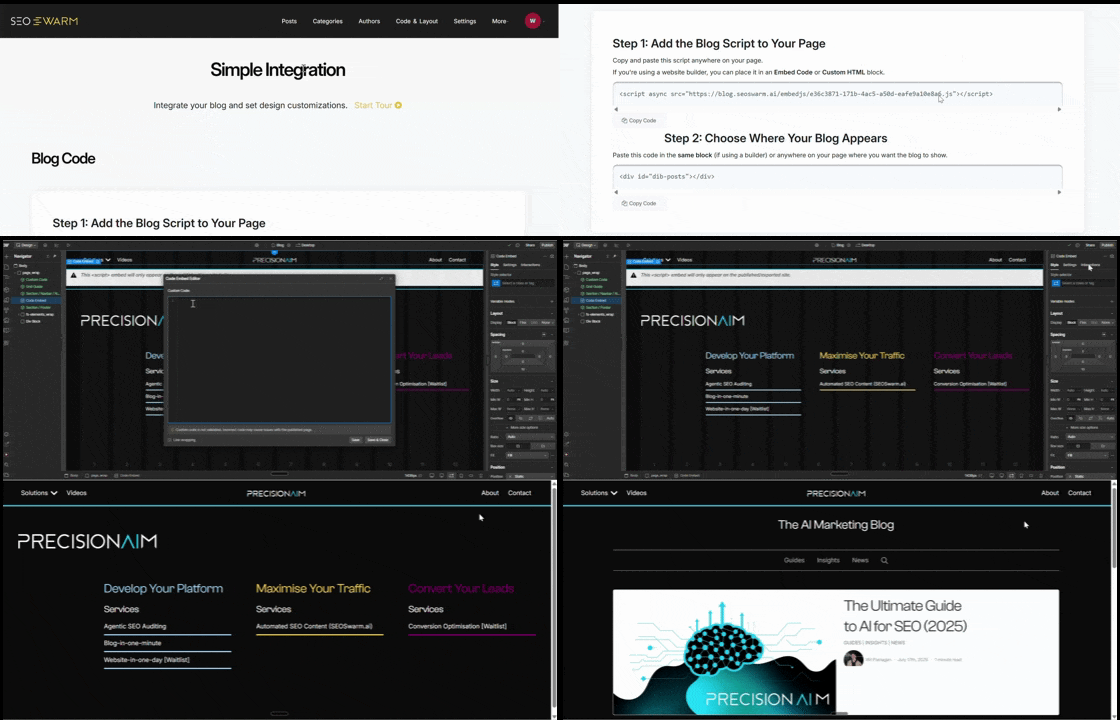
Chasing instant results? SEOSwarm’s “blog-in-one-minute” feature lets you spin up SEO-optimised blogs with just two lines of code. It’s perfect for campaign launches or keeping microsites fresh as AI search keeps evolving.
Blog-in-one-minute
Add a fully SEO-optimised blog to your website with just 2 lines of code.
Learn more
When this approach delivers maximum value
So, when does this hybrid really shine? It's ideal for agencies juggling huge portfolios or brands taking on rebrands and migrations. Publishers facing fast deadlines reap the rewards too.
Automation clears bottlenecks, freeing humans for high-impact strategy and clever responses to competitors. With consistent, high-quality output, you’re set to stand out as the battle for AI-driven search visibility heats up.
6. Engineer content clusters and internal linking for AI discovery
Principles of content clustering for LLM/AI optimisation
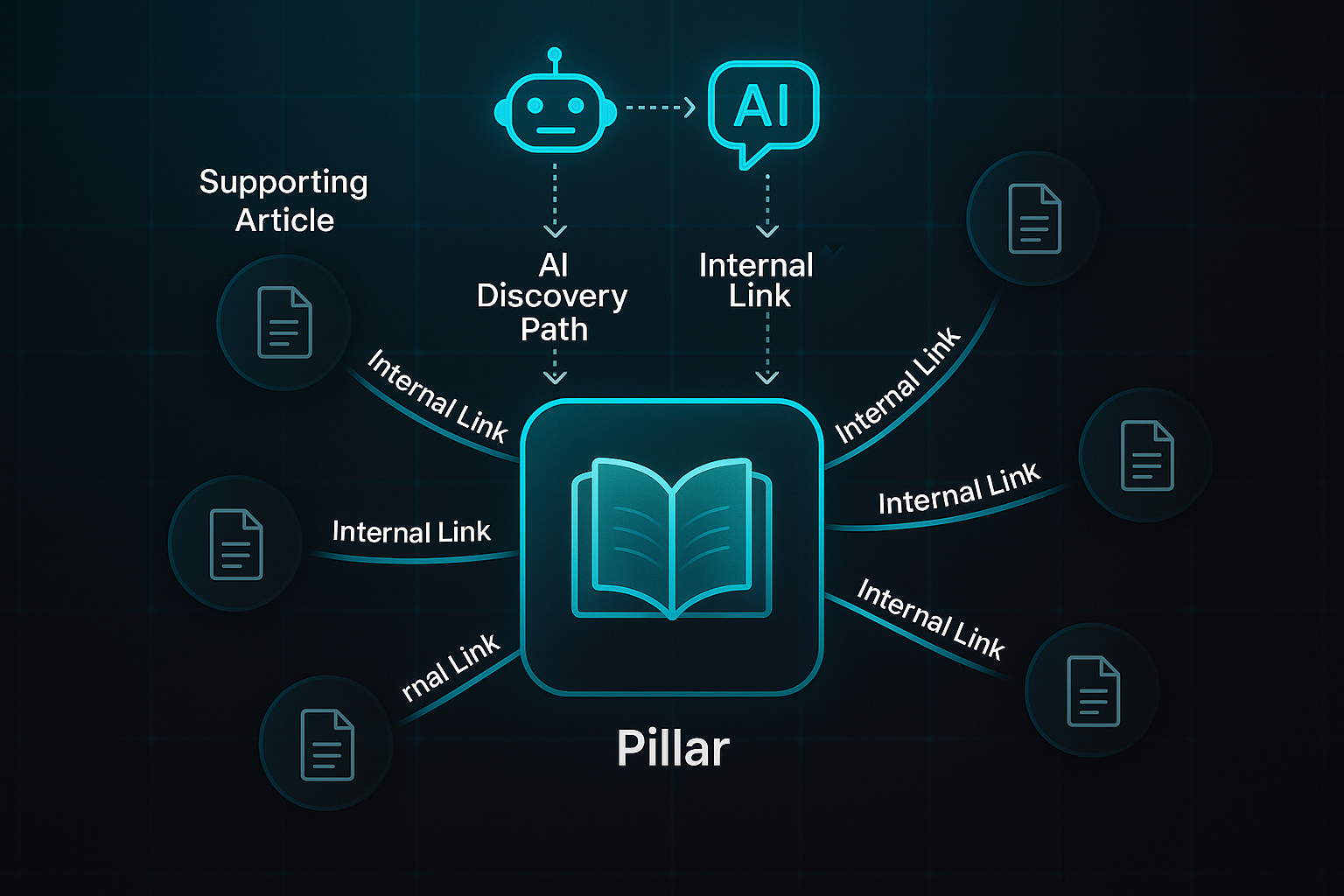
Think of your website as a well-organised library. Place a central pillar page at the heart, with supporting articles branching out to cover specific angles. This “hub-and-spoke” set-up isn’t just tidy for readers—it signals topical authority to AI engines like Google AI Overviews and Bing Copilot, mapping your expertise for large language models.
Here’s the payoff: internal links from these subtopics to the main pillar let AI systems trace your domain knowledge in detail. That makes it much more likely your pages will earn those all-important mentions in generative AI answers.
Consider this: when HubSpot rolled out LLM-optimised clusters, their citations in AI answers jumped from 2 to 7 out of 12 main topics—all within four months.
AI-based tools for mapping and building clusters
So, how do you pull this off at scale? Enter platforms like Surfer AI, SEOSwarm, and Schema App. Surfer AI creates clear visual maps so you can spot gaps. SEOSwarm helps agencies deploy entity-rich clusters, and Schema App simplifies schema markup so AI understands every relationship.
Start by letting these tools scan your content and show you where new articles or internal links are needed. You can automate much of the process—saving you from endless manual tweaks.
Semantic linking—using accurate, descriptive anchor text—plus smart schema, makes these connections crystal clear for AI. Then, visibility analytics track organic traffic, engagement, and appearances in answer boxes to keep your approach sharp.
The outcome? One SaaS company saw a 41% leap in organic traffic and grabbed more Google AI Overview citations after clustering and linking updates. Healthline’s improved interlinking boosted their snippets and Copilot answers. E-commerce sites using SEOSwarm’s clusters brought in more AI citations and stronger engagement.
Bottom line: content clusters and smart linking aren’t just “nice-to-haves”—they’re now essential for AI-first SEO success.
7. Boost EEAT using AI-powered tools
How EEAT impacts AI search and overviews
Let’s get into Experience, Expertise, Authority, and Trustworthiness (EEAT)—because they’re at the heart of being cited by AI-powered search engines like Google AI Overviews and Bing Copilot. These systems don’t just glance at single pages—they judge your whole site through an EEAT filter.
Zoom in on the content: details like strong author bios, clear credentials, and original research really matter. Step back, and it’s things like secure hosting, transparent policies, and authoritative profiles—LinkedIn, Wikipedia, you name it—that shout trust. Want a shortcut? Structuring pages with Person schema and sameAs links connecting authors to real-world profiles massively boosts citation chances.
It’s not just theory—Mayo Clinic saw a 28% increase in AI-driven citations after beefing up their author schema. So, investing in EEAT isn’t optional if you want your content chosen for those featured AI answers.
Tools and tactics for EEAT improvement at scale
Luckily, AI-powered SEO tools help automate and audit the signals that build EEAT. SEOSwarm lets agency teams roll out expert schema and SME citation links in bulk. Surfer AI does the heavy lifting too—flagging missing credentials, suggesting expert quotes, and tightening up your markup. AthenaHQ, meanwhile, takes care of automated fact-checking and trust page updates.
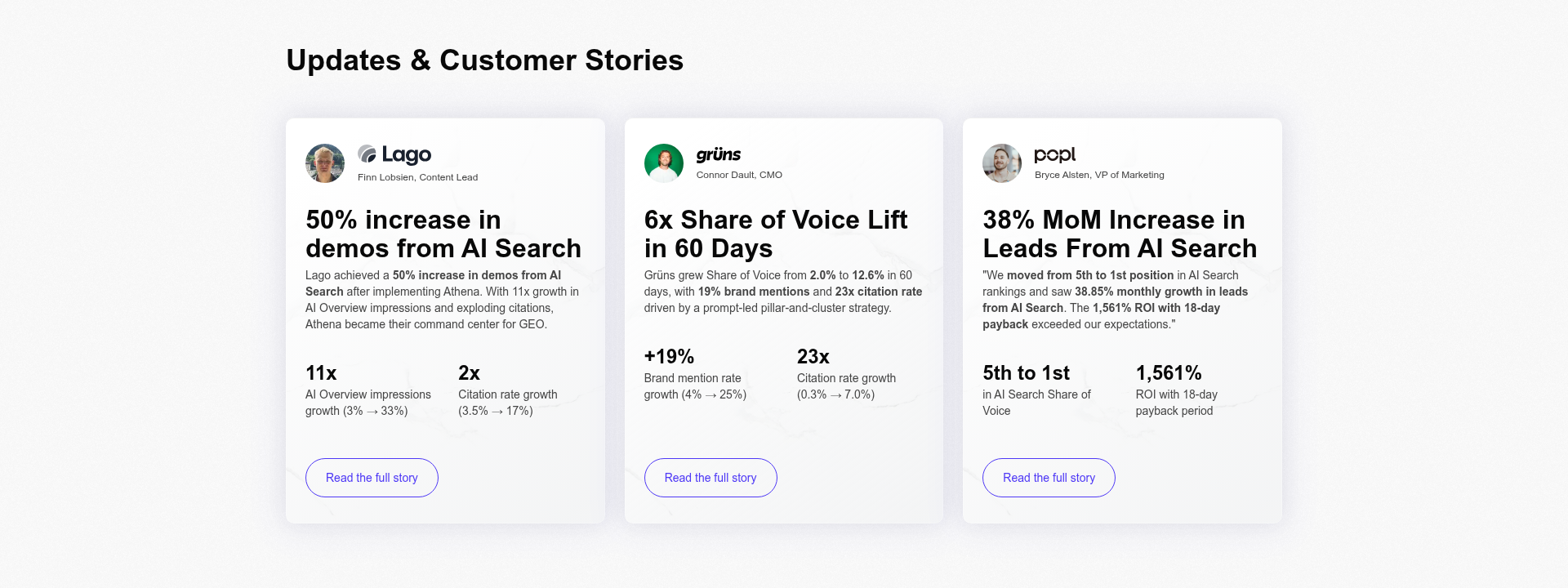
Source: athenahq.ai
A simple EEAT workflow: audit for weak signals, update bios and Person schema, automate About/privacy checks, and run ongoing fact-checks with schema validation. Still, regular human review keeps things sharp, so credentials and trust content don’t fall behind.
Direct value for brands and readers
Brands that build EEAT into their systems typically see a 19–32% boost in AI citations. Iowa Girl Eats, for example, recorded a staggering 430% rise in AI snippet citations plus a 36% jump in organic traffic over six months with AthenaHQ and Surfer AI.
Keeping EEAT strong protects your rankings and reassures users that AI answers can be trusted. Neglect these signals, and both visibility and compliance risks grow quickly.
If your brand isn’t sending out these signals, then the AI will ignore you. It will be like you don’t exist. And if you don’t exist in the AI’s world, then you don’t exist in the consumer’s world.
8. Automate schema maintenance, auditing, and enhancement
Why schema can 'drift' and cause lost AI visibility
Let’s talk about schema drift—the quiet problem that can undermine your AI visibility. It strikes when your structured data no longer matches your actual site content or the latest Schema.org standards.
How does this happen? Updating content and neglecting the markup, plugin or CMS glitches, even evolving schema guidelines can all leave you out of step.
Suddenly, platforms like Google AI Overviews and Bing Copilot may stop recognising your entities, so you gradually lose those valuable AI citations. The damage is often invisible until your brand slips out of the answer boxes.
Common triggers are easy to miss. Adding new products but ignoring schema updates, leaving orphaned markup after content changes, overloading with conflicting data, or failing to spot deprecated properties—all can erode visibility before you notice.
Automation tools for audit and maintenance
Here’s where automated schema tools make a difference. With Schema App, Entail.ai, and SEOSwarm, you get schema health dashboards, site-wide audits, and instant alerts about errors or standards changes.
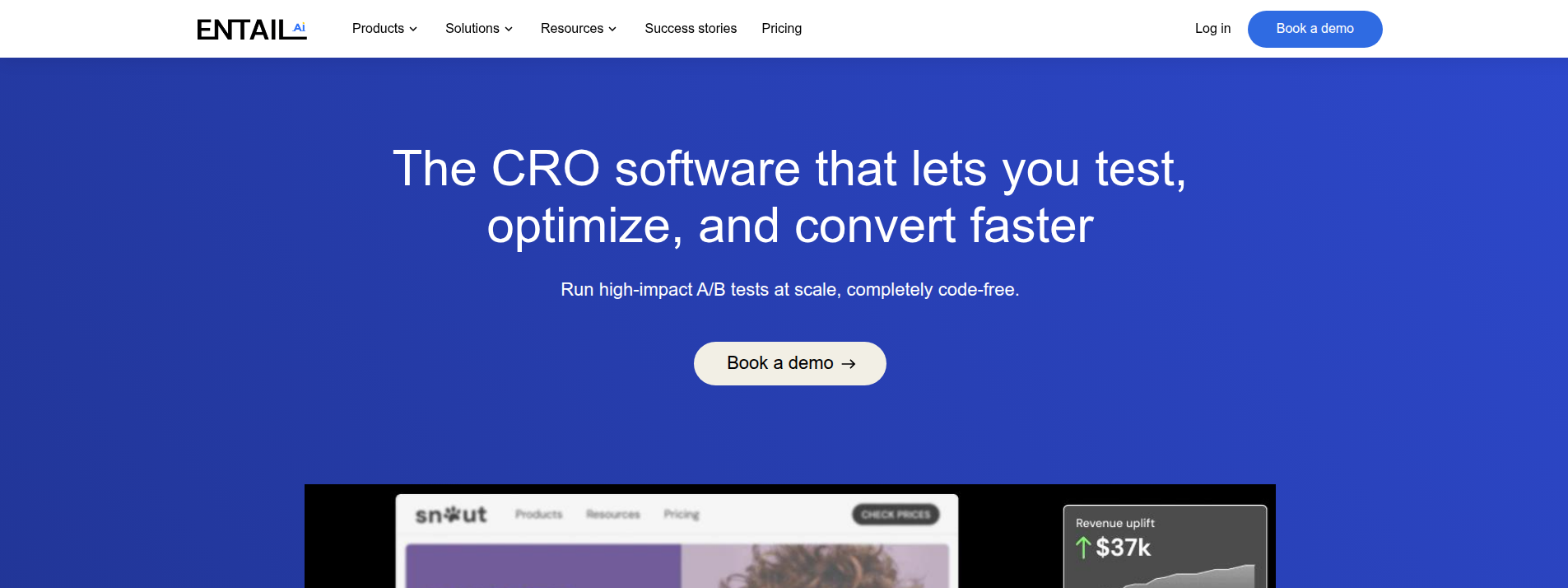
Source: entail.ai
These tools integrate directly with your CMS, so every content update automatically checks and refreshes the relevant schema. SEOSwarm stands out for building automated entity linking and schema checks into its agency workflows.
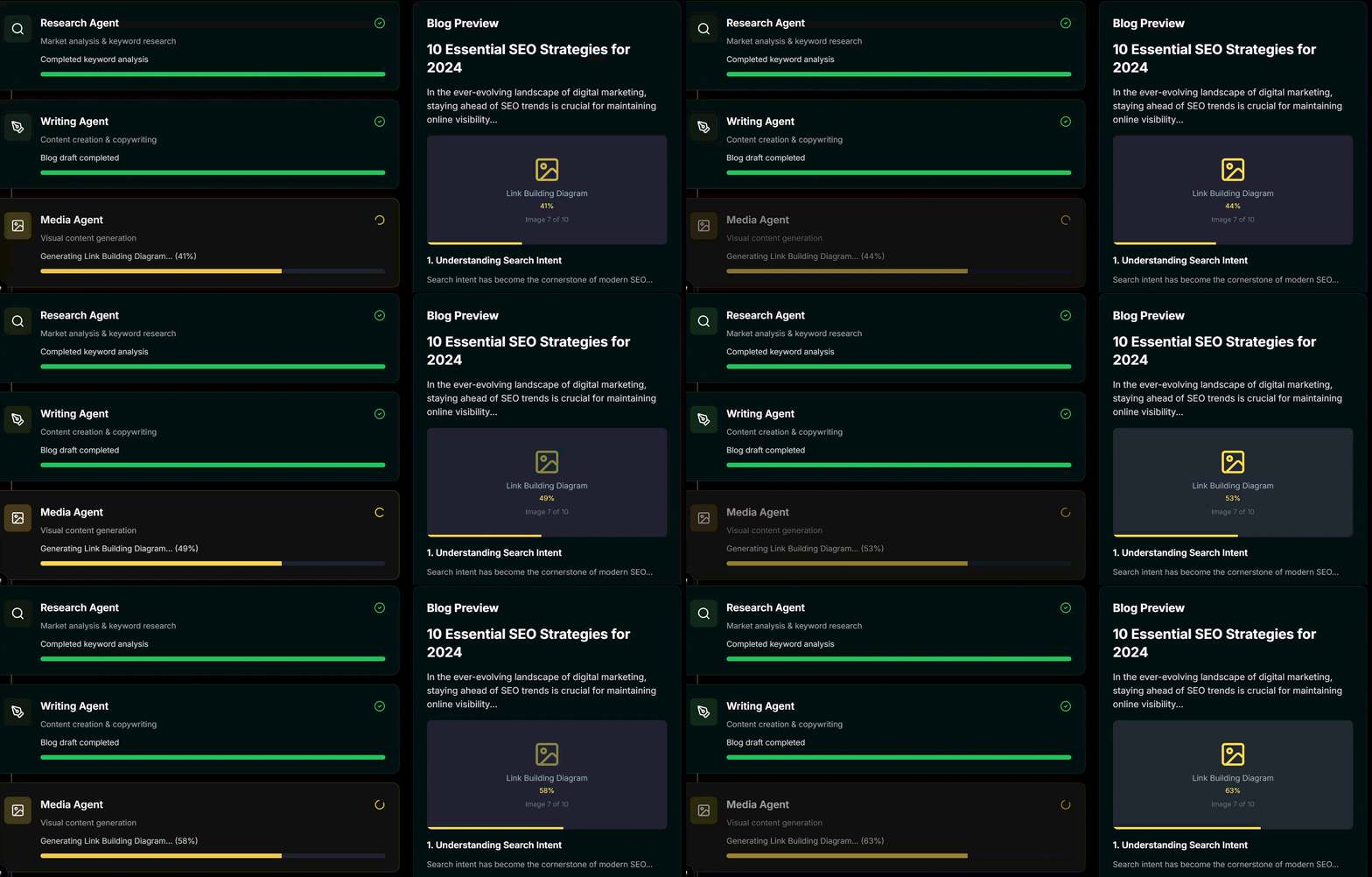
The payoff can be immediate—a travel publisher resolved 1,200 markup errors in a week using Schema App, restoring Bing Copilot AI visibility right away.
Workflow for sustainable schema health
Start with a baseline audit using one of these AI tools. Deploy validated markup templates across your site, integrate ongoing audit routines, and enable automated alerts for new issues or deprecated fields.
Keep tracking error patterns, and cross-reference against your AI citation trends. When a retailer enabled automated auditing and compliance via Entail.ai, they saw a 28% boost in answer box inclusion on Google and Bing.
Harnessing automation—underpinned by schema governance and smart updates—keeps your AI search visibility strong, no matter how platforms evolve.
9. Monitor and report on AI search analytics & ROI
Essential AI search KPIs and signals
What really matters when tracking your brand in AI-powered search? It’s less about classic SEO rankings and far more about how often—and in what way—AI platforms mention you.
- Brand inclusion rate
How often your brand is cited in AI-generated answers across platforms. - Zero-click exposure
Brand appearances in summaries where users don’t click through. - Branded search interest
Shifts in brand queries after citation in AI answers. - Share of voice (SOV)
Your visibility in AI answers versus competitors. - Citation count & sentiment
Frequency and tone—positive, neutral, or negative—of mentions. - Content block retrieval
Which site sections are commonly surfaced by AI.
These metrics create a richer picture than old-school click rates, alerting you to new opportunities and gaps emerging in AI search environments.
AI-focused analytics and dashboard tools
How do you bring all this together? The key is smart dashboards that track these signals and convert them into usable insights.
- AI analytics dashboards
Monitor citations, prompts, sentiment, and share of voice on major AI platforms. - Custom workflow dashboards
APIs display business-specific metrics and actionable alerts. - SEOSwarm reporting
Agency-managed summaries on entity linking, schema health, citation trends, and practical recommendations.
The big win is how these tools reveal answer box presence and sentiment—a layer classic analytics simply miss.
Turning analytics into actionable improvement
So, you’ve got the data—what next? This is where real progress happens.
- Content refresh
Analytics highlight low-performing content to improve. - Schema audits
Fix markup issues before visibility drops. - Attribution tracking
Link AI citation trends to user behaviour for true ROI. - Strategy feedback loops
Tweak your tactics using current analytics.
Using these AI-driven metrics lets your SEO keep pace, strengthens ROI, and maintains answer box visibility. Move quickly with these insights, and your brand is set to thrive as AI continues to reshape search.
10. Avoid AI SEO pitfalls: common mistakes and advanced tips
Frequent missteps in AI-focused SEO
Let’s be honest: tackling AI SEO takes more than ticking old boxes. Many brands still trip up over familiar mistakes, even as things change rapidly.
- Over-reliance on traditional keywords
AI search rewards entity-rich, semantically deep content over classic keyword lists. HubSpot saw a 38% increase in AI Overview inclusions after switching to intent-based, long-tail queries. - Ignoring schema/entity drift
If you leave schema outdated, it quietly erodes AI visibility. One Google update delivered a 22% citation drop for brands neglecting audits. - Neglecting prompt-level AI citation monitoring
Without tracking AI citations, mistakes slip by. LegalZoom recovered lost visibility quickly after daily checks caught 12% of mentions pointing incorrectly. - Not adapting to new schema or AI answer formats
Schema evolves constantly. Expedia embraced TravelItinerary schema early and bagged a 41% rise in SGE overviews—that’s the impact of keeping up.
Proactive troubleshooting and advanced optimisations
So, what helps you stay ahead when AI and schema shift under your feet?
- Checklist-driven, recurring audits
Use tools like Schema App or SEOSwarm to review markup and entities whenever issues, like schema drift, pop up. - Stay alert to AI format shifts
Watch out for tweaks in layouts, like Gemini citations or Discover modules. Fast updates using AI dashboard signals keep your brand in prime position. - Hybrid human + AI workflow
Combine automated scans with expert human review to preserve trust, accuracy, and tone—especially vital as platforms evolve.
Dodging these pitfalls isn’t just possible—it’s essential. Building reliable routines and adapting fast means your visibility remains strong, no matter how quickly the AI-powered search world changes.
Making the Best SEO Strategies Work for AI Visibility Tools
AI-powered search doesn’t reward those who stand still. Brands that thrive are the ones who treat SEO as a living system—constantly refining entities, updating schema, and monitoring how they’re cited across every major AI platform.
Here’s my advice: Don’t just set and forget your SEO. Use AI visibility tools to track citations, automate schema audits, and build content clusters that answer real questions. Prioritise workflows that blend automation with expert review, so you can adapt as AI search evolves.
The brands that win in this new era are those who make themselves impossible for AI to ignore. If you want your business to exist in the answers of tomorrow, start building for AI visibility today.
- Wil