

SEO has changed dramatically since AI-powered search engines started surfacing answer boxes instead of traditional ranked links. If your content isn’t being cited in those summaries, you’re missing out on the most valuable visibility available.
I’ve seen many teams struggle as old keyword tactics and static pages fall flat. It’s frustrating to watch organic traffic drop, even when you’re following the usual SEO playbook. The truth is, AI now prioritises authority, expertise, and up-to-date information—so your approach needs a serious upgrade.
In this guide, I’ll break down exactly how AI-driven search works, why classic SEO strategies no longer cut it, and what new tactics actually get results. You’ll get a practical framework for modular content, schema markup, and continuous optimisation, plus a look at the latest AI visibility tools and real-world case studies.
By the end, you’ll know how to adapt your workflow, measure what matters, and keep your brand visible as AI search keeps evolving.
What defines the best SEO strategies for AI visibility tools?
Understanding AI-powered search and visibility
Let’s look at how search engines have been transformed. With global rollouts of Google AI Overviews in May 2024 and platforms like Perplexity AI, SEO now revolves around answer-driven summaries placed right at the top of the page. Rather than pages of ranked links, users see AI responses referencing 2–5 highly trusted sources.
The way these sources are selected has completely changed—authority, expertise, and up-to-date material now dominate. Google’s AI favours expert-created, current content with solid evidence.
Google selects information from high-authority and trustworthy sources. Ranking in AI Overviews signals to users (and Google itself) that your content is accurate, authoritative, and valuable.
Here’s the twist: these engines understand and prioritise intent, so your content needs sharp, useful answers. AI also personalises results, so two users asking similar things might get different citations. That’s led to the “AI visibility gap”: old high rankings don’t guarantee you’ll show up in AI answer boxes. You’ve got to be authoritative and directly relevant.
| Feature | Generative AI Search (2024) | Traditional Search |
|---|---|---|
| Result Format | Summarised answer, 2–5 cited sources | Ranked links list |
| Source Criteria | Authority, expertise, freshness | SEO, backlink profile |
| Personalisation | High | Moderate |
| Visibility Gap | Possible omission | Top rank = high visibility |
Why traditional SEO strategies fall short
Does the old approach—cramming in keywords and relying on static pages—even cut it anymore? Not really. AI engines send users straight to concise summaries, so most sites are overlooked.
Keyword-only strategies and short-term fixes falter when AI demands modular, well-structured content focused on intent. FAQ and content block formats have a clear advantage. Skipping these updates is risky: a 2025 Semrush and Ahrefs study found finance and health sites dropped up to 45% in organic traffic after Google’s changes.
Adapting makes a big difference. Forks Over Knives saw their visibility collapse, but after using modular content and a refreshed keyword approach designed for AI, they regained 41% MoM traffic.
The core pillars of AI-oriented SEO strategy
What works now depends on three pillars:
- E-E-A-T (Expertise, Experience, Authoritativeness, Trustworthiness)
AI favours credible expert content—bios, credentials, and robust evidence. - Structured data/schema & modular content
Schema markup and block formatting make it easy for AI to find and cite your answers. - Continuous optimisation cycles
SEO isn’t “set and forget”. Refresh and adapt content regularly to remain visible as algorithms evolve.
Keep these pillars in mind, and you’ll future-proof your brand against ever-changing search. In the AI era, adaptability is everything.

How AI is reshaping the SEO landscape
AI-driven search engines: What’s changed?
Let’s look at how AI-powered search engines like AI Overviews and Perplexity have turned search on its head.
The days of wading through endless blue links are gone. Now, AI-generated summaries—sourced from recent, authoritative content—sit right at the top. So answers are quick and effortless.
If you want to adjust your question mid-search, conversational features deliver those real-time refinements in seconds, giving users exactly the information they want.
Here’s the catch: as soon as an AI summary is present, organic click-through rates drop by over a third, most dramatically for informational and non-branded queries. So the real goal is to get your content cited within those summaries.
The introduction of AI Overviews in search results has been shown to reduce clicks to organic listings by an average of 34.5%.
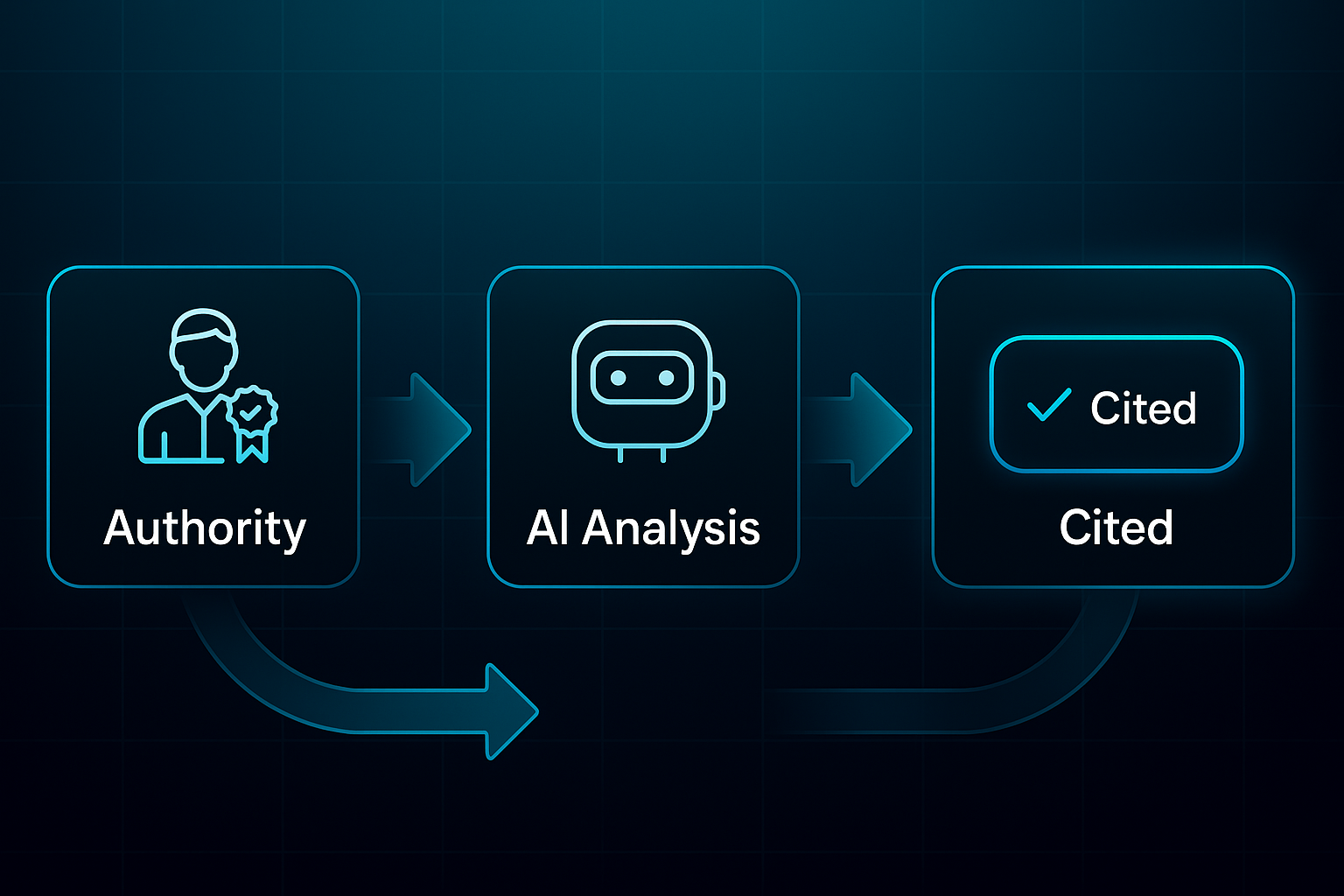
How do you make the cut? You’ll need authority, topical expertise, relevance, and up-to-the-minute freshness. Schema markup, strong referencing, and clear structure all make it easier for AI systems to find—and trust—your content.
Comparing traditional and generative AI SEO
Previously, SEO was all about climbing the keyword ranks and stacking backlinks. Your most important metrics? Keyword placements, backlink counts, organic visitors.
Now, generative AI SEO changes the strategy entirely. “Position 0” is the new top spot—the AI answer box citation. For this, content has to be succinct, modular, and easily extracted for summarisation.
That transformation brings a fresh playbook for measuring success. Forget keywords. Focus on citation frequency, brand mentions in AI outputs, and even how favourably AI presents your brand.
Here’s something interesting: modern tools like Semrush AI Toolkit and AthenaHQ help teams track citations and visibility in AI-generated answers.
How To Use Semrush AI SEO Toolkit in 2025 (Tutorial & Review)
When teams shift from keyword-obsessed strategies to AI-engineered content, they see powerful visibility gains—reinforcing that this tactical shift gives a real advantage.
To go even further, platforms like Surfer SEO and MarketMuse refine your site’s structure and clarity, making it more likely your answers get chosen for these all-important AI-driven results.
MarketMuse AI for Content Optimization: Tips to Create & Optimize Content for Better Results
If you want to stay competitive, now’s the time to think like the AI—because they really are the new search gatekeepers.
Exactly how to optimise content for AI Overviews
Start with modular, schema-backed content
Here’s where the new rules come into play. AI Overviews and tools like Perplexity don’t want to wade through clutter; they want crisp, easily extractable blocks. That means you need to structure content into bite-sized, answer-focused segments, each tackling a single intent or question.
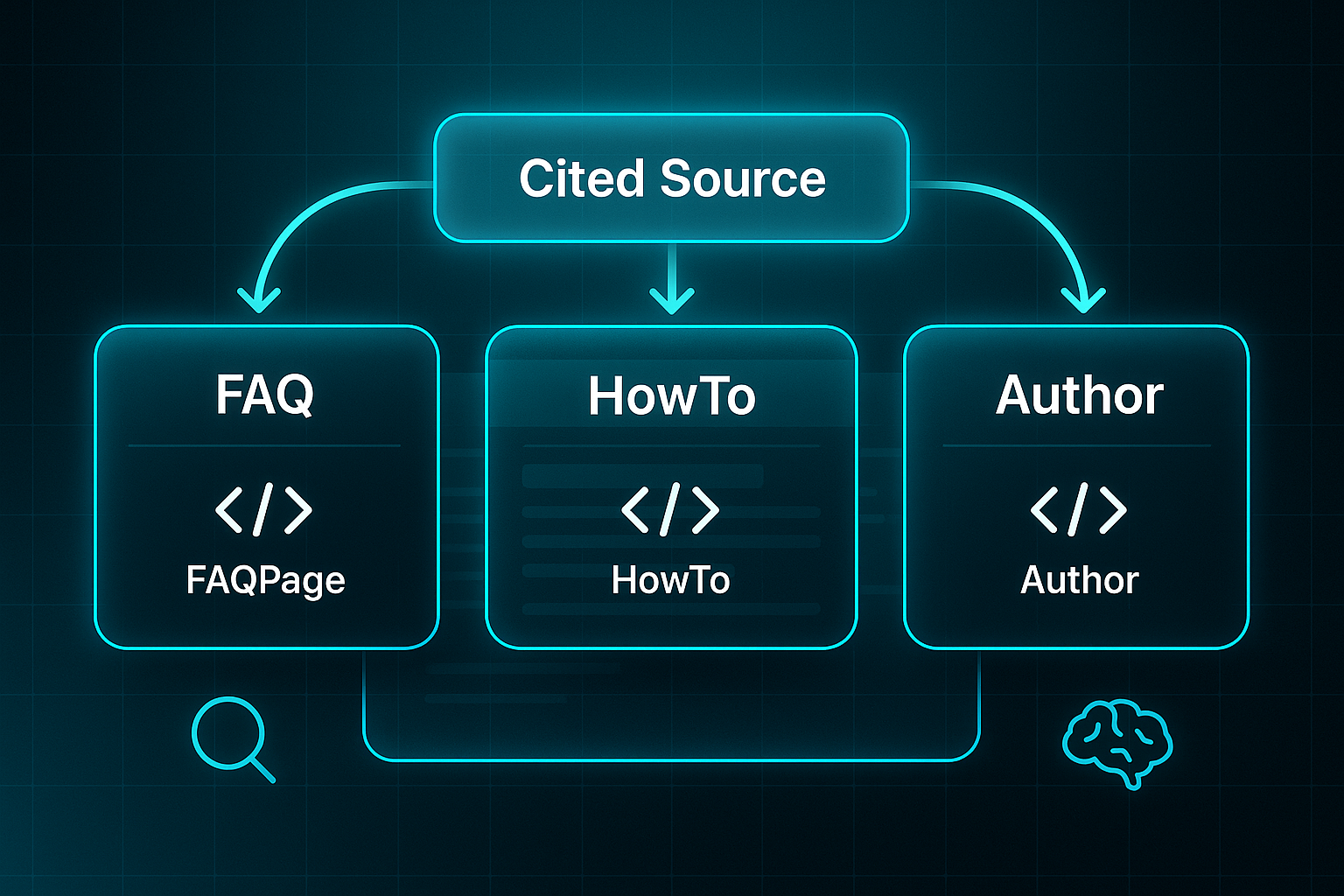
Ever looked at a strong FAQ page? It’s no accident those keep showing up as sources. Forks Over Knives, for example, rebuilt their recipes and guides into question-driven, modular cards—each marked with relevant schema. The result? Their citations from Google’s AI Overviews jumped 3x over six months.
It’s not just about breaking up text, either. Schema markup (think FAQPage, HowTo, Author) does the heavy lifting. By giving search engines—and their AI overviews—a clear roadmap, you’re increasing citation potential with every structured block.
Build visible authority into every answer
Okay, but what makes a source “trustworthy” enough for these AI summaries? The answer is a visible trail of expertise and credibility woven into every section. Bios for contributing experts, cited credentials, and explicit evidence all play a part.
Take the financial site NerdWallet. They attach author credentials and sourcing to each financial guide, with every claim linking to an industry source or government standard. That approach signals credibility—so much so their mortgage content recently saw a 70% rise in AI citations after these changes.

How NerdWallet Has $89,400,000/mo in SEO Traffic
Trustworthiness is the central, most important concept within the E-E-A-T framework, especially for 'Your Money or Your Life' (YMYL) topics like health and finance that can affect users’ well-being.
This really matters for sensitive spaces, too. In health and finance, Google and Perplexity reward sites showing evidence of professional review—think named doctors on patient guides, or regulated advisers quoted.
Signal topical freshness and ongoing relevance
Remember how we talked about AI favouring the most up-to-date answers? Timeliness is now a ranking factor. AthenaHQ, an emerging SaaS case study, saw a significant boost after introducing “last reviewed” stamps at the top of all their pillar content and refreshing key stats every month.
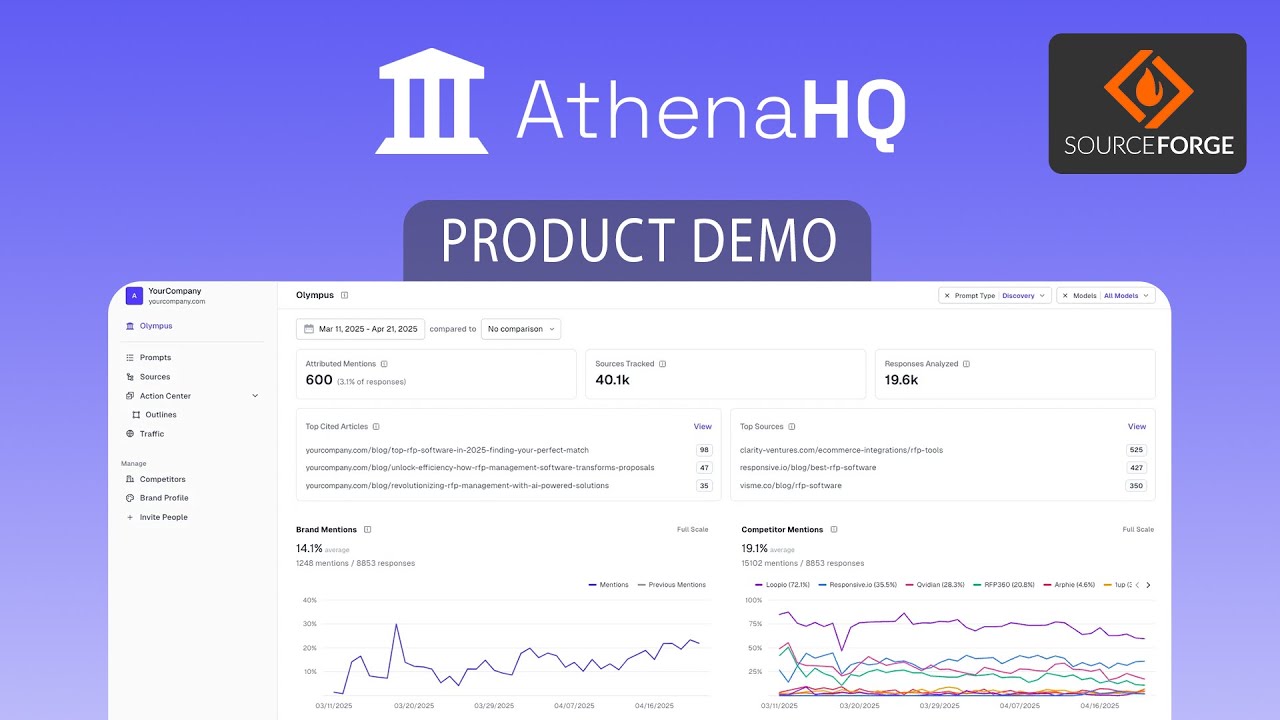
AthenaHQ Product Demo Showcase: Generative Engine Optimization (GEO) for AI Search
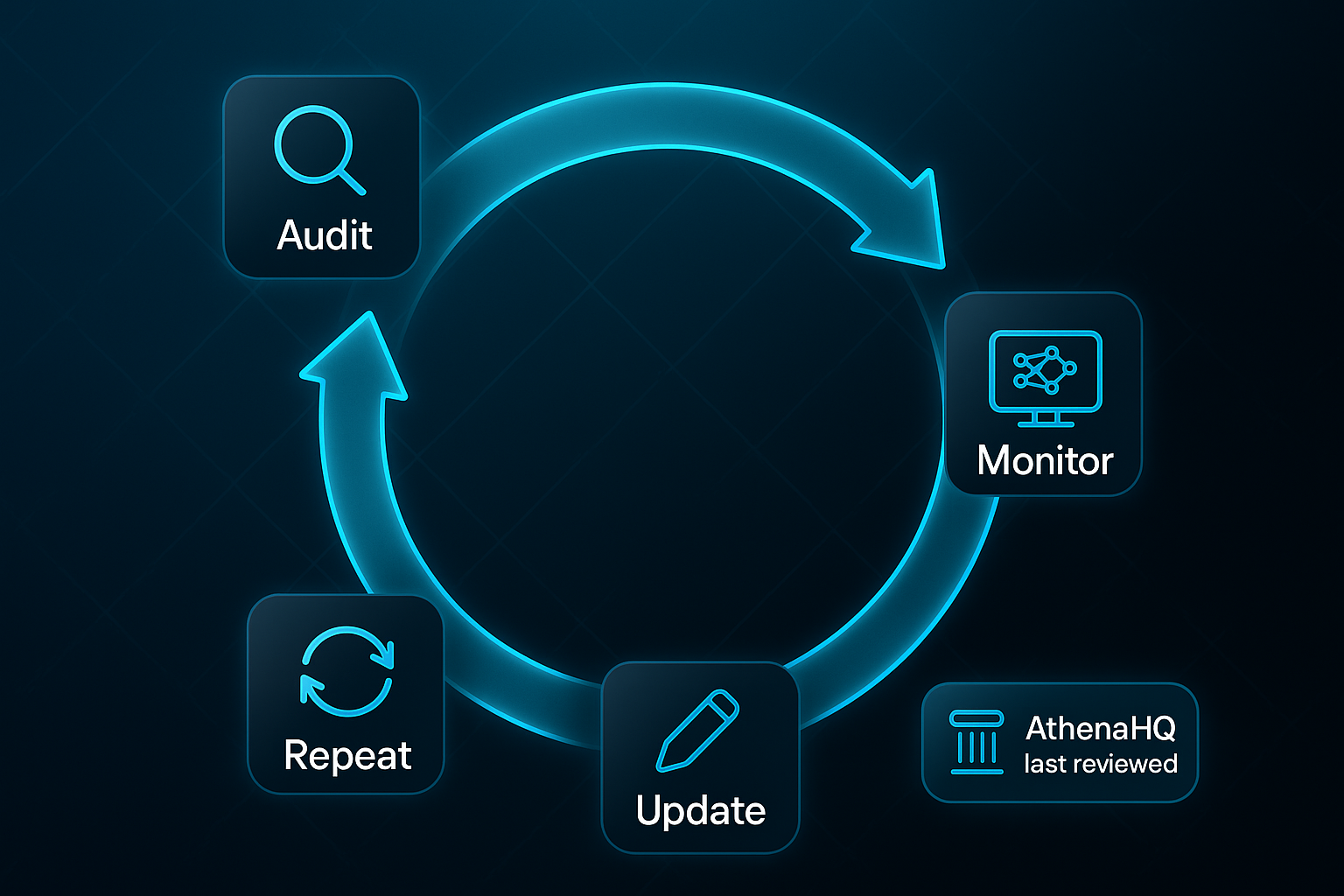
Authoritativeness and meticulous referencing build trust, but regular updates signal that your information is actually current—which algorithms love. And the cycle never really stops; continuous checks and content updates keep AI engines coming back.
Summing up: A tactical blueprint for AI SEO
So, here’s the play-by-play: carve up your content into modular blocks, wrap everything with schema, spotlight your expertise, and keep it all as fresh as possible.
It’s not about working harder—it’s about working smarter, so you’re the answer AI wants to cite.
Overview of the AI Visibility Tool Landscape
Search has changed, and standard SEO is no longer enough. So how do you actually get cited by AI rather than left off the list? That’s why this new wave of AI visibility tools is so important: they're purpose-built for a world where being named in answer boxes is what counts.
Why do these tools matter?
Let’s face it—traditional SEO tools won’t tell you if your brand is showing up in Google AI Overviews or Perplexity summaries. Modern AI visibility platforms fill this crucial gap, letting you see where you’re referenced among those all-important sources. Even top-ranked pages can be skipped by AI, so you need live, actionable intelligence.
It’s not just about knowing *when* you appear, but figuring out *why* you missed out—so you can react quickly. These tools put real-time detection and practical fixes front and centre.
What features truly matter in an AI visibility tool?
The best platforms focus on the essentials:
- AI Citation Tracking
Instantly spot every appearance of your site in AI answer boxes. - Authority & Schema Checks
Get feedback on bios and authorship, plus on your schema’s visibility to AI. - Tailored SEO Actions
Direct actions tied to E-E-A-T, modular content design, and updates for measurable impact.
Effective tools give you recommendations you can instantly put to work.
SEOSwarm: Live AI Citations That Drive Decisions
SEOSwarm shines by tracking both Google AI Overviews and Perplexity—alerting you the moment your content appears or disappears from summaries. With instant notifications and focused audits, you don’t just watch for changes; you learn which elements—like bios or “last reviewed” stamps—make a difference.
SEOSwarm helps you spot and close gaps before they harm your AI visibility, mapping actions directly to AI SEO pillars.
Blog-in-one-minute: Content Already Made for AI
What about crafting content that works in this new landscape? blog-in-one-minute generates modular, schema-powered content cards built for answer boxes. Authors, solo founders, and teams can quickly update a FAQ, highlight expertise, and drive AI visibility without rewrites or delays.
It’s the go-to tool when you’re low on time but hungry for proof your changes actually land.
A seamless feedback loop for the AI era
SEOSwarm finds your blind spots; blog-in-one-minute lets you act on them fast. Using both, you create a feedback loop that tracks and delivers results—keeping you visible, whatever AI engines do next.

AI-Powered
SEO Content Strategy
See the AI platform that's replacing entire content teams
(with better results).

Iterative SEO workflows to stay visible in AI-driven results
Why continuous SEO updating is essential
SEO simply can’t be a “set it and forget it” project—not with the relentless pace of AI updates. If you only review your content every quarter, you risk losing valuable positions and seeing traffic drop before you even realise something’s changed.
Platforms like Google AI Overviews and Perplexity frequently shift their citation criteria with little or no warning. Brands that fail to keep up will fall behind, plain and simple.
Being able to spot problems quickly and adapt to new AI trends is now what separates those who survive from those left behind. That’s how you defend, and even grow, your reach.
Take AthenaHQ. Switching from annual reviews to weekly, tool-backed audits turned things around. They saw a 24% month-on-month boost in AI Overview citations by plugging schema gaps as they happened.
Or that wellness retailer: live alerts exposed outdated author bios, letting them prevent a 35% worrisome drop in transactions.
The cyclical workflow approach
The answer is an agile, ongoing process—repeating cycles of audit, update and review.
Frequent audits using AI analytics
Auditing monthly, or even bi-weekly, with tools like SEOSwarm or Semrush AI Toolkit helps you catch AI-driven ranking shifts and newly missed citations before they become bigger problems.
Gap analysis and targeted refreshes
Turn audit discoveries into focused action. Fix weak or missing topics, update with modular blocks and smart schema, and keep running this audit–gap–update loop. That’s how teams build durable AI visibility.
Review and action tracking
Get stakeholder input before updates go live to guarantee changes meet brand standards and real user needs. Pair standard SEO results with AI-focused KPIs such as citation frequency and AI visibility score.
Automating and scaling with AI-powered platforms
SEOSwarm: live feedback, fast fixes
Platforms like SEOSwarm serve up real-time alerts and quick audits, shrinking fix times from weeks to days so you’re never left playing catch-up.
Balance automation and human review
Let automation handle routine tasks, while your team ensures strategy and quality—keeping your SEO evolving smoothly, whatever AI throws your way.
Measuring and improving AI search visibility: KPIs and analytics
AI-visibility-first metrics to prioritise
Let’s talk numbers—because in this AI-first search world, relying on old SEO metrics is like using last year’s playbook.
Keyword rankings and simple organic visits don’t tell you much now. You need AI visibility KPIs for the real story.
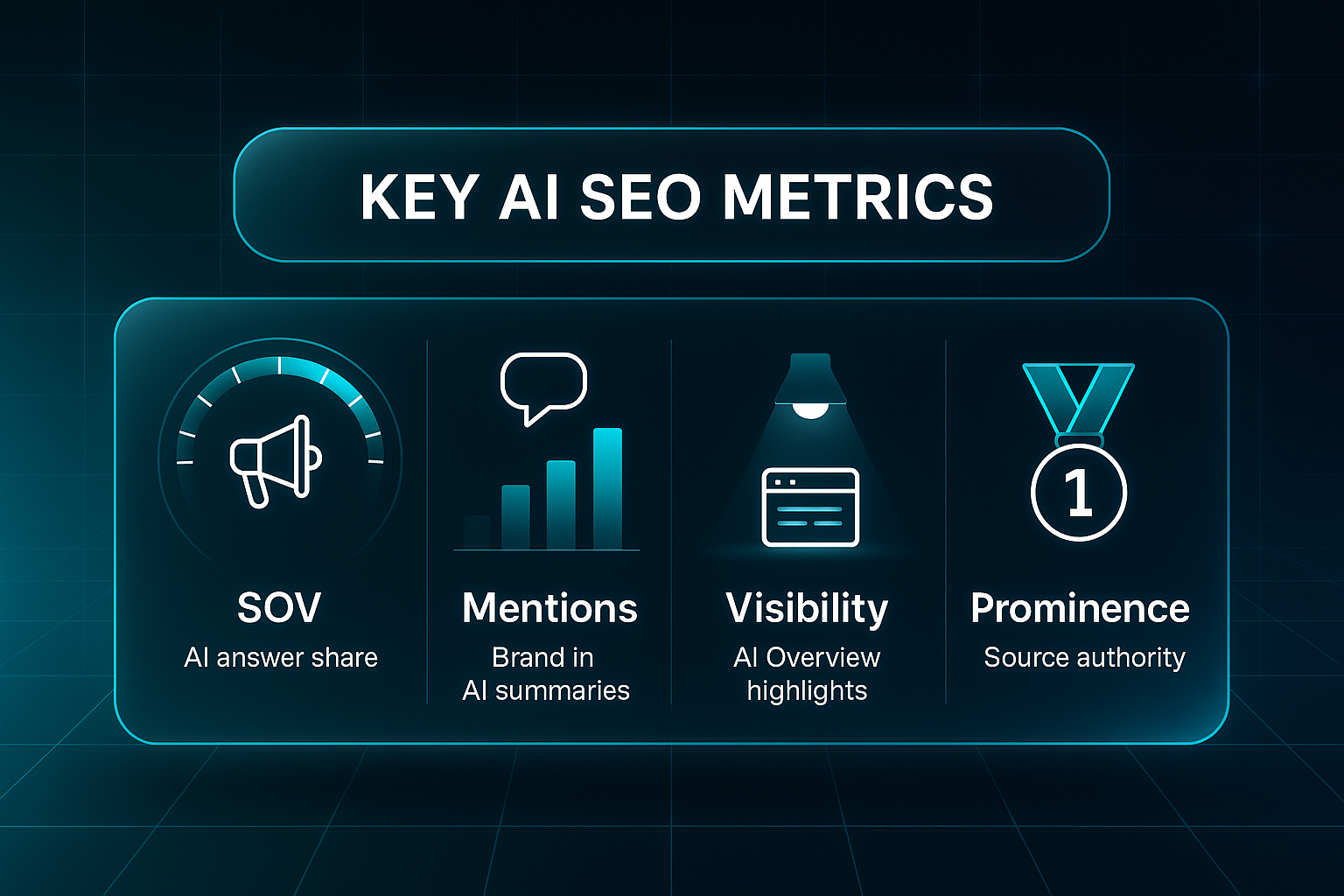
The key one? AI Share of Voice (SOV). This measures what percentage of AI-generated answers—across platforms like Google AI Overviews and Perplexity—cite your brand.
Here’s an example: in 2024, Semrush achieved a 33% SOV in ChatGPT for SEO queries, outpacing much of the competition.
Next is AI brand mentions. That means your brand shows up in AI summaries, even without a link. Mentions alone boost authority and recognition, especially while people increasingly trust AI answers.
Then there’s AI Overview Visibility: how often your site gets highlighted in Google AI Overviews for your chosen topics.
Finally, track source prominence. This notes whether your brand is a leading or supporting source in AI citations—an important signal for credibility and traffic potential.
Tools and methods for tracking AI search performance
Manual spot-checks just don’t cut it now—AI citation patterns shift constantly.
Tools like Semrush AI Toolkit, Keyword.com (AI Overview tracker), and Authoritas automate the job for you—watching shifts in SOV, mentions, linked sources, and competitive share in AI-driven results.
How to Report on AI Traffic in GA4 (Including ChatGPT, Gemini & Copilot)
Profound and Ahrefs notify you about new or lost mentions, while Google Analytics 4 labels traffic from ‘Google-AI-Overview’ or ‘Perplexity’, so you can analyse engagement, conversion, and depth.
Turning analytics into action
Analytics are only as good as your response.
A falling SOV or missing mentions? That’s your signal to refresh modular content, update schema, or enhance author signals so you return to the AI spotlight.
Brands like Semrush and Notion use weekly dashboard reviews to catch these gaps, focusing on updating their FAQ blocks and schema.
Even tracking sentiment in AI answers can guide you—if perception shifts, you might revise content or make public announcements to stay visible and trusted in the AI search landscape.
Obsolete and harmful SEO tactics in the AI era: What NOT to do
Common mistakes to avoid for AI SEO
SEO changes fast, so holding onto outdated habits is a sure way to hurt your visibility in AI-driven search. What once worked now risks leaving your brand behind.
A top mistake? Relying on unedited, duplicated AI-generated content. Sterling Sky Inc. reported a business pumped out hundreds of AI-generated local pages, barely touching them up. Traffic didn’t budge. When they tried scaling, Google handed them a penalty—removing the site from results entirely. That’s how quickly low-value content gets punished.
Keyword stuffing is another relic that now backfires. You might remember when loading up on keywords pushed rankings. But Session Interactive’s 2024 data found keyword-stuffed pages almost never appear in AI summaries, with brand reach plummeting soon after. Instead of climbing, you end up filtered out of the most valuable answer boxes.
Skipping E-E-A-T—Expertise, Experience, Authoritativeness, Trustworthiness—or neglecting technical SEO also spells trouble. Karcher Group found sites missing author bios or trustworthy citations were consistently downranked in AI search. Once you lose ground, organic traffic becomes unpredictable and unstable.
What’s the common thread here? AI search actively rewards unique, high-quality, and up-to-date content—and penalises anything less.
How do successful brands stay visible? They double down on entity-based and semantic optimisation, thorough fact-checking, and blend AI tools with real editorial judgement. Xponent21’s clients, for instance, teamed AI research with expert editing and saw substantial gains in AI citations.
In the end, it’s about ongoing quality reviews and an agile, meticulous workflow. Stick to that formula, and your brand remains visible as AI keeps evolving.
Case studies of AI-driven SEO success
Diverse, recent examples from varied industries
Let’s look at how brands from all sorts of backgrounds are winning at AI search—by changing how they work.
What’s the thread tying these wins together? Brands that invest in modular content, schema, automation, and constant monitoring are achieving standout visibility.
ZOE: Nutrition app’s AI Overview breakthrough
ZOE rebuilt its content into modular, question-driven blocks, each with FAQ schema and automated updates.

Source: zoe.com
With rigorous E-E-A-T checks and expert bios, ZOE saw a 61% rise in Google snippets, steady AI Overview spots, and a 54% surge in traffic within four months.
GameChampions: Esports ecommerce scales up for AI
GameChampions leaned into AI topic modelling and content templates to rapidly increase output. Frequent schema audits and live tracking secured strong visibility.

Source: gamechampions.com
The outcome? 30% more AI Overview placements and double the organic visits—clear proof it worked.
Healthcare and media: Automation accelerates results
Healthcare clinics and a media group automated guides, schema, and citation audits.
![[Media Group Name] homepage hero section displaying main information](https://cdn.prod.website-files.com/67209df463dce3fd8766a5ca/6913f59422aa0440cd3a1c27_K0r5ddP.png)
Source: cmg.com
Manual work halved. AI Overview citations doubled and medical query visibility climbed 44%.
What’s the common thread?
Automation, modular structure, robust schema, and live AI citation tracking drive lasting SEO gains.
Key takeaways and lessons for readers
- Automation, modularity, and audit cycles are foundational
Workflow, not just content volume, powers AI search results. - Expert content must be updated and structured for AI extraction
Schema, current evidence, and credentials lift citation rates. - Ongoing monitoring closes gaps quickly
Routine review of AI citations keeps your brand visible.
Optimising with SEOSwarm: Modern end-to-end AI-SEO in practice
SEOSwarm’s approach to sustaining AI visibility
SEOSwarm unites automated research, technical enhancement, and expert-reviewed content in a streamlined workflow.
It’s a cycle: regular audits, fast modular drafts, automatic schema tagging, then expert checks to keep performance sharp.
Curious if it’s working? You’ll spot AI Overview appearances and Share of Voice in real time on your dashboard.
This approach doesn’t just boost efficiency—it transforms results. Most clients shrink content cycles by 90%, cut technical errors by 70%, and achieve 35–60% organic growth within 90 days.
Integrating blog-in-one-minute for instant SEO blog sites
If speed matters, blog-in-one-minute (an add-on) launches schema-ready sites on Cloudflare within minutes.
Every post is tailor-made for AI answer boxes, helping your brand appear more often—and faster—across summaries.
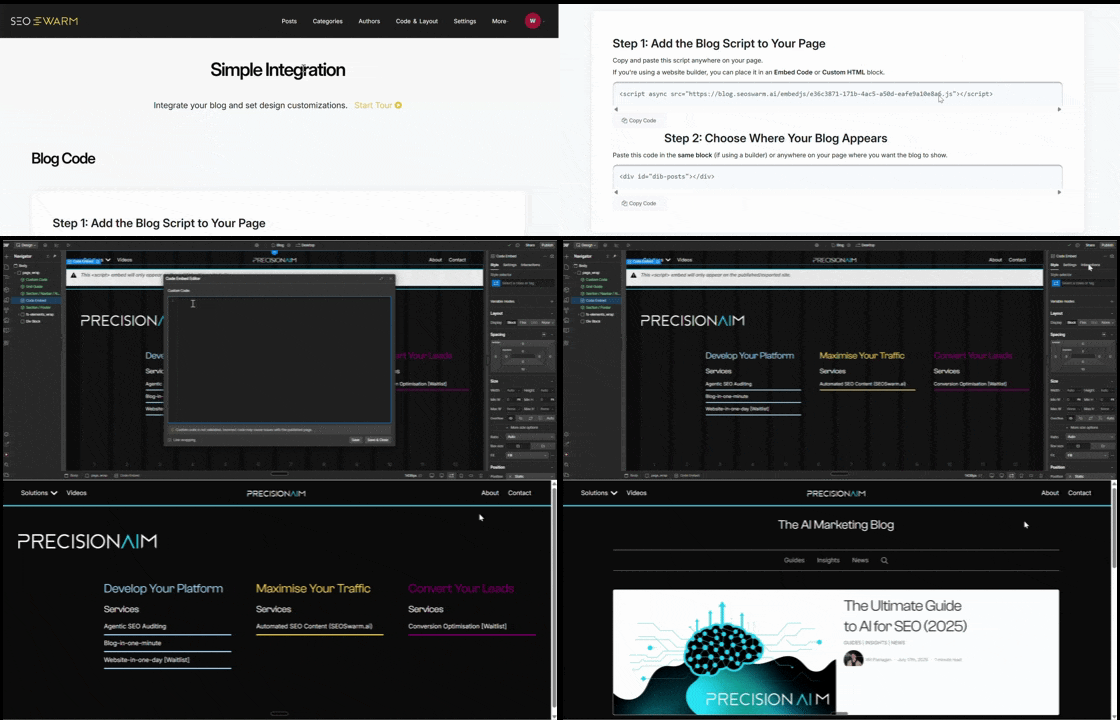
Output isn’t just higher, it’s multiplied—brands often see a fivefold gain over manual work.
Blog-in-one-minute
Add a fully SEO-optimised blog to your website with just 2 lines of code.
Learn more
Agency-managed automation vs. DIY AI SEO: Key differences
| Feature | SEOSwarm | DIY AI SEO Tools |
|---|---|---|
| Workflow | End-to-end automation, expert review | Manual steps, less automation |
| Quality & Speed | Under 10 minutes per post; 70% fewer errors | Hours per post, manual fixes |
| AI Visibility Impact | 35–60% organic growth, consistent answer box rates | Patchy, uneven citations |
Key takeaways
- AI/agency hybrid workflow sustains search presence
SEOSwarm blends automation with expert review for resilient AI SEO. - blog-in-one-minute enables instant, modular blog launches
Speeds up content and scaling to match AI-driven demand.
The road ahead: Future-proofing your SEO in the AI era
Staying agile in a shifting AI landscape
Let’s face it—AI search moves quickly. Teams that thrive spot shifts fast on real-time dashboards like SEOSwarm and respond without delay.
A sudden algorithm update? They’ll adjust schema, refresh modular content, and reinforce E-E-A-T, keeping themselves visible in AI results.
Making adaptation routine
Agility stems from a curious mindset. Teams such as Exploding Topics check metrics often, try new content formats, and promptly drop what no longer works.
Routine audits using SEOSwarm or AthenaHQ keep schema and content aligned with AI’s criteria.
Monthly reviews of bios, credentials, and schema maintain trust signals, while regular knowledge-sharing sessions ensure everyone’s up to speed with AI shifts.
Staying ahead of trends
Proactive teams set up news alerts, attend webinars, and test out new SEO tools—so they’re always ready for change. A growing network and tracking emerging resources keeps them prepared for the next AI-driven search shift.
Making the Best SEO Strategies for AI Visibility Tools Work
AI-powered search doesn’t reward the loudest voice—it rewards the clearest, most credible answer. If you want your brand cited in AI summaries, you need more than keywords. Modular content, robust schema, and visible expertise are now the foundation for real visibility.
Here’s my advice: set up a workflow that combines live AI citation tracking with rapid content updates. Use tools like SEOSwarm to spot gaps, and blog-in-one-minute to act fast. Make audits, schema checks, and expert reviews part of your regular routine—not just a quarterly task.
SEO in the AI era isn’t about chasing rankings; it’s about earning trust, staying current, and being the answer AI wants to cite. The brands that adapt quickly and review often will own the next wave of search.
- Wil