
SEO teams are under constant pressure to keep up with search engine changes and deliver results faster than ever. Traditional tools just can’t match the speed or depth needed to stay ahead in today’s competitive environment.
I’ve spent years testing both manual and AI-powered SEO platforms, and I know how overwhelming the options can feel. The right AI SEO software can automate tedious tasks, surface smarter insights, and help you adapt to algorithm shifts in real time.
In this guide, I’ll break down what sets the best AI SEO tools apart, from machine learning and NLP to full workflow automation. You’ll see how leading platforms like Surfer SEO, Semrush ContentShake AI, and SEOSwarm deliver measurable gains in efficiency, content quality, and traffic.
You’ll also get a clear comparison of managed services versus SaaS platforms, practical use cases, and a checklist for choosing the right fit. If you want to save time, scale content, and sharpen your competitive edge, you’ll find actionable advice and real-world examples right here.
What Defines the Best AI SEO Software?
Defining AI SEO Software: Beyond Traditional Tools
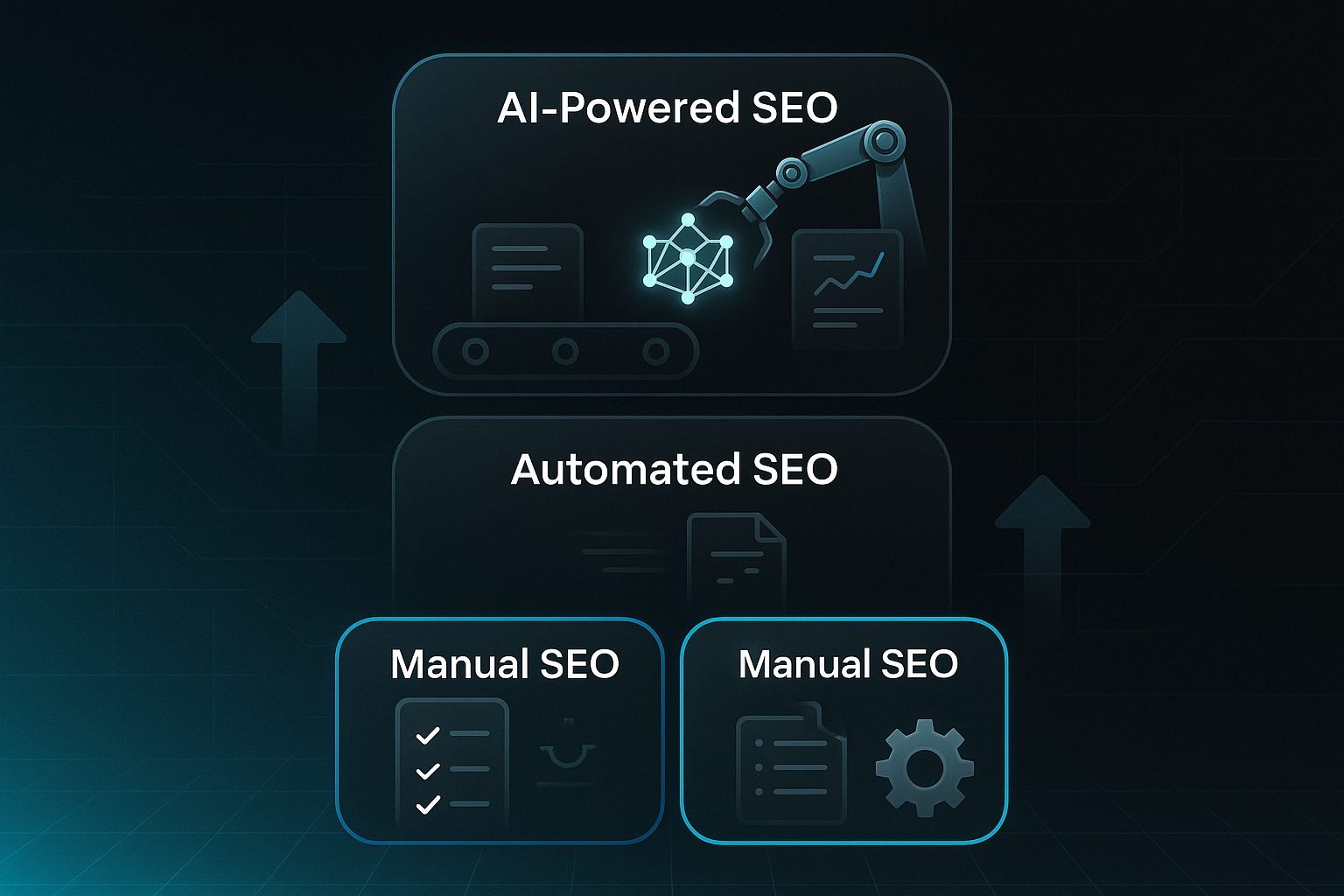
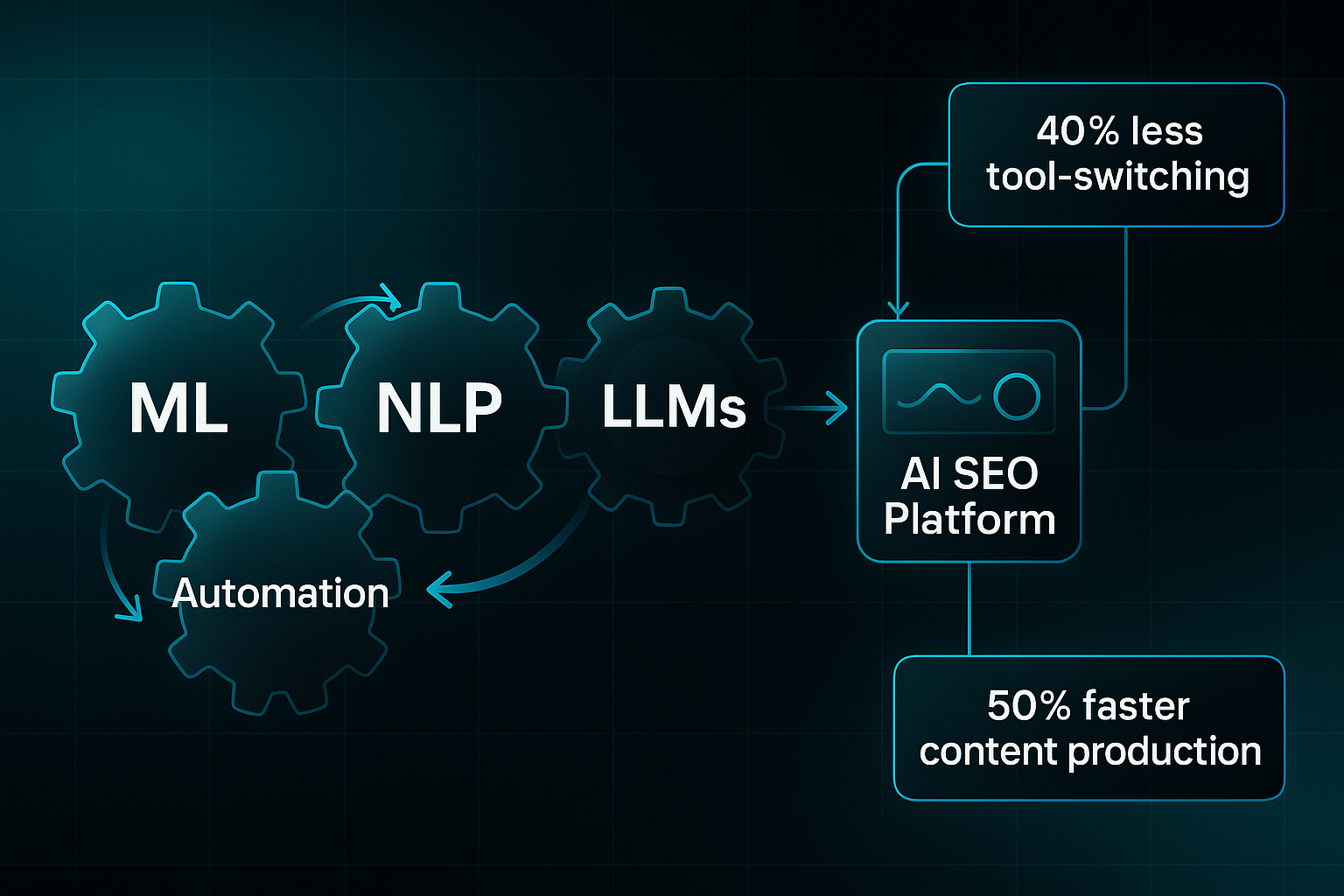
AI SEO software offers a totally new approach to digital optimisation. It taps into machine learning (ML), natural language processing (NLP), large language models (LLMs), and automation, helping SEO teams keep up with an ever-changing search landscape.
Forget the static checklists and manual slog of old-school tools. The best AI SEO platforms adapt in real time, reshaping themselves as search engines and users evolve.
Core AI Technologies and Their Edge
- Machine Learning
Analyses mountains of data to identify ranking drivers, automate technical work, and adapt to algorithm changes. Semrush ContentShake AI and Search Atlas rely on this. - Natural Language Processing (NLP)
Looks past keywords to decode language, context, and intent. Surfer SEO uses this for smarter content advice. - Large Language Models (LLMs)
Let teams create audience-specific content with real substance. RankIQ and ContentShake AI excel here. - Automation
Clears the grunt work—research, audits, internal links, site tweaks. AlliAI rolls out changes at speed and scale.
Why These Technologies Outperform the Old Way
Put ML, NLP, LLMs, and automation together and you get a platform that's responsive and evidence-driven. These tools crunch immense datasets, automate major workflows, and deliver over 40% less tool-switching for agencies and up to 50% faster content production.
AI SEO vs. Traditional SEO Tools
What really sets the new generation apart? Check this snapshot:
| Feature/Benefit | AI SEO Software | Traditional SEO Tools |
|---|---|---|
| Data Handling | Automated, ML-driven huge data analysis | Manual, fixed rule-based analysis |
| Content Optimisation | Context-aware, semantic, intent-based suggestions | Keyword-focused, basic recommendations |
| Workflow Efficiency | End-to-end automation, streamlined | Manual, fragmented |
| Adaptability | Continuous self-learning, real-time updates | Periodic manual tuning |
| Outcome Speed/Accuracy | Faster, more accurate, scalable | Slower, prone to error |
Practical Implications for SEO Teams
The benefits are real—faster adaptation, smoother teamwork, and better results.
- Faster Adaptation
AI responds quickly to algorithm updates; old tools get left behind. - Increased Efficiency
Search Atlas users see over 40% less tool-switching and up to 50% faster content output. - Clear Results
AlliAI users report double-digit traffic growth; Semrush ContentShake AI can lift B2B engagement by up to 40%.
Leading AI SEO Platforms Setting the Standard
Top platforms—Surfer SEO, Semrush ContentShake AI, Search Atlas, AlliAI, and RankIQ—blend smart data, context, and automation for stand-out results.
Source: surferseo.com
So, what’s the secret to exceptional SEO now? It’s all about smart, scalable innovation.
How AI SEO Software Works
Data Ingestion and Analysis
So, how does AI SEO software outpace those endless search engine updates and tactical competitors? Let’s dig into what’s really happening behind the scenes.
These platforms are anything but idle. They’re constantly harvesting live data—tracking ranking changes, spotting fresh SERP features, and flagging new competitor activity. Tools like SEMrush, Moz Pro, BrightEdge, and Ahrefs don’t just send regular reports; they deliver instant alerts on every shift that matters, so you always have the upper hand.

How To Use Ahrefs For Competitive Analysis: Full Review & Alternative Tutorial
But what are they analysing? Here’s the breakdown:
- Ranking data
Real-time monitoring of keyword positions and SERP features. BrightEdge and SEMrush instantly flag when your page jumps into or drops out of a featured snippet. - Competitor strategies
AI analyses rival backlink profiles, keyword campaigns, and ranking swings. Ahrefs excels here, with Moz Pro catching sudden moves. - Search trends
Spot trending topics and search intent shifts in real time—think KWI and its live SERP analysis. - On-page structures
Everything gets audited: headings, schema, content blocks, and internal links. Technical or content gaps surface quickly. - Backlink patterns
Track the quality, rate, and diversity of inbound links. Ahrefs keeps you notified of every new and lost link. - Content frameworks
Using NLP clustering, tools like BrightEdge Data Cube map topics thoroughly, pinpointing entity coverage and content gaps.
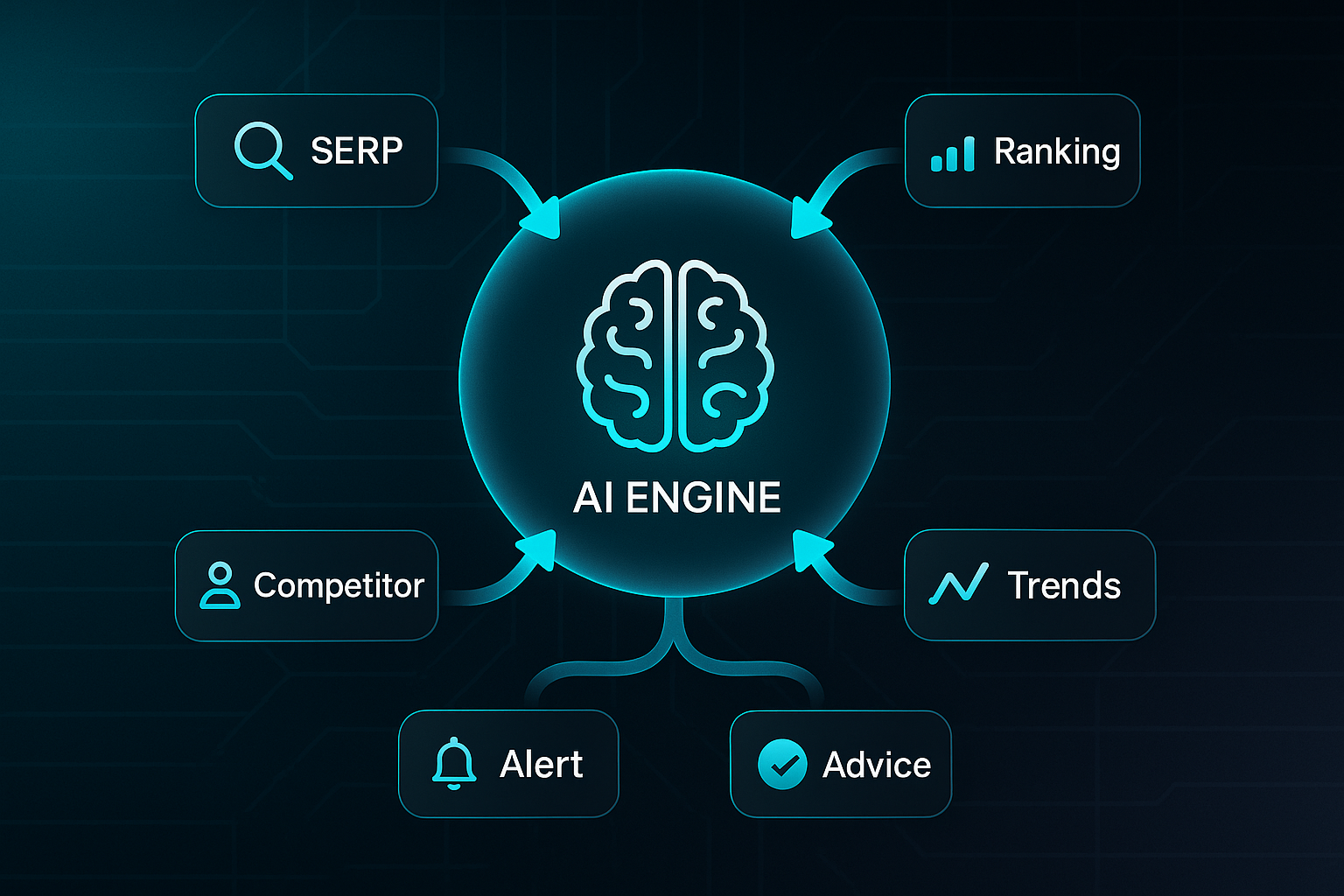
Now, here’s where AI’s edge really shows—these platforms instantly alert you to critical market changes. If a competitor lands a batch of strong backlinks, or Google adds a brand-new SERP feature, you won’t miss a beat. SEMrush, Moz Pro, or BrightEdge will send tailored recommendations—refresh content, strengthen internal links, or adjust to the new SERP, all within hours.
But there’s more. By integrating analytics, these tools keep eyes on engagement metrics like dwell time and CTR. If user behaviour dips after an update, AI connects the dots and recommends optimisations—maybe new titles, richer content, or internal linking changes.
The result? You respond to updates in hours, not days—powered by real-time insights and automation, leaving traditional manual SEO chasing shadows.
Key benefits and challenges of using AI SEO software
AI SEO software has flipped the script on digital marketing. Suddenly, whole teams are handling search optimisation, content creation, and competitive analysis in ways that would have felt far-fetched just a few years back. Let’s cut straight to the real-world advantages—things like dramatic time savings, slashed costs, boosted content quality, and sharper, data-led strategies.
But of course, it’s not all sunshine—there are real challenges under the bonnet too.
You're about to see actual business results, brand examples, and where these AI tools really shine (or occasionally stumble).
Time and cost efficiencies
Think about the endless hours that go into keyword research and repetitive SEO tasks. AI SEO platforms change this story completely. LoudGrowth, for instance, sliced keyword research hours by a hefty 42%, freeing up their teams for more strategic moves.
That’s not a one-off. HubSpot’s 2024 State of Marketing report uncovered a 58% leap in blog production speed for those using AI. Seer Interactive saw campaign output climb—with no need to bring in extra staff. Some experts now reclaim 10+ hours each week, time they can finally put towards creative thinking rather than routine audits.
AI-powered SEO tools enhance productivity by enabling teams to instantly identify traffic-stealing competitors, find untapped keyword opportunities, and create content that ranks higher, automating traditionally time-consuming analytical tasks.

Quality and comprehensiveness of output
What if your software didn’t just speed things up, but actually made things better? Tools like MarketMuse and Clearscope dive beneath the surface. They're not simply automating; they’re driving in-depth optimisation aligned with Google’s E-E-A-T principles—so that's experience, expertise, authoritativeness, and trustworthiness covered.
Source: marketmuse.com
To put that in perspective, Healthline saw a 32% lift in organic traffic after embracing these tools. Investopedia broke into challenging featured snippets across finance. Monday.com rolled out multilingual, high-standard content at scale, while Forbes polished their editorial consistency and authority. These top AI platforms make it possible to produce high-quality, search-relevant material at a scale that manual teams could only dream of.
In a case study on leveraging AI for search visibility, our agency achieved a 4,162% growth in traffic by developing and implementing a proprietary AI SEO framework.
Strategic and competitive advantages
Here’s where things get really interesting. AI SEO isn't just about reacting—it predicts. With smart analytics, you can spot emerging trends and unnoticed gaps before anyone else. Transit’s story is eye-opening: they spun up 10,000+ landing pages and catapulted organic traffic by an astonishing 1,134% just by forecasting what searchers wanted.
MedPark Hospital moved quickly on AI-driven changes and surged in rankings. The advantage? If you’re the first to adapt, you get a compound edge—meaning your SERP visibility and market share keep building over time.
Major pain points and how AI addresses them
Not every AI SEO platform is perfect. Some solutions still lean on basic automation, missing the real-time adaptability that makes AI special. Brainlabs puts it bluntly: if your tool isn’t learning fast, you’re not getting full value.
The Telegraph ran into what’s called "semantic drift," where meaning in AI-generated content slowly wandered off-course. Fixing it took advanced analysis and strong editorial guardrails. Integration headaches are real too—sometimes you need to retrain whole workflows or bring in custom middleware.
Booking.com had to develop robust attribution models just to get a true read on ROI. And over at Siemens, results only followed a solid investment in staff training.
Use cases
- In-house teams
MedPark Hospital achieved a 523% rise in organic traffic and scaled multilingual SEO with AI automation. - Agencies
Seer Interactive supercharged client content and reports, while LoudGrowth’s clients scored 35–50% higher traffic in half a year. - Solopreneurs
Randy Selzer halved his blog-writing time and boosted traffic 42% thanks to AI-powered research. - Enterprises
OneSpot stretched session duration by 28%; Alton Lex saw a 60% growth in organic visits across 20+ legal verticals.
Striking the ideal balance between AI and human oversight is the secret ingredient. That’s the only way to protect quality, relevance, and sustainable SEO wins.
Critical features and future trends in the best AI SEO software
End-to-end SEO workflow automation
Let’s dive into how AI SEO platforms have changed the landscape. The days of juggling a hodgepodge of different tools are fading fast. Leaders like Alli AI, BrightEdge, Surfer SEO, Semrush ContentShake AI, and Ahrefs now bring every core SEO task together within a single, streamlined environment.
Source: alliai.com
Picture this: keyword research, content brief creation powered by AI, automated on-page tweaks (like meta tags and schema), technical audits, link building, and performance dashboards—all in one place. No more flipping between tabs or patched-together processes.
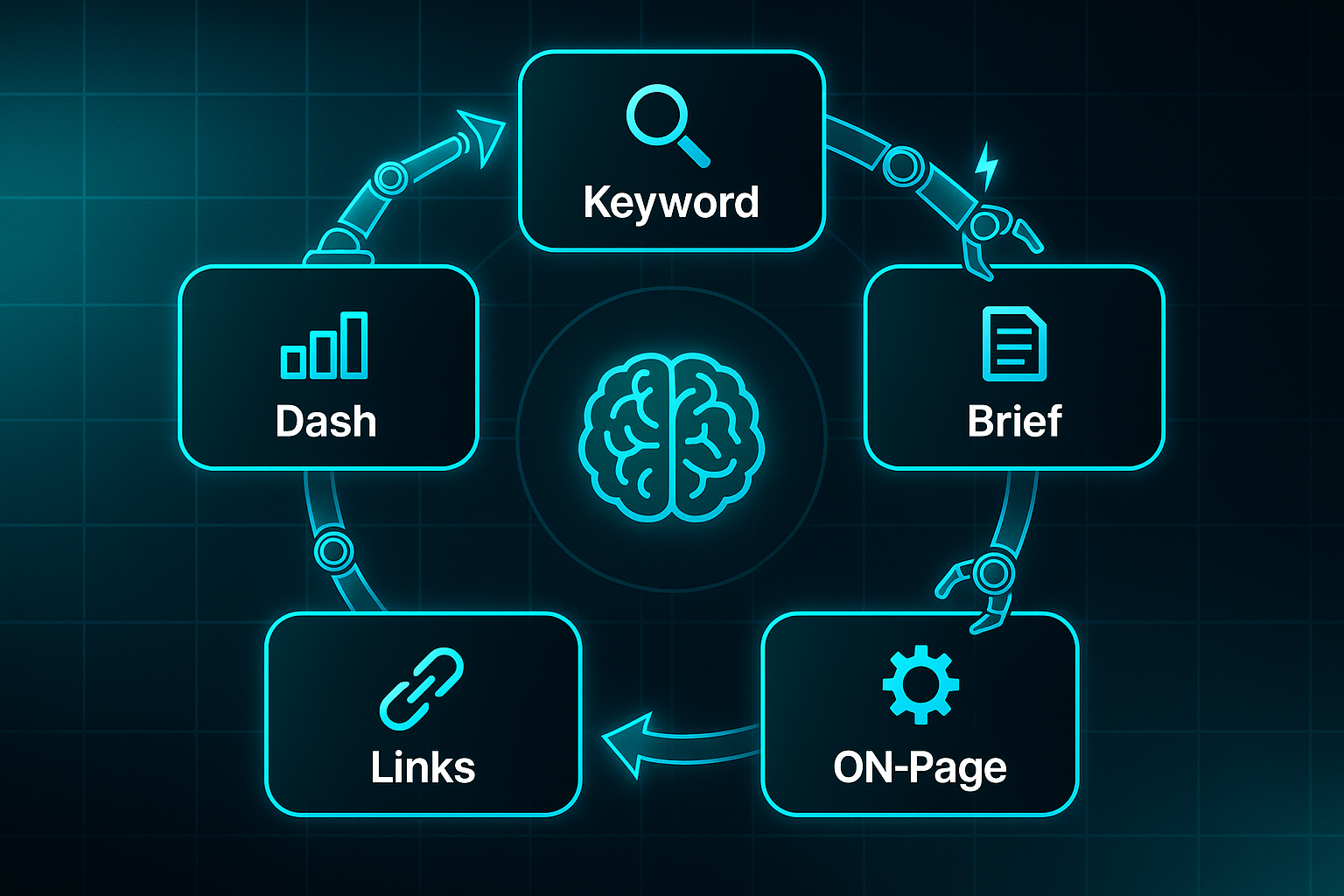
The real breakthrough is end-to-end automation. Alli AI lets agencies orchestrate technical fixes and content changes across thousands of pages in minutes. In 2024, this meant over 10,000-page migrations handled at once—with no need for extra staff. Batch updates, campaign scheduling, and audit rollouts are now faster and less error-prone than ever.
Scheduled audits and real-time alerts are game changers. BrightEdge’s predictive system constantly checks site health and content performance. If your rankings dip or the SERP shifts, instant, KPI-linked notifications go out. The result for major brands like Marriott and Adobe? Manual reporting time slashed by 60%.
Surfer SEO keeps content fresh by letting agencies automate daily audits and rapid refreshes whenever Google tweaks its signals. It’s almost like having a hyper-vigilant assistant that never sleeps.
Content scaling is where Semrush ContentShake AI shines. By automating the full blog workflow—idea, outline, grading, scheduled posting, analytics, and alerts—users like Wix and Shopify have grown their content output three- to fivefold. Manual effort? Cut by over 70%.
Ahrefs rounds things out with hands-free technical site monitoring. Automated audits and Slack alerts mean SEO leads are notified instantly of any errors— crucial for overseeing vast sites with thousands of URLs.
When search engine algorithms cause chaos, agencies can launch rolling audits across all domains. As soon as volatility hits, these platforms send real-time alerts and even suggest or automate quick fixes, like tightening links or updating schema. That’s the real promise of total AI automation: problems are identified and addressed before they spiral.
Automated platform feature overview
| Platform | Audit Scheduling | Real-Time Alerting | Enterprise Automation | 2023–2024 Outcomes |
|---|---|---|---|---|
| Alli AI | Yes (bulk, multi-domain) | Yes (ranking, technical) | Yes (batch updates) | 10,000+ page migrations, no extra hires |
| BrightEdge | Yes (predictive) | Yes (KPI-linked, SERP) | Yes (integrated) | Reporting time cut by 60% |
| Surfer SEO | Yes (content) | Yes (SERP volatility) | Yes (API, bulk refresh) | Audits/optimisation now daily |
| Semrush ContentShake AI | Yes (blog workflow) | Yes (performance) | Yes (full automation) | 3–5x content scale at Wix, Shopify |
| Ahrefs | Yes (site audits) | Yes (Slack, email) | Partial (error routing) | Automated large-site error monitoring |
In the end, the best AI SEO tools aren’t just smart—they’re coordinated, instant, and always one step ahead. That’s how modern teams stay in control, no matter what search throws at them.
A comparative review of the best AI SEO software platforms
SEOSwarm
SEOSwarm puts a fresh spin on AI SEO by combining agency-level expertise with advanced automation. It truly is a hybrid model: brands, agencies, and multi-site businesses get a fully managed package that covers strategy, content, technical fixes, analytics, and routine site maintenance.
Once you’ve signed off your content plan, SEOSwarm’s team does the lot. Research, brief creation, expert writing, technical on-page optimisations like schema markup and internal linking—every detail is orchestrated. There’s even a final round of human checks, so every deliverable measures up to tough EEAT (Experience, Expertise, Authoritativeness, Trustworthiness) standards, always drawing on reliable sources for topical authority.
But here’s what sets SEOSwarm apart: it’s far more than a content mill. The platform also automates technical SEO, direct site publishing, internal linking, and schema integration. The entire process is linked to analytics, letting you track keyword standings and content performance on live dashboards. Weekly AI-driven audits flag anything dipping below par and recommend what needs a refresh, so underperformers get a second life.
And you’re not left to guess what to cover next—monthly 'content health checks' suggest fresh topics, reacting to new trends and competitor shifts. All reporting connects right back to your GA4 and CRM data, so you’ll see exactly how SEO is fuelling organic growth and new business.
Curious how it plays out in the real world? Just look at HealthPro Clinics. In April 2025, SEOSwarm handled rollouts across 17 clinic sites, tackling landing pages, bios, and a hefty batch of 120+ FAQ entries tailor-made for each local search audience. The “blog-in-one-minute” feature let HealthPro’s team pump out 3-5 posts per clinic a week—each launched in under 60 seconds, topic-optimised and visually ready to go. The full network of sites went live in only 11 business days.
And the outcome? Organic search impressions shot up by 212% in 90 days, with monthly traffic surging from 480 to 1,370 visits per site. Seven clinics landed first-page rankings for “physical therapy near me”—and 38% of new enquiries came straight from SEOSwarm-powered blog entries.
Pricing works on a custom monthly retainer, so you only pay for exactly the scope and volume you need. It’s designed for agencies and medium to enterprise organisations that want robust, high-quality SEO at scale but don’t want to build a massive in-house team.
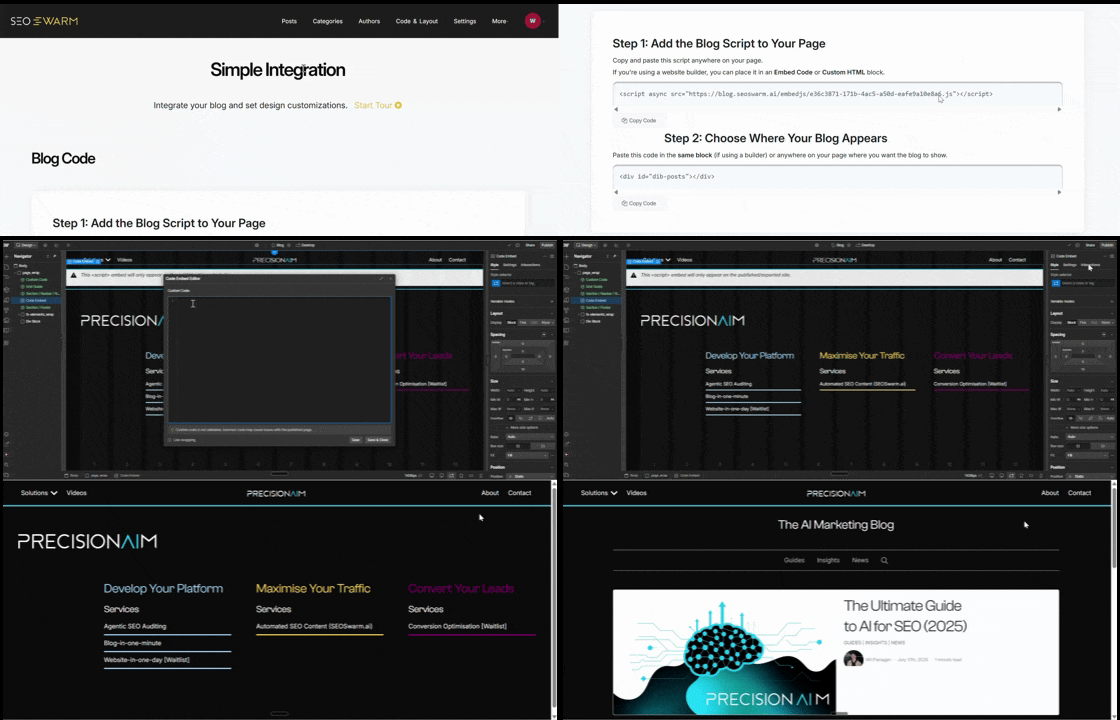
And for those pace-setters chasing rapid growth or instant setup, the optional “blog-in-one-minute” system is a gamechanger. Even a non-technical user can paste in two lines of code and get a ready-made, fully SEO-optimised blog hub up and running. HealthPro Clinics proved just how fast this is: a May 2025 article cracked their local top five in search and drew 120 organic visits in the opening week—without any drain on their own staff.
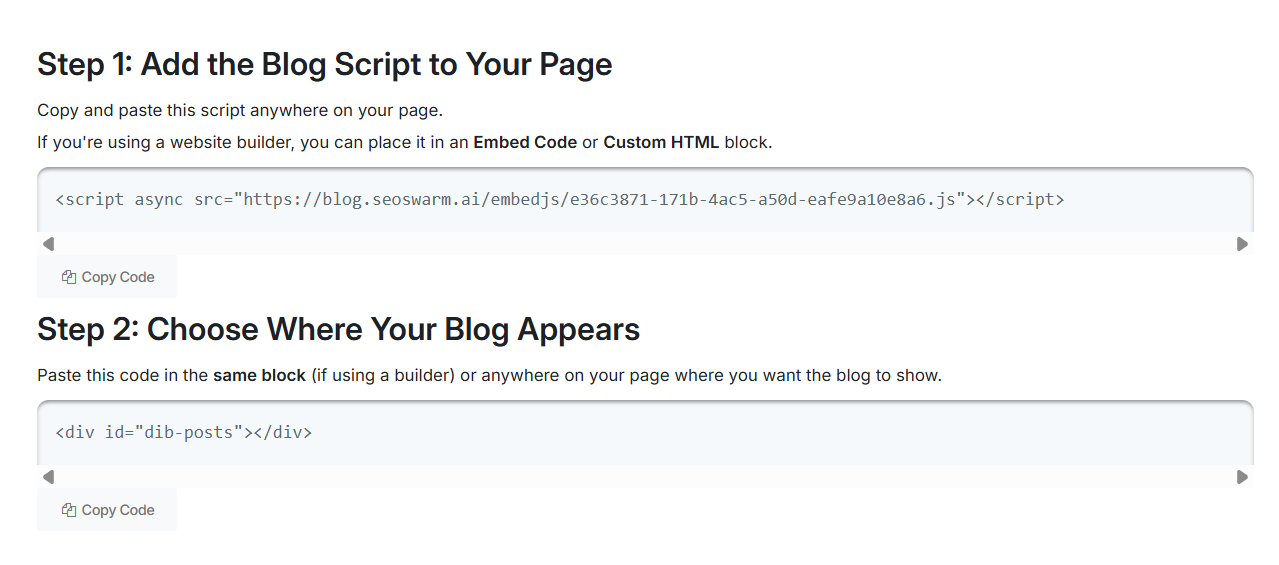
In sum, SEOSwarm’s blend of AI automation and human skill makes for market-leading results in speed, coverage, and zero-hassle SEO. If you want broad visibility, hands-off content upkeep, and measurable growth—especially across multiple sites—it’s an outstanding choice.

AI-Powered
SEO Content Strategy
See the AI platform that's replacing entire content teams
(with better results).

Managed AI SEO vs. SaaS Platforms: Which Approach Works Best When?
Two Distinct Paths: Managed Service or SaaS Platform?
When you’re sizing up AI SEO, you hit a fork in the road: do you want a fully managed service or a SaaS toolset that puts your team in the driver’s seat?
Take the managed model. With SEOSwarm, once you approve your content plan, their experts cover everything—strategy, content, technical SEO, publishing, and those crucial compliance checks.
Look at HealthPro Clinics for proof—it rolled out content across seventeen sites, posting three to five blog articles per location each week, each uploaded in under 60 seconds. The client’s workload was minimal: SEOSwarm orchestrated the research, analytics, audits, and trend-based topic ideas, all with compliance at the core. This route works best for multi-site healthcare chains, agencies, or businesses with regulatory hurdles.
SaaS Platforms: Self-Serve Flexibility
Flip to self-serve and you’re looking at tools like SurferSEO, MarketMuse, or SE Ranking. Here, the platform powers your research, content grading, competitive analysis, and reporting—but your team manages setup, integration, and next steps.
It’s all about control and flexibility. Costs are predictable, but every risk and responsibility falls to you. You need in-house SEO knowledge, the discipline to adapt with Google, and a taste for hands-on optimisation.
In 2024, 59% of in-house e-commerce SEO teams use at least one AI SEO SaaS tool. But platforms stick best where internal expertise is strong. Smaller outfits often churn when their content or analysis needs outrun what a lightweight team can handle.
Who Benefits Most?
Managed (SEOSwarm)
- Best for
Healthcare, networks, agencies needing compliance and scale - Why
Low client effort, platform-led quality
SaaS (SurferSEO, MarketMuse, SE Ranking)
- Best for
Start-ups, DIY marketing teams hungry for hands-on control - Why
Flexible and cost-efficient—if you’ve got the skills
Key Comparison Bullets
- Resource Demand
Managed = low client input; SaaS = high in-house input - Ownership
Managed = provider leads; SaaS = client team drives all - Quality/Compliance
Managed = provider ensures; SaaS = client-controlled
Choosing is all about your bandwidth, expertise, and tolerance for risk. Some want the shortcut to impact—others crave total DIY flexibility.
SEOSwarm: A closer look
End-to-end flawless SEO content strategy
SEOSwarm covers your SEO content journey from start to finish. After a collaborative onboarding process, the marketing agency behind the software locks in the strategy, takes on topic ideation, handles scheduling and drafting, and implements SEO tweaks like schema and internal linking.
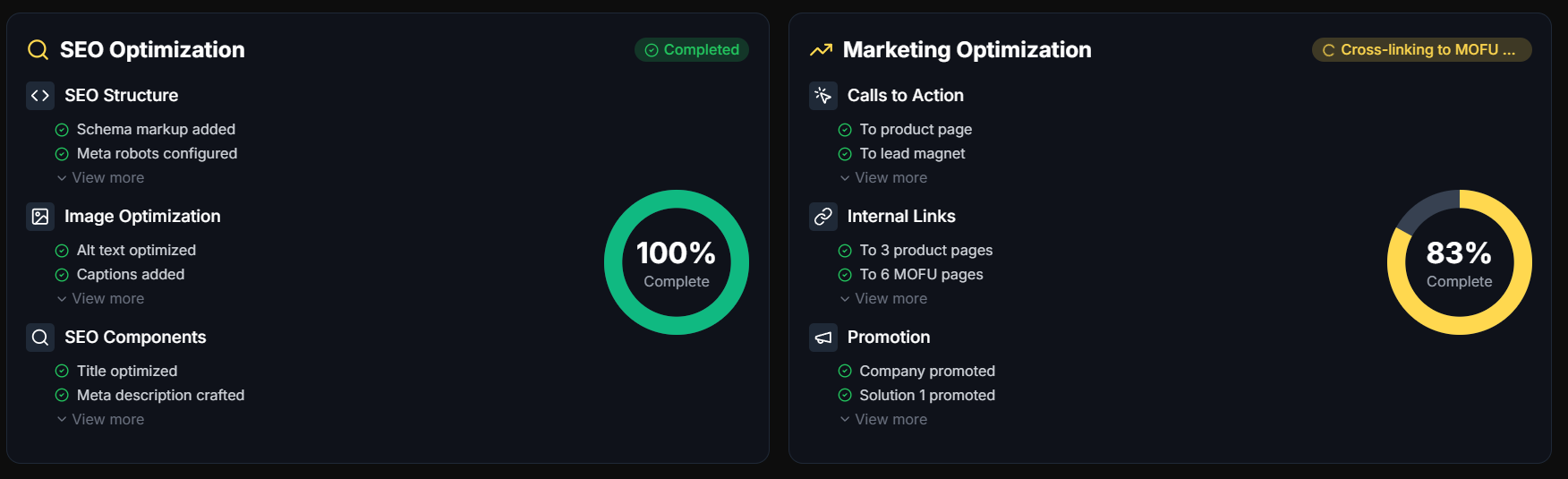
Analytics aren’t just for the record—they feed into live dashboards tracking rankings and engagement as they happen. Every month, underperformers are flagged and refreshed, so your strategy never sits idle. For one healthcare client, over 120 posts launched in 90 days led to a 212% spike in impressions and first-page rankings, all with barely any extra client effort.
Agentic AI, human oversight, and quality control
SEOSwarm’s AI agents handle research, structure, and technical SEO, but it’s experienced humans who ensure EEAT standards and sector fit. Real-time analytics nudge you towards data-backed optimisations, always matching Google’s and your industry’s evolving standards.
This hybrid saves serious time for agencies with lots of sites—manual checks dropped by 60%, translating to stronger authority and accuracy than most DIY setups.
Blog-in-one-minute integration (add-on)
Here’s the clever twist: with blog-in-one-minute, you can create an SEO-ready blog hub in just minutes—paste in two lines of code and let automation sort the rest, from linking to schema to Cloudflare hosting.
Because it’s an independent add-on, you get instant launch and technical SEO handled fast, without being tied to SEOSwarm’s main service. Quick campaign launches really are that easy—no developer required.
Blog-in-one-minute
Add a fully SEO-optimised blog to your website with just 2 lines of code.
Learn more
How to select the best AI SEO software for your needs
Feature alignment and usability
Start with your biggest needs—do you want technical audits, content optimisation, authority signals, or a mix?
Platforms with simple dashboards and strong in-app support usually win. Over-complicated software frustrates and rarely gets used, so focus on clarity and ease.
Don’t skip the pilot. Run a quick test on real content with your team. You’ll instantly spot what works and where headaches creep in.
- Workflow fit
Supports technical SEO, content, authority, and reporting essentials. - Ease of use
Look for intuitive dashboards and ready-to-use templates. - Support/onboarding
Strong onboarding, demos, and expert support smooth the switch. - Pilot testing
Short real-world trials reveal strengths and stumbling blocks.
Scalability, integration, and automation
For multiple sites or high-volume work, your platform must scale and integrate easily with analytics, CMS, and workflow tools.
Solutions like SEOSwarm excel at deep automation and easy integration, spotting problems before rankings slip.
- Handles scale
Reliable for large sites or multiple domains. - Integration
Seamless workflows with your existing systems. - Automation
Automated audits and alerts reduce manual checks.
Budget and value assessment
Look beyond headline costs—factor in time saved, not just the subscription. Managed solutions like SEOSwarm use custom retainers, while SaaS tools have tiered pricing. Ultimately, ROI comes down to rankings and time won back.
- Pricing models
Compare retainer and tiered plans. - ROI focus
Balance efficiency and better rankings with overall spend.
Vendor checklist and onboarding
Drill vendors on security, support, and workflow flexibility. Set KPIs and roll out in phases to minimise risk and show early wins.
Great onboarding makes all the difference.
- Vendor review
Check security, workflow options, and roadmap. - KPIs/rollout
Agree on goals, phase the rollout. - Training/support
Ensure onboarding help is strong. - Onboarding timing
Most teams launch in 2–8 weeks.
Future directions and innovations in AI SEO software
AI SEO software is picking up speed—propelled by generative AI, deeper automation, and next-gen AI search engines. Traditional keyword tools and one-off audits? They’re already obsolete. Modern platforms now write, optimise, and refresh content live, with human oversight to protect accuracy and quality.
But where’s all this momentum leading?
Generative AI integration and autonomous optimisation
Large language models aren’t just analysing—they’re crafting and refining content at scale, sometimes across hundreds of pages in minutes.
Core SEO pillars such as keyword research and internal linking are being transformed by autonomous systems, enabling a level of continuous optimization and strategic advantage that manual processes cannot match.
SEO ambitions have shifted. Generative Engine Optimisation (GEO) is all about landing in AI-generated answer boxes, not just Google positions.
And workflow hyper-automation is transforming delivery. AI now covers content ideation, technical checks, keyword research, and publishing—meaning your team can focus on the bigger picture.
- Automated, on-demand optimisation
AI instantly rewrites and enhances content and metadata for many pages at once. - Generative Engine Optimisation (GEO)
Standing out now means being present in AI summaries, not just search results. - Workflow hyper-automation
AI connects content ideas to publication, with barely any manual effort.
AI search engines and AEO readiness
AI-driven platforms like Gemini and Perplexity AI prioritise structured, schema-rich sites. Optimising for Answer Engine Optimisation (AEO) means preparing your content for direct answers and chat delivery.
- AI-based discovery
Schema-rich websites get top exposure in AI search. - Answer Engine Optimisation (AEO)
Win placements in answer boxes and chat summaries. - Schema and structured data
Clean markup and strong Q&A drive answer visibility.
Human-AI collaboration for quality and authority
AI is fast, but not flawless. Editorial experts keep EEAT (Experience, Expertise, Authoritativeness, Trust) high, checking both relevance and accuracy.
- Editorial oversight and EEAT
Humans anchor content credibility. - Guarding against semantic drift
Ongoing reviews catch and correct off-track AI output. - Hybrid workflows for quality
AI delivers scale—editors keep every detail sharp.
The future? It’s a smarter, faster, truly collaborative human–AI partnership.
My Final Thoughts on the Best AI SEO Software
AI SEO software isn’t just another tool—it’s a force multiplier for teams ready to move beyond manual guesswork. The best platforms combine machine learning, NLP, and automation to deliver faster results, sharper insights, and scalable content that actually ranks. But no software is perfect; real gains come from pairing AI speed with human judgment.
Here’s my advice: Start with a pilot on your own content. Test both managed and SaaS options—see which fits your workflow, compliance needs, and appetite for hands-on control. Look for platforms that automate the grunt work, integrate with your stack, and offer strong onboarding support. Don’t just chase features; focus on time saved, quality gained, and measurable growth.
SEO is no longer about keeping up—it’s about staying ahead. The teams who blend smart automation with strategic oversight will own the next wave of organic growth. In the race for search visibility, the real edge belongs to those who adapt fastest and never stop refining their approach.
- Wil