

Getting your real estate website noticed by serious buyers and sellers isn’t as simple as listing properties and hoping for the best. I’ve seen countless agents struggle to compete with massive property portals, only to miss out on the local leads that matter most.
If you’re frustrated by low website traffic or feel invisible in Google’s local results, you’re not alone. The good news is, there are proven SEO strategies that can help you stand out—even against industry giants.
In this article, I’ll break down exactly what makes real estate SEO unique, from hyperlocal keyword targeting to technical compliance and trust-building tactics. You’ll get actionable steps for optimising your site structure, listings, and content, plus real-world examples of agents who’ve turned small changes into big results.
I’ll also cover the best tools for keyword research, automation, and performance tracking, so you can measure what’s working and scale your efforts efficiently. By the end, you’ll know how to attract more qualified leads and build lasting authority in your market.
What is SEO for real estate?
Defining real estate SEO
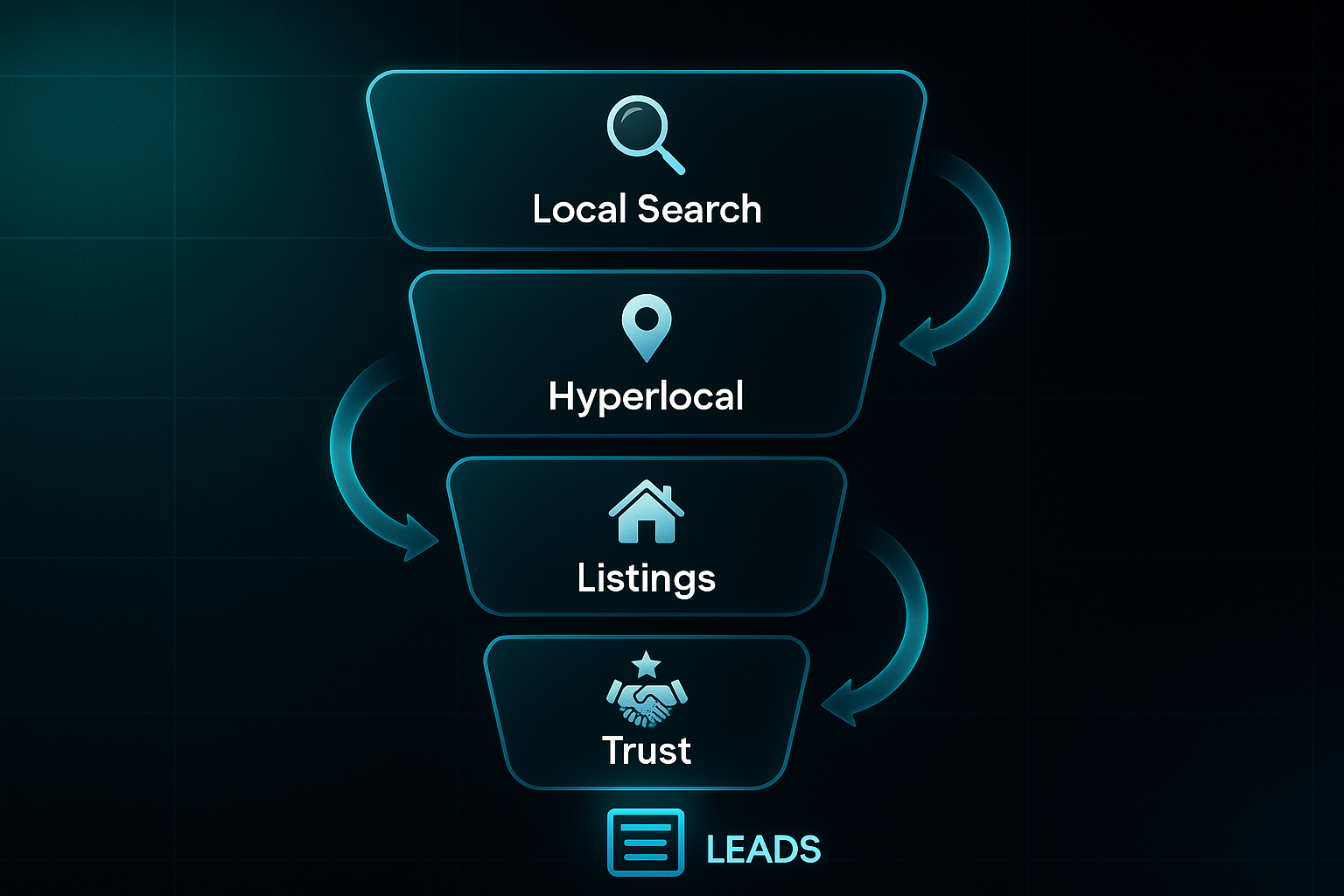
So, what exactly is SEO when it comes to real estate? At its core, it’s about getting your property website in front of the right people—those searching for a home, agent, or market insight in a specific location. It goes far beyond trying to rank for something broad like "houses for sale." The real opportunity is in those focused, local searches, where intent is high and competition fierce.
- Hyperlocal keyword targeting
Zoom in on neighbourhood, postcode, and property-type terms to reach people searching in very specific locations. - Adapting to dynamic inventory
Keep listings updated, so both search engines and buyers see only what’s actually available. - Regulatory and technical compliance
Satisfy industry rules on MLS, privacy, consumer rights, and website accessibility. - High trust standards
Ensure your listings, agent badges, and reviews are accurate to build credibility.
Great real estate SEO positions your site where it matters—so you turn online visibility into actual leads and local market authority.
Why SEO matters for real estate professionals
If you’re an agent, almost all quality online leads come from people searching for something specific—a rental valuation in Bristol, a flat in Ealing, or the right estate agent in Cardiff.
This kind of intent-driven, local search is pure gold—much more effective than pulling in random traffic from social ads.
But the game isn’t just about being found. Buyers and sellers now expect fast, visually appealing, and mobile-friendly websites. If you miss the mark here, you’re handing an advantage to your rivals.
Plus, visitors landing through organic search are usually serious—they’re ready to take the next step, not just browsing.
Agents investing in neighbourhood pages or unique listing content will always attract more targeted attention than those using generic templates.
That’s why SEO is essential for anyone hoping to stand out—whether you’re competing against global portals, or just the agency down the street.
What you need is a smart, strategic approach to real estate SEO that leverages your unique strengths—your local expertise, community connections, and ability to provide personalized service.
Characteristics of real estate SEO vs. generic SEO
What makes real estate SEO different from traditional strategies? Good question.
- Hyperlocal segmentation
Has landing pages for exact neighbourhoods, districts, and postcodes to attract precise search traffic. - Original property and agent content
Each listing and agent profile displays unique descriptions, compliance details, and attractive images. - Continuous content updates
Rapid inventory and market changes mean fresh website content is a must. - Competitive landscape
Big property portals win broad searches, so agencies need niche targeting and geo-specific optimisation. - Technical SEO challenges
Duplicate listing text demands solutions like canonical tags, unique copy, and structured data. - Rapid indexation
Sites need new listings indexed fast, which calls for up-to-date sitemaps and frequent refreshes.
Toss in fast-moving listings, complex compliance, trusted info, fierce portal rivals, and it’s clear: specialist, ongoing SEO is essential for agents aiming to win leads and keep their position online.
Unique SEO challenges for real estate websites
Competing against large real estate directories
Let’s be honest—giant property portals like Zillow and Realtor.com practically dominate national property search results. With domain authority scores above 90 in 2024, backed by millions of backlinks and relentless investment in site technology, these platforms set the pace. When you search “homes for sale”, these names’re always right up top. No surprise there.
This puts local agencies in a tough spot when it comes to ranking for broad keywords—they’re up against Goliaths. But here’s the thing: the door isn’t closed.
The real wins often lie in hyperlocal searches—when people target a specific area or suburb. More and more estate agents are skipping the high-stakes keyword battle and chasing visibility in the Google Local Pack: that map plus the three business results right underneath for “estate agent near me.” This can be a game-changer for smaller operations.
In a real estate-focused case study, a targeted local SEO strategy successfully elevated an agent from the #3 position to #1 in her specific market.
Securing one of those spots all comes down to your Google Business Profile (GBP). To stand out, your Name, Address, and Phone Number (NAP) must match everywhere online. Agents willing to update their GBP with posts, local reviews, and geo-tagged photos really start to shine.
Want proof? 2024 industry studies show that over 44% of local intent clicks go to the Local Pack. For estate agents, this brings up to five times more calls and website visits than those left outside.
A real-world example
Take Bret Wallace in Houston—he’s proof this works. Focusing on his GBP for a specific 36-square-mile area, using hyperlocal keywords, fresh content, and structured reviews, made all the difference.
Within just ten weeks, he pulled in $101,700 commission from only six leads—that’s a 68X ROI. Over two years, swapping big portal ads for this approach led to a 70% jump in annual gross commission income.
So, if you keep your reviews coming and your profile active, you really can leapfrog even the biggest players in local visibility and quality leads. That’s the power of hyperlocal SEO.
Core real estate SEO strategies: Where to start
Local SEO essentials
When it comes to real estate, everything starts with local SEO. If you think about how people search for homes or agents, it’s almost always local terms—“Flats in Camden” or “estate agent near me.”
Google’s local ranking algorithm cares about three things above all else: proximity to the searcher, your relevance to what they want, and your expertise in that area.
If you want to give yourself the best shot at top local rankings, your Google Business Profile is the place to begin. First, claim and verify it.
Then, sprinkle area-based keywords into your business name (where allowed) and description. Upload plenty of local images—think of recognisable local spots, team photos outside area landmarks, or photos that clearly show your patch.
And don’t stop there; Google Posts let you feature your latest listings or promote open house events right on your profile. Updated regularly, this all signals that you’re active and locally invested.
But here’s an easy way to sabotage yourself—get your name, address, or phone number (NAP) wrong somewhere on the web. Every single mention of your business online must match exactly.
Even the smallest difference—like using “St.” versus “Street”—can confuse search engines and cost you rankings.
Manual audits, services like Moz Local, or schema markup (specifically “LocalBusiness”) help spot and fix mistakes.
You’ll want more than just your homepage to win on Google. That means creating a dedicated landing page for every neighbourhood, suburb, or city you cover.
These pages should feature detailed area guides, up-to-date amenities, data on public transport, info on local schools, images taken around the neighbourhood, and of course, current property listings.
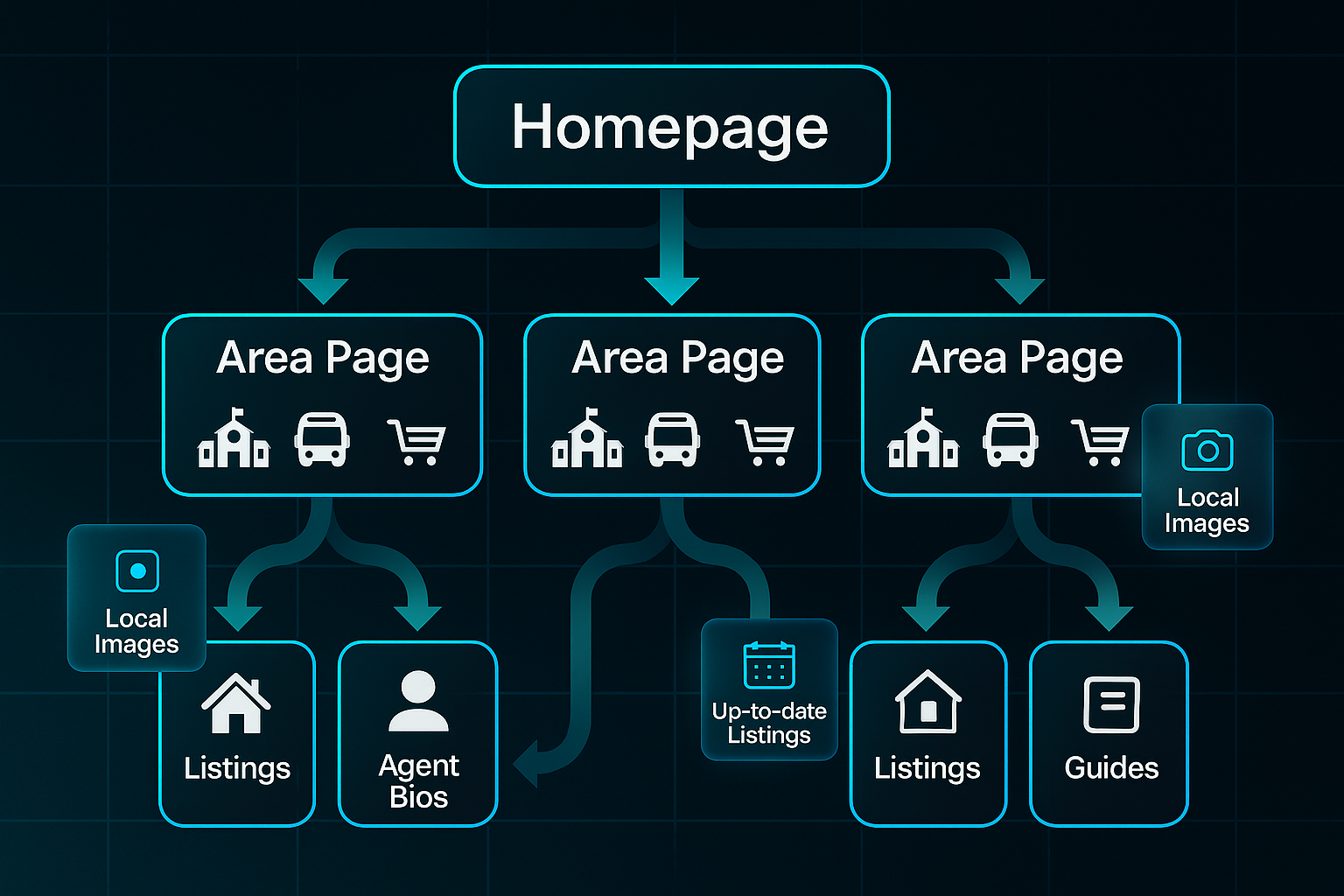
The goal? Out-inform generic competitors by being the expert on each area.
Make them easy to navigate, too—clear links from your homepage and a smartly structured navigation to show both users and Google where everything lives.
On-page optimisation for listings and agent bios
Ever landed on a listing page that sounds like every other? That’s a recipe for getting lost in the crowd.
Unique copy, local nods, and references to nearby parks or markets make your pages memorable and more likely to convert.
Targeting long-tail keywords and weaving local colour—maybe mentioning a weekend farmers’ market or a nearby top-rated school—gives your content an edge.
Markets change fast, so keep your keywords fresh. If it’s ski season, highlight properties near ski lifts.
During school holidays, update area pages with family-friendly content or events. This keeps your site relevant for the searches people are making right now.
Now, for a technical edge, embrace schema markup. It’s code that describes your content to search engines, increasing the chance of rich results like price or open house info in Google’s listings.
Use RealEstateListing and RealEstateAgent schema types—filling in fields for address, price, images, and agent credentials.
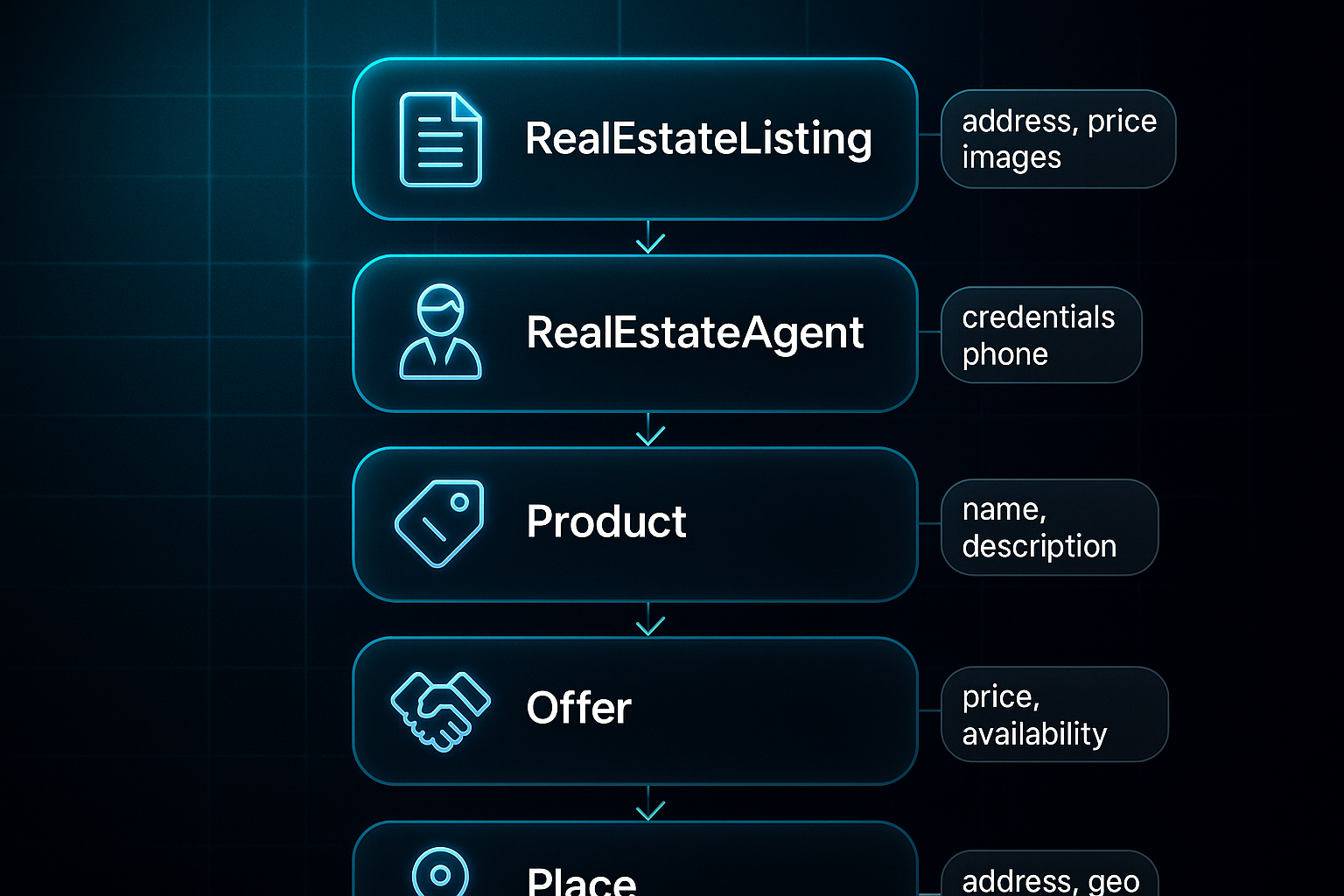
Resources like Schema.org explain every field, so it’s worth spending an afternoon making sure your site is technically spot on.
Building trust and authority
Authentic client testimonials are worth their weight in gold—both as trust signals for Google and reassurance for new visitors.
The best places to highlight them? All the big pages: your homepage, individual agent bios, and each property listing.
Asking for reviews can be as simple as a follow-up email, but never game the system—ethical, genuine feedback is what boosts trust and search rankings.
For extra impact, build a testimonials section that’s filterable by area or service and coded with schema markup so reviews can show as rich snippets.
It’s a win for both SEO and visitor experience.
EEAT is a big deal in Google’s world: expertise, authority, trust. Publish your licence and credentials, showcase in-depth neighbourhood knowledge, share recent results, and highlight any media mentions to cover all bases.
Don’t let bios or area pages go stale. Refresh them with up-to-date sales numbers, new qualifications, or the latest market shifts.
This transparency sends all the right signals to both Google and future clients.
Keyword research for real estate: Best practices and workflows
Hyperlocal and intent-based keyword targeting
When it comes to real estate SEO, hyperlocal keywords are where the magic happens. Instead of broad phrases, zero in on searches like “flat for sale near Regent’s Park NW1” or other postcode-focused terms.
Next, mix in property-type targeting. Linking features to types—for example, “eco-friendly house Cambridge” or “student letting Leeds”—helps you attract buyers and tenants with a specific need in mind.
Intent-driven keywords are gold dust. Searches such as “sell my house fast Bristol BS8” or “first-time buyer schemes Manchester 2024” reflect action-ready visitors.
Finding and prioritising queries that convert
Start with a simple seed list—your areas, property types, and typical client needs. This early brainstorm lays the groundwork for smart research.
Expand using SEMrush or Ahrefs to discover keyword variants and real search volumes. These tools show exactly what’s working and where gaps exist.
Now, classify your terms by intent. Are people looking to buy, sell, rent, or are they just researching? Grouped clusters help you design focused landing pages.
Don’t sleep on long-tail keywords. Phrases like “pet-friendly two-bed flat Hackney” may attract lower volumes, but deliver the best conversion rates.
Keep an eye on trending searches. Google Trends and MLS data highlight what’s taking off—be that neighbourhoods, features, or buyer questions.

Competitor and market gap analysis
Curious what you’re missing out on? Keyword gap analysis tools let you compare your site to competitors and highlight opportunity areas.
Manual SERP audits are surprisingly effective. Browse rival agency pages—you’ll quickly notice overlooked postcodes or property types worth targeting.
Consider Knight Frank’s smart move: in Q1 2024, new pages on “family homes Dulwich SE21” and “period houses Wimbledon” resulted in a 28% jump in South London organic leads.
Practical keyword research tools
- SEMrush
Area-focused keyword filtering and gap discovery. - Ahrefs
Backlink and SERP insights for competitive benchmarks. - Google Keyword Planner
UK search data and ideas for real estate. - Answer the Public
Identifies current buyer and seller questions. - Google Autocomplete
Real-time search phrase inspiration. - People Also Ask
Surfaces popular FAQs for compelling content. - MLS/property logs
Reveals trending amenities and feature ideas.
Optimising your real estate site structure and listings for SEO
Site architecture for real estate websites
How you organise your website matters—not just for visitors, but for search engines too. Leading agencies like Knight Frank and Compass set up site hierarchies reflecting real user logic: paths such as “Buy > London > Shoreditch Flats” make navigation easy.
Persistent mega menus and header navigation mean every property or area page is always within three clicks. This boosts search engine crawl efficiency and helps keep users engaged. Breadcrumbs, such as “Home > Buy > London > Kensington > 2-Bedroom Flats,” orient users and help Google understand your site structure.
Site-wide internal linking is crucial. Savills’ “Area Guides,” for example, link visitors to relevant listings and agent bios, increasing time spent onsite and building page authority. Architecture audits with Screaming Frog quickly flag hidden navigation mistakes and broken links.
Optimising listing and neighbourhood pages
Generic property text doesn’t inspire action. Unique, locally flavoured descriptions—think “Sun-filled three-bedroom in Primrose Hill with designer kitchen”—convert far more leads and make your listings stand out.
Area guides are real lead magnets when regularly updated. Focus on market trends, school insights, and amenities to turn users into prospects. Compass’s guides generated notable increases in traffic and inbound queries, proving their worth.
A local realtor who implemented proven SEO techniques saw their organic traffic increase by over 130% within a single year.
Standout area and listing pages use schema markup—like RealEstateListing, RealEstateAgent, and video schema. This gets your details featured in search results and drives richer clicks. To avoid indexing issues, assign unique meta titles, descriptions, and canonical tags; regular audits with Siteliner or Screaming Frog keep duplication in check.
Mobile-first user experience and fast site speed
Want to know what’s crucial now? Over 70% of home searches happen on mobile, making responsive design absolutely vital. Sticky search bars, simple filters, and quick-loading images are now standard. Agencies like Zillow and Real Estate Bear favour compressed images (WebP) and lazy loading.
Site speed is a game changer. Pages loading in under three seconds win—compressed images and fewer heavy scripts are key, so audit regularly using Google PageSpeed Insights. Agencies hitting sub-two-second load times see triple the conversions, longer sessions, and far more mobile enquiries.
The bottom line? Mobile-friendly, super-fast sites don’t just rank better: they bring in more leads and perform best in competitive real estate markets.
Content marketing for real estate: Driving leads with the right topics
Content marketing really is a game-changer for estate agencies wanting more than just fleeting online visibility. It goes way beyond uploading listings. The right approach turns your team into trusted local experts, answers the questions buyers and sellers actually have, and brings property searches to life with real community flavour.
Done well, this kind of content is what differentiates you from cookie-cutter directories, giving you a steady rise in organic reach and genuine enquiries.
Types of real estate content that drive results
Neighbourhood guides and market reports—think “Brixton property trends 2024”—attract serious, high-intent visitors by diving into local insights and recent sales. Content answering buyer and seller FAQs, like “Is stamp duty different for first-time buyers in Islington?”, surfaces in key search results and qualifies leads before they call.
Community pieces make a big impact too. If you’re reviewing festivals or showing off the best parks, suddenly your brand isn’t just another logo—it’s part of the neighbourhood. This is powerful for trust and gets your articles shared.
Generating content ideas and staying organised
Ever run out of inspiration? Not if you tap into keyword tools, listen to client queries, and check what’s trending locally, such as an uptick in “eco-friendly homes Uxbridge”.
A repeatable calendar does wonders. Slot in monthly updates, area profiles, and rotating FAQ themes. Batching and templating your content means less stress, especially for leaner teams.
Track what lands best by watching which posts draw the most traffic or leads. Tools like SEOSwarm streamline all this—suggesting topics, drafting posts, and queuing your updates automatically.
Promoting and distributing your content
Simply hitting publish isn’t enough. Connect your area guides, listings, and agent bios with internal links so Google and visitors easily find their way around.
Build partnerships with local businesses or event organisers to reach new audiences. Collect authentic reviews and show them off across your website—they help with both trust and rankings.
With automation platforms like SEOSwarm, you can broadcast new posts, see which channels deliver leads, and focus your energy where it pays off. That’s smart, scalable content marketing for real estate.

AI-Powered
SEO Content Strategy
See the AI platform that's replacing entire content teams
(with better results).

Technical SEO for real estate: Avoiding common pitfalls and maintaining performance
Preventing duplicate content and indexing issues
Duplicate property listings—thanks to syndication and quick turnovers—can really damage your rankings and confuse visitors.
Zillow cut duplicate indexation by 73% in just four months with canonical tags and dynamic XML sitemaps. For best results, add canonical tags to identical or similar listing pages. If a listing expires, use a 301 redirect to an agent bio or similar property—save 404s for cases with no logical alternative.
Smart agencies automate monthly crawls with Screaming Frog or SEMrush to catch duplicates and broken links, keeping search indexes packed with only live, canonical listings.
Optimising site speed and mobile responsiveness
Speed on mobile isn’t optional—it’s essential for leads. Redfin lifted mobile submissions by 28% by compressing images, lazy loading, and using a CDN, slashing load times from 4.7 to 2.6 seconds.
Sites loading in under three seconds double their conversion rates over slower rivals. Regular speed checks via Google PageSpeed Insights or SEMrush keep your site fast and competitive.
Schema implementation for listings and agents
Structured data (aka schema markup) boosts your Google visibility. Realtor.com’s advanced schema triggered a 34% rise in rich result appearances.
Use Product, Offer, and Place schema on property pages, plus RealEstateAgent schema with credentials on bios. Run regular schema validations with Screaming Frog or SEMrush—especially since your listings change all the time.
Ongoing website health audits
You can’t just set it and forget it. Routine, automated audits keep sites running smoothly and leads coming in.
Compass’s monthly reviews—checking speed, duplicates, links, schema, indexing—cut critical errors by 61% and increased organic traffic 14% in a year.
Update sitemaps, double-check canonical status, monitor indexation, and fix broken or stale pages. That’s your ticket to maintaining authority and ensuring steady enquiries.
Measuring real estate SEO performance: KPIs and success tracking
Most important SEO KPIs for real estate
How do you know if your SEO work is actually delivering new clients, rather than simply driving up visitor numbers?
The real value comes from KPIs with genuine business impact. Agents need proof their SEO brings in quality enquiries and appointments.
- Organic traffic & rankings
Track local, intent-driven keywords your buyers and sellers use. - Lead generation & conversions
Log completed forms, calls, and viewing requests from organic visits. In 2024, the average conversion rate is 2.2%. - Listing engagement metrics
Check impressions, clicks, and average time on page—signs visitors are interested. - Bounce rate
If bounce rates top 60% on key pages, look for slow load times, thin content, or poor targeting.
Tracking and reporting tools
The right tools reveal the real story. Google Analytics (GA4) and Search Console show how people find you and what they do next.
Connecting analytics to your CRM lets you trace each lead from first visit to conversion. SEMrush and Ahrefs help you benchmark your rankings on local keywords and property types.
- Connect analytics & CRM
Attribute every lead and action with full traceability. - Benchmark and automate reports
Set targets, automate reporting, and spot trends efficiently. - Review & act on insights
Address underperforming pages and double down on strategies that work.
Linking insights to business outcomes
It’s easy to get excited about rising page views—but do these actually lead to new clients or instructions?
The smart move is to link SEO KPIs directly to actual results, not just website stats. Comparing conversions to benchmarks gives you the confidence to show real ROI—and to refine your approach as you go. That’s how you close the loop and drive measurable growth for your agency.
Scaling and automating real estate SEO: Tools, agencies, and AI solutions
Benefits and considerations of automation for real estate SEO
Automation is changing the game for real estate SEO right now, handling the pressure of tight staffing, budgets, and time crunches. Agencies leaning into AI platforms and slick MLS or CRM integrations are easily doubling or even tripling their content output. In fact, it’s common to see at least a 30% jump in web conversions and a 28% increase in qualified leads after automating follow-ups and regular listing refreshes.
Imagine this: daily property updates happen like clockwork, new area guides go live faster than ever, and dreaded SEO audits take half as long. The real secret sauce? Blending AI with human expertise. So, think AI for first drafts and technical jobs, then human touch for compliance and local colour—this combo helps agencies halve their production time while staying accurate and community-focused.
Hybrid methods really pay off. Some agencies have pulled off a 75% surge in ranking pages and seen organic lead enquiries rise by 52%, simply by lettting AI speed things up while the experts make sure the details ring true.
Top tools and solutions for real estate SEO automation
Need to streamline your real estate marketing workflow? Here are the top platforms reshaping the industry:
- SEOSwarm
Fully managed, AI-driven research, keyword mapping, content briefs, and one-click publishing—all purpose-built for property sites. - Write.homes
Bulk-generates listings and neighbourhood guides, syncing straight from MLS data for automatic content and inventory refreshes. - Search Atlas OTTO SEO
Runs regular audits, keeps you compliant with real estate regulations, and organises workflow tasks so your team never misses a beat. - ChatGPT
Whips up drafts for area guides, FAQs, and engagement pieces; all can be customised to local style and compliance needs. - Ahrefs/Semrush
Delivers ongoing keyword and competitor data, so you always know where you stand and where to focus content efforts.
Deploying these tools lets agencies crank out four times the optimised content, boost lead gen for agents, and chop repetitive work in half. SEOSwarm in particular can handle the full SEO journey end-to-end, while most rivals mean stitching together multiple products to achieve the same results.
Rapid blog launch and integration: Blog-in-one-minute
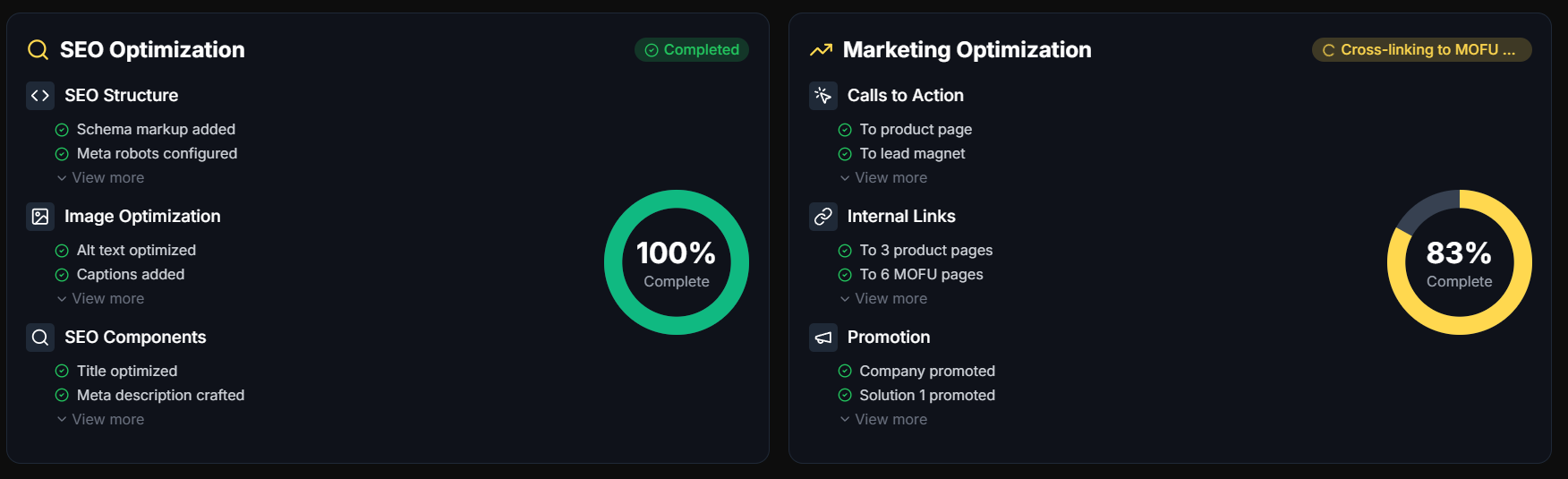
If you want to launch a fully SEO-optimised real estate blog in record time, Blog-in-one-minute is a clever option. For as little as $39/month, it allows agencies to add a high-performance blog to their site with only two lines of code. You get automated on-page SEO, schema, and fast Cloudflare hosting out of the box.
It’s perfect for agencies jumping into new markets or wanting a quick SEO foundation—sites get indexed and visible on Google almost instantly. Then, you can layer on SEOSwarm to keep the rankings rising. Where others drag their feet with slow set-up or generic posts, Blog-in-one-minute delivers real estate–specific performance, ease, and speed, making it a strong ally for smaller teams or brokerages eyeing fast, sustainable digital growth.
Blog-in-one-minute
Add a fully SEO-optimised blog to your website with just 2 lines of code.
Learn more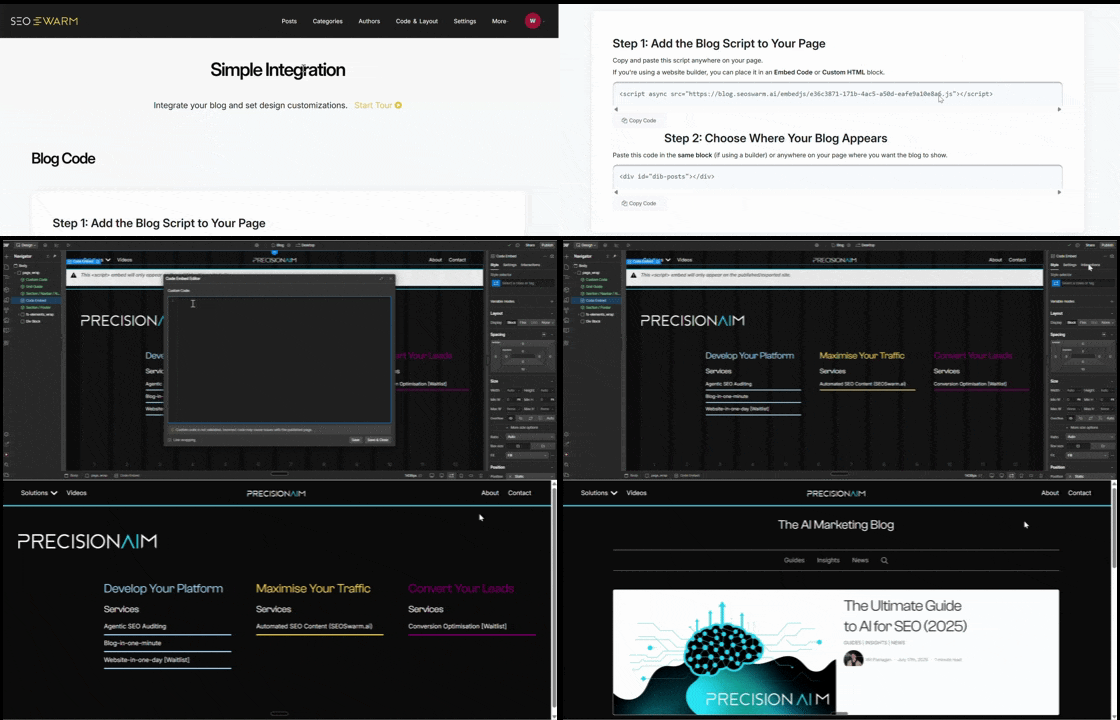
Making SEO for Real Estate Work Locally
Most agents chase broad rankings, but the real wins come from owning your patch—one hyperlocal search at a time. I’ve seen agencies leapfrog national giants by focusing on Google Business Profile, unique neighbourhood pages, and up-to-date listings that actually reflect what’s available.
If you want to see results, start with these steps: - Audit your Google Business Profile and fix every NAP inconsistency - Build out dedicated landing pages for each area you serve - Refresh listings, agent bios, and testimonials with local detail and schema markup - Automate content updates and technical audits to stay ahead
SEO for real estate isn’t about chasing every trend—it’s about consistent, local authority and a site that evolves as fast as your market. The agents who win tomorrow are the ones who act today, turning every search into a real conversation with their next client.
- Wil