

Getting your web pages indexed quickly can make or break your visibility, especially when timing is everything. If you’ve ever waited days for Google to notice your latest update, you know how frustrating slow indexing can be.
I’ve worked with both Google Search Console and Rapid URL Indexer, and I’ve seen how each tool handles the race for fast, reliable indexing. The right choice depends on your site’s size, urgency, and how much control you want over the process.
In this article, I’ll break down how both tools work, their strengths and drawbacks, and where each one shines. You’ll get a clear side-by-side comparison of setup, automation, speed, pricing, and real-world results—plus practical tips for blending both tools for the best outcome.
Whether you’re a solo publisher or managing hundreds of URLs for clients, you’ll walk away knowing which solution fits your needs—and how to avoid common indexing pitfalls.
What is the google indexing service rapidurlindexer.com?
Understanding Google indexing
Let’s break down Google indexing before diving into specific services. Picture Googlebot as a tireless librarian, constantly searching out new web pages and shelving them in Google’s enormous catalogue.
It all starts when Googlebot stumbles upon URLs—either through sitemaps, links, or direct submissions. Then, it crawls the site, picking apart not just the HTML, but also anything written in CSS or JavaScript. This way, Google sees your page exactly as a human visitor would.
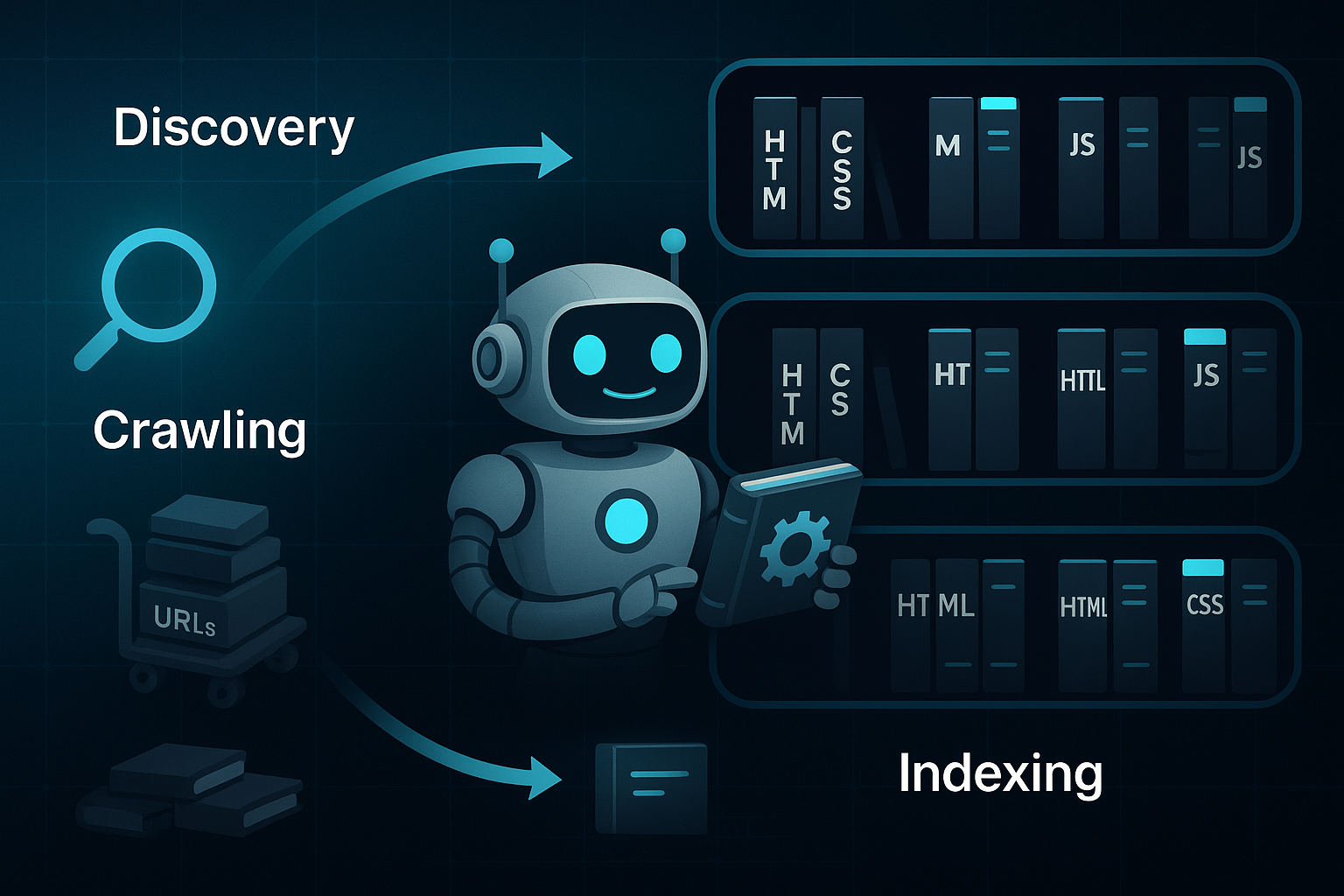
Here’s the trick: several technical factors shape whether your content actually lands in Google’s index. Things like canonical tags, meta robots directives, and site speed can tip the scales. If you tick all the boxes, your page is indexed and ready for searchers to find.
Pages that don’t get indexed? They’re basically invisible online. For businesses or publishers, that means lost visitors, missed leads, and shrinking revenues. So, fast and effective indexing is vital—especially for those keen on organic growth.
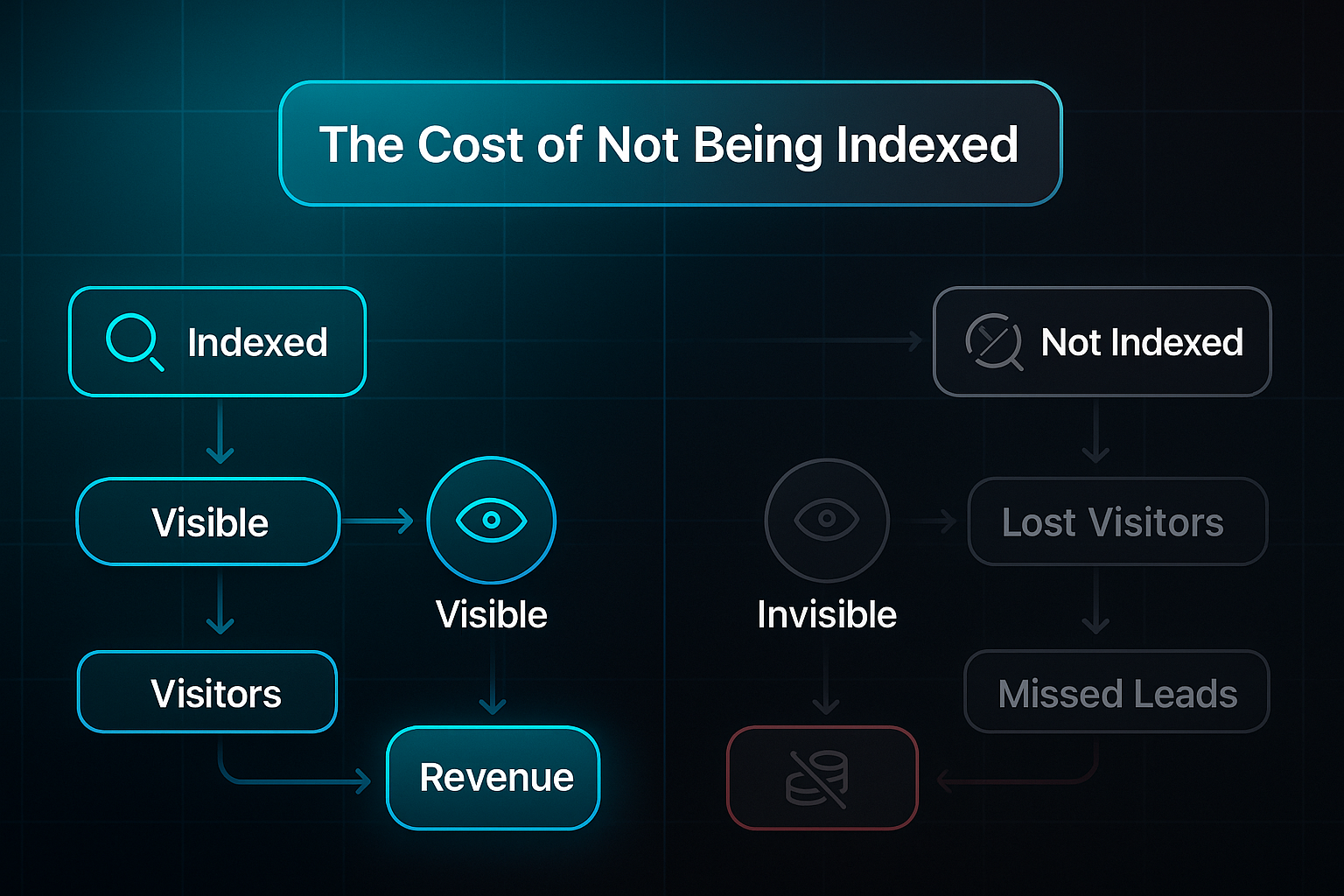
Why indexing speed and reliability matter for SEO
Speed is not just convenient—it’s essential. If your new content is left waiting for Google’s attention, you’re missing out while competitors get ahead.
Imagine launching a product and watching your rivals scoop up traffic because their pages appeared first in search results. That early window is crucial. Publishers know this best: in news or sports, those who show up in trending searches immediately reap the rewards.
Rapid indexing also gives site owners real-time feedback, which helps refine strategies and stay ahead of market shifts. Without it, you’re left struggling to respond quickly and may find your rankings lag behind.
Summary of main Google indexing service options
So, how does one actually get web pages indexed by Google? Two main paths are available:
- Google Search Console (GSC)
Free and official, GSC helps you submit URLs, manage sitemaps, and troubleshoot. Manual submissions work well for small sites, but bulk requests face limits and delays. - Rapid URL Indexer (rapidurlindexer.com)
This paid service speeds up the process with bulk submissions, often getting pages indexed in mere hours. Agencies and businesses needing urgent or large-scale indexing turn to this for reliable results, and it may cover multiple search engines.
Google Search Console suits smaller sites or DIY efforts, while Rapid URL Indexer is purpose-built for high-volume pushes and urgent campaigns.
Next, we’ll examine how each service actually works and which situations benefit most from using them.
Overview of Google Search Console for indexing
What is Google Search Console and how does it work for indexing?
Google Search Console, or GSC, is the go-to dashboard for anyone who wants their website on Google’s radar. After a straightforward verification—uploading an HTML file, altering DNS, or connecting Google Analytics—you get full access to GSC’s indexing toolkit.
The standout feature is the URL Inspection Tool. It allows you to submit new or updated pages for indexing, though there’s a hard limit of 10 manual submissions per site a day. After submission, GSC reports statuses like ‘Indexing requested’, ‘Discovered – currently not indexed’, or ‘Submitted and indexed’, so you know exactly where you stand.
But what if your site gets updated often? That’s where XML sitemaps shine. Just upload your sitemap and Googlebot takes care of the rest, automatically crawling your pages. Sitemaps are invaluable for larger sites—summary reports quickly reveal which URLs are covered or have run into issues.
The basic routine is simple: verify, submit URLs or sitemaps, and keep an eye on reporting for progress or problems.
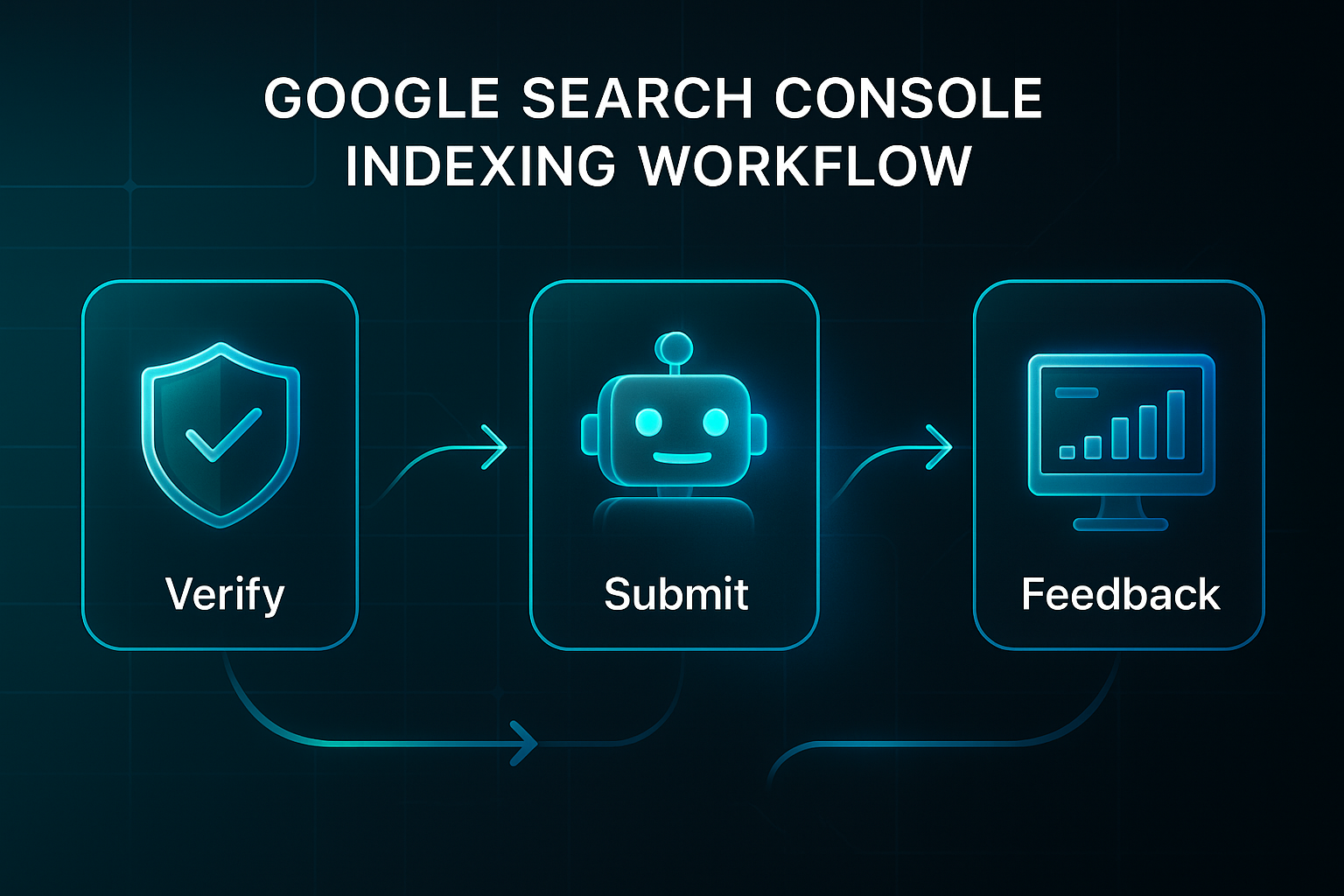
Strengths and limitations for web page indexing
GSC offers direct integration with Google, clear indexing feedback, and useful diagnostic tools for crawl errors and canonical issues. You can choose manual submissions for smaller changes or sitemaps for automation; flexibility is its strong suit.
However, those daily caps mean bulk or urgent indexing is out of reach, and results can be slow—sometimes hours or days. Pages often end up stuck in ‘Crawled – currently not indexed’ or ‘Couldn’t fetch’ territory. In 2024, persistent delays and incomplete sitemap updates can make alternative rapid bulk indexing services more appealing.
Submitting a sitemap doesn't mean that we will crawl these URLs immediately. It's more that we will take these URLs and we will put them into our list of things to look at, and then we will try to crawl them over time.
Recent updates and changes
The August core update has sharpened the focus on E-E-A-T content quality and mobile readiness. Page Indexing and Sitemaps now show clearer error messages, making troubleshooting easier. GSC added 24-hour trend monitoring and API alerts for better real-time insight and smoother integration with SEO tools.
Search Console Insights now compiles key engagement stats for all indexed content. Still, delays and errors linger, so staying vigilant with reports is crucial. Even with GSC’s tools, patience is just part of the process.
Overview of Rapid URL Indexer for Google indexing
What is Rapid URL Indexer and how does it facilitate Google indexing?
Rapid URL Indexer is built for speed and scale—exactly where standard free tools, like Google Search Console, fall short. Think of it as your all-in-one, cloud-based solution for tackling big, fast-moving indexing projects across many domains or clients.
Unlike GSC, you won’t need to handle any site verification first. That’s huge for agencies or users juggling multiple projects. The process is simple: a few clicks in the dashboard, paste or upload your URLs (CSV works great), and off they go.
Here’s where it gets powerful—you can submit hundreds or even thousands of URLs in one batch. Progress is tracked with real-time graphs, and reports are ready for download. Since it’s cloud-based, you don’t install a thing. Plus, it’s not just for Google—Bing and Yandex are covered too, which is brilliant for international campaigns.
Whether managing a business website, running a digital campaign, or handling client SEO, getting content indexed quickly is key to ranking success.
The real magic is automation. There’s an open API for full workflow integration and a Zapier connector if you want no-code convenience. A Chrome extension and dedicated WordPress plugin let you submit or schedule indexing in one click. That means recurring bulk tasks only take seconds to set up.

Key benefits and user scenarios
Need pages live in Google fast? With Rapid URL Indexer, batch submissions get turned around within minutes or a few hours. Agencies with client portfolios, publishers running regular updates, and ecommerce teams launching product pages all benefit from this pace.
Features like drip-feed submissions make your activity look organic to Google, while the real-time dashboard keeps you instantly informed. Downloadable campaign reports help with tracking and analysis.
What’s clever is the pay-for-success credit model: you only pay for URLs Google picks up, with automatic refunds for any duds.
Limitations and considerations
Of course, there’s a cost: each URL sits around $0.12–$0.35, with volume discounts but still higher for frequent bulk users than GSC. Reports only cover indexing status, so separate analytics tools are needed.
And because it’s a third-party service, indexing can’t ever be truly guaranteed—outcomes rely on Google’s own handling, so watch results and adjust as you go.
How Google Search Console and Rapid URL Indexer work: Workflow, setup, and limits
Initial setup requirements
Let’s dive into setup. With Google Search Console, you’ll need to prove site ownership—typically an HTML file upload, DNS tweak, Google Analytics, or Tag Manager.
It’s secure but can slow onboarding if you’re wrangling multiple client sites. Rapid URL Indexer skips all this. You simply sign up and start submitting URLs instantly. For busy agencies or teams, that’s a big advantage.
Submission and indexing processes
Now, onto submitting URLs. GSC’s manual submissions cap out at 10 per day per site via the URL Inspection Tool. Bigger sites lean on sitemap uploads, but Google sets crawling speed, and status checks are manual.
Rapid URL Indexer changes the pace. You batch-upload hundreds or thousands of URLs through dashboard, CSV, or integrations, with typical processing in minutes or hours. Usage depends on credits or project caps, and you get refunds for URLs not indexed. Its real-time dashboard means instant feedback, saving time spent on repetitive checks.
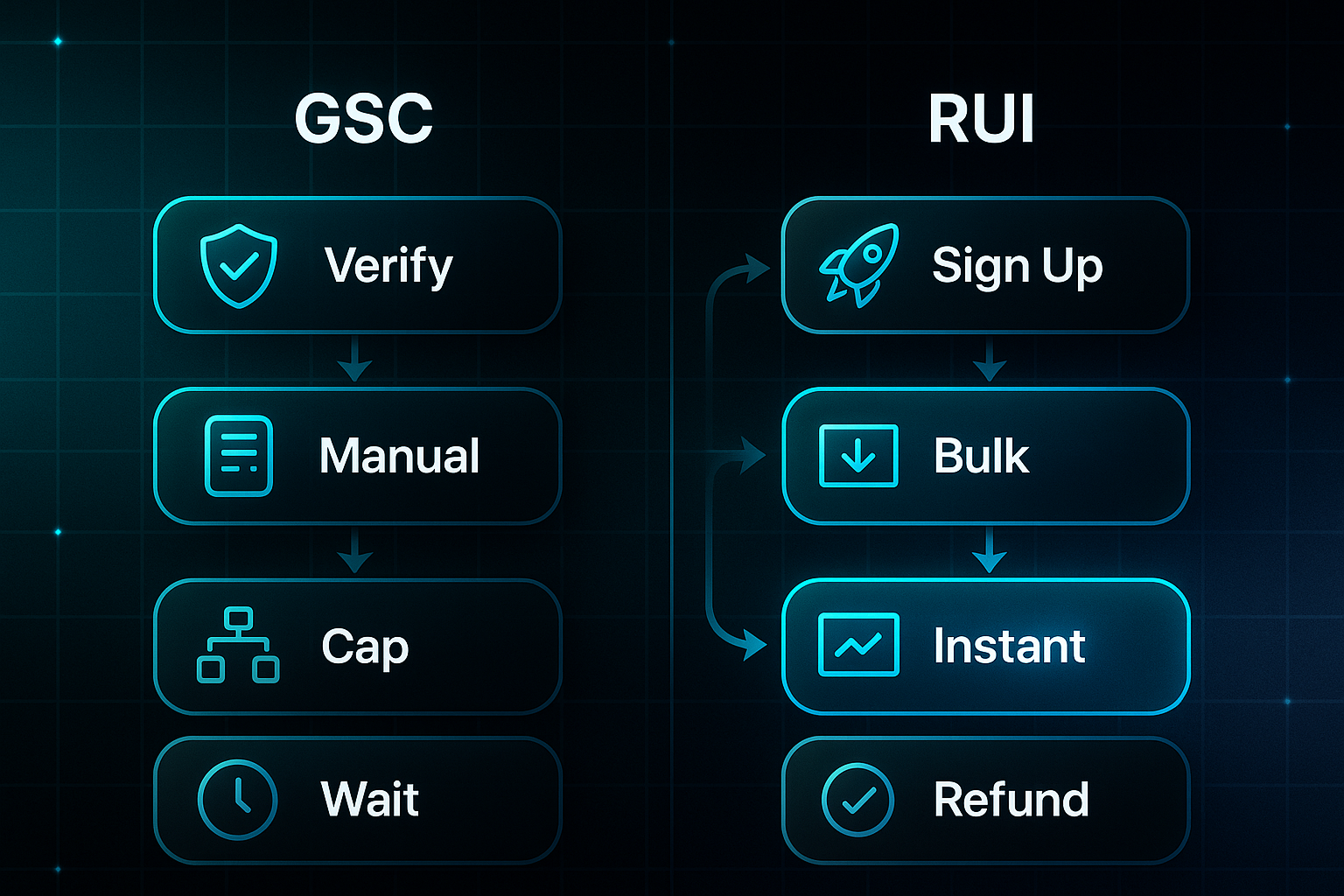
API access and automation potential
Thinking about automation? GSC’s API gives reporting, but no automated submissions. WordPress plugins focus mainly on sitemaps and reporting.
Here, RUI really shines. It provides a REST API for high-volume automated submissions, plus Zapier integration, Chrome extension, and a WordPress plugin—so you automate as much as your credits allow.
Direct comparison snapshot
So, which fits best? GSC is made for those wanting security and granular control. Rapid URL Indexer suits anyone needing fast, automated, bulk indexing.
| Feature | Google Search Console | Rapid URL Indexer |
|---|---|---|
| Setup | Site verification required | No verification; instant onboarding |
| Submission | Manual (10/day), sitemap (bulk, delayed) | Batch (hundreds/thousands), CSV, integrations |
| Automation | Reporting API; no auto-indexing | REST API, Zapier, WP plugin, Chrome extension |
| Feedback | Manual status checks | Real-time automated dashboard |
| Usage limits | Daily quota and cooldowns | Credit/project caps, refunds for fails |
| Best fit | Small site owners, manual SEO | Agencies, automation, high-volume |
Comparing Google Search Console and Rapid URL Indexer: Speed, scalability, and reliability
Indexing speed and capacity
Let’s cut to what really sets Google Search Console (GSC) and Rapid URL Indexer (RUI) apart: speed and scale.
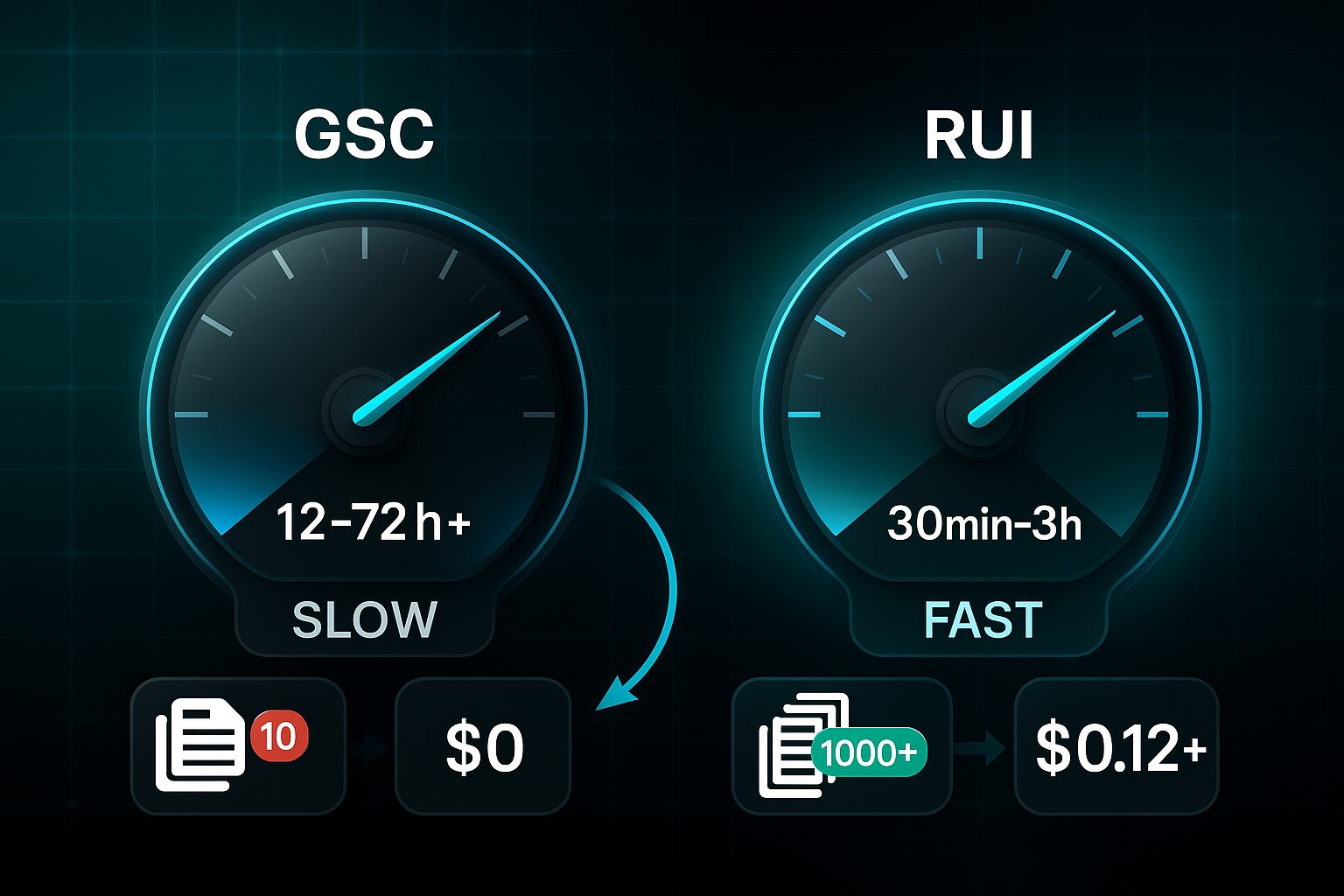
With GSC, you’re capped at 10 manual URL submissions daily and can expect to wait 12–72 hours for new pages to appear in the index. For bulk needs, you can push XML sitemaps, but crawling depends entirely on Googlebot’s timing—often two to ten days, or longer for busy or urgent sites. There’s no charge, but you have zero control over when your URLs show up.
RUI, meanwhile, is made for instant results. You can batch-submit hundreds or thousands of URLs in one go—no daily quota, just based on your credits. Most batches start appearing in Google within 30 minutes to 3 hours. Big campaigns regularly see everything indexed by day’s end. Pricing is $0.12–$0.35 per successful URL, with automatic refunds for those that miss. There’s no verification step, so signup is immediate.
Direct comparison snapshot
| Aspect | Google Search Console | Rapid URL Indexer |
|---|---|---|
| Manual submission speed | 12–72+ hours (single URL) | 0.5–3 hours (single/batch) |
| Bulk indexing speed | 2–10+ days via sitemap | 1–6 hours (large batch) |
| Submission quotas | 10 manual/day, unlimited sitemaps | No daily cap; credit-limited |
| Cost per URL | Free | $0.12–$0.35; refund if not indexed |
Reliability and risk
So which can you trust? GSC’s real strength is that it’s a first-party Google platform—stable, clear about updates, and very low risk for crucial sites. Changes are rare and always communicated.
RUI is a third-party tool—not officially recognised by Google. That means a Google algorithm update can disrupt things overnight. Refunds protect your spend, but this volatility means it’s less suited for compliance-heavy sectors. For fast campaigns, that hunger for speed could make all the difference.
Feature and analytics differences
GSC leads for analytics and site diagnostics: you get keyword trends, crawl health, and engagement stats all inside one dashboard. Seamless Google integration makes site management straightforward.
RUI’s strengths are automation and raw batch speed, with simple status updates but no deep analytics. Many combine them: RUI for getting indexed fast; GSC for ongoing tracking.
So, do you need outright speed, or full insight and control? That’s the real question.
Pros and cons of Google Search Console vs Rapid URL Indexer
Choosing between Google Search Console (GSC) and Rapid URL Indexer (RUI) really comes down to your priorities—do you need speed and volume, or are you more concerned with insight and security?
Advantages and disadvantages of Google Search Console
Let’s start with the benefits of GSC. The first appeal: it’s absolutely free, so you don’t need to think about cost when submitting or tracking your pages. Because it’s the official Google tool, you know you’re getting a safe, reliable solution that’s always in step with Google’s policies.
Next, GSC’s analytics are a big selling point. You get comprehensive diagnostics—not just on crawl issues, but also on keyword queries, backlinks, and technical errors. If you want flexibility, it’s got that too: you can submit individual URLs manually (up to 10 per day), or automate with sitemap uploads as your site grows. Every submission comes with detailed feedback, so you know if your content hits the index successfully or needs a fix.
But GSC isn’t perfect. Its single biggest drawback is slow indexing speed; even if you act fast, it might still take Google a few hours—or sometimes days—to get your new page live. There’s also the 10 manual submission limit per day, which can cramp bigger sites or fast campaign launches.
Error reports are useful, but solving problems is often a technical, hands-on process. And when you need urgent attention for specific URLs, GSC gives no way to cut to the front of the queue—everything moves at Google’s natural speed.
Advantages and disadvantages of Rapid URL Indexer
Switch to RUI and things shift. Its core strength is bulk, fast indexing: you can push out hundreds or thousands of links at once, and see results in just 1–3 hours. There are no daily caps, no verification checks, and everything is run on a credit system—pay only for successful results.
If automation is your thing, RUI shines again, offering a dashboard, API, CSV upload, plugin integrations—everything designed to save time. There’s even a refund guarantee for URLs that don’t make it into Google.
The catches? RUI is not free—expect to pay $0.12–$0.35 per indexed URL (cost adds up with large batches). Reporting is simple to a fault, only showing whether a URL made it or not, with no extra diagnostics. It’s a third-party tool, so sometimes Google changes can leave you waiting for fixes. And if something breaks, you usually just try again—troubleshooting is minimal.
Quick comparison snapshot
| Aspect | Google Search Console | Rapid URL Indexer |
|---|---|---|
| Cost | Free | Paid per indexed URL |
| Indexing Speed | Hours–days | Minutes–3 hours (bulk) |
| Analytics | Full diagnostics | Basic status only |
| Limits | 10 manual/day, sitemap bulk | Bulk, based on credits |
| Reliability | Official, stable | Third-party, variable |
| Ease of Use | Manual setup/submission | Simple dashboard, automation |
| Troubleshooting | Granular info available | Minimal feedback |
So which tool should you use? If you care about analytics and sticking close to Google’s official processes, GSC is a safe bet. But for urgent, large-scale campaigns, RUI’s speed and automation make a powerful case. Honestly, many find that a blended strategy works best—harnessing both to fit the situation.
Blog-in-one-minute
Add a fully SEO-optimised blog to your website with just 2 lines of code.
Learn more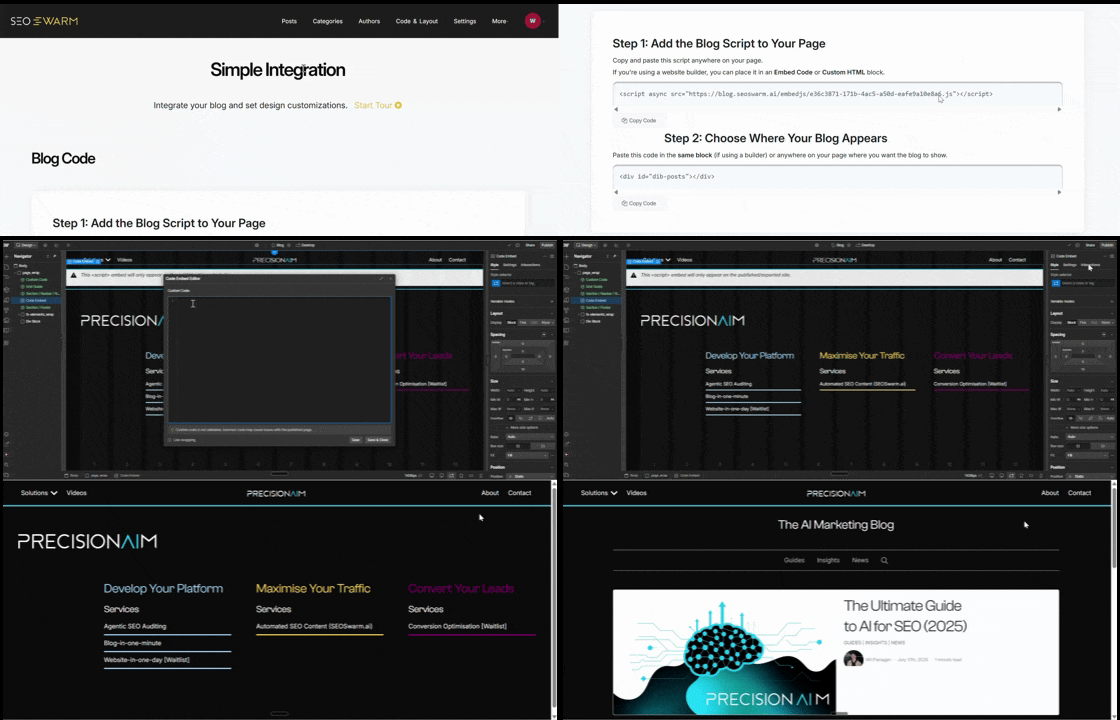
Pricing models and limits: Free vs paid Google indexing
Google Search Console pricing and quota considerations
Let’s talk cost. Google Search Console (GSC) is totally free—no subscriptions, no hidden fees. You can manually submit 10–20 URLs per site each day, with the count resetting every 24 hours.
Managing a bigger site? XML sitemaps let you submit up to 50,000 URLs each, and you’re allowed several. However, the actual indexing pace is up to Googlebot, so even big batches aren’t instant.
The free API only provides status reporting—no automated bulk uploads. For small and medium sites, the quotas are rarely an issue. Agencies or large publishers, though, will notice the daily cap slows down urgent or high-volume campaigns.
Rapid URL Indexer pricing, tiers, and scaling costs
Rapid URL Indexer uses a credit system: pricing starts at $25 for 500 URLs, but bulk options reduce this to $0.04/URL. No recurring fees, and credits never expire.
Upload as many URLs as your credits allow—batch size isn’t limited. If a URL is not indexed in 14 days, your credit’s refunded. There’s no free plan, but you do get automation via API, Zapier, and plugins.
RUI is perfect for agencies or businesses handling frequent, large indexing jobs—especially when timing and control matter.
Who gets the best value from each pricing model?
So, who’s the big winner? GSC works best for individuals, bloggers, or anyone wanting no-cost, occasional indexing.
Need unlimited batches, automation, and pay-for-results? Rapid URL Indexer is a better fit for high-volume users and agencies that can’t afford delays.
| Feature | Google Search Console | Rapid URL Indexer |
|---|---|---|
| Cost | Free | $25/500 (to $0.04/URL bulk) |
| Manual quota | 10–20/day/site | Unlimited |
| Bulk upload | Sitemap (50,000/file) | Unlimited batch |
| Automation | Status API | REST API, plugins |
| Refunds | N/A | Auto-refund in 14 days |
| Recurring fees | None | None |
| Best fit | Small sites, blogs | Agencies, bulk/rapid |
Google Search Console or Rapid URL Indexer: Which should you use, and when?
Typical scenarios favouring Google Search Console
GSC is your go-to when detailed analytics, hands-on control, and totally free indexing matter most. So, where does it excel?
- Ongoing, steady website management
Monitor performance, catch errors, and safeguard search health for existing sites. - Standard publishing pace
For gradual updates or where urgency isn’t a priority, GSC fits well. - Technical troubleshooting and diagnostics
Solve crawl issues, indexing snags, or perform in-depth site audits. - Sole proprietors, bloggers, small businesses
Ideal for those on strict budgets or who want official Google tools.
If day-to-day oversight and robust diagnostics are the aim, GSC has you covered.
Best use cases for Rapid URL Indexer
But what if you need speed? Rapid URL Indexer (RUI) brings bulk automation and fast results, great for critical, frequent, or big indexing jobs.
- Fast site launches or urgent update pushes
Get lots of new or revised URLs live in hours. - News, time-sensitive, or campaign-driven content
Ensure trending or breaking updates hit search before they fade. - Large-scale ecommerce updates
Push catalogue changes or product launches live rapidly. - Post-migration or penalty recovery
Reindex after migrations or fixes to recover visibility quickly. - High-volume agencies or publishers
Automate bulk submissions without bottlenecks.
When GSC feels slow or limiting, RUI’s speed and pay-per-success pricing are a real upgrade.
Blended approach and transitioning strategies
Now here’s a trick: most savvy teams use both, blending their strengths.
- Dual-tool workflows
Harness RUI for quick indexing; rely on GSC for troubleshooting and analysis. - Scaling from basic to advanced workflows
Begin with GSC, layering in RUI as demands grow. - Continuous performance monitoring
Use GSC to confirm RUI pages make it into the index.
As volume and speed demands rise, shift more towards RUI—but keep GSC’s technical insights close. That’s how you secure instant visibility and ongoing search health.
Addressing common pain points and misconceptions about Google indexing tools
Myths about instant or 'guaranteed' indexing
Let’s cut through the noise about “instant” Google indexing. Some still hope there’s a magic button, but no tool guarantees instant Google indexing. Even rapid services like Rapid URL Indexer can only help Google discover URLs faster—everything still faces algorithmic review and checks before joining the index.
So, what’s possible? Indexing tools can quicken crawling and visibility but can’t guarantee inclusion or override Google’s standards. And if you try repeating submissions, Google’s systems may filter or deprioritise them, especially if it looks manipulative.
Reliability, safety, and risk
How about risks? Bulk tools are appealing, yet overuse can cause problems. Hit Google’s anti-spam triggers and you might find your site subjected to crawling delays, warning messages, or, in the worst cases, delisting.
There’s a sharp divide between reputable services and risky ones. Platforms like Rapid URL Indexer offer drip-feed submissions and refund unindexed credits, while “too good to be true” tools risk Google penalties. Staying compliant means only submitting original, valuable URLs and steering clear of aggressive, automated techniques.
Improving results and managing expectations
What brings the best results? Focus on unique, high-quality content. Use Google Search Console for everyday needs, and Rapid URL Indexer for genuine bulk indexing.
Don’t forget to check Search Console regularly for errors or warnings to address any issues early.
Resist resubmitting unchanged or duplicate URLs or using services promising higher rankings rather than straight indexing—trusted, dedicated tools are the safest route.
Bottom line: there’s no shortcut around Google’s internal review. For urgent jobs, blend RUI’s speed with GSC’s detailed analytics. In the end, patience and the right mix of tools give you the best shot at timely, safe indexing.
Real-world use cases and performance benchmarks
Agency and publisher experiences
Agencies regularly wrangle hundreds—or thousands—of URLs when launching new products, breaking news, or updating catalogues. Tight deadlines make speed a necessity.
With Google Search Console, manual caps and those unpredictable delays can turn migrations or urgent campaigns into days-long marathons. That’s where frustrations build.
So many turn to Rapid URL Indexer for its bulk speed advantage. Seeing 2,000+ retail pages indexed in 36 hours, with up to 91% success, changes the game for time-sensitive launches.
Still, nothing is flawless. Server strain, API blips, or redirect issues can trip up both tools—especially since Google’s 2024 anti-spam updates made everything a bit trickier.
Indexing timelines and results in 2024
Wondering how the pace stacks up? One URL in GSC might take one to seven days, sometimes more. With RUI, hundreds regularly get indexed in under 48 hours—even faster for news sites.
But 2024’s Google algorithm shifts caused swoops. RUI’s success rate dropped to 78% in turbulent times, while GSC delays stretched longer for new or thin pages.
RUI’s typical average? Around 91% success for bulk batches, but that dipped after major updates. For low-authority or brand-new sites, GSC’s delay is noticeably worse.
Unlike Google Search Console, which relies on natural crawling, Rapid URL Indexer actively pushes URLs to search engines using direct API submissions, backlink pings, and social signals to create crawlable references and accelerate indexing.
Lessons learned and practical workflow tips
Here’s what works: combine RUI for rapid scaling and GSC for diagnostics and ongoing checks. The blend gives you speed and insight.
Strategic timing is vital. Spread batches out, tackle errors early, and avoid triggering Google’s rate limits—or accidental ‘soft bans’.
Go too heavy on volume or resubmit poor URLs and you risk wasted credits, or seeing your pages technically indexed but not found in search. Consistency and restraint win the race.
Where SEOSwarm fits: Complete content and Google indexing for growing sites
Who benefits from SEOSwarm?
Ever find yourself fighting endless bottlenecks just to get your content indexed? SEOSwarm steps in for organisations and teams overwhelmed by limits in manual or patchwork solutions.
Big enterprises, agencies with multiple clients, and publishers juggling frequent updates all know the pain—manual submissions, slow reporting, and tangled tech requirements quickly pile up. As your site grows and publishing ramps up, daily quotas and diagnostics delays become major problems.
If you’re working with non-technical staff or lack a dedicated SEO team, things get even harder. Missed indexing windows translate to lost traffic and stunted growth just when momentum matters.
Key differentiators of SEOSwarm (and blog-in-one-minute integration)
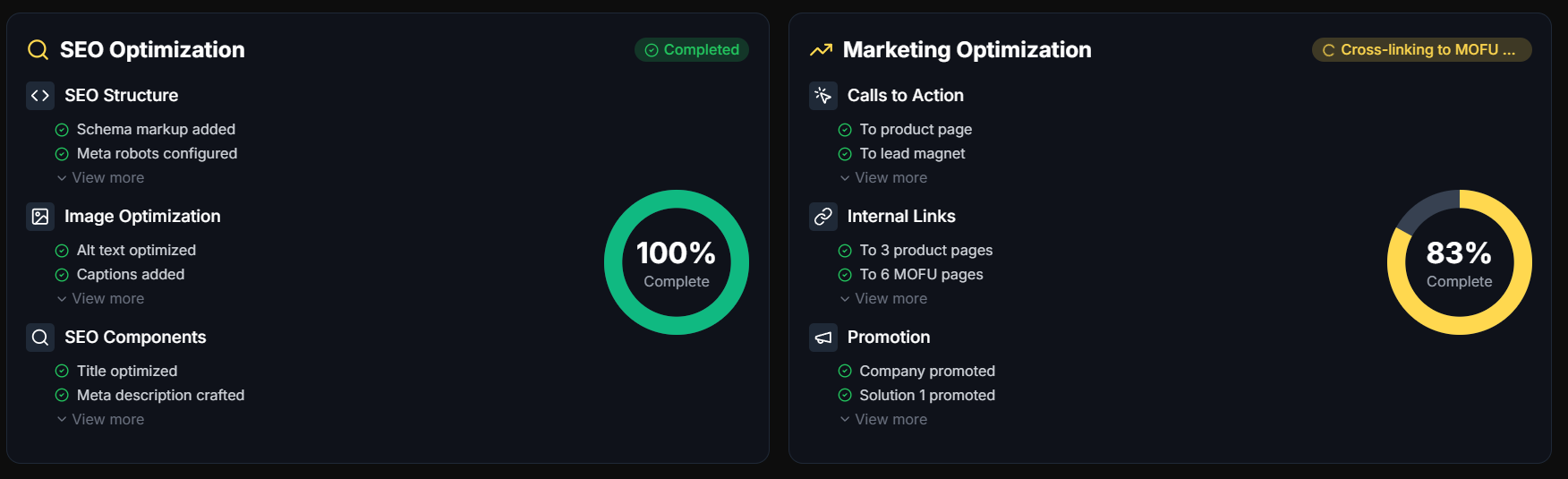
Here’s where things take a leap. SEOSwarm brings an all-in-one managed service, covering research, strategy, writing, optimisation, publishing, and analytics.
Human experts and AI Agents collaborate for instant error-solving. Integrated with Google Search Console, you’re always seeing up-to-date performance data.
Ready for new blogs or a surge in content? The blog-in-one-minute integration lets you spin up a site with two lines of code. With built-in Cloudflare hosting, there’s no development wait.

Predictable subscription pricing makes scaling straightforward and supports rapid growth. And because SEOSwarm adapts to Google’s frequent changes, you stay ahead.
When to consider an agency-driven indexing solution
So, when’s the tipping point? If your team faces constant resource strain, slow reporting, or mounting complexity, it’s time to let professionals handle it.

AI-Powered
SEO Content Strategy
See the AI platform that's replacing entire content teams
(with better results).

With SEOSwarm, you shift to automated, reliable indexing—reducing time-to-index and delivering continuous visibility. For expanding organisations tired of manual routines, it’s a major unlock.
My Take on Google Indexing Service RapidURLIndexer.com
Speed alone won’t win the indexing race—strategy matters just as much. I’ve seen too many site owners chase instant results, only to hit Google’s limits or miss out on deeper analytics. The real edge comes from matching your tool to your needs, not just your impatience.
Here’s my advice: use Google Search Console for steady, insight-driven site management and diagnostics. When deadlines are tight or you’re handling bulk updates, Rapid URL Indexer’s automation and speed can save the day. Most teams get the best results by blending both—fast-tracking urgent URLs while keeping a close eye on long-term search health.
Don’t let your content stay invisible. The smartest approach is a flexible workflow that evolves with your goals. In the world of indexing, patience and the right mix of tools will always outperform shortcuts.
- Wil