

Marketers face a constant challenge: keeping up with digital content trends and finding the right opportunities to reach audiences. NewFronts events promise fresh tools and platforms, but it’s easy to get lost in the details or miss out on actionable strategies.
I’ve spent years tracking NewFronts announcements and testing their features for real campaigns. In this guide, I’ll break down what NewFronts actually offer, how major platforms like Meta, YouTube, TikTok, Amazon, and Snapchat are changing the game, and which innovations matter most for your budget and goals.
You’ll get step-by-step playbooks for launching campaigns, troubleshooting common issues, and measuring results—plus real-world case studies from small businesses who’ve turned NewFronts features into rapid wins. I’ll also share practical benchmarks, onboarding tips, and unified analytics tools that make campaign management easier for lean teams.
If you want to make sense of the latest NewFronts updates and activate smarter digital campaigns in 2025, this article gives you everything you need to get started and succeed.
What are Digital Content NewFronts?
Understanding Digital Content NewFronts
Digital Content NewFronts are annual industry events that operate as a centralised marketplace for digital content and advertising trends. They’re often compared to TV Upfronts, but NewFronts spotlight digital-first media—including streaming, social video, and creator-driven content.
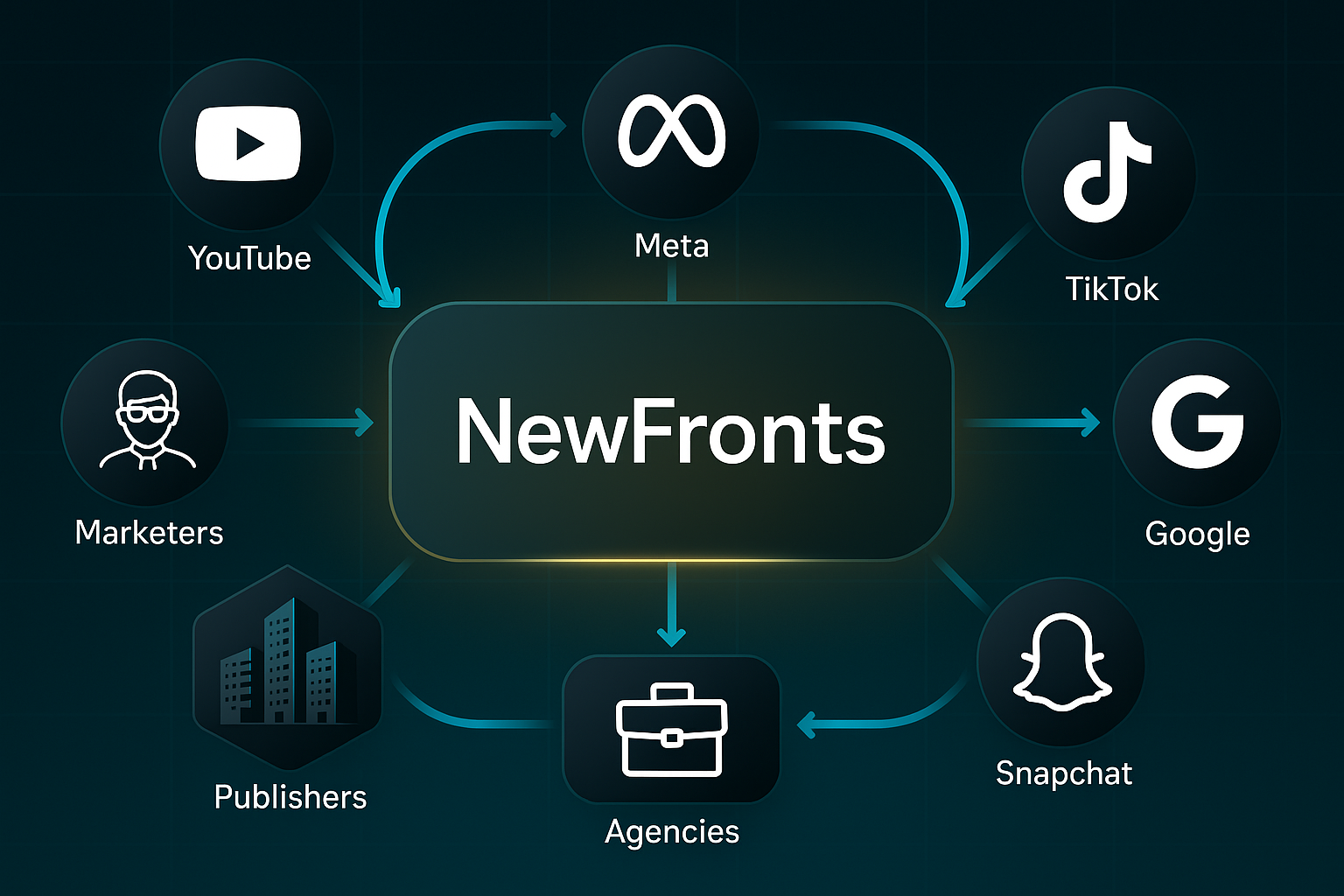
The Interactive Advertising Bureau (IAB) brings together a wide range of participants. Here are some of the major categories represented:
- Leading Platforms
Companies such as YouTube, Meta, Snapchat, Google, TikTok set the digital pace. - Digital Publishers
Focused on providing innovative online media. - Creative Agencies
Experts in branding and campaign strategy. - Advertisers
Organisations aiming to reach digital audiences. - Influential Creators
Individuals shaping digital content and trends.
At these events, platforms present their latest content slates, demonstrate emerging advertising technologies, and announce new partnership opportunities for marketers and agencies. The format is intentionally inclusive—anybody with a stake in digital advertising can engage and take part.
The Origins and Evolution of NewFronts
In the days before NewFronts, digital advertising was fragmented and tricky to navigate. Brands and buyers often found it challenging to access premium digital content and coordinate cohesive marketing campaigns.
The IAB introduced NewFronts in 2008 as a way to bring structure to this landscape, adapting some elements from broadcast TV Upfronts but reimagining them for the fast-moving digital world. The range of featured content areas has continued to expand, and today, NewFronts sessions commonly showcase the following:
- Programmatic Technologies
Automated buying and advanced targeting solutions. - Creator Platforms
Channels built around influencer and user-generated content. - Retail Media
Blending commerce directly with media. - Shoppable Content
Integration of direct purchasing into media experiences.
Over time, NewFronts have grown from a relatively small preview of digital video companies into a much broader, multi-faceted event.
Notable milestones include increases in video ad spend driven by NewFronts announcements and the rising presence of creator-driven sessions and AI-powered campaign features.

Key Elements of the NewFronts Marketplace
Key features of the NewFronts experience include a combination of main-stage presentations, breakout sessions, and networking moments. Here are some core offerings that define the event:
- Content Showcases
Platforms reveal new programming and digital series. - Ad Product Innovations
Introduction of cutting-edge advertising solutions. - Partnership Opportunities
Announcement of new collaborations and dealmaking options.
After these core offerings are presented, these settings invite participants from various backgrounds—not just traditional media, but also independent creators and smaller agencies. Dealmaking increasingly happens in real time, giving marketers a chance to respond quickly to fresh opportunities.
Common Challenges and Misconceptions about NewFronts
Why do some people think NewFronts are just digital TV Upfronts? The misconception persists but misses the distinct innovation focus and inclusivity of NewFronts. They don’t merely echo TV models—instead, they elevate performance-driven formats and welcome a wider spectrum of industry players.
Questions about who can participate and what’s included arise as new ad technologies and platforms debut each year. Still, NewFronts work to overcome these challenges with a transparent, unified venue that brings together brands, agencies, platforms, and creators to align on future content and campaign trends.
With this foundation in place, one can start exploring how each NewFronts event sets the pace for digital advertising. Announcements and innovations from these gatherings shape media buying and brand strategies across the industry.
Key Platform and Feature Announcements from the 2024–2025 Digital Content NewFronts
Let’s talk about what really grabbed attention at the 2025 IAB NewFronts. From AI-powered creator tools to immersive ad formats, every major digital platform—Meta, Google/YouTube, TikTok, Amazon, and Snapchat—revealed new features set to shape how marketers run campaigns this year.
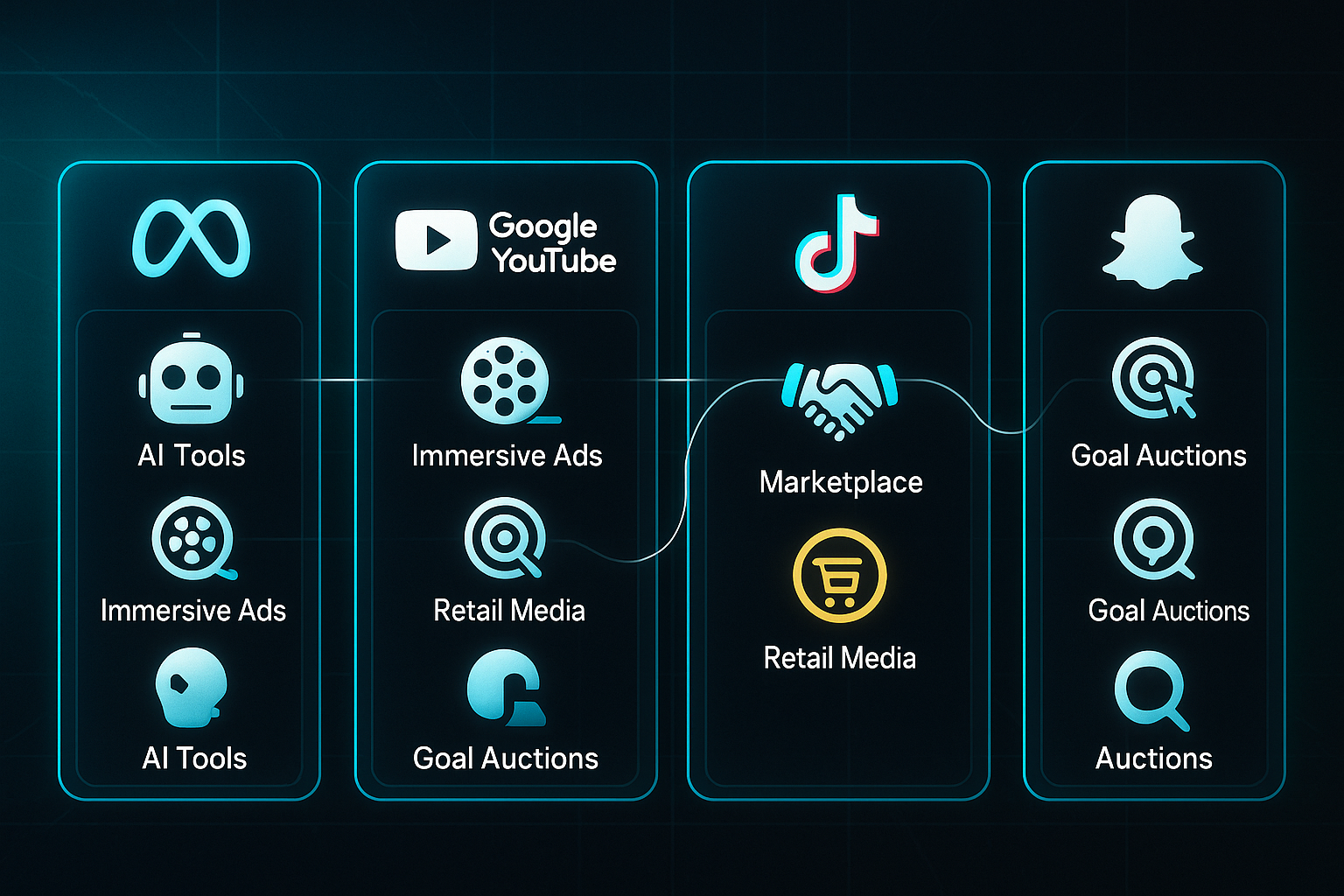
Across four action-packed days (May 5–8, 2025), these companies rolled out details on AI innovations, onboarding, regional launches, and—crucially—who can access what.
Wondering how it all breaks down? Here’s a platform-by-platform summary so you don’t miss a thing.
Meta
Meta was keen to show off its AI-Powered Creator Tools. These now live inside Creator Marketplace, making it far easier to vet influencers and match up with the right audience.
The new “AI-Powered Trends Tool” automatically spots emerging creators and identifies hot topics—ideal for hands-off partnership scouting.
They’re testing out new, immersive ad formats too. Reels Trending Ads are in early pilot, and native Video Ads for Threads are available, both rolling out in waves across different regions.
There’s also a boost in shopping and AR features, especially for immersive mobile ads, giving creative teams more ways to engage audiences.
For onboarding, advertisers simply hop into Creator Marketplace or stick with the familiar Meta Ads Manager. Accessing Threads video ads is just a matter of campaign selection.
Regions? Meta says global, with a particular focus on mobile-first and emerging markets.
If you’re worried about entry costs—no minimum spend or onboarding threshold for smaller businesses was mentioned this year.
Google/YouTube
On the Google/YouTube front, their big play was unveiling DV360 Generative AI Tools. These help marketers use Audience Persona and Content Optimizer for smart campaign ideas, creative guidance, and even predictive planning.
It’s as close to a robot strategist as you’ll find in 2025.
They’ve revamped how brands connect with creators. BrandConnect and Creator Hub now offer AI-matchmaking, pairing brands with influencers whose audience fit is calculated by algorithms.
Onboarding is handled through existing DV360 and YouTube systems.
If you want to link up with a creator, BrandConnect makes it seamless, even automating the outreach and management steps.
These features are rolling out globally, with priority given to markets focused on privacy-first practices.
Again, no public minimum spend requirement—so it’s open season for both large and small players.
TikTok
TikTok put brand safety and control front and centre. New campaign tools let marketers decide exactly which feeds their ads appear on, set exclusion zones, and target content with greater precision.
They teased more immersive ad formats, but the real star is the brand-safe campaign controls now baked in.
Advertisers get upgraded controls via TikTok Ads Manager, including new options for feed targeting.
Rollout is worldwide, especially in mobile-first regions.
No word on minimum campaign spend or SMB restrictions—so, as with others, it’s wise to double-check official TikTok documentation as you start planning.
Amazon
Amazon leaned into AI-driven real-time optimisation for its retail media. Now, advertisers can dynamically adjust campaigns, tap into automated optimisation, and track results through full-funnel measurement inside Amazon Ads.
Plus, deep integration with retailers helps campaign targeting and performance analysis hit new heights.
If you’re keen to try these features, it’s all available via the Amazon Ads console for eligible retail advertisers in the US and abroad.
Focus is largely US, but international reach is expanding.
Minimum spend details weren’t shared during NewFronts, so plan to research further if you’re a smaller brand.
Snapchat
Finally, Snapchat rolled out Goal-Based Auction Ads. These support Sponsored Snaps using goal-based bidding—like Pixel Purchase or Add to Cart—which means advertisers can focus on real performance measures and let the system optimise in real time.
Goal-based bidding flows through Ads Manager, combining pixel events with auction mechanics for smarter results.
These features are global and particularly relevant for mobile-first audiences.
Minimum spend requirements? Not disclosed, so check their documentation before diving in.
Marketers, take note: If minimum spend or onboarding details were missing during NewFronts, always consult platform reps or official docs for clarity.
One thing’s for certain—AI guidance and global rollout have become the default across every major player, powering technical features that are reshaping digital advertising right now.
The digital advertising landscape is rapidly evolving, with a significant focus on leveraging AI for personalization, as evidenced by the development of resources like the AI Personalization Playbook.
How to Activate NewFronts-Featured Campaigns: Playbooks, Budget Scenarios, and 2025-Specific SMB Guidance
The 2025 NewFronts have brought new opportunities for small and medium businesses (SMBs) to run advanced campaigns across YouTube, TikTok, and Meta.
But here’s the catch—each platform has its own exact rules, budget requirements, and troubleshooting fast tracks that you’ll need to know.
Want to get your campaign off the ground and optimise early? Let’s break down the key steps and metrics for quick wins.
YouTube Shoppable Video Ads: Fast SMB Launch in 2025
Setting up YouTube Shoppable Video Ads involves linking your YouTube channel, Google Merchant Center (GMC), and Google Ads accounts.
Your product feed needs at least four in-stock items with essential data like GTIN, clear images, and up-to-date inventory.
Shorts-only channels are fine if they meet the Partner Program and region rules.
YouTube Launch Playbook: Step-by-Step Setup
To make your launch seamless, follow these steps:
- Prepare Product Feed
Confirm GMC data is complete and syncing successfully. - Enable Shopping Ads & Link Accounts
Connect YouTube, GMC, and Google Ads for eligibility. - Create Vertical Creative
Produce 15–30 second vertical videos with product tagging for higher approval. - Launch with Tracking
Set up Video or Demand Gen campaigns and ensure GA4 tracking is monitoring conversions.
Here are the 2025 budget benchmarks by popular vertical:
| Vertical | CPV (USD) | CPC (USD) | Daily Budget (USD) |
|---|---|---|---|
| Fashion | 0.01–0.03 | 0.34–1.42 | $15–$30 |
| Home Goods | 0.01–0.03 | 0.34–1.42 | $10–$25 |
| Electronics | 0.01–0.03 | 0.34–1.42 | $20–$50 |
If you’re just getting started, CPV averages $0.01–$0.03 in 2025.
Begin with a $10–$20 daily budget and let conversion results steer your spending upwards.
Don’t scale if you’ve got feed or creative errors—fix those first.
Double check that GA4 analytics is active across campaigns.
Once setup is complete and budget is aligned with your goals, regular tracking and optimisation will help increase ROI as your campaign matures. This approach also makes it easier to apply data-driven lessons when you expand to platforms like TikTok and Meta.
TikTok Sponsored Search: Key 2025 Setup & Spend Principles
TikTok campaigns work differently. You’ll need an active TikTok Shop seller account and a synced product catalogue before running Sponsored Search ads.
These are the essential setup and optimisation priorities to focus on from day one:
Essential TikTok Setup & Optimisation Priorities
- Catalogue Sync
Confirm your catalogue syncs correctly so ads don’t stall. - Keyword Targeting
Use relevant keywords from TikTok’s planner to hit trending searches. - Native Creative
Upload 10–25 second videos with an authentic TikTok feel.
Budget is another make-or-break factor: the minimum daily spend is $20, but aiming for $50/day lets you learn and adapt faster.
Typical CPC for 2025 falls between $0.30 and $1.50, with around 6% commission per order based on category.
Most issues stem from catalogue problems or poor keyword targeting.
Check those first—campaigns missing impressions rarely benefit from tweaking budget or creative until compliance issues are resolved.
Effective troubleshooting and steady adjustment on TikTok provide a foundation for refining your cross-platform strategy and maximizing long-term returns.
Meta Creator Marketplace: Influencer Activation & Budget in 2025
Meta’s Creator Marketplace is reached via Meta Business Suite, but you’ll need a verified ad account and active product catalogue to participate.
Filter creators using built-in tools and set up shoppable campaigns directly using Meta’s contract and messaging platform.
Meta Campaign Activation Checklist
- Eligibility Checks
Connect product data and confirm the ad account is ready to launch. - Creator Selection
Use Meta’s tools to identify creators who fit your brand. - Campaign Planning
Set clear goals and engage creators with direct contracts and messaging.
Starting budgets can be as low as $100–$500 per creator, with CPM averages of $5–$15 and CPC between $0.50–$2.00.
Pilot campaigns are ideal—work with 3–5 creators, test product resonance, and only spend more when you can clearly attribute results.
If a campaign stalls, run a compliance and catalogue check before adjusting creative or targeting.
Meta’s dashboards make it easier to track attribution and see what’s working before scaling.
Solid campaign management on Meta gives valuable insights that apply across TikTok and YouTube as well, helping SMBs build more agile and scalable digital strategies.
SMB Troubleshooting: Cross-Platform Recap
Across every platform, accurate product data and compliance come first.
Dedicate 60–90 minutes per day in week one solely to eligibility and sync issues—creative and advanced targeting are secondary.
Once these basics are locked in, use analytics to iterate.
These habits ensure your campaigns become efficient, scalable, and ready for greater spend when results roll in.
With your troubleshooting and optimisation workflow established, you’ll be prepared to move from foundational setup to data-driven scaling across every major NewFronts platform.
So, what does all of this look like in real life? Next, we’ll see how actual SMBs use these tactics for rapid wins in 2025.
Real-world Case Studies: SMB Troubleshooting and Creative Wins with NewFronts Innovations
YouTube Shopping & TikTok Sponsored Search: Rapid Rescue Tactics and Metrics
When small and medium businesses dive into Digital Content NewFronts features in 2025, nimbleness is everything. The ability to troubleshoot and pivot swiftly is what separates quick campaign recovery from costly stalls.
Let’s get specific. Below, you’ll see how two of the most common campaign bottlenecks—feed underperformance on YouTube and catalogue issues on TikTok—were resolved using exact steps and tools. For each scenario, you’ll see the measurable impact right alongside the actions taken.
YouTube: Ad feed or creative underperformance - Rescue Steps
- Audit ads using YouTube Analytics for drop-off points
- Sync feed data with Napolify or Trendio
- Update thumbnails to bold, curiosity-based visuals
- Overlay direct CTA (“Shop Now”, “Limited Offer”) in first 3 seconds
- Allocate 60–70% of budget to top-performing creatives
YouTube: Metrics & Outcome
- CTR rose from 1.5% to 2.1%
Up 40%. - Order count increased from 225 to 314 per $1,000 spend
- CPA dropped from $100 to $81 in just 7 days
- Minimum effective spend for stability
$1,000/month.
TikTok: Catalogue rejection or low conversion - Rescue Steps
- Check TikTok Seller Center for SKU and description errors
- Fix feed using FastMoss; re-upload with TikTok Ads Manager
- Add trending visuals, retest with Spark Ads
- Use TikTok Pixel & UTM parameters for detailed tracking
TikTok: Metrics & Outcome
- CTR jumped from 1.2% to 1.8%
- CPA sliced from $85 to $61
- Orders climbed from 154 to 284 per $1,000 spend in a week
- Minimum spend for real improvement
$500/month.
These results demonstrate that platform-native analytics should be your first stop if campaign numbers dip or ads stall.
Direct call-to-action overlays and thumbnail swaps are the fastest levers. Real-world results often show order count and click-through rates (CTR) can jump by 20–40% in just a few days if you fix both creative and feed sync together.
Napolify and FastMoss automate frustrating product feed problems. Google Analytics and TikTok Pixel deliver real-time tracking. Don’t overlook UTM (Urchin Tracking Module—link analytics) parameters; they guarantee clarity when measuring every campaign’s effectiveness.
If you hit stubborn rejections or see conversions stall, redirect at least 60% of your budget towards your highest-performing creative variants.
In 2025, this strategy lets most SMBs recover quickly, but only if they consistently spend $500–$1,000 monthly.
Weekly refinement—plus bold CTAs and trending thumbnails—separates winners from laggards. Sometimes this saves you $20+ per acquisition in a single troubleshooting round.
Having covered rescue tactics, we'll next explore how attribution tools and closed-loop analytics can streamline workflows for lean marketing teams and drive smarter results.
Blog-in-one-minute
Add a fully SEO-optimised blog to your website with just 2 lines of code.
Learn more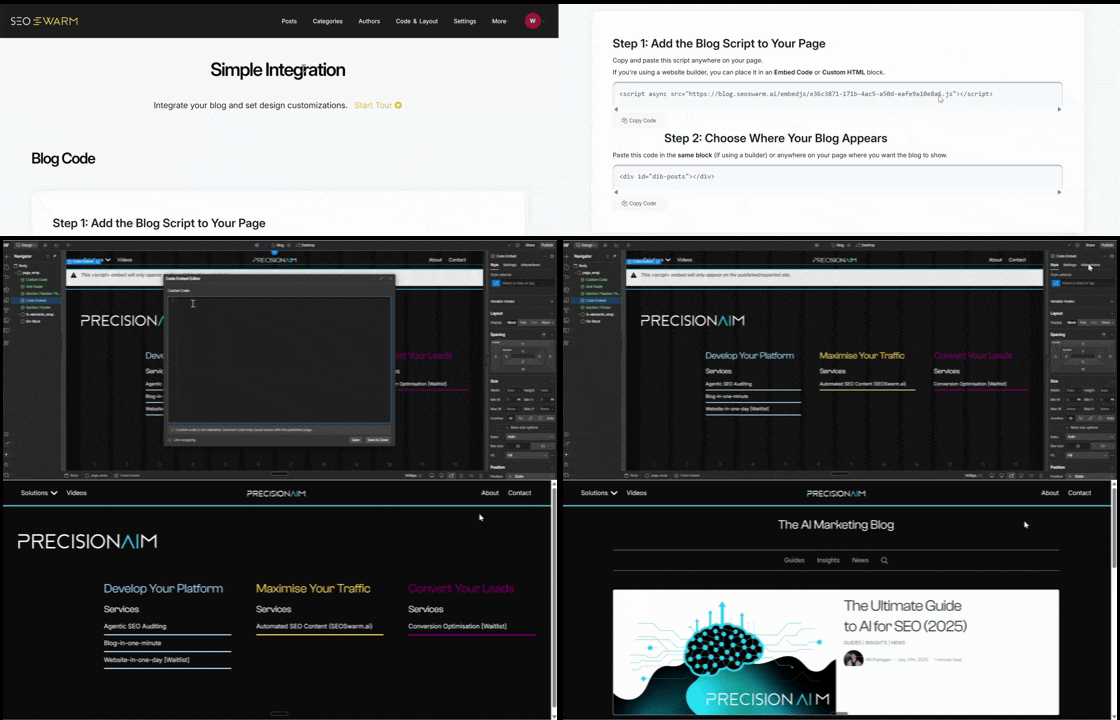
Measurement and Attribution: Tools, Onboarding, and Trends for SMBs and Lean Teams
Why Measurement Matters for Lean Teams Acting on NewFronts Innovations
When your team is small—maybe just one or two marketers—getting your campaign measurement right isn’t just handy, it’s essential.
During the 2025 Digital Content NewFronts, analytics tools and templates took centre stage. These make life easier for lean teams.
The latest platforms focus on simplified onboarding and automated troubleshooting. You don’t have to be a technical expert or hire a pricey agency to get unified attribution.
Detailed tracking and optimisation are no longer reserved for big-budget enterprises. These capabilities are now open to virtually anyone.
Platform Highlights: 2025 SMB-Focused Advances
One example is Google Analytics GA4, Google’s analytics and attribution platform. Now, GA4 is packed with AI-driven metrics, robust cross-device tracking, and a fresh interface designed around SMBs.
Automated anomaly detection and visual setup flows mean most teams get up and running in under a day.
Error rates for campaign conversion tracking have plummeted, now just below 10% for SMBs, compared to 35% a couple of years ago.
A one-click attribution model switcher and Event Diagnostics tools guide users straight to fixes. There’s no longer a need to rely on IT support.
Building on these improvements, Meta’s Advantage+ incorporates generative AI to handle campaign setup, budget pacing, and creative tweaks in real time.
SMBs benefit from plug-and-play onboarding and troubleshooting that reduce setup time to hours and measurement mistakes overall.
Automated weekly digests offer smart recommendations.
Even solo marketers know how to shift budget or creative angles, without needing technical expertise.
Turning to TikTok, Symphony Analytics offers a QuickStart Attribution Wizard.
For most SMBs, connecting everything takes just an afternoon.
Event mapping errors are now down to the 5–10% range.
Automated alerts and visual fixes point out what’s missing or misconfigured.
Creative analytics reveal exactly which video tweaks are driving conversions, so you can adapt quickly.
Unified Cross-Channel Dashboards and Key Outcomes
The major turning point is the availability of all-in-one dashboards that pool data from Google, Meta, TikTok, and Shopify.
Closed-loop ROI tracking usually takes about 30 minutes to set up with template connectors.
AI-powered data harmonisation and built-in troubleshooting eliminate reporting errors and duplicated attribution headaches.
Surveys from early 2025 NewFronts found that switching to integrated dashboards lifted conversion rates by 24%. Return on ad spend increased by 13% compared to brands using siloed tracking.
Automation and visual validation flows make a tangible difference for SMBs, closing knowledge and bandwidth gaps.
A significant 88% of small business owners say automation enables them to compete with larger companies by helping them scale smarter and respond faster.
Common campaign errors, like pixel failures or missing conversion events, get flagged instantly.
The tools walk you through fixes visually. Troubleshooting now takes minutes, not hours.
With validation and visual troubleshooting supporting SMBs, sticking with official templates and centralised dashboards lets you focus on creative and strategy.
Measurement becomes accurate, scalable, and simple to maintain.
Every pound spent on NewFronts-featured campaigns works harder for you—with no extra technical complexity required.
As measurement struggles fade, you have more time for refining creative and exploring new platform opportunities.
Access, Democratization, and Actionable Playbooks for Small Brands/Agencies: Overcoming Barriers and Making the Most of NewFronts
SMB Onboarding: Spend Levels, Timelines, Tools, and Outcome Benchmarks
For small brands and agencies, entering the world of NewFronts in 2025 feels like the gate has finally swung open.
Lower minimum spends, smarter onboarding, and guided analytics let even compact teams move quickly from concept to campaign.
To make the most of this era, you’ll need specifics on spend, timelines, essential tools, and real outcome metrics.
This table summarises what it will take—and what you can reasonably aim for—on each major platform:
| Platform | Min. Daily Budget (USD) | Stepwise Timing | Key Tools | Outcome Benchmarks (SMB, 2025) | Actionable Insight |
|---|---|---|---|---|---|
| YouTube Shoppable Video Ads | $10–$20 | Feed setup: 1hr, Approval: 1–3 days, Creative: 1–24h, Ad review: 1 day, Go live: 48h | Google Merchant Center; YouTube Studio | 1.5–3% CTR, ≥30 conversions week 1, resolve >90% errors in <2 days | Prep feed for instant approval |
| TikTok Sponsored Search | $20–$50 | Seller reg: 30min, Cat. sync: 45min, Creative: 1hr, Approval: up to 2 days, Batch test: 3–7 days | TikTok Seller Center; TikTok Ads Manager | 2–4% CTR, ≥25 conversions, error fix <24h, ROI 2–4x in 2 weeks | Test multiple ads, shift spend after 72 hours |
| Meta Creator Marketplace | $50–$100 | Creator pick: 1hr, Collab setup: 1–2 days, Approval: 24h, Batch test: 1–2 weeks | Meta Business Suite; Creator Marketplace | 1.5–3% CTR, >100 engagements week 1, positive ROI in 4 weeks, fix issues <48h | Target micro-influencers, boost ROI up to 27% |
Let’s break down how you turn these numbers into results.
If you’re a lean team, achieving strong click-through rates (CTR) and clearing early errors now happens faster than ever—provided you take a few disciplined actions.
Before and just after launch, follow these steps to maximise performance:
- Feed Perfection
Complete all feed fields and use sharp product images for fast approvals. - Variant Testing
Start with two or more creatives and cut underperformers swiftly. - Budget Shift
At 72 hours, reallocate spend to the top ad using live dashboard insights. - Micro-Influencer Focus
For Meta, prioritise smaller creators for cheaper, quick-turn engagement. - Daily System Checks
Use YouTube Studio, TikTok Ads Manager, and Meta Business Suite dashboards daily to catch and fix snags.
Real-world results point to a major shift.
With minimum viable budgets, first campaigns can go live in less than a week.
Errors—whether missing data or paused ads—are resolved in hours rather than days thanks to improved support flows.
When reading this table as an SMB, consider where your goals and resources align.
YouTube is best for those needing lowest entry spend and reliable time-to-launch.
TikTok excels with rapid feedback loops—great for batch-testing.
Meta delivers high ROI, especially for brands able to activate micro-influencers.
If you aren’t hitting the listed CTR or conversions, focus on dashboard alerts and address them immediately for the fastest turnaround.
Avoid the trap of waiting days for fixes—2025’s platforms favour teams who act in real time.
For maximum success, remember that constant iteration is your edge.
Even the smallest brands can run test campaigns Friday, check analytics Saturday, and see measurable gains by Monday.
It’s never been easier to close the gap with bigger players.
As savings from minimum viable budgets accumulate and campaign speed increases, lean teams can take advantage of rapid feedback and support flows.
These efficiencies set the stage for amplifying results with organic tactics and strategic content efforts.
SEOSwarm: Event Blog Launches and Transparent Pricing
Paid isn’t everything—getting organic traction post-NewFronts is still key.
Enter SEOSwarm for brands that want to turn trends into traffic with SEO-driven campaign blogs.
You can go with a single trending post, an event batch, or ongoing search engine domination, all with up-front pricing and predictable returns.
| SEOSwarm Pricing Model | Use-Case Example | Typical Initial Result (6 weeks) |
|---|---|---|
| Per-article | Single event blog | Traffic up 25–40%, impressions up 30–45% |
| Special batch | Bundle of 4–10 posts | 35–50% more visits, cost per acquisition (CPA) drops 20–30% |
| Custom campaign | Ongoing blog SEO | Growing share of search engine results page (SERP) over time |
Let’s walk through how to use these options as a lean marketer.
If you’re after a quick win with minimum fuss, a single event blog during a NewFronts surge can boost traffic 25–40% and lift your visibility for weeks after.
A batch order (4–10 blogs) gets you exponential gains—more visits and faster drops in cost per acquisition (CPA)—by building momentum across search.
For brands in it for the long haul, ongoing blogging compounds results, locking your place on the search engine results page (SERP) and giving steady, month-on-month organic growth.
By connecting paid campaign performance with organic blogging momentum, small teams can maximise every opportunity post-NewFronts, taking tactical actions for both short-term wins and lasting search presence.
- Approve briefs within hours for maximum trend relevance
- Publish within 48 hours to capture organic demand spikes
- Track analytics weekly, then double down where results rise fastest
These habits let you adapt on the fly and make sure that every pound invested goes further.
The clear pricing also prevents wasted budget—a rarity in digital marketing.
Small teams competing in 2025 must play faster.
That means acting on insight, shifting spend, and prioritising winning topics or ads daily.
Whether paid or organic, you now have the same tools and playbooks as the giants—just with a little more hustle and pace.

AI-Powered
SEO Content Strategy
See the AI platform that's replacing entire content teams
(with better results).

Making the Most of Digital Content NewFronts
Digital Content NewFronts aren’t just industry showcases—they’re your fastest route to smarter, more agile campaigns. I’ve seen lean teams win big by acting quickly on platform updates and using built-in analytics to troubleshoot in real time. The difference between stalled ads and rapid growth often comes down to daily system checks and bold creative pivots.
If you’re ready to compete, start with minimum viable budgets, test multiple creatives, and shift spend to what’s working within 72 hours. Use platform-native dashboards and automation tools to resolve errors fast—don’t wait days for fixes. Pair paid campaigns with organic content launches for lasting impact.
I’ll leave you with this: In 2025, speed and discipline separate winners from laggards. The brands that iterate daily and connect paid with organic will outpace the rest—no matter their size.
- Wil