
Keeping up with SEO is exhausting—algorithm changes, endless audits, and repetitive keyword research can drain any team’s resources fast.
I’ve seen firsthand how AI agents are changing the game, automating everything from technical fixes to content optimisation. If you’re tired of manual SEO tasks or worried your site isn’t keeping pace, you’re not alone.
In this article, I’ll break down exactly what SEO AI agents are, how they work, and why so many businesses are switching. You’ll get a clear look at the top AI-powered solutions—like SEOSwarm, Otto AI, Semrush AIO, and more—plus practical tips for choosing the right fit for your needs.
I’ll also share key evaluation criteria, real-world use cases, and honest pros and cons for each tool. By the end, you’ll know which AI agent can automate your SEO, save you time, and help your rankings climb—without sacrificing quality or control.
What are SEO AI agents?
Definition and core concept
Let’s break down exactly what SEO AI agents are. These smart, autonomous software programmes rely on large language models (LLMs) and natural language processing (NLP) to do their work. Once set up, they plan, execute, and optimise SEO activities on their own—requiring very little day-to-day input from you.
Think of the difference this way: conventional SaaS SEO tools are like a sat nav handing you directions, but expecting you to do all the legwork behind the wheel. SEO AI agents, though, act like autopilot, constantly rerouting on your behalf. They steer, react, and take care of obstacles as they pop up.

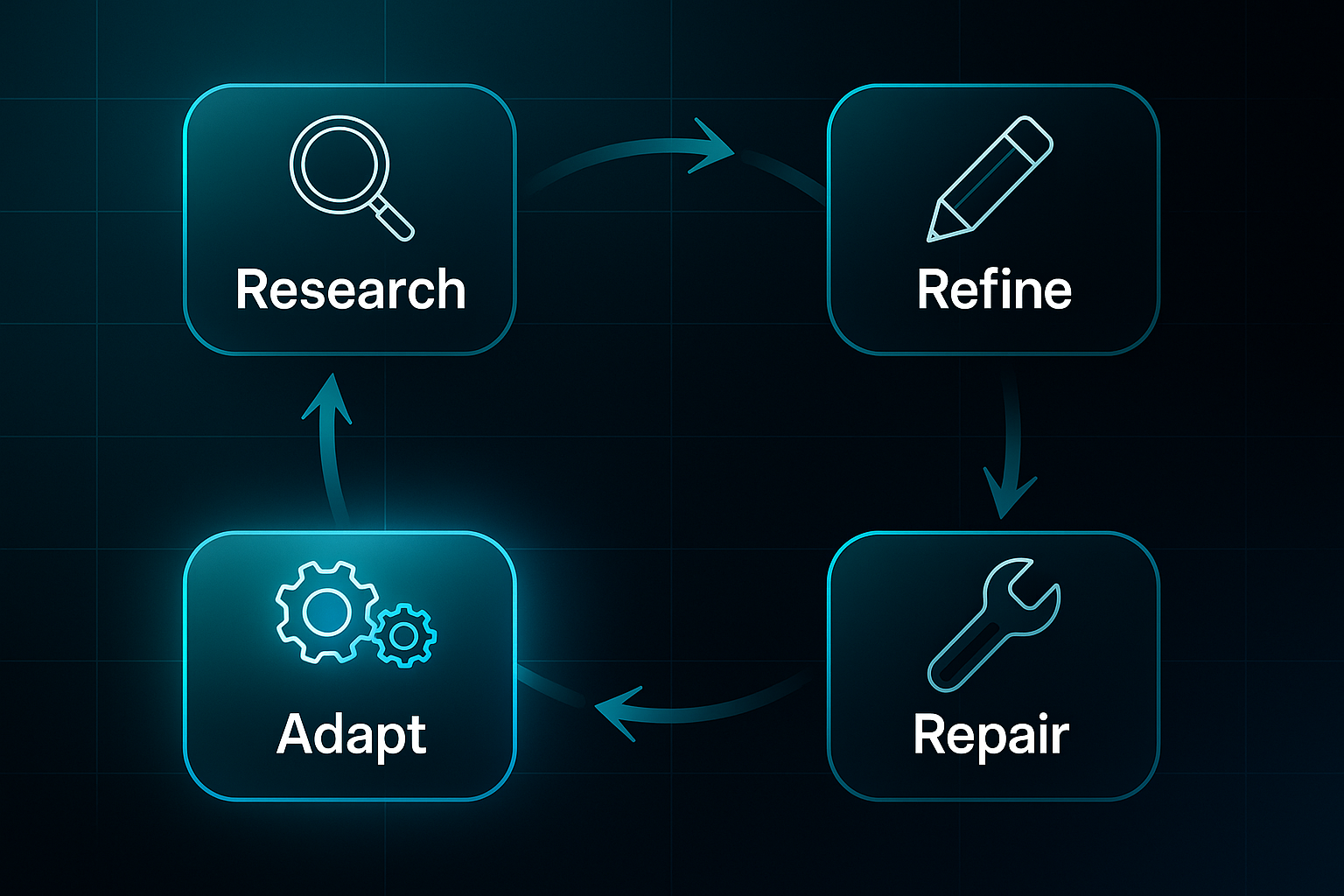
That means repetitive SEO work—things like keyword research or manual audits—no longer eats up your team’s time. The AI agent keeps watch, continually identifying new keywords, refining content, repairing metadata sitewide, and even pivoting as Google’s search algorithms evolve.
What really stands out is just how hands-off this can be. Most tweaks and fixes are handled without your team hovering over dashboards or racing to patch issues.
Why use SEO AI agents?
So why are businesses making the switch? Put simply, SEO gets more complex every year: algorithms shift, competition heats up, and old manual methods struggle to keep up. AI agents bring both efficiency and scale, whether you have one website or a sprawling portfolio.
- Automating repetitive tasks
Handles labour-intensive jobs like keyword research, clustering, content tweaks, in-depth audits, and internal linking automatically. - Scalable mass updates
Rolls out improvements across single or multiple sites in dramatically less time. - Consistent output quality
Delivers technical and on-page fixes at a uniformly high standard, reducing human slip-ups. - Significant time savings
Labour reduction: Routine SEO task time dropped by 36–45% for many companies using AI in late 2023. Widespread adoption: By early 2024, nearly 60% of digital marketers used AI or automation for SEO. - Rapid, adaptive changes
Instantly responds to algorithm shifts, broken links, or competitor moves.
Today’s AI agents handle keyword clustering, enhance page content, automate technical health checks (spotting crawl errors, duplicate content, broken links), watch search rankings, and adapt strategy in real time—no more waiting around for the next manual audit.
Types of SEO AI agents
When it comes to using these agents, businesses usually follow two main routes:
- Agency-delivered AI SEO agents
An agency sets up and manages your automation. They ensure expert quality, letting your team focus on higher-level strategy. - Self-serve SaaS AI agent tools
Here, you subscribe to a smart platform and manage the agents yourself—ideal if you want maximum control and flexibility.
Picture it: A retailer might let an agency automate their SEO across dozens of sites, while a B2B business uses a SaaS tool to automate keyword research in-house. Whatever the choice, you get automation that matches your resources, desired involvement, and goals—freeing time, cutting error, and delivering a strategic edge.
If your business is heavily data-driven, operates in a highly competitive market, and is focused on maximizing ROI through predictive analytics and automation, an AI Digital Marketing Agency might be the better choice.
What to look for in a modern SEO AI agent
Essential evaluation criteria
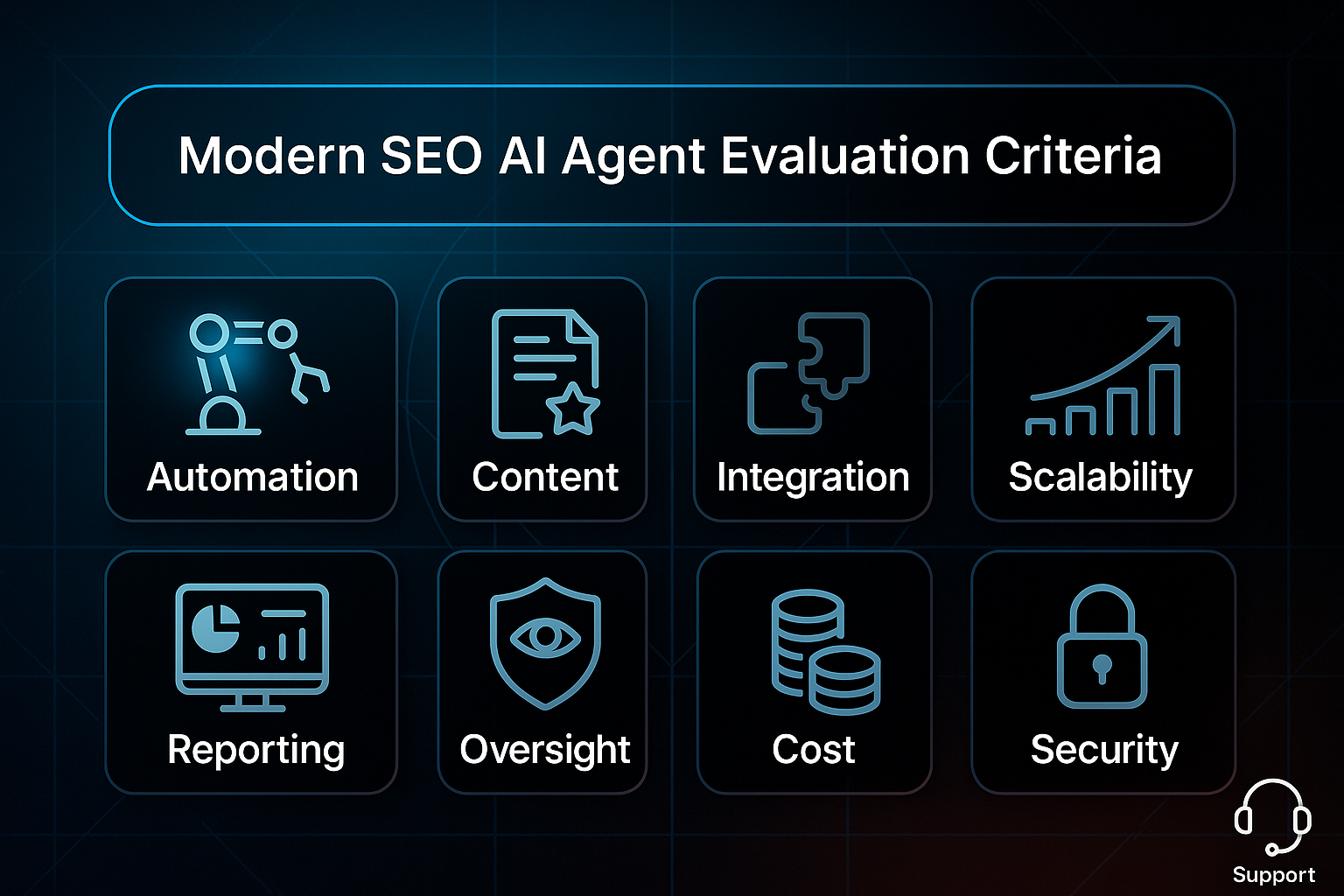
Picking the right SEO AI agent isn’t just about tech specs—it's about what will actually work for your team and objectives. The search can feel overwhelming, so how do you find the options that genuinely stand out?
Level of automation: single-task vs. end-to-end
Some agents only manage one area—think keyword research or audits. Others handle everything: planning, content, optimisation, and reporting. If you want true efficiency, those end-to-end agents are usually the best bet.
Content quality and generation
Top agents use advanced language models for accurate, EEAT-ready content. That said, editorial review remains important—no one wants generic or off-brand text going live.
Integration capabilities
Your new agent should blend into existing systems. Tight connections with your CMS, analytics, or Search Console are vital. Perks like automatic schema markup are especially handy for reducing manual tweaks.
Scalability and bulk actions
Managing several sites or heaps of content? Agents with powerful bulk actions let you apply updates everywhere from one dashboard—this can save massive amounts of time for agencies or larger teams.
Reporting, analytics, and ease of use
A clear dashboard and rapid analytics help your team move quickly. The strongest agents flag issues so you can fix them fast, and anyone on your team should feel at home with the interface.
Strategy and human oversight
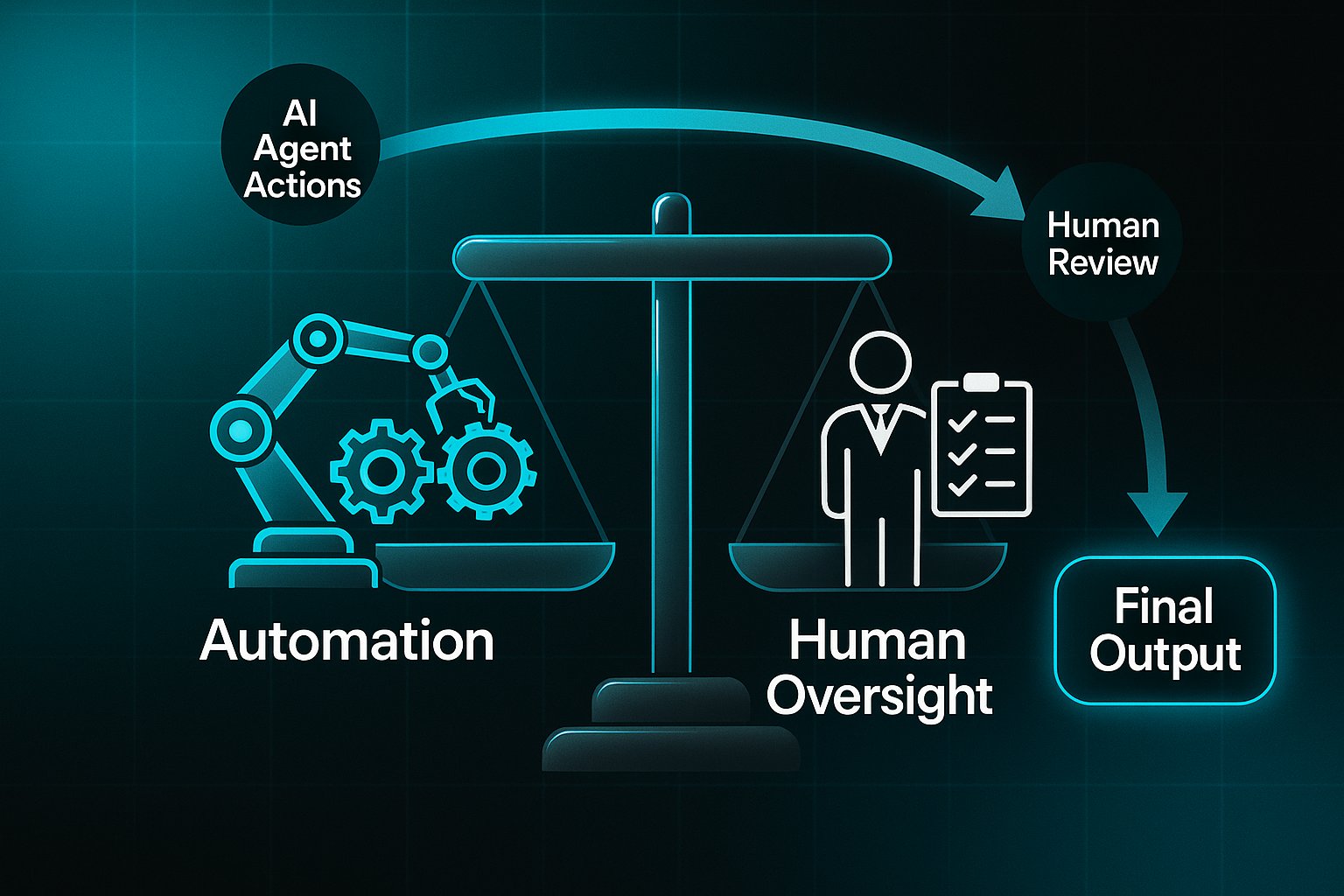
Automation is great, but human input matters. Features for workflow approvals and quick overrides mean you keep your business goals front and centre.
Cost model
Consider pricing carefully—subscription, usage, or managed service all come with pros and cons. Watch for integration fees and any premium add-ons.
Security, privacy, and compliance
Solid encryption, GDPR compliance, and proper certifications aren’t optional if you’re handling sensitive information. Ask for proof before you commit.
Support and onboarding
Support truly makes a difference. Reliable, responsive help and a clear onboarding process ensure your team makes the most of any agent—regardless of prior SEO experience.
Weight these criteria carefully, and you'll spot which agents bring real value—freeing your team to focus where it matters, while the tech handles the heavy lifting.
SEOSwarm
Overview and positioning
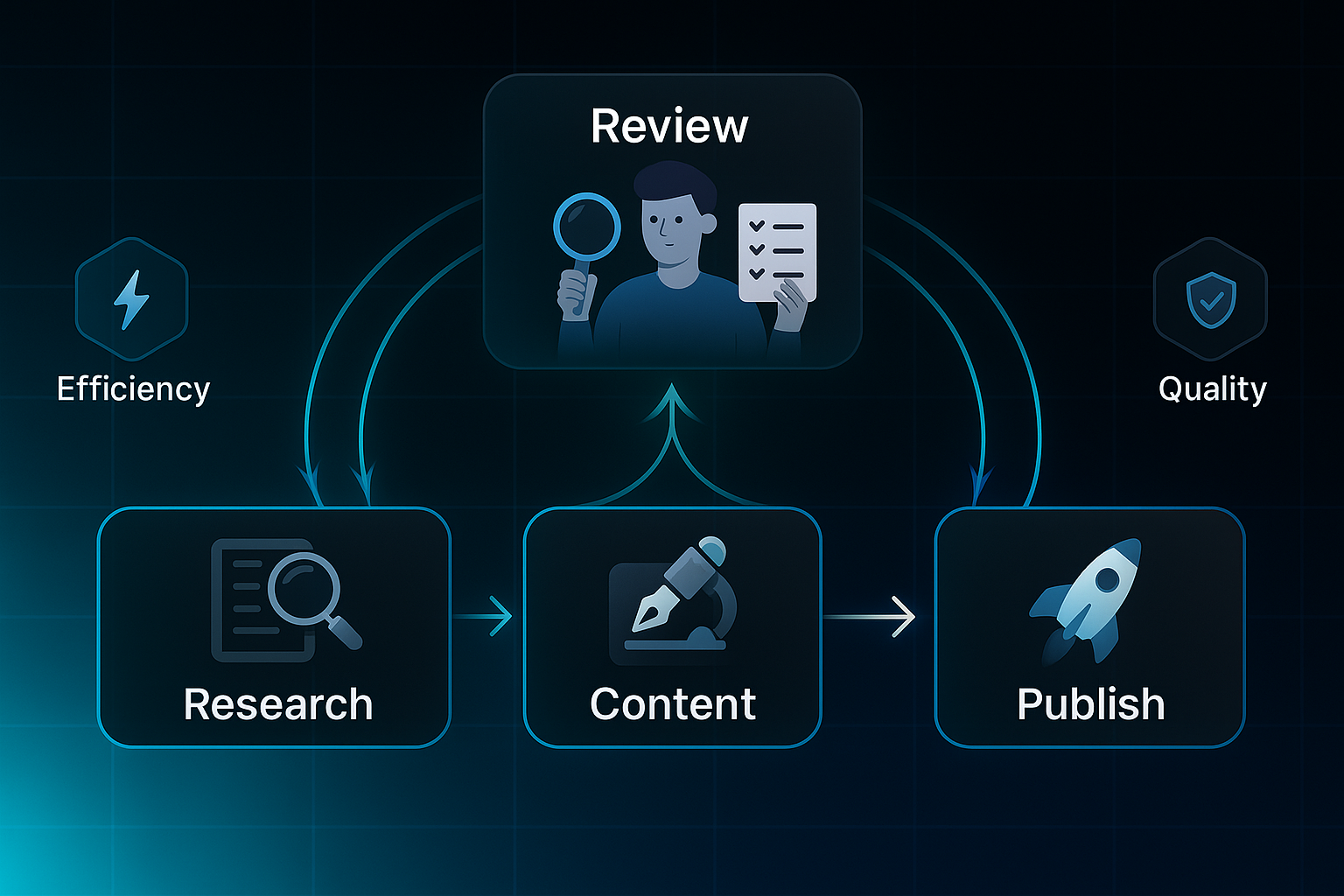
SEOSwarm is a fully managed AI SEO agent platform. Picture skipping all the routine set-up and check-ins that come with standard SaaS tools—here, everything is managed as a service. The agency orchestrates the workflow: from developing your strategy, right through to research, content generation, optimisation, analysis, and publishing.
For companies or agencies seeking scalable SEO, or those wanting to pass the headache of content strategy to someone else, this model is a welcome relief. The beauty lies in automation paired with expert review, so you get efficiency with a human check on every decision and deliverable.
It really is the best of both worlds: reliable automation, but always with the assurance of human oversight.
Core features and automation
SEOSwarm’s automation tackles the entire SEO cycle. Its AI agents dig into keyword research, analyse competitors, shape your content, and make on-page or technical improvements, then publish directly to your website.
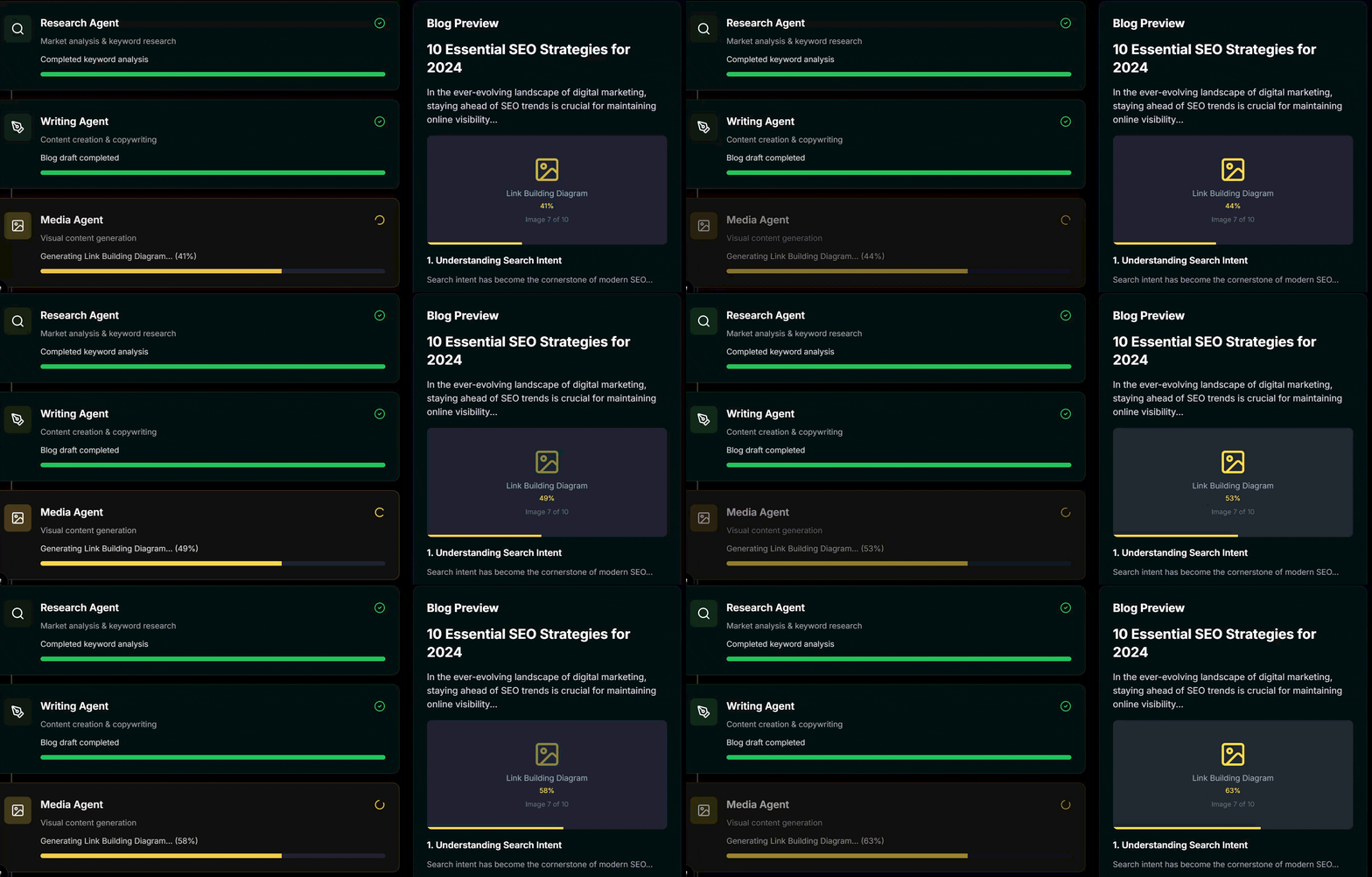
There’s plenty going on behind the scenes: automated calls to action, internal linking, EEAT compliance to satisfy Google’s trust metrics, schema integration, and brand media support. Your blog content is regularly refreshed and optimised.
These agents proactively watch trends, run audits, and can trigger site refreshes as needed. A human layer always acts as your strategic safety net, ensuring alignment with your vision and standards. Thanks to Search Console integration, updates are indexed fast and performance analytics are always close at hand.
Unique differentiators
SEOSwarm breaks away from the pack with its two-layered quality approach: every piece of content goes through both automation and a required human review. That means reduced risk of rogue, off-brand, or mistaken outputs—something more common with “set and forget” AI tools.
Rather than relying solely on AI to fix things (and you to catch errors), SEOSwarm’s process delivers reliability—each tweak, from automated internal linking to schema and EEAT fulfilment, gets checked by an expert.
And it’s not just a bonus: enhancements like branded media and a smooth user journey actively help not only rankings, but conversion rates and trust signals, putting SEOSwarm ahead of typical SaaS solutions.
One thing that always catches attention is the consistency: you don’t just get one or two optimised articles—you get quality, sitewide.

AI-Powered
SEO Content Strategy
See the AI platform that's replacing entire content teams
(with better results).

Blog-in-one-minute integration
Need results, fast? SEOSwarm includes blog-in-one-minute, a powerful, optional add-on. With just two lines of code you get a fully SEO-optimised blog, superfast Cloudflare hosting, ongoing technical health checks, and built-in editorial SEO tips.
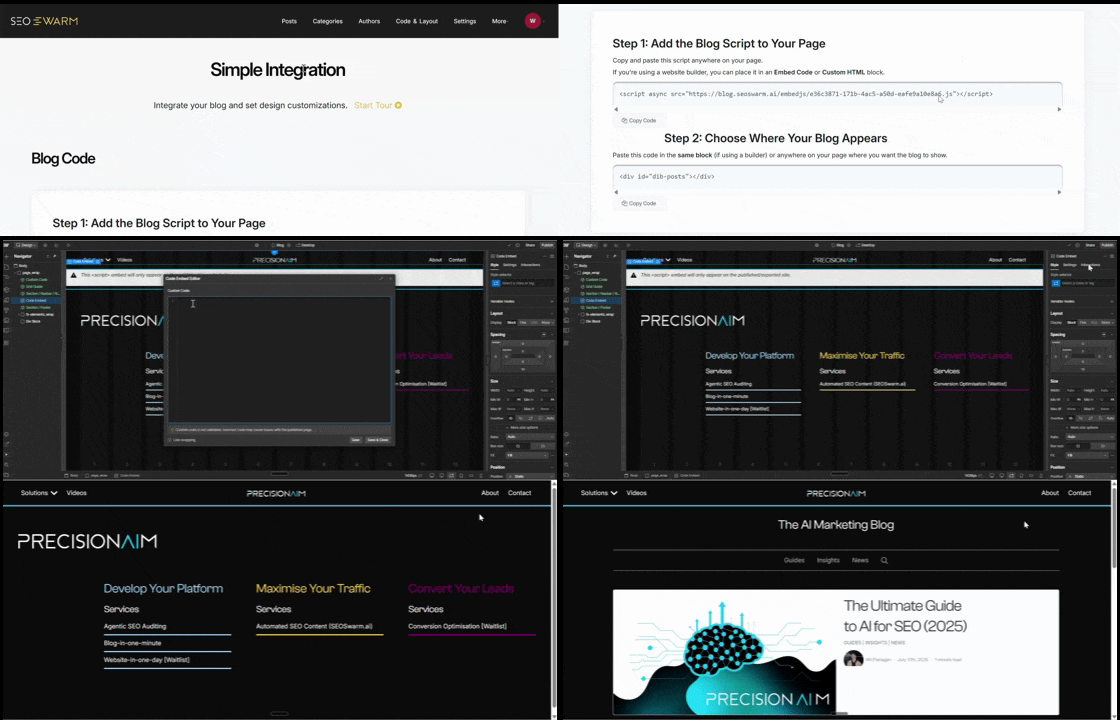
You can use this as a stand-alone solution for instant content, or alongside SEOSwarm’s broader agency services. It brings instant impact for organisations that need to spin up new content hubs quickly.
Blog-in-one-minute
Add a fully SEO-optimised blog to your website with just 2 lines of code.
Learn more
Ideal use cases and limitations
SEOSwarm is a dream for large publishers, multi-site agencies, or enterprise teams wanting scale and quality without babysitting every SEO tweak. Hands-free operation, layered control, and rapid rollout are all major strengths.
But if you want full control over daily SEO tasks or budget is tight, SEOSwarm’s managed, hands-off style might not be the best fit. For some, self-serve SaaS solutions, with their DIY flexibility, are still the preferred option.
Otto AI by Search Atlas
Source: searchatlas.com
Overview and main workflow automation
Let’s talk about Otto AI from Search Atlas—a fully autonomous SEO agent laser-focused on technical SEO. Otto never takes a break; it works in the background, scanning your site in real time and fixing issues the moment they pop up. Imagine not having to schedule those endless audits or chase down every broken meta tag ever again.

Introducing OTTO SEO by Search Atlas | Automate your SEO and start ranking
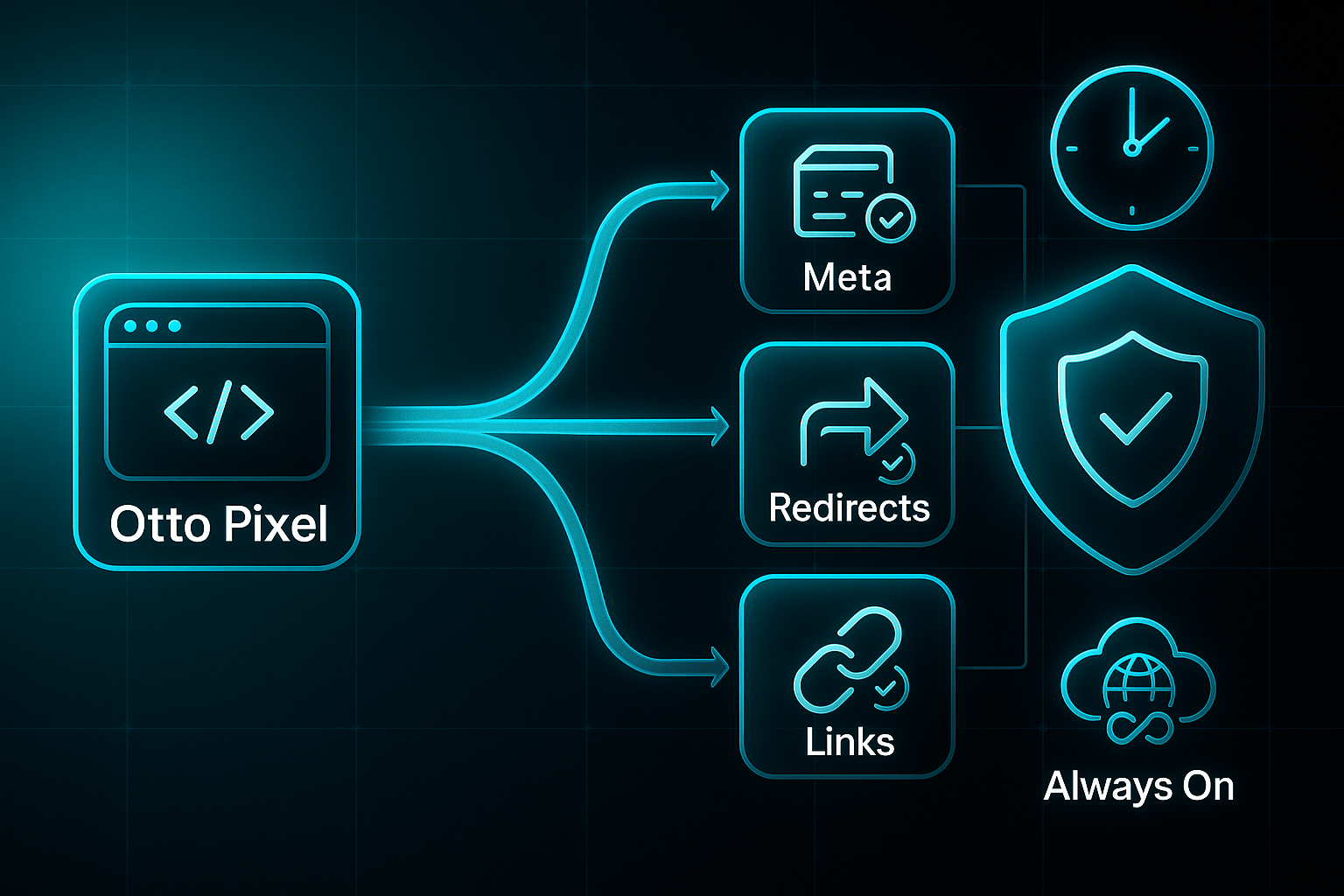
The magic starts with the Otto Pixel: just add its tiny code snippet to your website. Otto then leaps into action—detecting and auto-repairing meta tags, schema, canonical tags, redirects, internal links and status codes. Everything happens silently, and updates are handled instantly, so your technical SEO is always current.
It doesn’t matter what your site runs on—WordPress, a bespoke CMS, something totally custom—the Otto Pixel is platform-agnostic. This means set-up is painless, there’s next to no upkeep, and when your website changes, Otto sticks with you.
Once it’s installed, Otto quietly manages your site’s technical health, no daily input required.
Key differentiators
Otto offers the real set-and-forget experience. Set up your branding details once, and Otto takes over, handling every part of technical SEO without you lifting a finger.
One standout is Otto’s knowledge graph ingest. Give it your business and brand data, and Otto enhances your site’s schema and semantics, boosting search engine understanding and contextual relevance. It all happens automatically.
The Knowledge Graph allows Google to move from a keyword-based system to a more intelligent, entity-based system.
There’s also an ingenious Deep Freeze rollback: if you remove the Otto Pixel, all improvements remain in place. No worries about vendor lock-in or reversing your progress—a genuine safety net. Most tools just offer suggestions and leave you to do the work; Otto does the job itself.
Best for and limitations
Otto really shines for agencies and enterprises running large, fast-changing sites, or anyone lacking an in-house technical SEO whizz. If compliance and routine technical fixes eat up your resources, Otto keeps everything shipshape with minimal effort.
It won’t create editorial content or handle content strategy for you. Brands needing blogs or articles should pair Otto with a content-driven AI agent to cover the full SEO spectrum.
Semrush AIO

Source: semrush.com
Overview and core functionalities
Let’s get into what makes Semrush AIO stand out. This isn’t just a legacy SEO suite—it’s evolved into an all-in-one platform packed with advanced AI capabilities, ready for both traditional and new search frontiers.
Semrush AI Toolkit Review - 2025 | Master Your Brand’s Online Reputation Fast
It covers all the bases: technical audits, site health checks, link building, rank tracking, and keyword research. Thanks to its AI-powered upgrades, though, it goes further than basic metrics.
Here’s where it gets interesting: Semrush AIO tracks your brand visibility across AI answer engines—think ChatGPT, Google Gemini, and Perplexity—not just classic organic search.
Using large language models, it automatically scans for mentions of your brand or products, then analyses the sentiment and context.
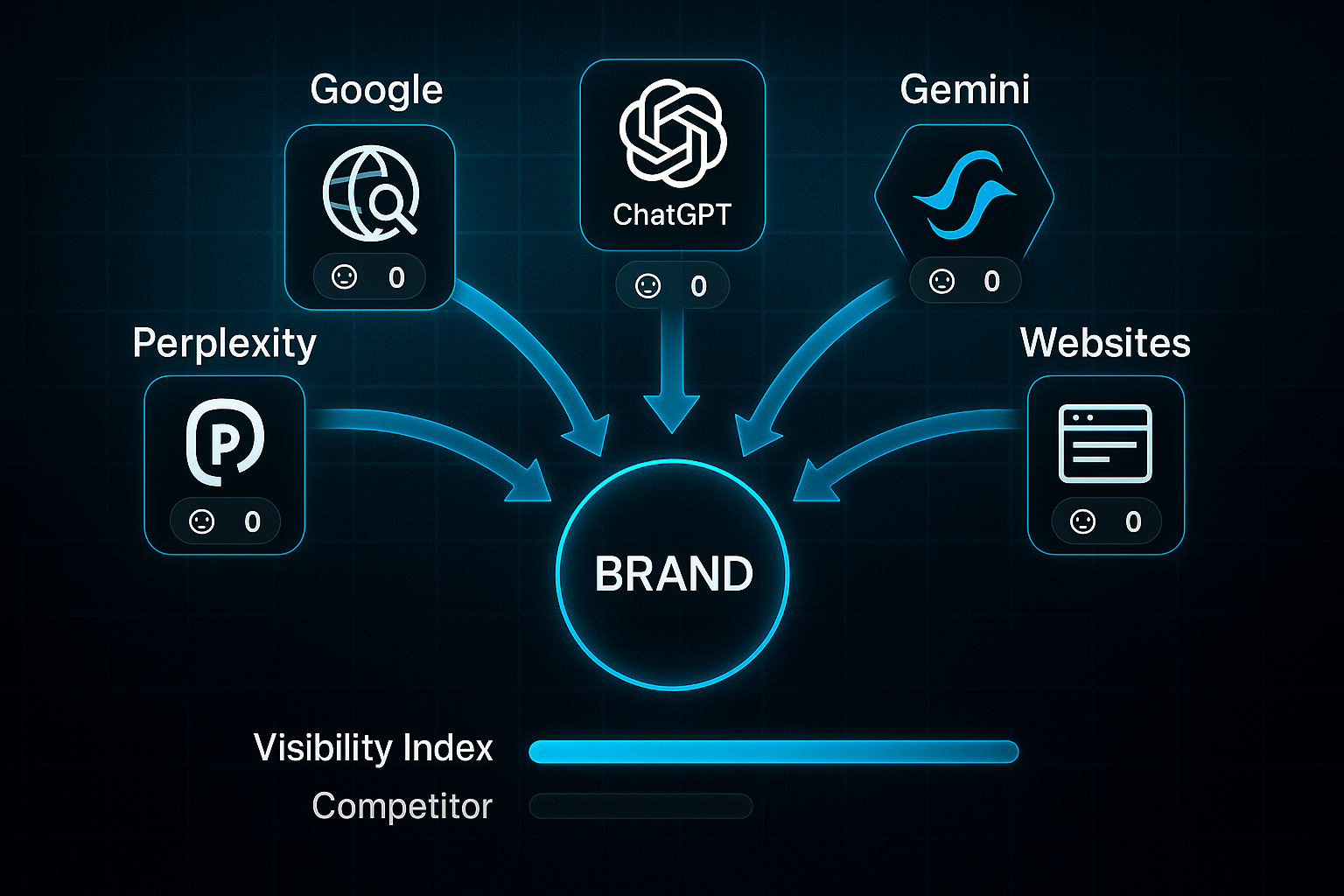
So, you don’t just see where you’re mentioned—you see how you’re talked about, whether it’s on a website or via an AI-generated answer. The AI Visibility Index pulls all this together, comparing your performance and content gaps against competitors.
AI-driven unique selling points
What sets Semrush AIO apart is its automated monitoring and alert system, keeping tabs on both standard search and AI-powered responses.
Every brand mention gets sentiment analysis; if your visibility dips or negative feedback arises—say, after a Google AI Overview—the platform flags it and offers practical workflow recommendations. You might get suggestions to update content, fine-tune technical SEO, or start off-site reputation management activities.
It’s clever, too—there’s a feedback loop. After you act, Semrush AIO measures if your sentiment and mention volume improve in later AI search snapshots.
Best use cases and who it fits
Semrush AIO is ideal for enterprises, big brands, and agencies managing reputation and classic SEO while adapting to the rapid shift in AI-driven search.
If your brand’s image and reach matter, the real-time insights help you move quickly and stay ahead. But for smaller or strictly local businesses, all these added AI sentiment and brand tracking tools can be more than you need—and the costs may not justify it if visibility on AI platforms isn’t a daily concern.
WordLift (AI SEO Agent)
Source: wordlift.io
Overview and automated workflows
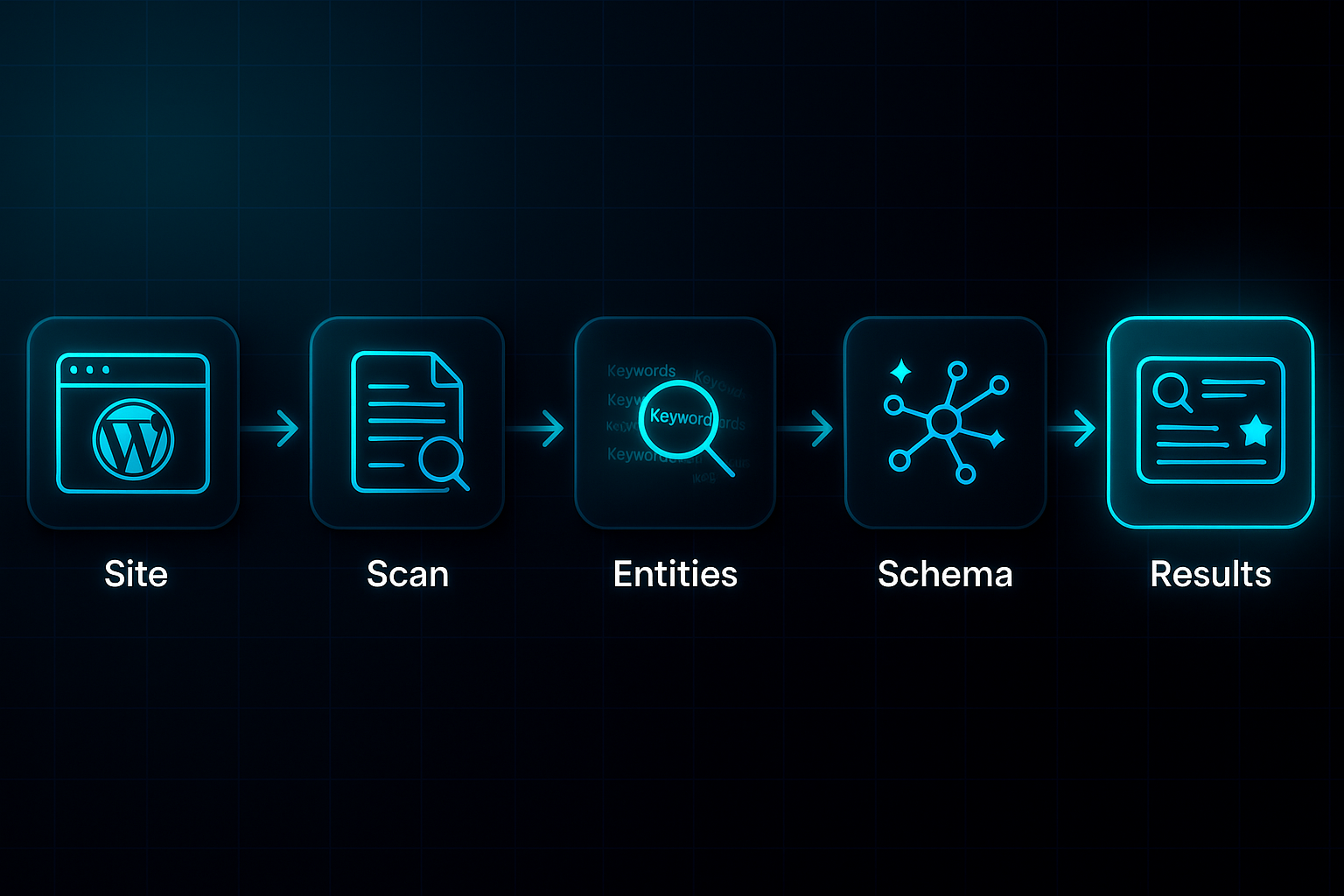
Let’s talk WordLift—an AI agent that brings semantic SEO automation to WordPress and WooCommerce sites. It scans content, highlights core topics and entities, and adds structured annotations for search engines.

WordLift Agent, Chrome Extension
As your content grows, your knowledge graph evolves too, making your site more authoritative in the eyes of search engines. The best part? Schema.org structured data is auto-updated with every change, so you’re always ready to win rich results and appear in Google knowledge panels. For internal links, WordLift keeps everything connected automatically behind the scenes.
Here’s a standout stat: in 2023, publishers using WordLift saw up to a 25% organic traffic boost, mostly thanks to more featured snippets and higher knowledge panel visibility.
In a case study, Tharawat Magazine leveraged advanced semantic SEO and grew its organic traffic by 321% in just five months.
- Semantic SEO automation
Pulls out and structures key entities to shape a knowledge graph. - Continuous schema markup updates
Aligns structured data automatically with content changes. - Dynamic internal linking
Forms and refreshes links between relevant pages, hands-free. - Impact on rankings and snippets
Improves authority, snippet wins, and click-throughs.
Integration and differentiators
WordLift shines for how easy it is—just install the plugin, no coding experience needed. Your knowledge graph expands as you publish, while in-editor widgets provide instant ideas for entities and links. For fast-paced or high-volume publishing, all this happens quietly, so you stay productive.
- WordPress/WooCommerce integration
Zero-code, ultra-fast install for publishers and shops. - Knowledge graph automation
Builds itself with your ongoing content. - Editorial widgets
Offers instant suggestions while editing. - Optimises busy sites
Handles the pace of frequent publishing.
Best fit and limitations
WordLift is ideal for publishers or WooCommerce shops who want smart, on-page SEO without hassle. If you need technical SEO or international customisation, you’ll still want some editorial oversight.
- Ideal use cases
WordPress/WooCommerce sites building topical authority and targeting rich results. - Focus and limits
Semantic/on-page SEO only—doesn’t cover technical, off-site, or full multilingual needs. - Complex sites
Extra review helpful for language or complex schema.
Surfer SEO
Source: surferseo.com
Core functionalities and workflow automation
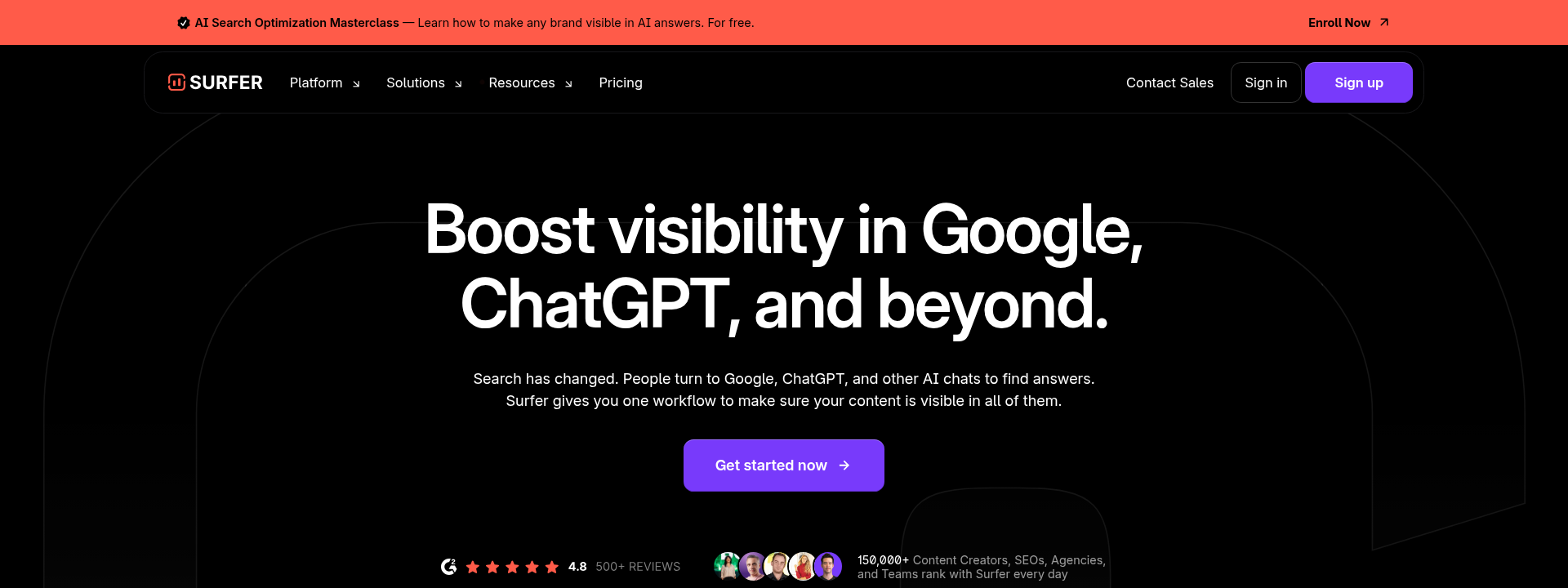
Surfer SEO takes the grind out of on-page optimisation by automating much of the content improvement process. Its Content Editor gives you real-time SEO feedback as you write. The Content Score updates live, with keyword suggestions and headline tips to keep you on track—all inside your editor.

Surfer SEO Content Editor | Complete Surfer Tutorial (Part 1)
Writers and teams can benchmark their work against top competitors for any keyword, making tweaks as they go for maximum relevance. Want to dig deeper? The SERP Analyzer breaks down competitor pages—spotting keyword usage, headings, and topic coverage so you know where to step up.
Surfer’s Audit Tool makes reviewing older content painless. Scan lots of URLs at once and get actionable to-do lists: see which pages need more keywords, better structure, or extra internal links. It’s site-wide optimisation, minus the spreadsheet slog.
Unique features and integrations
A real highlight is bulk automation. Auto Optimize lets you roll out mass improvements for keywords, headings, and links—all with a single click. That’s a huge time-saver for anyone managing big archives.
Coverage Booster (the Topical Map) suggests missing subtopics and new sections, helping build topical authority and fill knowledge gaps. The integrations are strong: Google Docs, Jasper, WordPress, and Zapier let you optimise content from your favourite workspace. Support for multiple languages helps global teams, while automated topic clusters and internal links keep things organised for busy publishers.
Best users and scenarios
Surfer SEO shines for agencies, in-house teams, and publishers working at scale or managing many sites. Automation speeds up bulk changes and keeps quality consistent across loads of content.
Solo SEOs also benefit from the live feedback, but basic blogs may not need every feature. If scalable, data-driven optimisation matters to you, Surfer keeps your team focused, fast, and free from repetitive edits.
Clearscope

Source: clearscope.io
Overview and automation scope
Clearscope has become the trusted tool for editorial teams and agencies determined to raise their content quality through AI-powered optimisation. Its live grading system—ranging from A+ to F—benchmarks your draft against the highest-performing competitors for your chosen keywords.
How to Use Clearscope for Content Creation & Update
Rather than just handing over keywords, Clearscope’s AI highlights crucial terms and related topics. You’re not just ticking SEO boxes, but ensuring semantic coverage for every piece you publish.
Writers benefit from instant feedback—prescribed word counts, Flesch-Kincaid readability recommendations, and gap analysis versus leaders on the SERP. The outline generator is handy for typical topics, but for more complex subjects, you’ll still need editorial judgement.
That benchmarking panel is a standout. It lays out exactly how top-ranking pages are structured—covering word counts, content grades, and more—pinpointing where your draft falls short.
User experience and integration
Clearscope’s interface is clean, so getting started is easy. Integrated Google Docs and WordPress support brings live scores and suggestions straight into your favourite editor, skipping platform-hopping altogether.
These integrations shine for agencies working across multiple projects or collaborating remotely. Optimise, comment, and share feedback—all right in the browser. For especially large teams, you may pair it with additional project management tools when more coordination is needed.
Best fit and drawbacks
Editorial teams and agencies chasing scalable, search-ready content get a lot from Clearscope’s actionable guidance and competitor benchmarks.
But here’s the catch—it’s strictly premium, starting at $189/month with no free option, so freelancers and small businesses may find it pricey.
Finally, its focus is purely on-page and semantic optimisation. For technical SEO or off-site work, you’ll still want extra tools. For most, though, Clearscope is a true asset for modern, high-performing content.
Scalenut
Source: scalenut.com
Automation and content workflows
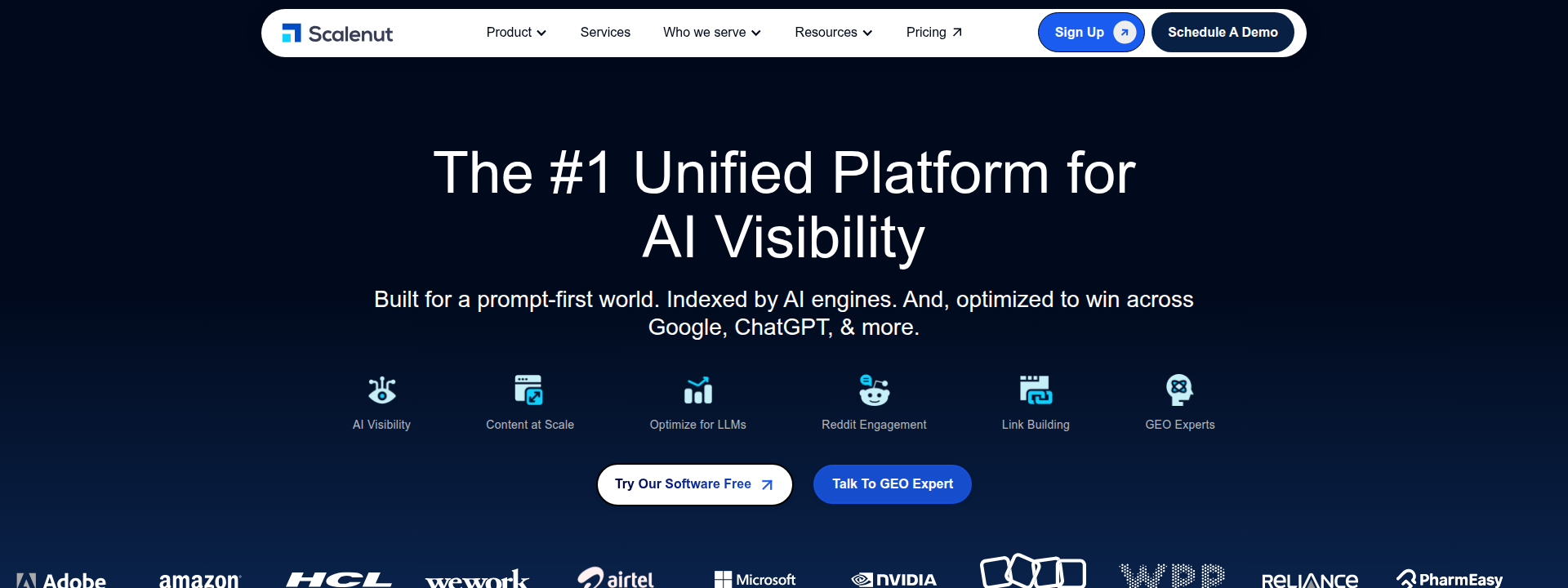
Scalenut’s Cruise Mode is the heart of its automation—it can whip up long-form, SEO-optimised drafts from a single keyword in just minutes. The process begins with intelligent brief creation, complete with competitor gap analysis, keyword clustering, and SERP insights. Before you know it, you’ve got a neatly structured outline and draft ready for refinement.
Scalenut Review: Full Blogs w Cruise Mode + SEO features
As you write, Scalenut provides real-time SEO and readability scores and actionable tips inside the editor. AI controls allow instant rephrasing or expansion without leaving the workflow. What sets Scalenut apart is its seamless workflow—combining keyword research, analytics, direct publishing, and landing page optimisation—with far less manual juggling than other tools demand.
Ease of use and unique value
Everything happens in your browser, with drag-and-drop outline editing and live feedback baked in. The “Detect and Humanize” feature helps match your brand’s tone, though a quick human review is wise if your style is nuanced.
Now, here’s where Scalenut stands out: instead of buying separate writing, research, and optimisation tools, you get it all in one affordable package focused on SMBs. Agencies and small businesses rave about the simplicity—it’s perfect for those dealing with steady content demands and bulk refreshes.
Ideal users and limitations
Scalenut is a natural fit for SMBs, agencies, and marketers who want scalable content output minus the tedious oversight. It excels at blog posts, landing pages, and quick campaign pushes.
But for those needing deep editorial control or advanced competitor analysis, platforms like Surfer SEO or Clearscope deliver more flexibility. In really competitive spaces, a final editorial sweep helps catch any lingering AI oddities.
So, for anyone seeking unified, automated SEO workflows that don’t break the bank, Scalenut finds that sweet spot between basic tools and pricey enterprise platforms.
Alli AI
Source: alliai.com
Technical workflow automation
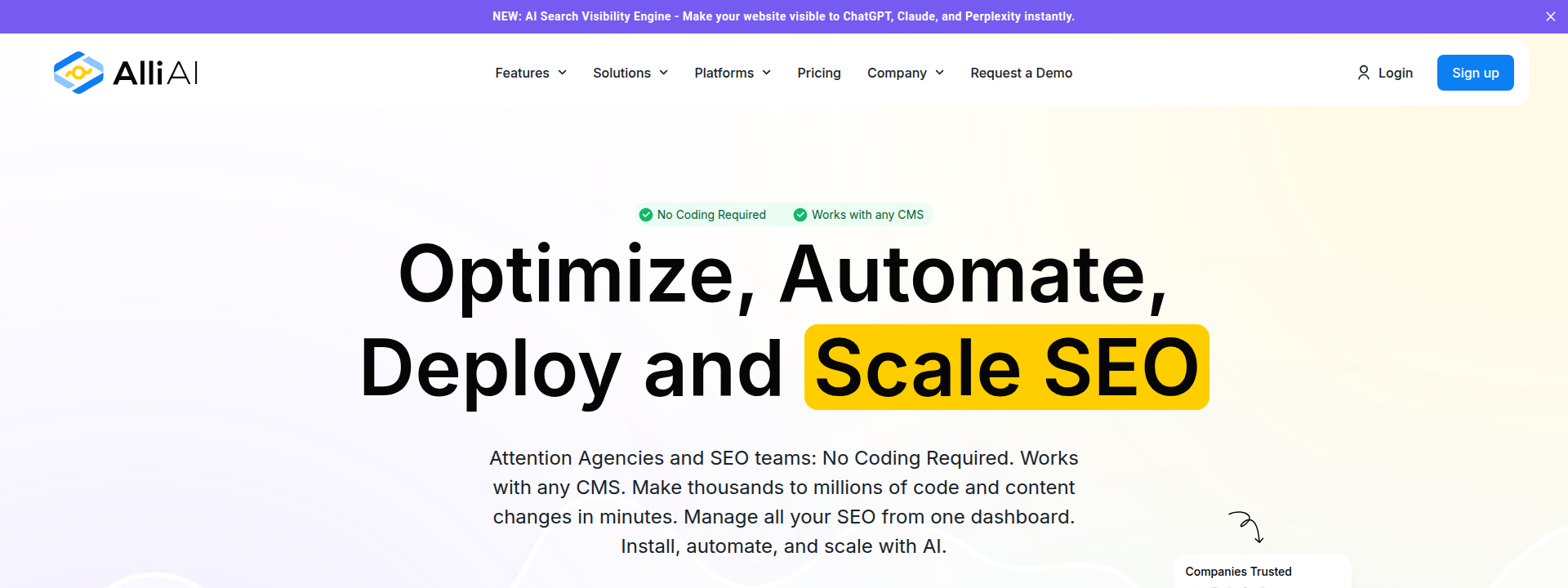
Let’s talk about Alli AI—a platform built for technical SEO teams and agencies who need speed and scale. Getting started couldn’t be simpler: just add a JavaScript snippet to your site and you’re ready to go.

Alli AI Full Walkthrough Demo
From there, Alli AI functions as an ever-vigilant site auditor, scanning for meta tag issues, schema gaps, page speed snags, and broken links. Fixes are surfaced automatically, so problems are solved before they become headaches.
The real standout? Its bulk update engine. Rather than endless manual edits, you can push on-page and technical changes to thousands or even millions of URLs in one go. Technical teams love the no-code schema and structured data tools—sophisticated enhancements go live without IT involvement.
For agencies, the internal linking engine is a highlight. It analyses your site structure and bulk-adds contextual links, boosting crawlability and relevance. Teams have used these features to roll out millions of improvements with one automated push, cutting out weeks of manual work.
Agency and enterprise use
Managing lots of websites? Alli AI’s dashboard centralises SEO across dozens or hundreds of sites. You can preview updates before rolling them out, and if you need to backtrack, the one-click rollback reverses changes instantly.
Because Alli AI overlays any tech stack, onboarding new brands or properties is quick, no matter the CMS in use. Agencies have slashed project timelines, and enterprises have seen up to 80% reductions in page load times alongside improved site health and rankings.
Best for and constraints
Alli AI shines for agencies, technical SEO leads, and enterprises with complex portfolios—especially where speed and bulk automation are essential.
It’s less suited to smaller or editorial teams wanting permanent, hard-coded updates, as optimisations disappear if the JavaScript overlay or subscription lapses. For those who prioritise unified, high-speed control, Alli AI delivers.
Outranking
Source: outranking.io
Workflow and automation scope
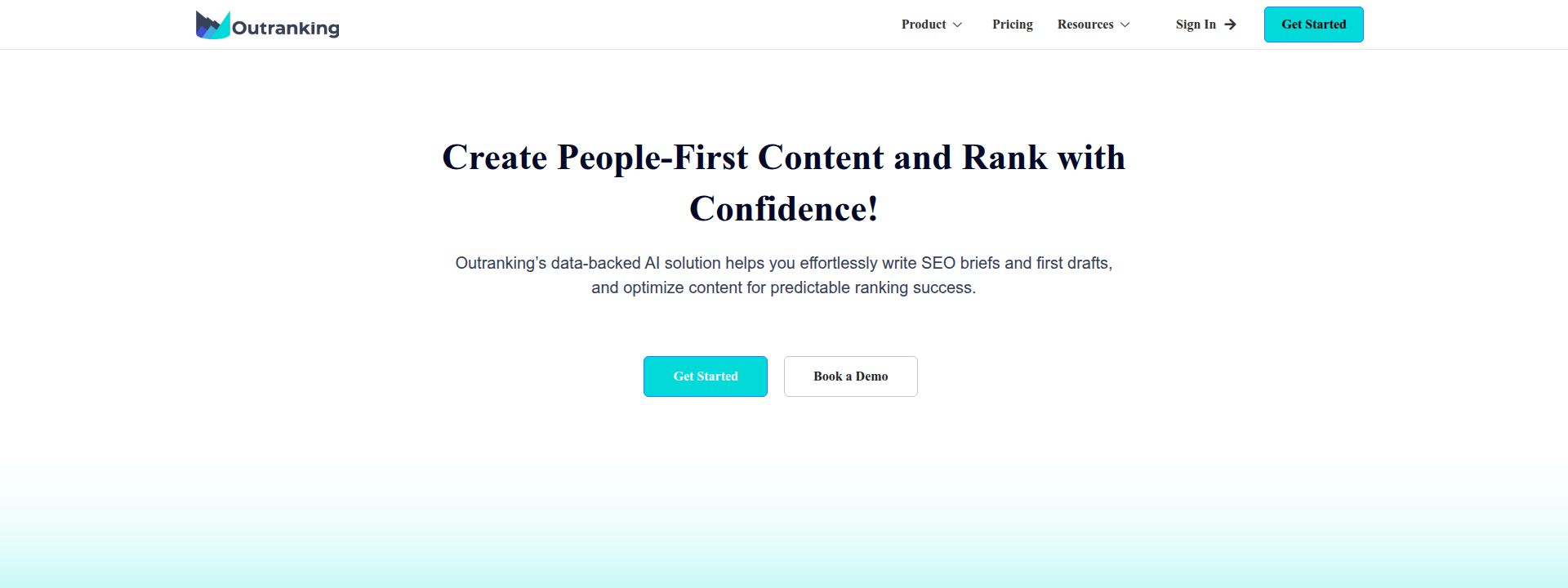
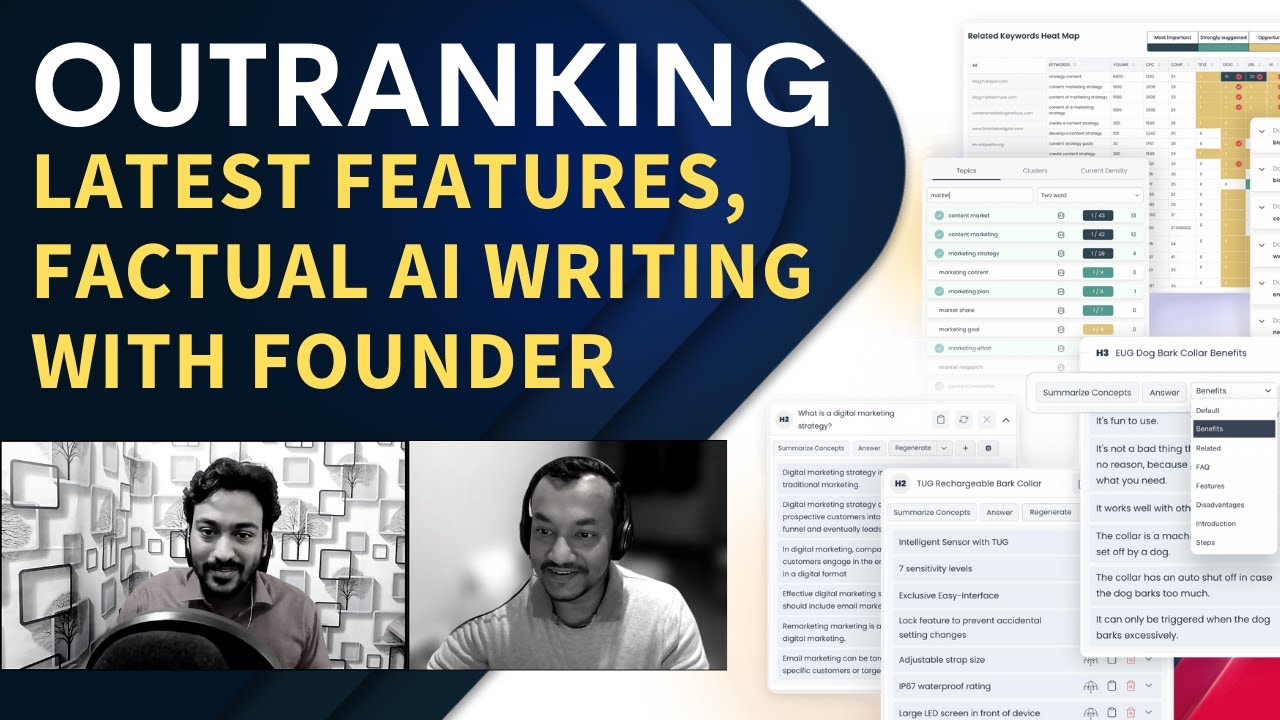
Outranking brings a guided AI workflow to content creation, blending automation with strong editorial flexibility. Start by entering a target keyword, and you instantly get a SERP snapshot—revealing competitors’ headings, word counts, and the top phrases you should consider.
Outranking Review & Tutorial From Co-Founder:Features, Factual AI Writing & Roadmap
Next up, you’re provided with a customisable outline your team can revise to fit your needs. The AI editor includes advanced features like paragraph expansion, rewording, and live suggestions—powered by GPT-3/4—making it easier to produce SEO-friendly drafts.
A live SEO score tracks keyword usage, section length, and topic coverage, highlighting where you need to optimise. Collaboration is seamless: assign roles, discuss with internal comments, and access prior revisions, so distributed teams stay synchronised without getting bogged down in emails.
Content analytics and guidance
Outranking’s analytics dashboard benchmarks each draft against SERP leaders, delivering actionable tips for headings, length, keyword placement, EEAT, and statistics.
The platform reviews entity coverage, internal linking, and meta descriptions, then guides you step by step through both new content and updates. Even novice users find the process straightforward, with clear optimisation walkthroughs that make SEO tasks manageable.
Once published, Outranking tracks organic impressions, ranking changes, and page speed, so you can see the impact of your efforts. In 2023, users who followed Outranking’s recommendations saw 30–50% more page one keyword rankings—a striking boost for any business focused on SEO gains.
Fit and limitations
Outranking is built for writers, agencies, and teams seeking a hybrid AI-plus-human workflow. It’s especially good if you want research, writing, and optimisation in one package, but still need human editorial judgement for voice.
Just remember, it’s not a totally hands-off tool like SEOSwarm or Otto—human input matters. You get smart automation plus editorial control for content that performs and sounds like you.
GrowthBar
Source: growthbarseo.com
Rapid content automation features
- 2-Minute First Draft and blog generation
GrowthBar uses GPT-4 and its own AI to produce SEO-optimised blog drafts up to 1,500 words—ten times faster than manual writing. - Automatic outlines and paragraph building
Instantly create structured outlines and paragraphs with a single click, ensuring topic consistency and speeding up your workflow. - Integrated keyword research and optimisation
Real-time keyword suggestions, SEO tips, internal linking, and competitor-inspired ideas appear directly in your editor—no switching tools required.
When you’re up against tight deadlines or scaling content, this automation really makes a difference. Everything you need, from research to structure, comes together right where you work, pushing productivity up and stress down.
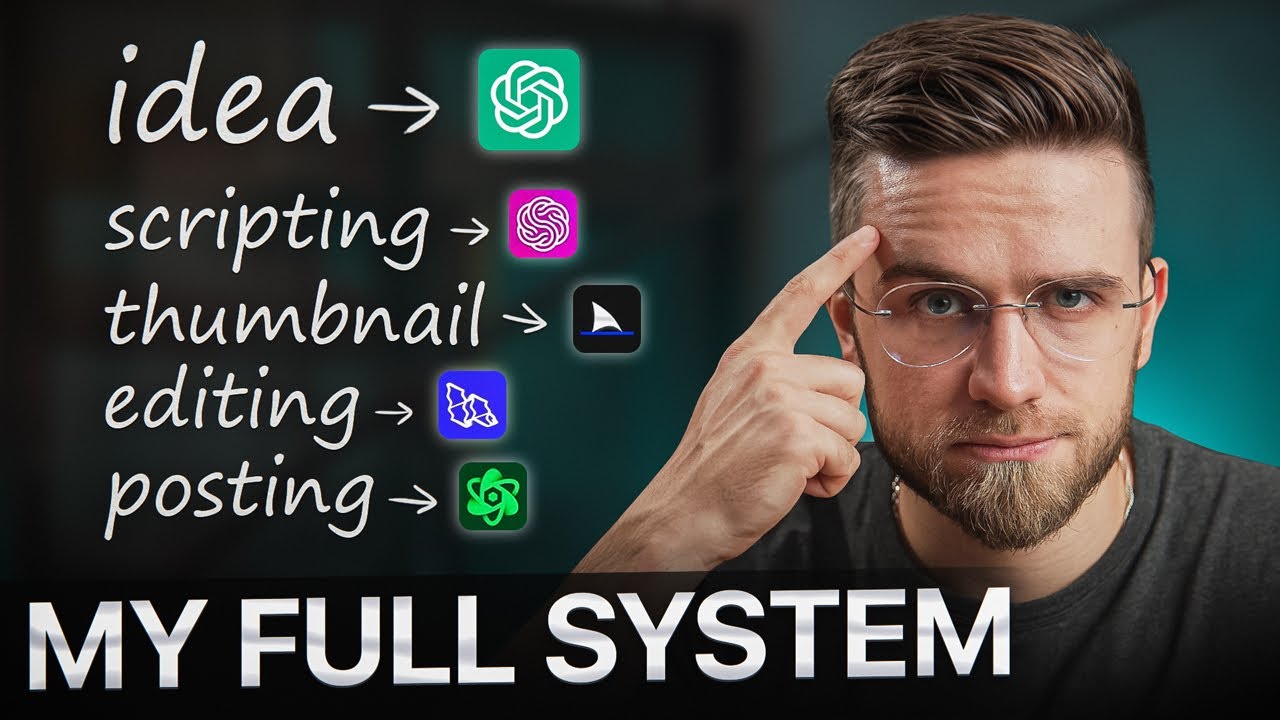
How I Use AI to Automate Content Creation - Step-by-Step (FULL GUIDE)
User experience and accessibility
- Intuitive, beginner-friendly UI
Straightforward navigation and real-time tips make GrowthBar accessible for beginners and experienced SEOs alike. - Integration with Chrome and WordPress
The Chrome extension works in Google Search or your CMS, while WordPress integration enables direct publishing and ongoing optimisation. - Accessibility for non-technical users
No-code setup, rapid onboarding, and a clean interface let busy teams or marketers get started with ease.
You can jump in and start publishing optimised content almost immediately, even if you’re working solo or in a small agency. No lengthy learning curve or hefty budget required.
Best use cases and downsides
- Best for rapid, high-volume content needs
Suited to founders, agencies, and marketers prioritising fast, SEO-ready content over advanced technical depth. - Limitations
Compared to platforms like Semrush, competitor analysis and technical audits are basic; analytics and backlinks are also limited. - When to outgrow GrowthBar
Growing teams may eventually need deeper analytics, customisation, or technical features—at which point, an enterprise SEO suite makes sense.
If you want speed, scalability, and simplicity, GrowthBar is spot on. For intricate SEO and deep dives, you may soon look to bigger tools.
Agency-delivered vs. self-serve SEO AI agents: Which is right for you?
Core differences and benefits
So, which option fits your approach—agency-delivered or self-serve SEO AI agents? The answer really depends on the control, expertise, and input you want day to day.
With agency-delivered services like SEOSwarm by Precision AI Marketing, everything is managed for you. Strategy, workflow, optimisation, reporting—even compliance—are handled end-to-end by experts. It’s hands-off ease for teams that favour strategic oversight and don’t want to be buried in SEO details.
If you prefer self-serve tools—like Surfer SEO, GrowthBar, or Scalenut—it’s all about hands-on control. You run automations, steer updates, and drive optimisation yourself. For teams with strong SEO know-how or quickly changing needs, customisation and flexibility are the big draw.
Sometimes, a hybrid hits the sweet spot. Some businesses pair agency support for overarching strategy with SaaS tools powering everyday content updates—enjoying strategic guidance plus fast-moving execution.
Cost, quality, and output comparison
There’s a real cost divide. Agency-delivered models, such as SEOSwarm, generally mean a higher monthly investment. But you’re getting quality assurance, regulatory compliance, and polished, multi-site content—all without needing in-house SEO specialists.
Self-serve SaaS is budget-friendly, often from £15 to £100 per seat/month. Scaling is easy—just add users or sites. However, your results depend on your internal team’s SEO expertise; quality and consistency rest squarely in your hands.
Hybrid setups offer a balance—lean on agency experience for big-picture strategy, but execute with SaaS tools to keep costs down while maintaining performance.
Decision checklist
- Level of control needed
Self-serve is hands-on; agency is fully managed. - Budget and flexibility
SaaS offers adaptability and low commitment; agency is a bigger, strategic investment. - In-house expertise
SaaS works for experienced teams, agency for those needing SEO expertise. - Scale and complexity
For large or multi-market projects, agency shines; SaaS suits single sites and straightforward needs. - Hybrid suitability
Blend agency direction and SaaS agility for maximum impact.
Match your solution to your needs and resources. The best fit lets you focus your efforts, play to your strengths, and get the results your business truly wants.
SEO AI agent comparison: Features, pricing, and best-fit scenarios
Quick comparison
Choosing the right SEO AI agent depends on what you actually need handled. Here’s a turbo-charged summary—each tool’s strongest feature, limits, and ideal fit, all in one quick scan.
| Tool | Automation | Output quality / Review | Price (2024) | Best for | Limitation | Model |
|---|---|---|---|---|---|---|
| SEOSwarm | Full-cycle, hands-off | High EEAT, expert review | Not public; agency | Large teams, sitewide quality | Less DIY, higher cost | Agency |
| Otto AI | Technical SEO | Strong tech, no content QA | $29–$99/mo | Tech fixes, no-fuss sites | No content features | SaaS |
| Semrush | Multi-task, AI tracking | High, benefits from review | $140–$500+/mo | Enterprises, brand tracking | Price, learning curve | SaaS |
| WordLift | On-page, knowledge graph | Schema-driven, edits help | From £49/mo | WP/Woo, easy semantic SEO | Not full technical | Plugin |
| Surfer | Bulk content, audit | Topical feedback, live tips | $79/mo | Agencies, scaling content | Not deep technical | SaaS |
| Clearscope | Editorial/semantic | Premium scoring, needs editor | $189+/mo | Editorial teams, quality bar | Price, no tech SEO | SaaS |
| Scalenut | Content/SEO end-to-end | Good EEAT, review for style | $39–$149/mo | SMBs, unified workflow | Lacks deep analysis | SaaS |
| Alli AI | Bulk technical | Strong tech, no content | $299–$1199/mo | Large, fast-changing sites | Overlay model, price | SaaS |
| Outranking | Hybrid writing + SEO | Good EEAT, collab friendly | $89–$219/mo | Teams, guided workflow | Needs human touch | SaaS |
| GrowthBar | Fast blog/outline | Quick SEO, review advised | $48–$199/mo | Startups, quick blogs | Basic analytics/SEO | SaaS |
Getting it right
Want hands-off, sitewide quality? SEOSwarm pairs AI with expert review so nothing slips by unnoticed. Need technical peace of mind? Otto AI and Alli AI put compliance on autopilot—no manual fixes, ever.
Focussed on content? Surfer, Clearscope, and Scalenut help you scale up and optimise at speed, but adding editorial review only sharpens the result.
For rapid blog creation or startup budgets, GrowthBar is hard to beat for swift output. Outranking suits teams sharing a workflow from brief to draft, guided by strong SEO analytics.
The recap
- Full-service agency
Big teams, high-touch, totally managed. - Technical agents
Reliable, set-and-forget fixes for busy sites. - Content suites
Scale creative output, editorial edge. - High-speed tools
Fast, flexible content for lean teams.
Match your top challenges to these types—then trial the few tools fitting your needs best. No more guesswork. Just growth.
Common pitfalls, FAQs, and success tips for adopting SEO AI agents
Addressing common fears and mistakes
SEO AI agents can supercharge your workflow, but overdoing automation opens the door to problems. If you rely just on auto-generated content or one-click fixes, you might see generic copy, factual slip-ups, or outputs that don’t fit your brand or pass compliance.
Here’s the thing: AI lacks that subtle, human context. Small mistakes easily sneak in if people aren’t actively reviewing. It’s why a hybrid workflow—automation for drafts, audits, and repetitive updates, with real experts reviewing before anything goes live—is safest.
While AI tools are redefining optimization by processing vast amounts of data, the future of SEO lies in augmenting, not replacing, human expertise. The most effective and ethical strategies will leverage AI for automation while relying on human insight for strategic direction and creative execution.
Scheduling audits and keeping your review process updated with search and compliance changes keeps everything tight and effective.
ROI, security, integration, and compliance concerns
- Security risks
AI needs backend access; set permissions wisely, or you might expose sensitive data or allow unexpected changes. - Data privacy compliance
Automated site updates must still obey GDPR, CCPA, and similar rules—set up your rules and double-check outputs. - Integration hurdles
If your CMS or analytics sync is unreliable, errors happen and you could miss results—rigorous pre-launch testing is a must. - ROI tracking
Track hours saved, cost per asset, and whether rankings and traffic are actually improving so you can prove the AI’s value. - Human review protocols
Always keep a documented process making sure people check major SEO or content changes.
Maximising value: adoption best practices
- Set benchmarks
Choose clear targets for cost, quality, and rankings so progress is clear. - Phased rollout
Start small, validate outcomes, then expand when quality’s assured. - Continuous improvement
Don’t “set and forget”—schedule audits and try fresh A/B tests as you collect feedback. - Cross-team champions
Get content, compliance, and tech leads on board to support the rollout and share best practices. - Ongoing training
Maintain open feedback channels and enable upskilling as your agent evolves. - AI as augmentation
Always remember, AI agents bolster your team—human expertise still powers your best results.
Blending automation with oversight, routine process updates, and regular team input helps you reap real value—while staying out of those classic traps that catch teams off guard.
Making SEO AI Agents Work with Your Team
Automation alone won’t win you the SEO race—how you combine AI agents with human expertise makes all the difference. I’ve seen teams thrive when they treat these tools as partners, not replacements, using automation for scale but keeping a sharp editorial eye on quality and compliance.
If you’re ready to act, start by mapping your biggest SEO bottlenecks to the right agent type: technical fixes, content creation, or full-service management. Test a shortlist, set clear benchmarks, and keep your review process tight. The smartest teams evolve their workflows as both AI and search algorithms change.
Here’s my advice: Don’t chase every new tool—choose the agent that fits your goals, then refine your process relentlessly. In SEO, consistency and adaptability always outperform shortcuts.
- Wil