

Getting your hotel’s website noticed by travelers isn’t as simple as listing rooms online. With OTAs dominating search results and mobile bookings on the rise, hotels face real challenges capturing direct reservations.
I’ve seen how confusing it can be to stand out in organic search, especially when resources are tight and competition is fierce. Many hotels struggle with technical issues, slow sites, and missing out on local searches—costing them valuable bookings.
In this guide, I’ll break down the essentials of hotel SEO, from technical audits and schema markup to local map pack strategies and content planning. You’ll get step-by-step workflows, validation checklists, and real-world examples tailored for independents, chains, and resorts.
By following these proven tactics, you’ll learn how to increase direct bookings, reduce reliance on OTAs, and build lasting guest trust. Whether you’re just starting or ready for advanced automation, you’ll find practical solutions to boost your hotel’s visibility and revenue.
What is SEO for hotels and why does it matter?
The meaning and scope of SEO for hotels in 2025
When people mention SEO for hotels, they’re really talking about making a hotel’s direct booking website stand out in organic search results. The aim? To capture more direct reservations and boost visibility.
But here’s the thing—hotel SEO operates within a pretty clear boundary. It’s all about optimising the hotel’s own website; forget about supplier pages, OTAs (online travel agencies), restaurant mini-sites or social channels.
And, unlike paid ads that chase people all over the internet, this approach focuses strictly on organic tactics.
Ever wondered who these strategies are for? Picture those high-intent travellers typing in phrases like “boutique hotel near Covent Garden” or “pet-friendly hotel in York”. These aren’t casual browsers—they’re searching with purpose.
At heart, hotel SEO tries to maximise direct bookings, shielding profitability from the commission-heavy OTAs. With mobile searches now the norm, hotels want to show up in Google’s local pack and maps. That’s how you catch last-minute bookers looking nearby.
A case study on strategic SEO for a boutique hotel showed that a hyper-local approach focused on Google Business Profile and mobile experience resulted in a 75% increase in direct bookings and a 20% reduction in OTA commission costs within six months.
And it’s not just about more website traffic. It’s about guiding guests from that first spark of interest all the way through to a seamless reservation. The journey is where you win or lose them.
Key differences between hotel SEO and generic SEO practice
So what actually makes hotel SEO different from the regular sort you see everywhere else? The answer comes down to a few unique twists that hotels must master.
Let’s break down why these differences matter:
- Booking Engine Integration
Hotels require websites that are lightning fast, mobile-friendly, and designed for instant bookings. Ecommerce stores don’t have to juggle all of that at once. - Traveller-centric Content Journey
Hotel content guides a guest from dreamy inspiration to hands-on booking, instead of just answering broad questions. - Structured Listings & Schema Markup
Using schema markup means room details and amenities pop right off the search page. Most sites can skip this, but hotels simply can’t afford to. - Seasonal and Event Adaptability
Unlike static business sites, hotel websites must update constantly—think seasonal offers, local happenings, or shifting trends.
All this means hotel SEO has a different playbook, fine-tuned for the specific needs of would-be guests.
Conceptual frameworks for understanding hotel SEO
To really get a grip on hotel SEO, it helps to picture two tried-and-tested models.
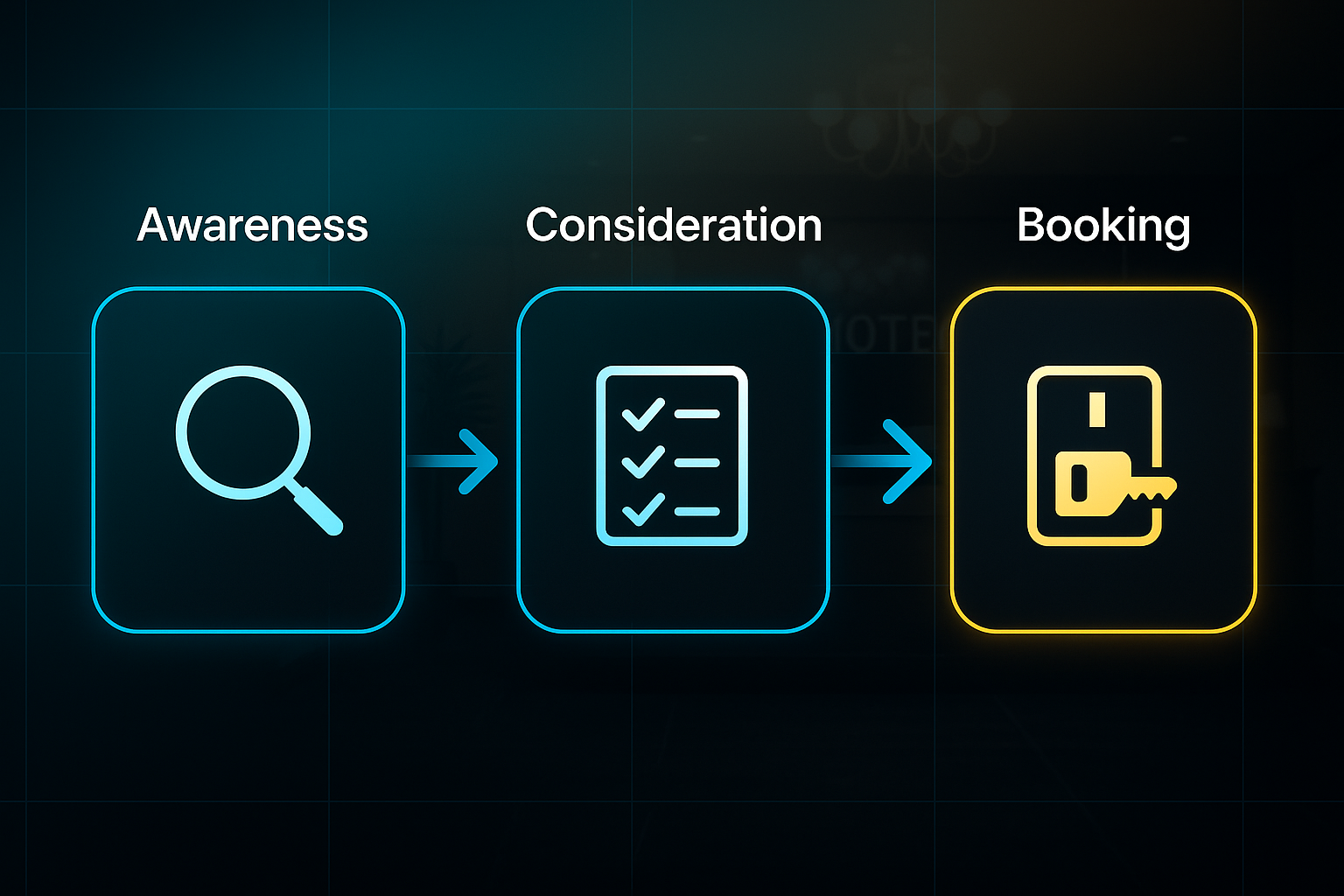
First, there’s the Hotel Booking Funnel. Think of it as your guest’s digital journey: they go from awareness (searching), to consideration (researching and comparing), and finally to booking (the moment of truth).
SEO supports guests at each step, like a concierge guiding them through the process.
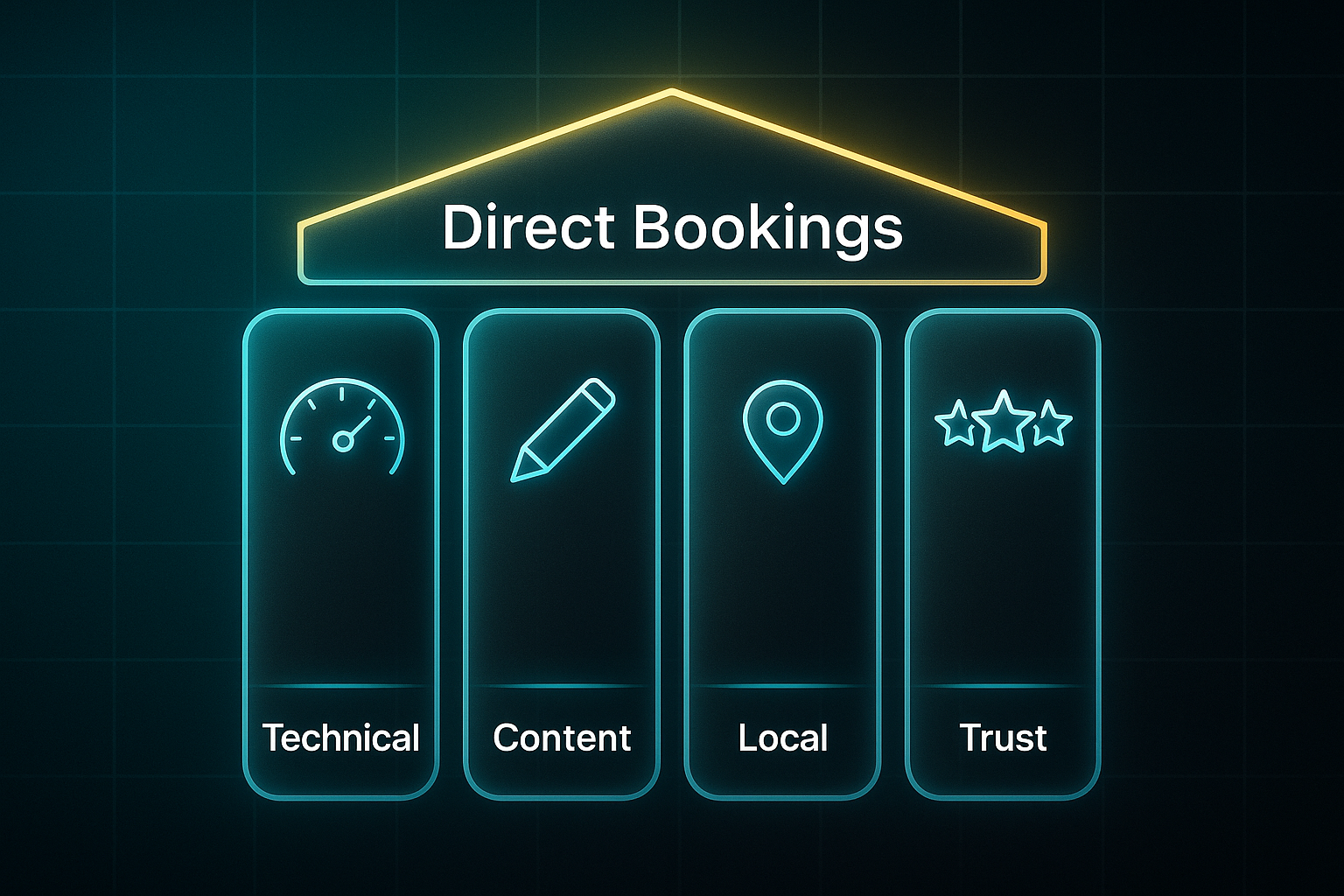
Then there are the Four Pillars of Hotel SEO. Picture your hotel website as a digital concierge, always ready to help guests:
- Technical optimisation
speed, mobile experience, schema markup - Content strategy
location guides, unique selling points - Local authority
Google Business listing, map visibility - Off-page signals
trustworthy backlinks, glowing reviews
These frameworks help hotels focus their energy and budget where it will grow bookings, not just clicks.
Industry-wide pain points for hotel SEO
Of course, it’s not always smooth sailing. Every hotel—whether it’s a slick city chain or an independent country retreat—runs into obstacles.
These challenges make it tougher for hotels to compete online:
- OTA Competition
Why do OTAs dominate search results? Major aggregators almost always rank above hotels for key queries, siphoning off bookings and ramping up commission costs. - Local Search Struggles
Hotels often miss out in “near me” and mobile searches—losing spontaneous guests and walk-ins to competitors. - Resource Constraints
It’s like trying to run a busy reception desk with just one staff member: challenging and overwhelming. Many independents simply don’t have the staff or budget for SEO, while chains deal with rigid standardised templates that limit unique optimisation. - Weaker Authority Signals
Let’s be honest: thin content and few reviews erode visibility, trust, and conversions—almost like having a hotel with barely any guest feedback for reassurance.
Facing these hurdles, hotels have to find focused, creative ways to protect bookings—and their bottom line.
Why hotel SEO drives revenue and competitiveness
So, why does all this matter in practice? Because SEO drives both revenue and guest loyalty—plain and simple.
Here are the standout reasons it pays off:
- Maximising Direct Bookings
Ranking well means more guests book direct, sidestepping commissions and keeping more revenue in-house. - Boosting Occupancy and Loyalty
Showing up for high-intent searches fills rooms and lays the groundwork for repeat stays. - Competitive Control
With robust SEO, hotels get to set the rules—controlling booking pathways, pricing, and the guest experience.
Imagine SEO as the hotel’s frontline defence in the digital age. Without it, the competition can chip away at both occupancy and profit.
Hotel content and visibility lifecycle (overview only)
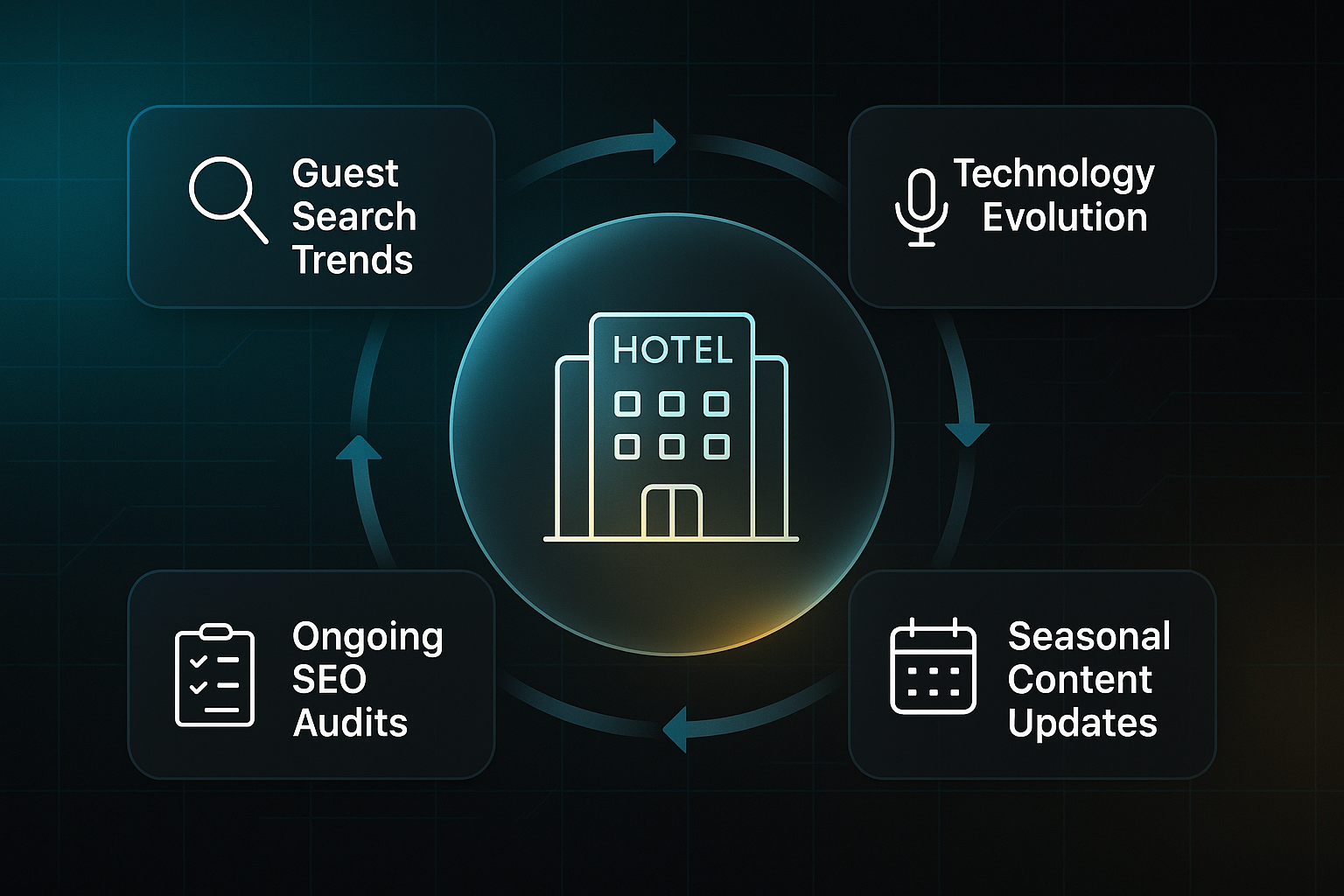
Here’s the last thing to consider. Hotel SEO isn’t a one-off project; it’s an ongoing evolution. Guest searches shift, new tech like voice commands emerge, and seasonality keeps website teams busy year-round.
Managing SEO is like keeping lobby decor and guest amenities fresh throughout the year—if you stop updating, the experience quickly feels stale. Keeping up with these cycles helps hotels maintain that all-important visibility—and sets the foundation for the hands-on SEO steps we’ll explore later.
Hotel Website SEO Foundations: Audits, Schema, and On-Page Optimisation
Let’s get practical. Laying the groundwork for hotel SEO isn’t about wild guesswork or just hoping Google takes notice—it’s a series of targeted, repeatable steps.
Think of these as the non-negotiables for any hotel serious about direct bookings, better search visibility, and genuine guest trust.
Addressing basics like site speed, structured data, and on-page persuasion lays your foundation for everything that comes next—no matter if you run a boutique inn or a city-centre chain.
Step 1: Technical Site Audit
Begin with an honest assessment.
That means running a full crawl of your website using Screaming Frog SEO Spider. It’s free if you’ve got up to 500 URLs, but paid is needed for sprawling sites.
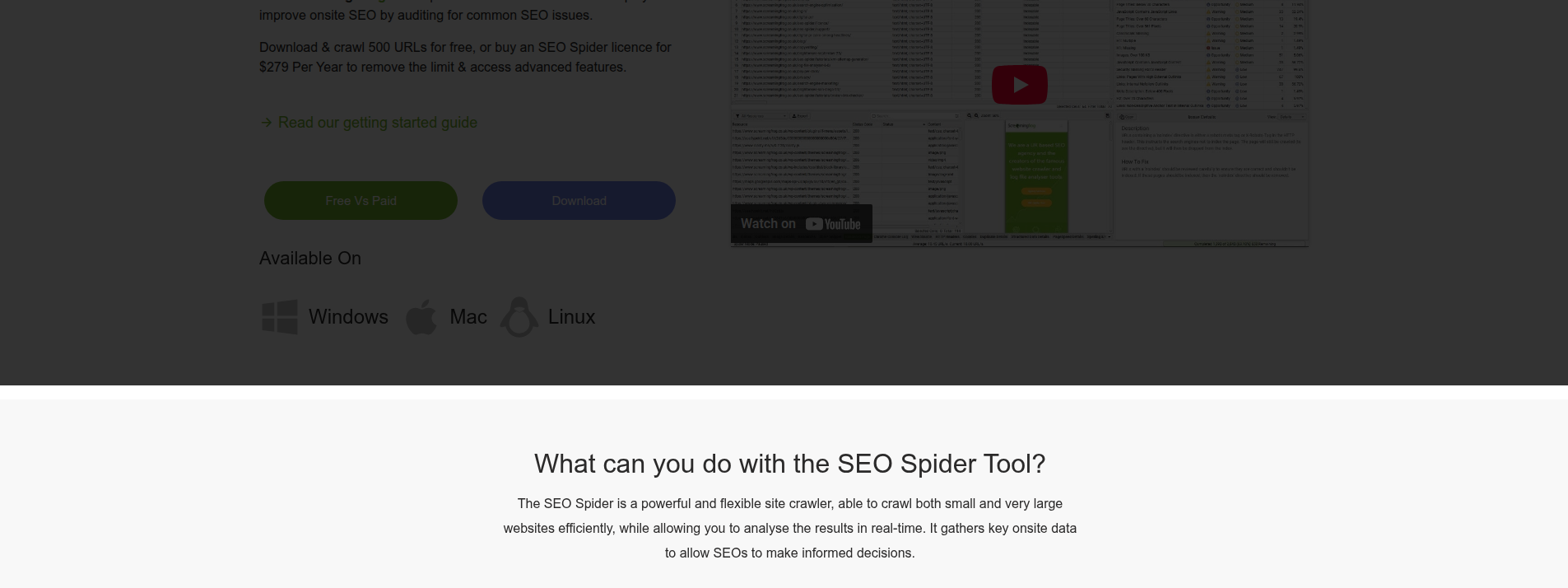
When you do this, you’ll spot and resolve errors like 4xx or 5xx codes, broken links, annoying redirect chains, duplicate or thin content, and anything off in the robots.txt file.
Next, Google Search Console becomes your reality check.
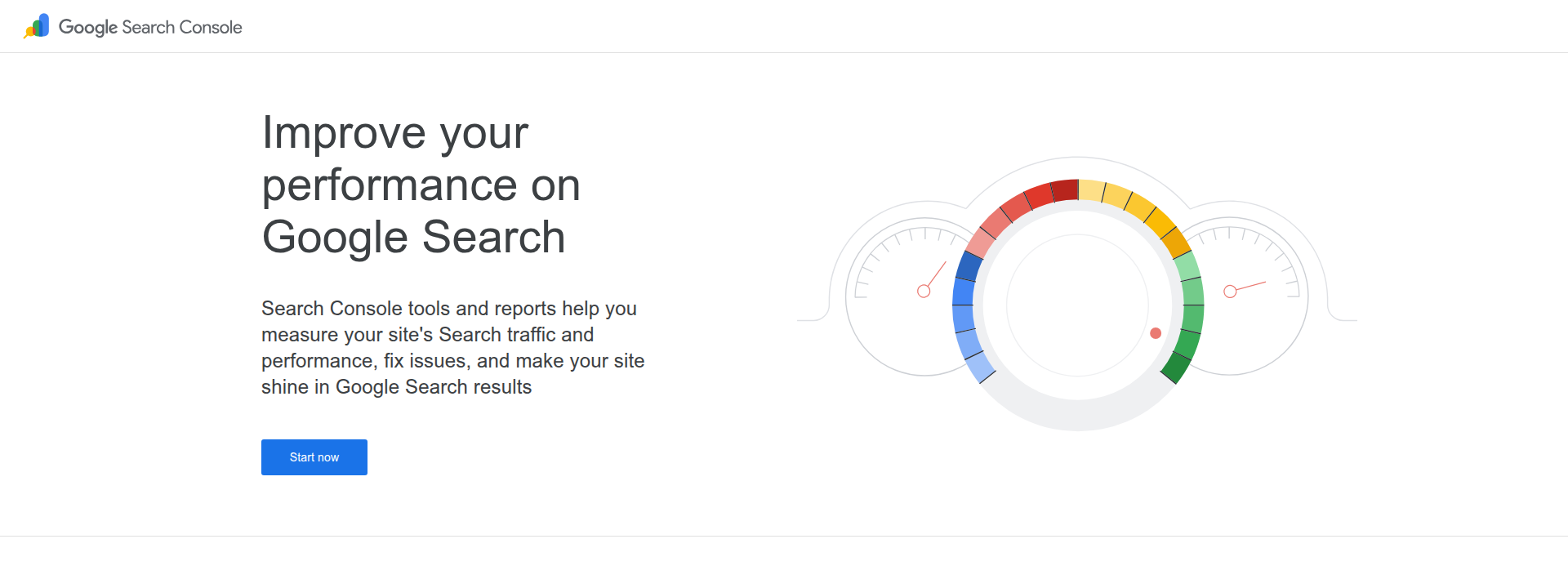
Look at Index Coverage and confirm all your main pages are submitted and indexed.
Review Mobile Usability and check for any error messages.
Look at Core Web Vitals—specifically, LCP at or below 2.5s, INP below 200ms, and CLS under 0.1.
The goal here is zero critical errors and every single booking path indexed and working.
Independents can carve out 30 to 60 minutes for this first sweep.
Groups should expect to spend up to 3 hours getting everything ship-shape.
Step 2: Speed Optimisation & Image Compression
Unpopular truth: Slow hotel sites don’t sell rooms.
Image size and loading speed matter.
Every picture should have its own size goal. Banners should be under 250 KB.
Room photos should be less than 120 KB.
Thumbnails should be capped at 50 KB.
Use WebP or AVIF formats.
Let TinyPNG or Squoosh crunch file sizes even more.
Don’t forget a Cloudflare CDN for page caching, script minification, and keeping things snappy for global guests.
Score your site with PageSpeed Insights or GTMetrix. Aim for 83-plus on mobile and 90-plus on desktop.
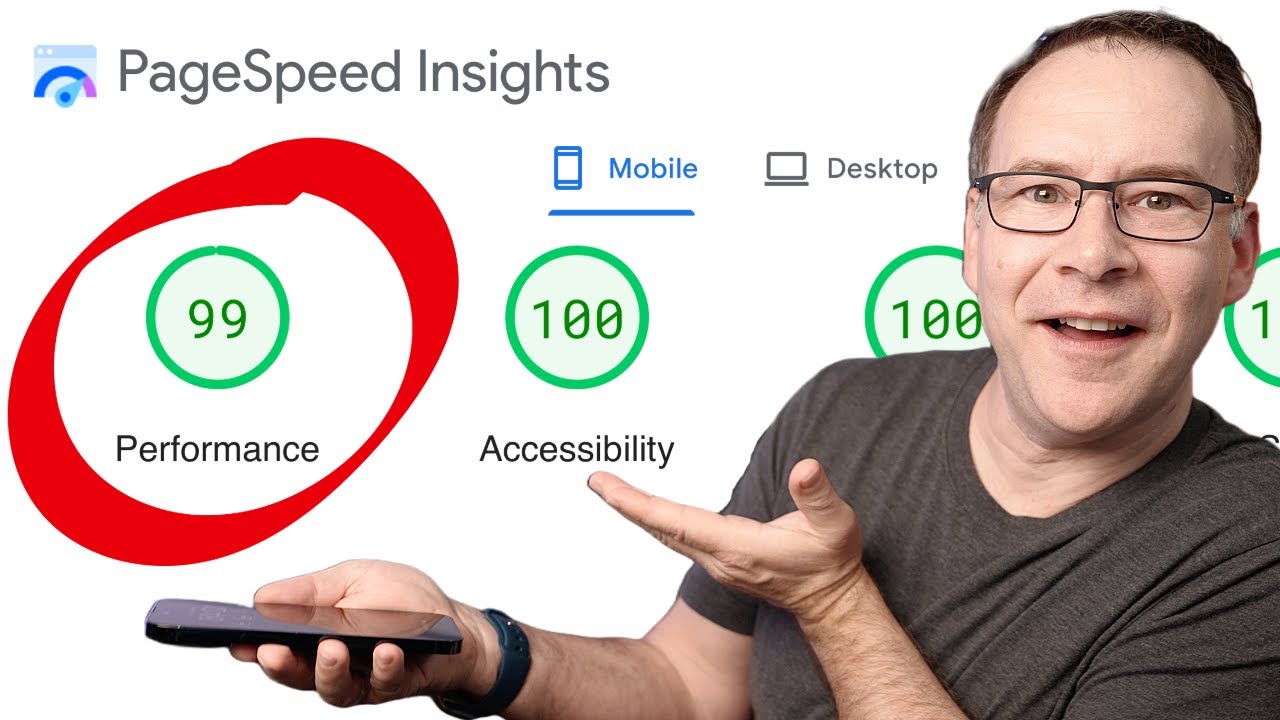
PageSpeed Insights Tutorial
In a case study involving a major hotel chain, improving the mobile Google PageSpeed Insights score from 35 to 92 resulted in a 32% increase in the conversion rate for direct bookings within three months.
This is a quick win for independents—doable in an hour.
Chains might batch process through IT.
Confirm all images hit their target file sizes.
Check that Cloudflare is running and verified in the dashboard.

Step 3: Schema Markup Setup
Next comes structured data. Think of this as your direct line to the search engines.
Create hotel-specific JSON-LD schema using tools like TechnicalSEO or Merkle.
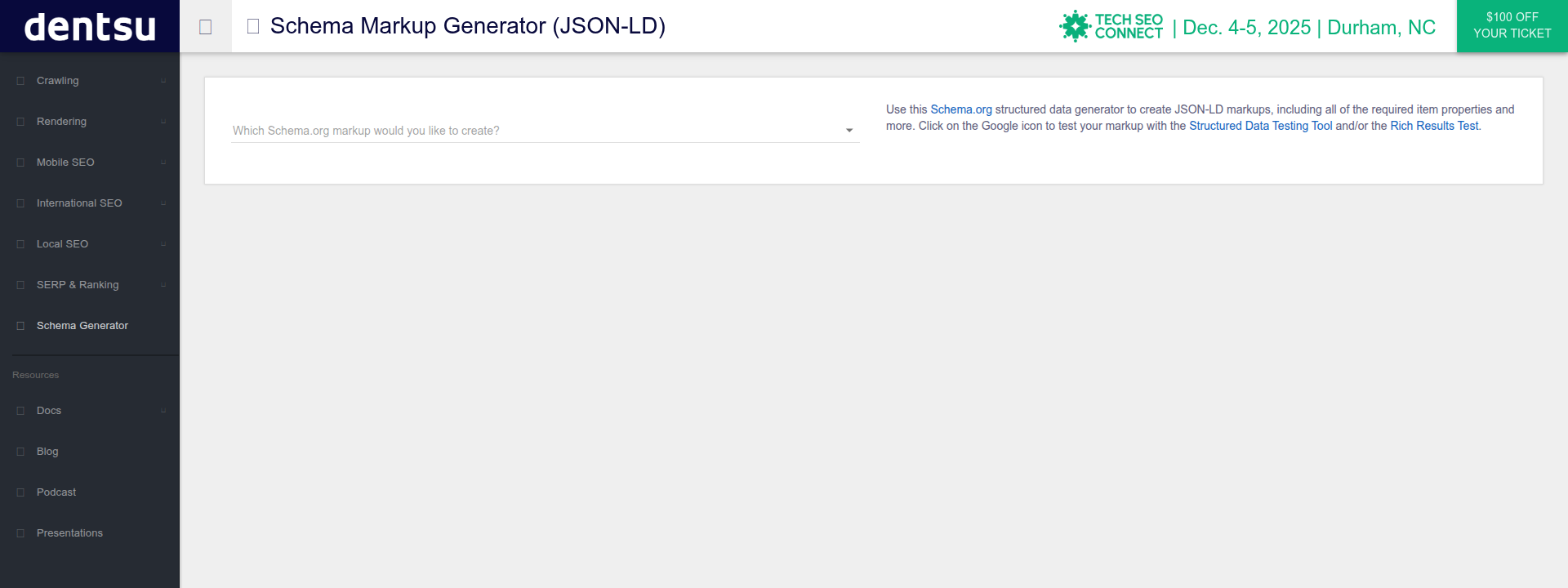
Make sure you plug in essentials like address, ratings, amenities, and offers.
Add this markup to every key page.
Use Google’s Rich Results Test to fix any errors or warnings.
Set a sensible routine and mark a calendar for quarterly schema reviews.
Log updates and fixes as you go.
Aim for no errors or warnings, and your main templates marked up every time.
Step 4: On-Page Optimisation & Conversion Checks
Now, turn your eye to what guests actually see.
Each meta title and description should target high-intent and local keywords.
Always place Book Now calls-to-action above the fold.
Connect your homepage to essential pages.
Don’t forget to route FAQs and blogs directly to booking flows.
Analytics don’t lie: track your calls-to-action and push for at least a 1–2 percent direct booking rate from those prompts.
Reviewing and refreshing core pages will probably take 30 to 90 minutes each time.
Step 5: EEAT and Accessibility
Finally, build trust and inclusivity.
Write descriptive, keyword-rich alt text for every image.
Make sure images are fast-loading and on-spec.
Show visible staff authorship or bios on About, FAQ, and blog pages.
Keep schema author fields up to date.
Showcase guest reviews.
Display awards.
Maintain secure HTTPS.
Include clear privacy policies.
Once you’ve checked the basics, regular validation ensures ongoing performance and keeps your platform conversion-ready.
Quick Validation Checklist
Great results start with quick, regular checks. Use this actionable list to review your progress each quarter:
- Crawl errors fixed
Less than 2 percent errors, all crucial pages indexed - Mobile performance
Passed PageSpeed Insights benchmarks - Image compression
All images compressed to specification - CDN validation
Cloudflare active and visible in dashboard - Schema integrity
Validated—zero errors or warnings - Conversion pathways
Book Now calls-to-action appear - Internal linking
Internal links work cleanly - Authorship visibility
Visible author details on trust pages - Reviews displayed
Guest reviews are present - Awards displayed
Awards are shown - Trust badges and security signals
Trust badges mapped - HTTPS status
Secure HTTPS visible
Keep all this logged in your audit sheet or a trusty spreadsheet and review it at least every quarter.
That effort lays a conversion-ready SEO platform—ready for advanced local search, guest reviews, and visibility campaigns, which we’ll dig into next.
Local SEO for Hotels: Step-by-Step Workflow for Map Pack Dominance
Landing your hotel in the Google Map Pack doesn’t come down to luck—it’s about nailing each step of a proven process. If you’ve already got a live website and at least one positive guest review, plus access to your Google Business Profile (GBP), you’re ready to level up your local search ranking.
This workflow is perfect for independent hotels and well-established chains seeking to boost direct booking visibility on Google Maps in 1–3 months. Before starting, make sure you’ve got access to your GBP, your website backend, some high-quality photos, and a plan to encourage guest feedback.
No GBP or reviews yet? Begin with GBP verification and a focus on guest satisfaction.

Google My Business for Hotel | Google Business Profile for Hotels | GMB for Hotels
Step-by-Step Local SEO Workflow
You’ll follow these essential steps to dominate local search—each with core actions and practical checks to stay on track.
- Claim and Verify Your Google Business Profile
Allocate 30–45 minutes for setup. Use Name, Address, Phone (NAP) to exactly match your site—every letter counts. Choose verification (postcard or phone) for your verified badge. Validation: Look for the verified badge in your GBP dashboard. Tip: If no code comes in 10 days, resubmit or contact Google. Edge case: If Google says your hotel is ineligible, shift focus to building reviews and directory listings for now. - Complete All GBP Details & Post High-Quality Photos
Dedicate 20–40 minutes; complete every GBP field and list every amenity. Upload 30+ sharp photos highlighting rooms, features, local events. For chains, central tools work; independents should customise for their local vibe. Validation: Double-check that your public profile is 100% complete. Common mistake: NAP mismatch with website—kills rankings quickly. Troubleshooting: If photos don’t display, reformat or reload them. - Request and Respond to Guest Reviews
Set up in 15 minutes; maintain monthly with 15–30 minutes. Use QR codes, email, text, or your property management system (PMS) for seamless requests. Assign someone to reply to every review within 48 hours. Validation: Secure 10–20 new reviews/month and maintain a 4.4+ star average. Prevention: Always ask right after checkout; skip generic or delayed asks. Troubleshooting: Solve persistent negatives by reviewing guest feedback and adapting your approach. - Audit and Update Local Citations
Allocate 30–60 minutes every quarter. Use Moz Local (£14/month/location), BrightLocal (£29/month), or a spreadsheet for tracking. Correct NAP everywhere—TripAdvisor, OTAs, tourism boards. Validation: Hit 90%+ NAP accuracy across all directories. Troubleshooting: Updates slow? Ping support or resubmit. Chains check API sync; independents log changes. - Post Updates and Events to GBP Monthly
Target 2–4 posts/month; each takes 10 minutes. Share offers, events, or amenities. Link to booking engine where you can. Validation: Posts should show live within 30 minutes. Mistake: Missed posts hurt your profile’s freshness score and ranking. Edge case: Errors posting? Clear your browser and try again. - Monitor Map Pack Visibility & Performance
Track rankings, searches, and clicks with GBP Insights or BrightLocal. Aim for a 10–15% boost in visibility and 20%+ review growth over 1–2 quarters. Validation: Drop in rank? Check profile completeness, share fresh posts, add photos. Edge case: Technical delays (often for chains using APIs)? Contact support, or stagger updates to smooth things out.
Some common pitfalls—like mismatched NAP, missed review replies, or slow review outreach—really slow momentum if you’re not careful. Keep yourself on track with a quarterly checklist, a running log of all changes, and by lining up your website and GBP data perfectly.
With this foundation in place, initial setup generally takes just 1–2 hours per property, and ongoing monthly effort is a manageable 30–60 minutes. Allow up to 8 weeks for some directories to fully update.
In cases where GBP isn't claimable, be intentional about third-party directory presence and sharing rich, local area content directly on your own website. As you refine your setup and processes, every step validated will boost your long-term local visibility and direct booking numbers.
Get every step right, validate your progress, and you’ll see local search feed your direct bookings—whether you manage a boutique city inn or a nationwide hotel brand. Now, you’re ready to choose intent-based keywords and create hotel content that really converts lookers into loyal guests.
Hotel Keyword Research and Content Strategy: Tool Steps, Validation, and Real Results
Once your hotel’s technical and local SEO is sorted, it’s time to push for more direct bookings in the months ahead.
Make sure your site audit is done, GSC (Google Search Console) access is set up, and NAP (name, address, phone) is identical everywhere online.
Not there yet? Use Moz Local to tidy up before diving in.
You’ll need a tracking spreadsheet for this workflow. Here’s what to include—and why it’s worth the setup:
- Guest intent
Why someone is searching—family, event, business. - Search volume (SV)
Monthly searches for each phrase. - Keyword difficulty (KD)
How hard it’ll be to rank. - Mapped page
Which landing page or blog will target each keyword. - OTA gap
Spots where OTAs outrank you. - Review status
If updates or rewrites are needed.
Pick a research tool that fits—chains often use SEMrush ($139.95+/month) or Ahrefs ($99+/month), while independents tend toward KeySearch (£13/month) or Ubersuggest (£23/month).
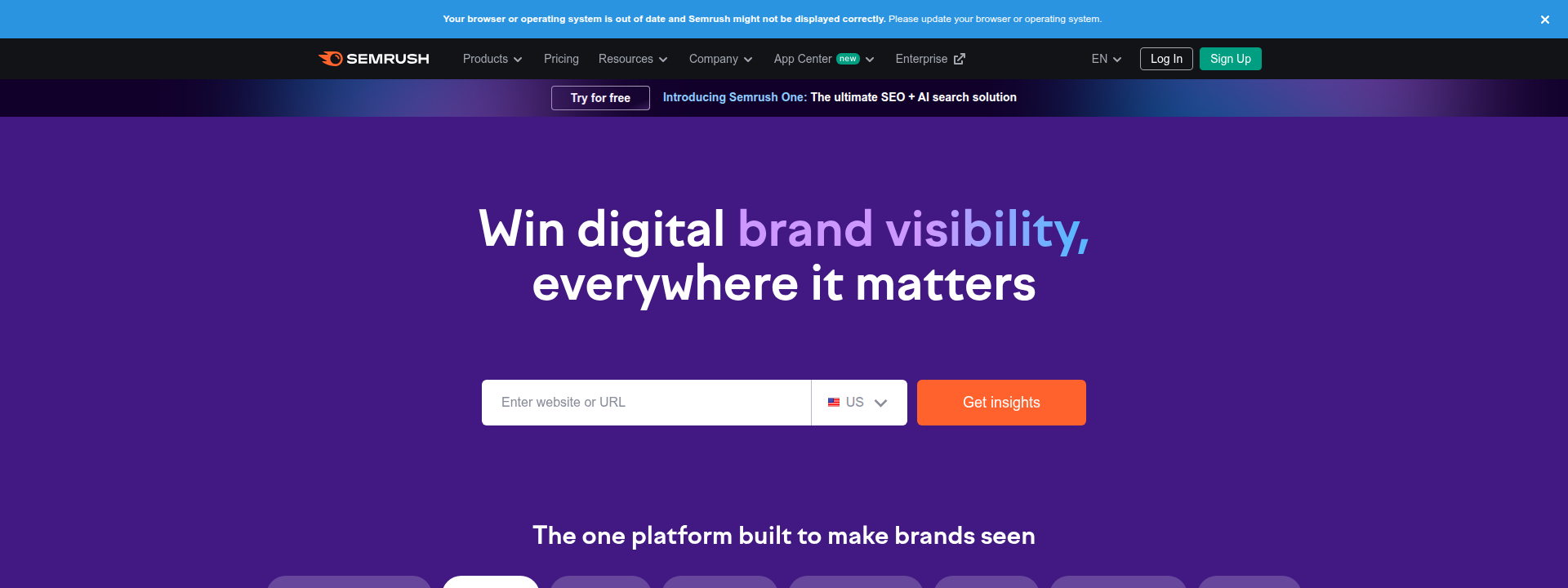
Allow 20–30 minutes to get started.
Enter your target terms: “hotel in [location]”, pet-friendly, events, or key amenities.
Fill in SV, KD, guest intent, and mapped page for each.
Now scan the SERP. Are 7 out of the top 10 results hotel or booking pages? If not, those keywords may not be worth your energy.
Focus your efforts where they’ll drive bookings.
Finish with 20–40 reliable keywords, mapped to a specific page and guest purpose.
For validation, check for blanks—each keyword needs a clear target.
Troubleshooting
Stuck on keyword ideas? Add descriptors—“boutique” or “family-friendly”.
Hit a tool’s limit? Google Keyword Planner can expand the list.
Before moving on, double check your tracker is complete.
Real Result
What does this look like in real life? One York hotel mapped 28 strong keywords, launched two new pages, and saw impressions jump from 650 to 2,100 in just six weeks.
OTA Competitive Gap Analysis and Action Mapping
It can feel like OTAs are everywhere.
This step helps you win back ground.
In SEMrush or Ahrefs, spend 2 hours per major OTA (Booking.com, Expedia).

Semrush Keyword Gap Analysis Tutorial
Export keywords where they outrank you.
Filter for SV above 1,000 and KD under 50 for landing pages, and SV over 300 for blogs.
Highlight these as “gap” terms and map each to a refreshed or new page.
Double-check for 5–15 strong gaps logged and assigned.
Troubleshooting
If OTAs crowd you off core terms, pivot to content on events or amenities.
Calendar quarterly reviews to spot new gaps.
Real Result
A regional group found five gap keywords and, after updating, CTR rose from 2.7% to 5.3%, with 1,900 more impressions a month in eight weeks.
Publishing, Tracking, and Refresh Cycle
Ready to publish? Aim for 2–4 posts each month.
Spend 3–4 hours per post on research, writing, and review.
Schedule event or seasonal guides 4–6 weeks ahead to catch early interest.
Keep results in sight.
Each quarter, check for posts with at least 1,800 impressions by month two.
Look for CTR of 4–6% and sessions over two minutes.
You want a direct booking rate of 10% or higher.
Troubleshooting
Posts under 1,000 impressions or CTR below 2%? Add them to your tracker’s “Review” column.
Refine keywords, calls-to-action, and update images, or merge thin content.
If technical issues crop up, check Core Web Vitals and ask for help.
Real Result
By tracking results every step, you spot what’s working and steadily close OTA gaps.
Those direct booking boosts soon show up on your bottom line.
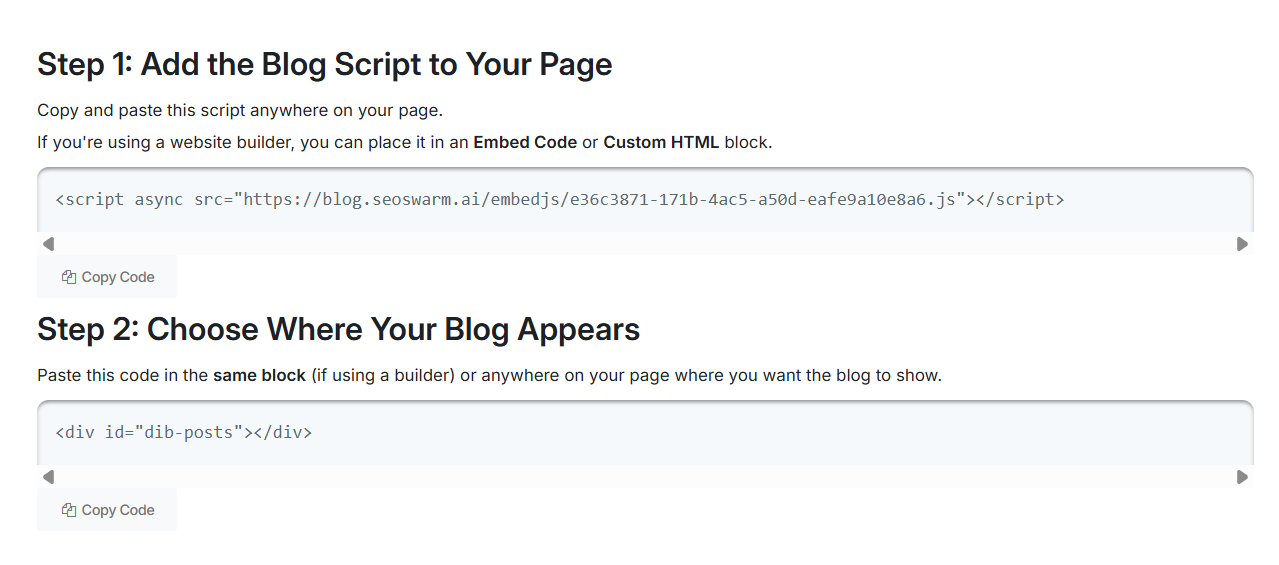
Blog-in-one-minute
Add a fully SEO-optimised blog to your website with just 2 lines of code.
Learn more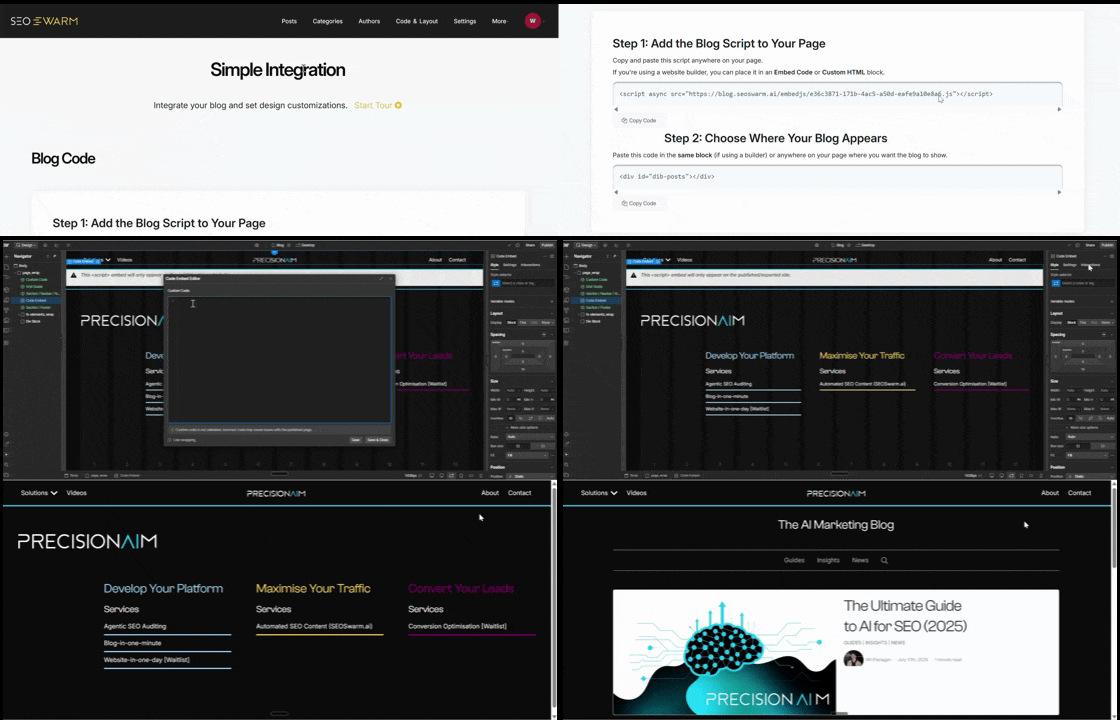
Advanced Hotel SEO: Schema, EEAT Trust, Funnel Optimisation, and Troubleshooting
Ready to move past the basics? This is where advanced hotel SEO starts making direct booking numbers leap.
Are you feeling stuck with low click-through rates (CTR), not quite earning guest trust, or just tired of endless, manual site tweaks?
Wondering if automation could actually change your team’s day-to-day?
Here’s the practical, hands-on blueprint that blends schema automation, EEAT trust content, and real-world funnel optimisation.
This guidance is for anyone weighing whether to go manual or switch to a modern solution.
Prerequisites and Resource Requirements
Before diving in, let’s set the scene.
A live, indexed website is your starting point, with technical SEO checked, NAP (Name, Address, Phone) fully correct, CMS (content management system) or backend access, up-to-date amenities, and images smaller than 150 KB in WebP or AVIF format.
Resource needs depend on your strategy.
For manual, you’ll want a marketing or content manager and a web admin.
Automation solutions, such as SEOSwarm, mean your main role is oversight and letting software do the heavy lifting.
- Manual (independent hotel)
Requires 1–2 hours per property each quarter for schema and trust content, plus 1–2 hours per audit. Schema App costs £24/month/property. - Manual (chain)
Requires 4–8 hours per quarter, and £24–45/month for core tools and plugins. - SEOSwarm solution
Less than 1 hour per schema or EEAT cycle, regardless of property count. Payment is per article or as a custom package from Precision AI Marketing.
Manual effort is great if you’ve only got a single site.
However, consider how you’d manage multiple hotels or rapidly changing offers.
This is where automation excels. The right platform can cut admin hours by 70 to 80 percent and prevent your team from getting lost in spreadsheets or endless fix lists.

AI-Powered
SEO Content Strategy
See the AI platform that's replacing entire content teams
(with better results).

Schema: Setup, Validation, and Results
Schema is the bridge between your website and Google's search results.
Set up hotel schema in JSON-LD format. Cover your hotel name, address, phone, price range, aggregate rating, amenities, and a booking URL.
Add geographic data and a summary if available.
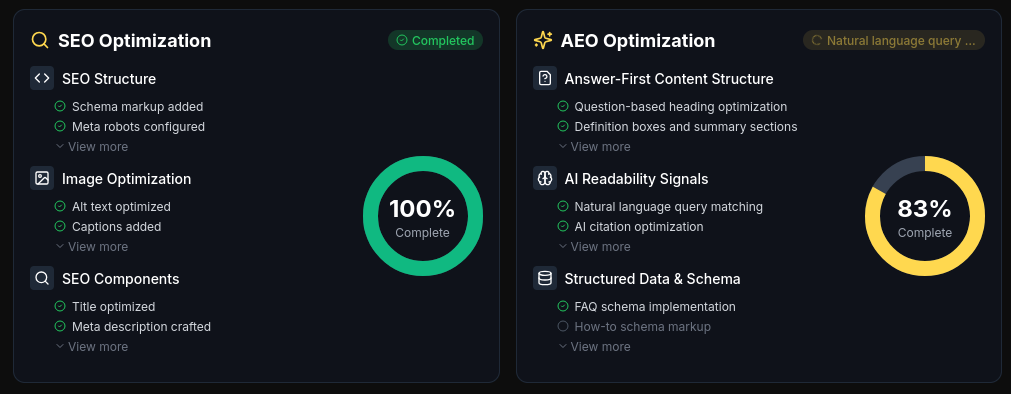
For manual sites, paste schema into the site header or use Schema App. If using SEOSwarm, automation means schema is deployed, validated, and synced—including amenities—in minutes.
- Validation
Run Google Rich Results Test and look for the green tick stating “Page eligible for rich results”. Use Google Search Console to confirm there are zero enhancement errors. Expect new rich snippets within 2 to 14 days. - Result Example
After clean schema setup, one boutique hotel saw their click-through rate (CTR) rise from 2.5 percent to 5.1 percent—a 104 percent jump. Most hotels enjoy a 10 to 25 percent increase in traffic if errors are avoided. - Automation edge
SEOSwarm flags schema or amenity errors within five minutes of deployment, so issues are fixed before traffic is lost.
Manually updating schema can work for occasional changes.
In fast-paced hotel marketing, automation keeps rich snippets consistent and highlights issues immediately.
EEAT Trust Modules: Setup, Auditing, and Conversion Impact
EEAT stands for Experience, Expertise, Authoritativeness, and Trustworthiness. It represents Google’s criteria for trust.
To deliver on EEAT, add author or person schema, include staff bios, photos, and videos on every high-value page.
Active review and award badges should be placed close to your Book Now calls to action. Media files should be under 150 KB for speed.
Manual setup takes 15 to 30 minutes per page.
SEOSwarm can batch these changes across all pages in less than an hour, with all progress tracked in a dashboard.
- Audit and validation
Set aside 1 to 2 hours each quarter for manual bios and badge review. SEOSwarm’s dashboard will flag outdated content in less than an hour. - Conversion Example
When a city-centre hotel added trust modules, direct booking rate increased from 2.6 percent to 4.7 percent—an 80 percent boost in 45 days. Most hotels see direct bookings rise by 1.2 to 1.6 times within weeks of improving EEAT.
Placing author bios, badges, and guest quotes near booking points lifts conversion rates. If trust content is out of date or missing, conversion rates drop.
Funnel Optimisation, KPIs, and Troubleshooting
After technical and content audits are complete, funnel optimisation becomes the next logical step. Tracking advanced SEO means focusing on key performance indicators.
Monitor your conversion rate—aim for 5 to 8 percent for direct bookings. Observe session duration; a rise from 1 minute 55 seconds to 3 minutes 47 seconds after trust improvements is a good sign. Keep bounce rate below 30 percent and look for a 15 to 25 percent year-on-year rise in organic traffic.
Always confirm these numbers using Google Analytics 4 or the SEOSwarm dashboard.

Mastering Google Analytics 4 for Hoteliers: Measure the Effectiveness of Your Hotel Website.
Positive outcomes include a conversion rate of at least 5 percent within a month and session durations that are 50 percent longer.
If figures decline, audit EEAT, schema, and all booking funnels for broken links or out-of-date trust signals.
Manual workflows require 2 to 4 hours of work each quarter plus £24 to £45 per month in tools. Automation reduces the workload to less than an hour each cycle.
The true benefit: your team can then focus on guest experience instead of administrative tasks.
Getting advanced doesn’t mean ignoring the basics. With technical, onsite, and trust systems running, your hotel is ready for the next step: strategic link-building, high-impact partnerships, and a reputation engine that amplifies your hard work.
Hotel SEO Case Studies and Long-Term Roadmap: Segment-Specific Strategies, Outcomes, and the Manual vs. Managed Decision
Let’s talk about what really works for different kinds of hotels. SEO in 2025 isn’t a one-size-fits-all exercise—it genuinely depends on your hotel’s resources, scale, and local context.
So, here’s a roadmap for independents, chains, and resort/seasonal hotels. Everything here draws from recent hands-on research and concrete, real-world results.
You’ll see exactly what steps to take, key validation moments, and what kind of uplift is possible—whether you’re focused on direct bookings, organic traffic, or that all-important map pack exposure.
Optimal SEO Workflows by Hotel Segment
Most hotels tackle the same core steps, regardless of their size or style. These actions lay a solid foundation and ensure you’re not missing any essentials.
Here’s how the typical workflow unfolds:
- Technical Audit
Use Screaming Frog (£149/year) to spot errors such as 404 pages or slow load times—then fix them in your CMS. - Mobile/Speed Checks
Compress images with TinyPNG (free), check your speed in PageSpeed Insights (aim for a 90+ score on mobile), and run Google’s Mobile-Friendly Test to catch usability problems. - Schema Markup
Add or update your hotel schema using tools like TechnicalSEO.com, then check it’s working through Google’s Rich Results Test. - Google Business Profile (GBP)
Make sure your GBP is fully verified, update with at least 30 geo-tagged photos, and confirm NAP accuracy using services such as Moz Local. - Content Calendar
Publish regular blog posts focusing on location or seasonal topics, then track both keyword rankings and booking conversions using Search Console and Google Analytics.
Boutique/Independent Hotels: Manual/Hybrid Workflow
Smaller hotels or independents usually work with a tight team—a couple of staff familiar with web basics and analytics.
Expect to spend 6–8 hours initially on setup, then 2–3 hours a month for maintenance.
Budget about £300–£500 a year for essential tools.
Focus your tactics on hyperlocal keywords, highly personal content like local attractions and stories, and keep your GBP and review requests up to date.
Once fixes are live, re-crawl the site for errors. Aim for a less than 2 percent error rate.
Your GBP should read “100 percent complete” and blog posts should be indexed in Search Console within a week.
Seasonal or location-specific blog posts need to add at least 15 new keyword rankings per quarter.
Independents can expect organic traffic growth of 40–57 percent and direct booking increases of 35–55 percent inside a year.
Map pack visibility for local terms often jumps to 70 percent or higher.
If you see lingering schema warnings, don’t try to muddle through—involve a developer promptly, because rich snippet eligibility relies on flawless markup.
Chain/Multi-Property Hotels: Managed/Agentic Workflow
Larger, multi-property groups have the benefit of central marketing and IT teams—often two to four people—plus powerful agentic platforms such as SEOSwarm or BrightLocal.
These rollouts are bigger: expect 20+ hours to onboard everything, then about 6–8 staff hours per month for each property.
Premium enterprise tools run £2,000–£10,000+ monthly, but they offer serious automation and oversight.
Tactics here centre around automated dashboard audits, batch updates for schema, GBP, and citations, and a shared content calendar.
Weekly sweeps via dashboard automation should keep automated error rates under 5 percent.
Publishing logs should confirm over 95 percent successful content deployment each month.
Review KPIs monthly and run quarterly audits to compare map pack coverage. The goal is over 70 percent and to log 10 or more new top-20 keyword rankings per property.
For chains, these approaches typically deliver 50–80 percent jumps in direct bookings and a doubling of organic traffic over a twelve-month window.
Watch for edge cases: if an API sync or data alignment slips, escalate fast to IT. Make sure there’s a clear manual override protocol, which keeps everything live.
Resort/Seasonal Hotels: Hybrid Bulk/Seasonal Cycle
Resorts and seasonal hotels need tailored marketing muscle, usually a sharp content manager plus someone on photos and imagery.
You’ll need at least 8–12 hours a quarter for keyword and content work.
Budget £700–£1,500 per year on tools and updated content.
Tactics revolve around event and season-driven keywords and bulk content creation ahead of busy periods.
Start with a pre-season audit to confirm everything’s ready.
Before peak season, validate that blogs and event posts are indexed.
Test all booking or enquiry forms after every major content update.
Check that images and landing pages load faster than 2.8 seconds.
This approach can unlock 2–5x organic traffic increases and 60–120 percent growth in direct bookings over two years.
You’ll also see event-related map pack visibility surge during peak periods.
If your newest seasonal content isn’t indexing right away, quickly resubmit URLs and confirm Google’s crawlers can reach them. This often fixes delays inside 48 hours.
Decision & Validation Framework: Which Workflow When?
Deciding on the right workflow depends on your hotel’s segment and day-to-day reality. Here’s a straightforward look at what validates progress and what results you should aim for:
| Segment | Workflow | Core Validation | Typical Outcomes (2024/25) |
|---|---|---|---|
| Independent/Boutique | Manual/Hybrid | Under 2 percent crawl errors, 10 or more new keywords or top-20 rankings per quarter, GBP fully complete | 40–57 percent traffic gain, 35–55 percent direct booking lift, 70 percent or more map pack presence |
| Chain/Multi-property | Agentic/Central | Under 5 percent automated errors, 95 percent or more published content each month, 70 percent or more map pack coverage | 50–80 percent higher bookings, 100 percent or more organic traffic rise, 10 or more new top-20 keywords each month per property |
| Resort/Seasonal | Hybrid | Every event post indexed, tracked forms, page loads under 2.8 seconds | 2 to 5 times traffic, 60–120 percent booking growth, peak map visibility |
Mistakes that trip up hotels, regardless of their workflow, include skipping schema validation (which blocks rich snippets), letting NAP or reviews slip out of sync, or forgetting to test forms and site speed before busy periods.
Want to master tracking? Make these your standard practices:
Track sessions and conversion metrics weekly in Google Analytics 4. Check Search Console errors and keyword rankings monthly.
Use agentic dashboards for live publishing and error reports if you run a big portfolio. Set quarterly reminders for a complete SEO audit—just as you’d schedule for fire alarms or staff safety training.
Choose the workflow that fits your resources and hotel segment, and validate every step ruthlessly. Hotels that do this report consistent double-digit gains in direct bookings, organic traffic, and prime map pack presence.
Curious what this looks like in action? Next up, we’ll explore real-world case profiles—showing the actual timelines, roadblocks, and wins for indie, chain, and seasonal hotels using these strategies.
Making SEO for Hotels Work for You
Direct bookings don’t just happen—they’re earned through consistent, focused SEO effort. I’ve seen hotels double their direct reservations simply by auditing site speed, validating schema, and keeping Google Business Profiles spotless. The difference between a stagnant website and a thriving booking engine is regular, actionable maintenance.
Here’s my advice: Set a quarterly checklist for technical audits, image compression, schema validation, and GBP updates. Track your keyword rankings and conversion rates every month. If you’re running multiple properties or seasonal campaigns, consider automation to save time and catch errors before they cost you bookings.
SEO for hotels isn’t a one-time fix—it’s a living system that grows with your business. The hotels that win aren’t the ones with the fanciest websites, but those that treat SEO as an ongoing commitment to guest experience and revenue. Your next direct booking is just one well-optimized page away.
- Wil