
Choosing the right SEO platform can feel overwhelming when every tool promises to be the best fit for your business. I’ve seen teams struggle with clunky workflows, hidden costs, and feature gaps that only show up after you’ve already committed.
In my experience, the real challenge isn’t just picking a tool with the most features—it’s finding one that matches your actual needs, whether you’re running agency campaigns, focusing on technical SEO, or managing local projects. That’s why a direct, side-by-side comparison of Semrush, Ahrefs, and Moz is so valuable.
This article breaks down what each platform does best, where their strengths and limitations lie, and how their pricing and plan structures impact real-world use. I’ll walk you through technical specs, workflow scenarios, and onboarding realities, so you can make a confident, informed decision.
By the end, you’ll know exactly which SEO platform aligns with your goals, your team size, and your budget—without any surprises down the road.
Semrush vs Ahrefs vs Moz: How to Decide
Understanding SEO Platforms: Definition and Purpose
So what exactly is an SEO platform? Simply put, these are centralised software solutions designed to help improve a website’s visibility in search engine results.
That means they bring together essential tools for keyword research, site audits, backlink analysis, rank tracking, and reporting—all under one roof.
This unified approach allows businesses and agencies to manage their organic search strategies with greater ease. This is especially important as their needs grow in scale or complexity.
At its core, the main purpose of an SEO platform is to simplify what can otherwise feel like a tangled mess of tasks. By reducing manual work and enabling data-driven decision-making, users can accomplish far more in less time.
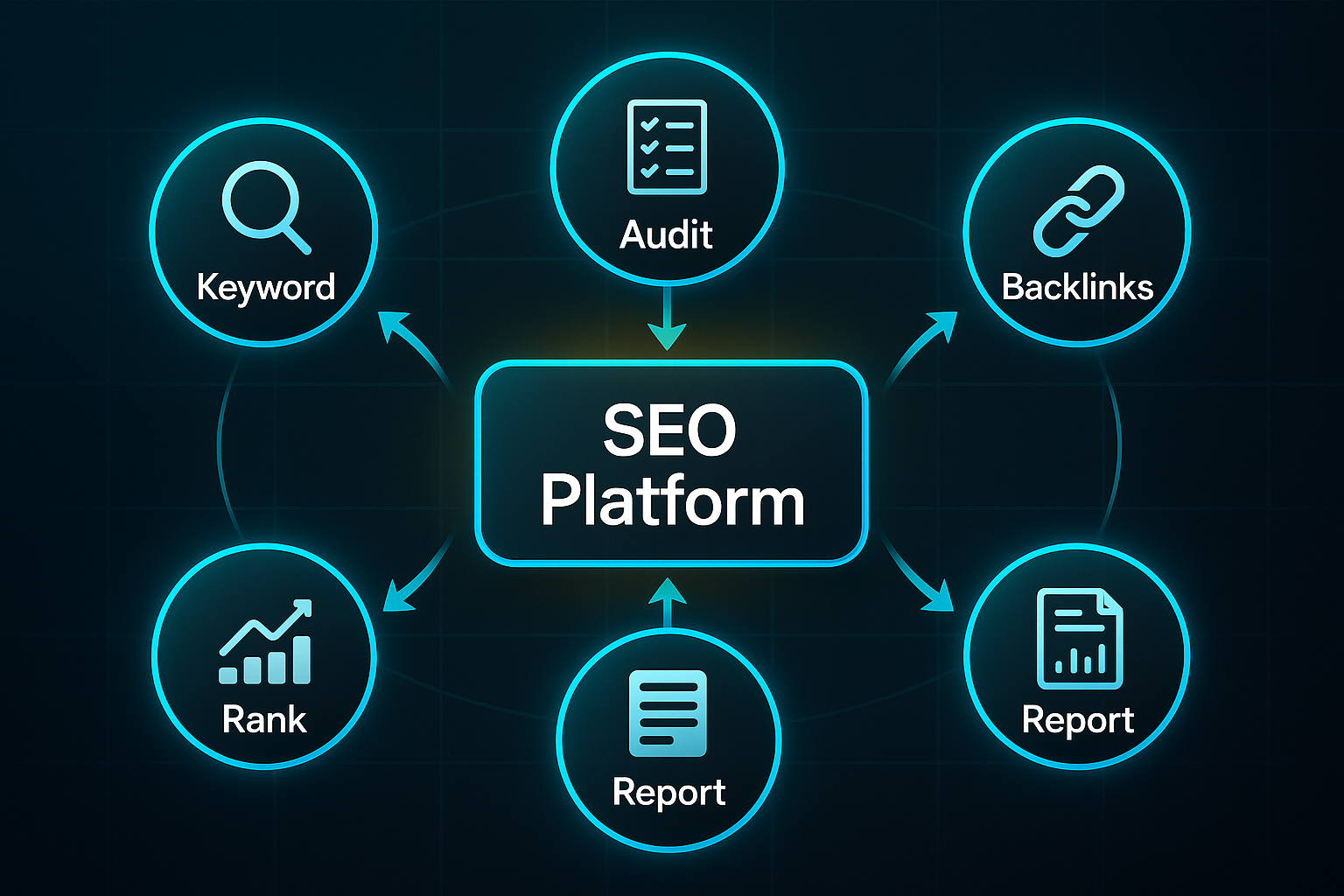
Everything is accessible through one main interface. This means there’s less tool-juggling and more focus on actual results.
Why have these platforms become such a fixture in modern digital marketing? For SEO professionals, agencies, and even small businesses, the ability to spot new growth opportunities and measure the impact of their work quickly is absolutely vital.
As search engines keep evolving, being able to react swiftly to algorithm changes matters more than ever.
And with data coming in from every direction—site analytics, search trends, backlink profiles—having all those insights together isn’t just helpful. It’s just about essential.
A solid SEO platform lets users see the bigger picture. They can zoom in on specifics, and adjust strategies confidently as things change.
Semrush, Ahrefs, and Moz: Industry Leaders in 2024
Now, when it comes to deciding which SEO tool to explore, most professionals encounter three big names: Semrush, Ahrefs, and Moz. Each of these platforms brings its own strengths to the table.
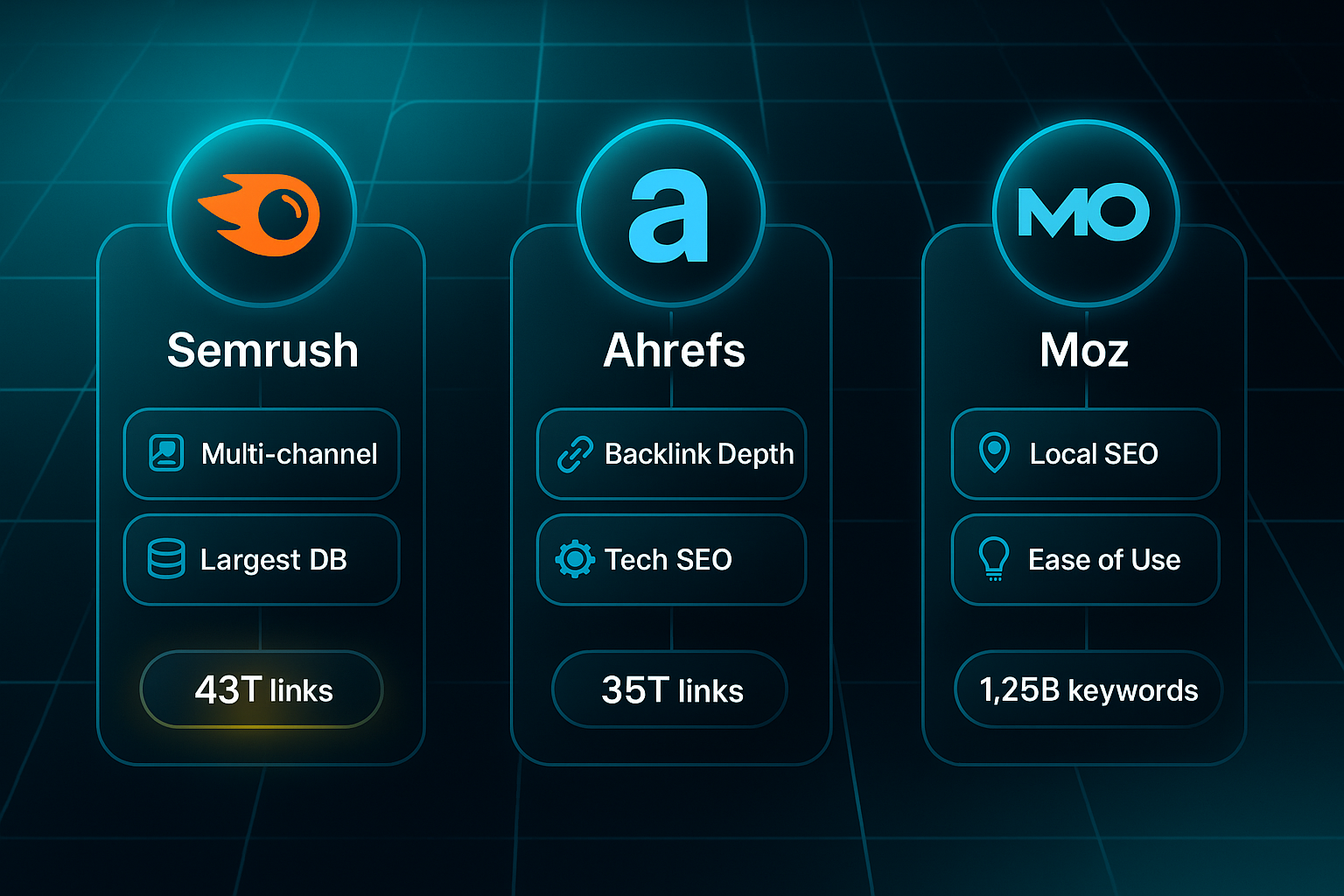
Semrush is more than just an SEO toolkit—it’s a broad digital marketing suite that covers SEO, PPC, social media, and content marketing. If you need to report across projects or run integrated campaigns, Semrush’s platform has you covered. This is thanks to its enormous database of 43 trillion links and 25.3 billion keywords.
In contrast, Ahrefs is often the go-to for SEO professionals who obsess over backlink analysis and granular competitive research. Its backlink index reaches 35 trillion links, plus there’s a massive keyword database of 28.7 billion.
Those prioritising link building and content strategy tend to value Ahrefs’ reputation for accuracy and depth.
Additionally, Moz takes a more approachable route. It caters to beginners and those at a mid-level with its straightforward dashboard and trusted metrics like Domain Authority.
While Moz’s keyword database is the smallest here—at 1.25 billion—this doesn’t mean it’s lacking. It’s popular for local SEO and suits smaller businesses who value simplicity and clear analysis.
Research from this year paints a clear picture. Ahrefs tops the charts for technical SEO practitioners. Semrush finds favour among agencies that need broad reporting across channels. Meanwhile, Moz continues attracting users focused on local visibility and entry-level optimisation.
Core SEO Functionalities and Why They Matter
There’s a reason these platforms matter to so many. At their heart are the essential modules that drive SEO success.
Let’s break down what that actually means:
- Keyword Research
Helps uncover valuable search terms for your business. How large and accurate the platform’s database is can make all the difference for spotting new opportunities. - Site Audit
Checks for technical and on-page SEO problems automatically. The more thorough and actionable these audits, the better your chances of maintaining high search rankings. - Backlink Analysis
Tracks how many external sites link to you and the quality of those links. Larger, fresher indexes help monitor link-building and spot competitive gaps. - Rank Tracking
Keeps tabs on your keyword positions across search engines, devices, and regions. Consistent tracking means you can measure what’s working and what’s not. - Reporting
Pulls all this SEO data into custom, clear reports for sharing with anyone from team members to clients.
These features underpin almost every strategic SEO decision. Each tool excels in different areas. Some lean on database size, while others focus on ease of use or analytical breadth.
With just a small content team and smart use of AI-powered topical clustering, one brand grew traffic by 1300% in just 7 months, demonstrating how the right platform features can dramatically impact campaign outcomes.
Why Does a Detailed Comparison Matter Now?
You might be wondering: why is it especially important to compare Semrush, Ahrefs, and Moz in 2024?
Here’s the thing—SEO technology keeps pushing forward, and expectations get higher each year.
Marketers want more than basic rankings; they’re looking for integrated platforms that help with everything from toxic link detection to clear data visualisation.
The stakes are real: picking a platform that fits your needs directly affects your workflow and long-term results.
Switching tools, onboarding your team, or integrating with other systems can all be costly or disruptive.
So getting this decision right upfront is a smart move.
Comparing the context and specialty of these platforms is the key to figuring out which suits different businesses and objectives.
Now that the essentials are clear, it’s time to take a closer look at the standout features and fresh innovations you’ll find in Semrush, Ahrefs, and Moz—so you can understand what sets each platform apart.
Semrush, Ahrefs, and Moz: Core Features and Innovations (2025)
Choosing an SEO platform in 2025 is about more than just ticking off specs on a list. You’re really weighing technical capacity, the latest AI-driven features, and each tool’s database scale against the demands of your particular workflow. Semrush, Ahrefs, and Moz each have distinct strengths—whether you’re running a large agency, deep-diving technical SEO, or running multiple local projects.
Let’s break down how their main features stack up and why those differences genuinely matter in practice.
Semrush: Expansive Suite for Agencies & Integrated Content Teams
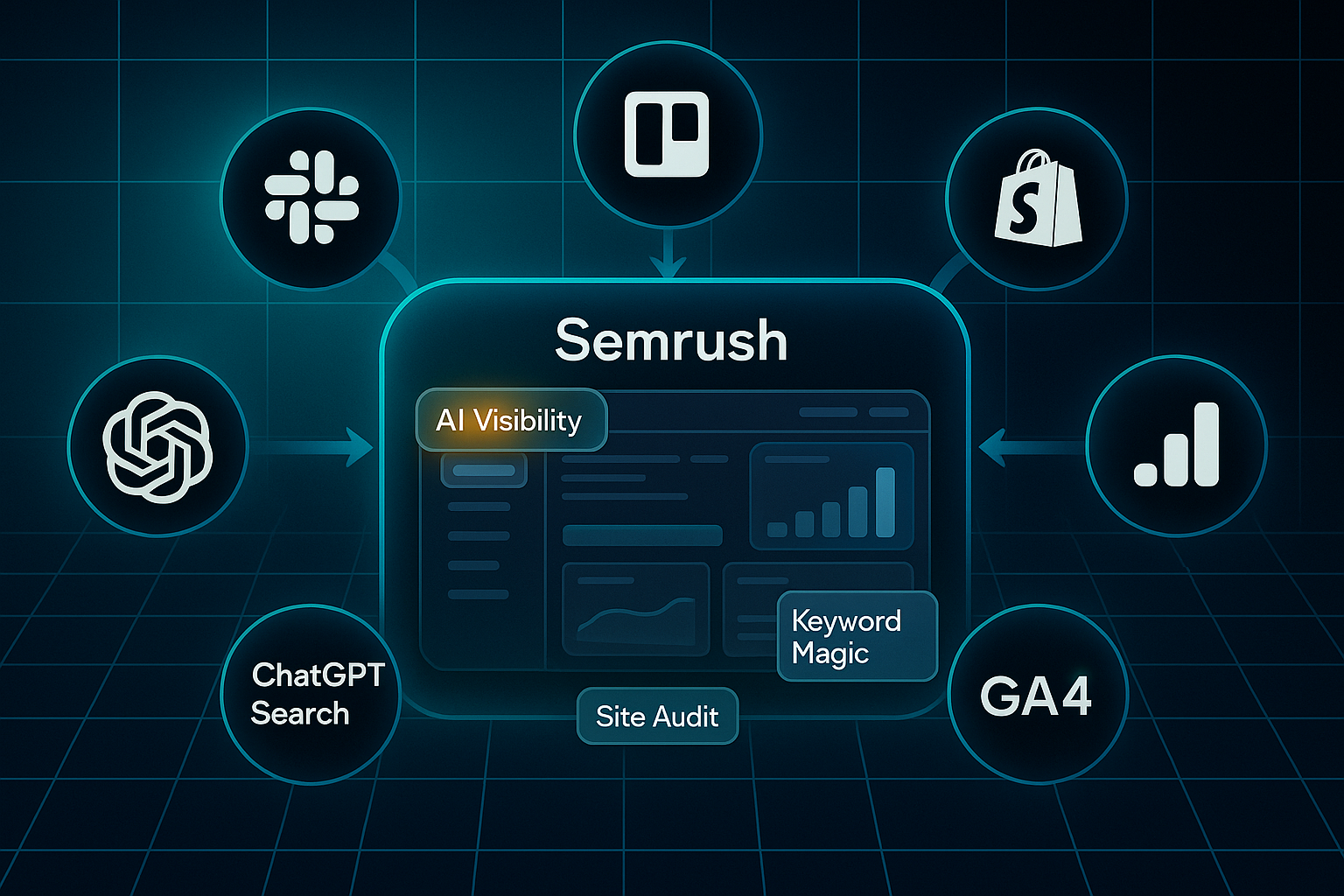
Semrush has cemented itself as an all-in-one digital marketing platform, bringing together backlink analysis, site audits, and rank tracking across Google, Bing, and now ChatGPT Search. Its Keyword Magic Tool searches over 26 billion keywords and refreshes daily, giving agencies and content teams a real head start.
One of the defining features for 2025? The AI Visibility Index. It tracks your brand’s exposure across emerging AI-powered search results, which is increasingly relevant as more queries happen through virtual assistants.
Semrush’s integrations with collaboration (Slack, Trello), e-commerce (Shopify), and analytics (GA4, GSC) make onboarding and data flow easy for agencies handling lots of client accounts. For large-scale technical jobs, the platform can audit up to 1.2 million pages per hour on its enterprise tier—ideal for site migrations or health monitoring.
The rise of AI search isn’t just another algorithm update; it’s a fundamental transformation in how people access information.
Reporting is highly customisable, with automated, white-label dashboard exports tailored for multi-client needs. And yes, Semrush’s backlink database is enormous (43T+ links), although Ahrefs edges it for total size.
Ahrefs: Technical SEO Specialist for Data-Driven Teams
For SEOs who live and breathe technical, granular data, Ahrefs is often the platform of choice. Its Keyword Explorer covers 29 billion keywords across nine platforms, supporting deep audits and global research.
The backlink database is a highlight—35T external, 27.2T internal links, updated every 15–30 minutes for maximum freshness. This is a standout for campaign managers who react to fast-changing search trends or digital PR ops.
The new Brand Radar module adds value by tracking brand mentions not just in the SERPs, but across AI tools and smart home devices. This makes Ahrefs exceptionally useful for brands needing digital footprints in multiple digital spaces.
On technical audits, Ahrefs allows up to 150,000 pages per crawl and supports concurrent projects—suiting multi-site teams. API access lets large teams automate bulk data exports and reports with minimal manual work.
Moz: Accessible SEO Platform for SMBs & Local Campaigns
Moz is known for making SEO straightforward—particularly useful for SMBs and agencies handling many local campaigns or onboarding less technical users. Its Keyword Explorer (1.25B keywords) is intent-focused, helping surface conversion-ready queries without overwhelming users.
The Link Explorer’s 45.5T database powers trusted Domain Authority (DA) and Page Authority (PA) metrics, which many digital marketers depend on for link outreach and partnership decisions.
Getting started is simple, with Moz’s guided wizards and client checklists. Site crawls hit 500,000 URLs per month per client and refresh every 12 hours, keeping site health actionable and fresh.
Moz’s AI modules now predict search intent and behaviour for local SEO, sharpening campaign targeting. Entry pricing is competitive, and their educational resources are some of the most comprehensive—a welcome touch for businesses looking to upskill.
Benchmarking Table: Key Technical Metrics & Use-Case Guidance
Here’s a visual guide to the technical specs—and where each tool really fits best:
| Feature | Semrush | Ahrefs | Moz | Scenario/Use-Case Guidance |
|---|---|---|---|---|
| Keyword database | 26B+, multi-engine, daily updates | 29B, Google-focused, 15–30m refreshes | 1.25B, intent-focused, capped suggestions | Large agency campaigns (S), data segmentation (A), SMB/local targeting (M) |
| Backlink database | 43T+, improves weekly | 35T ext/27.2T int, largest/freshest | 45.5T, industry benchmark, foundational | Deep link analysis (A), broad campaign (S/M) |
| Site audit depth/speed | 1.2M pages/hr (enterprise) | 150k pages/crawl, concurrent audits | 500k URLs/mo/client, 12h recrawl | Large migrations (S), technical monitoring (A), onboarding (M) |
| Reporting limits | Robust/custom dashboards, exports, integration | Largest project/reporting capacity, API automation | Multi-client templates, easy onboarding | Automated reporting (S/M), historic trends (A), quick handoff (M) |
| AI/automation | Content generation, visibility tracking | SERP history, API automation | AI intent prediction, simple onboarding | Content scaling (S), migration (A), SMB onboarding (M) |
From the table above, we can interpret the key differences and strengths among Semrush, Ahrefs, and Moz for various business scenarios. Looking over the numbers, Semrush is best fit for agencies running multi-channel campaigns or managing numerous clients, particularly where workflow automation and integrated reporting matter most. Ahrefs is the expert’s pick for those needing reliably fresh, rich data with custom automation options. Moz suits businesses that value ease of use and affordability, with features tailored to SMBs or those prioritising local campaigns and straightforward onboarding.
Quick Self-Assessment Checklist
Still deciding? Use this checklist to pin down the platform that really fits you:
- Thinking about agency-wide reporting for 10+ clients, easy integration with tools like Slack, Shopify, or GA4, or full omnichannel management?
Strong fit: Semrush. - Need always-current backlink and keyword data, large account reporting, API-driven automation, or advanced competitor insights?
Strong fit: Ahrefs. - Onboarding several SMBs, want intent-focused keywords, affordable entry, or simplified client handoff?
Strong fit: Moz.
Migrating ranking and link data for historic projects?
- Semrush
Lets you import data and set up workflows in one place. - Ahrefs
Advanced API handles bulk migration, supported by a vast SEO database. - Moz
Step-by-step wizards for fast new domain and client setup.
This benchmarking and scenario guide clarifies how these platforms match up for different business needs.
Now, we’ll move on to explore each platform’s unique strengths, their latest AI developments, and hands-on tips for getting practical value—so you can make a confident, informed final decision.
Semrush vs Ahrefs vs Moz: Features, Strengths, and Limitations Compared
When you set out to compare Semrush, Ahrefs, and Moz in 2025, you quickly realise there’s a lot more in play than just checking feature boxes or leaning on brand reputation.
The real secret? It’s about matching each tool’s technical strengths—and their plan-specific limits—to what you genuinely need in your workflow, whether you’re juggling agency clients, running local SME campaigns, or managing heavyweight SEO for enterprise scale.
So, if you’re wondering why some platforms work perfectly for one project but fall short for another, you’re about to see how those hidden details matter.
Feature-by-Feature Comparison: Plan-Specific Specs & Workflow Impact
Let’s walk through a direct, up-to-date feature comparison. We’ll look at how site audit power, backlink analysis, keyword research, rank tracking, and reporting automation differ across the typical plan tiers. It’s the nuts and bolts: plan names, project caps, export quotas, and the real technical capabilities you get for your money.
Here’s the rundown:
- Site Audit Capabilities
Semrush audits 10,000–50,000 pages per project on Pro through Business plans, with deeper technical checks. Ahrefs handles 10,000–50,000 pages per audit (Lite–Advanced) and features JavaScript rendering plus simultaneous site audits. Moz covers 5,000–20,000 pages (Standard–Large), offers speedy wizard setup, and runs 12-hour recrawls. - Backlink Analysis
Semrush comes with a 43T+ backlink database refreshed weekly. Ahrefs tracks 35T live links with updates every 15–30 minutes. Moz keeps pace with 44.8T links updated monthly or biweekly. All plans include toxic/spam metrics, but export limits depend on your tier. - Keyword Research
For Semrush you get 500–5,000 tracked keywords per project (27B+ keyword DB, AI-powered intent). Ahrefs allows 750–10,000+ tracked keywords and a database of 28.7B, though report/export is credit-limited. Moz supports 300–10,000 tracked keywords (1.25B DB), with handy Domain Authority and Page Authority scores. - Rank Tracking Engines & Granularity
Semrush tracks Google, Bing, Baidu, and ChatGPT Search, with 500–5,000 checks per day depending on the plan. Ahrefs is Google-only (weekly/daily, add-on required), and Moz tracks Google, Bing, Yahoo! daily, with varying segmentation for device and region. - Reporting & Automation
Semrush delivers 3k–50k daily reports, 20–50 PDFs/month and API on Business plans. Ahrefs offers unlimited reports at Standard+ tiers, with API at premium. Moz provides 75–15,000 keyword reports/month, API as an add-on, and multi-user access included on Medium+.
You can see how small differences—like audit page caps or which search engines get tracked—shape what an agency, freelancer, or enterprise manager can actually do day-to-day.
Semrush’s Guru and Business plans stand out for broad concurrency and heavy-duty export/reporting, matching agencies that manage lots of clients. Ahrefs delivers fresh backlinks and powerful automation but limits cheaper tiers to fewer reports. Moz leans into easy onboarding and trusted metrics, simplifying life for SMEs and local agencies.
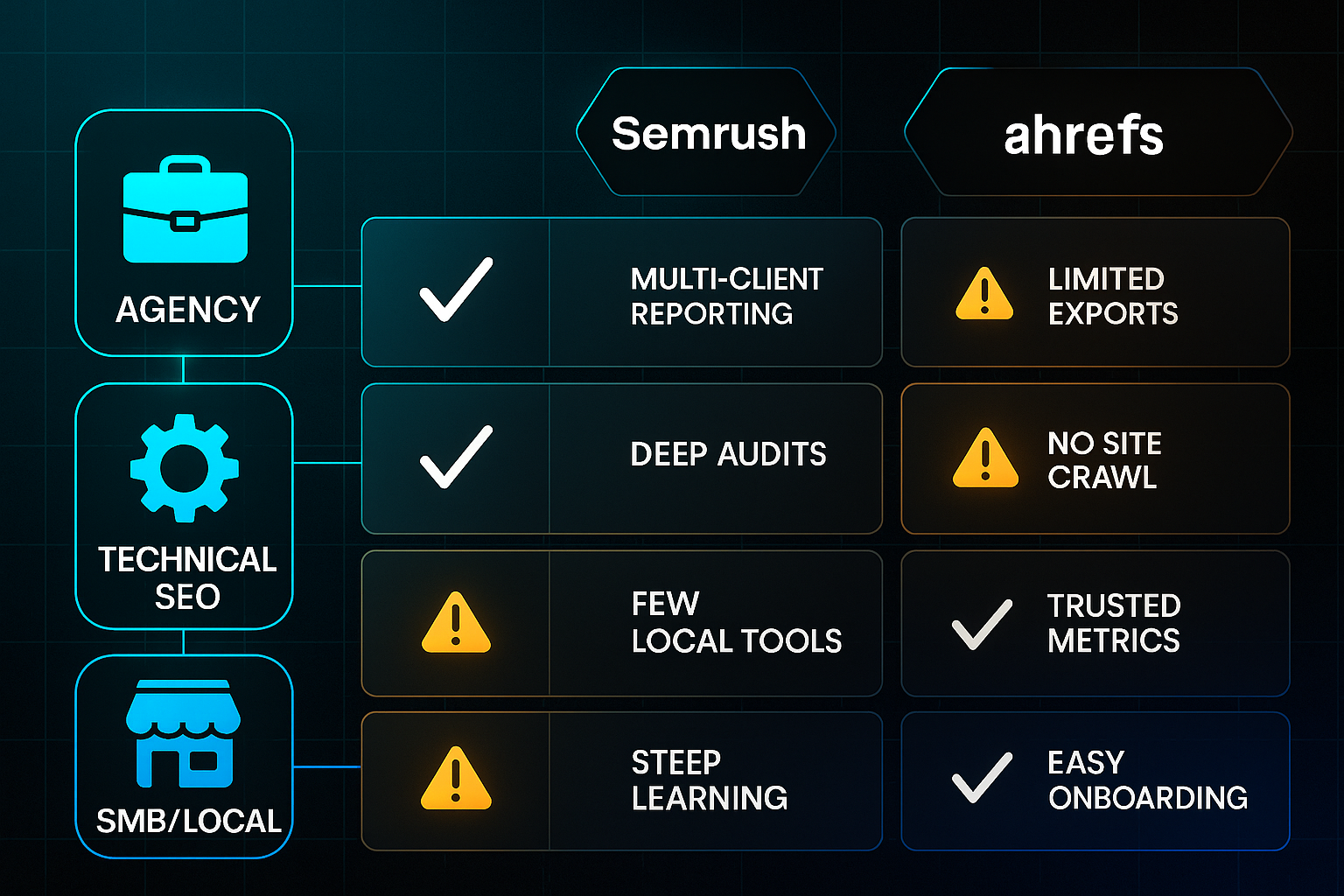
To make things practical, let’s map those specs against common user scenarios. This checklist ties plan features to real-world pain points so you know which platform unlocks actual usability for your situation.
Each key purpose for the table is stated clearly, without blending or skipping segments. The table displays the scenario, user, recommended plan for each platform, and the main fit and limitation for the user case.
| Scenario/User | Semrush Plan | Ahrefs Plan | Moz Plan | Fit & Limitation |
|---|---|---|---|---|
| Agency (10+ clients/complex workflows) | Guru ($249.95; 15 projects, high report/export caps) | Standard ($249; 10–20 projects, unlimited reporting) | Medium ($179; 10 projects, multi-user) | Semrush/Ahrefs best at scale, Moz hits ceiling at 10 projects. |
| Freelancer/SMB (Local campaigns) | Pro ($139.95; 5 projects, 500 keywords) | Lite ($129; 5 projects, 750 keywords) | Starter ($99; 3 projects, 300 keywords, 30d free trial) | Moz wins for multi-user and trial, Semrush/Ahrefs costlier and restrictive. |
| Enterprise/Ecom (multi-engine/all automation) | Business ($499.95; 40 projects, all engines, 50k reports/day) | Advanced ($449; Google-only, API extra) | Large ($299; 10 projects, basic API/automation) | Semrush offers most automation and engines, Moz/Ahrefs more constrained. |
| Avoiding Add-on/Overage Shock | Extra users $45/mo; AI modules $99/domain | API add-on $5+/mo; daily rank $49/mo | API $5+/mo multi-user included on Med+ | Carefully check scale/automation needs before buying. |
Looking over the table, agencies find Semrush Guru or Ahrefs Standard the most workable for managing lots of sites and tasks at once. Moz’s Starter and Medium plans shine for smaller teams thanks to the built-in trial period and multi-user access—no extra fees or complicated onboarding.
To further clarify these distinctions, let’s explore common user challenges and see how each platform really stacks up in practice.
Workflow Case Studies: Real User Challenges & Platform Fit
Here are three common scenarios:
- Agency automating audits and reports
Semrush Guru ($249.95) gives you 15 projects and 10,000 daily reports, plus AI alerts as optional extras. Ahrefs Standard ($249) has unlimited reports for 10 sites, although bulk export credits can quickly add costs. Moz Medium ($179) focuses on smooth onboarding for up to 10 projects, with API access for $5/120k rows. - Ecommerce link outreach & audit automation
Semrush Link CRM add-on ($60/month) is good for drip campaign support. Ahrefs API ($5+/mo) works well for bulk outreach—just watch out for rising costs in high usage scenarios. Moz, meanwhile, integrates DA/Spam Score right into basic reporting, handy for shorter campaigns. - SMB/local SEO experience
Moz’s 30-day trial and free multi-user options at Medium+ make teamwork and onboarding straightforward. MozBar for Chrome helps with real-time reporting. Semrush and Ahrefs, in comparison, charge higher prices and add extra user fees or shorten trial windows.
As these examples show, Moz is ideal if you want easy trial access and team-friendly onboarding for local or entry-level SEO. Semrush and Ahrefs are better suited to agencies and technical specialists who need bulk automation, deeper reporting, or coverage across multiple search engines—but expect steeper learning and extra overage fees if you scale fast.
All migration and workflow tips here refer solely to what’s outlined in the platforms’ official guides and user resources for 2025. No safety, legal, or finance angles—stick with what the vendors actually provide.
With the technical capabilities and workflow realities clearly mapped, you’re ready for the next crucial phase: plan-by-plan breakdown of pricing, add-ons, and trial offers, so you can figure out which solution delivers genuine value over the long haul for your team structure.
Pricing, Plans, and Value: Semrush, Ahrefs, and Moz (2025)
Scanning the price tags for Semrush, Ahrefs, or Moz doesn’t reveal the full story. Picking the right SEO platform in 2025 means balancing more than the monthly fee—you have to look at project caps, tracked keyword limits, reporting quotas, API charges, and those sneaky overage costs that can appear out of nowhere.
For agencies, technical SEO teams, and anyone scaling up campaigns, these details make all the difference.
Tier Structure, API, and Overage Costs
Let’s lay out the facts: here’s a clear table comparing their standard pricing, feature caps, and trial setups for 2025. It’ll show you where the value lies—and when costs might escalate rapidly.
| Feature | Semrush | Ahrefs | Moz |
|---|---|---|---|
| Starting Price | $139.95/mo (Pro) | $129/mo (Lite) | $39–49/mo (Starter) |
| Mid-Tier | $249.95/mo (Guru) | $249/mo (Standard) | $99–143/mo (Standard/Medium) |
| Enterprise | $499.95/mo (Business) | $449–$1,499/mo (Adv/Enterprise) | $239–299/mo (Large) |
| Projects (top tier) | 40 | Unlimited (Adv/Ent) | 25 |
| Reporting | 3k–10k/day; export limits | Unlimited, export credits needed | 15k keyword/70k backlink/mo |
| API Access | Paid add-on, capped units | Separate plan, credit-based | $5–$10k/mo (volume-based) |
| Overages | $10+/extra API units | $1k+ bulk exports/users extra | API/reporting charged as add-ons |
| Free Trial | 7–14d (most features, no API) | 7d paid, limited export | 30d, most features incl. reporting |
Table Analysis: Matching Platform to Needs
So, how should you read these numbers? Semrush Pro and Guru are great starters for small teams or agencies that plan to scale. But, watch out for API overages—bulk exports or deep reporting can quickly drive up spend if not monitored. Ahrefs unlocks big projects and unlimited reports, but API access always costs more, starting at several hundred dollars a month for automation or heavy exporting. If you expect rapid team growth or lots of bulk tasks, the true price can soar. Moz dazzles with a low entry price and a generous 30-day trial, making it a favourite among solo marketers and SMBs. Its pay-as-you-grow add-ons bring welcome flexibility, but exporting huge data or needing advanced API access pushes monthly spend higher.
Here’s the thing: plan-specific limits shape daily reality. Agencies juggling lots of clients thrive on Semrush’s predictable scaling, provided they set dashboard usage alerts. Technical specialists and teams eyeing deep automation should factor Ahrefs’s API bill into every decision—growth brings risk of lock-in. If your business is SMB-sized or just starting, Moz lets you dip a toe in with its trial and instant add-ons—just keep an eye out for costs climbing if your automation needs ramp up.
The key takeaway? True value is tied to the fit between platform capacity and your usage habits.
Upgrade Flexibility, Value, and Cost Management
As your team or workflow grows, knowing when—and how—you can upgrade really matters. Semrush provides instant tier upgrades and usage alerts, so agencies don’t get caught off-guard by surges. Ahrefs processes tier changes at the next billing cycle, so pivots may pause or delay reporting. Moz stands out with instant up/downgrades and modular add-ons—ideal if your client base grows unpredictably.
Keeping costs in check as you scale is crucial. These straightforward tips should help keep your spending on track: It's worth keeping these best practices in mind as you explore the platforms:
- Monitor usage with alerts
Track API calls and exports regularly to prevent unexpected overages. - Trial features before upgrading
Use Semrush and Moz’s free trials for a hands-on feel; Ahrefs trial covers less ground. - Upgrade timing matters
Semrush/Moz upgrades are instant, Ahrefs is next billing cycle—plan growth accordingly.
Always review your real monthly averages, and expect short-term spikes—extra users, mass reports, or surging API calls can move costs up fast. That’s why these price structures matter so much. With these cost factors and upgrade approaches in mind, you’ll be fully set up for the next phase: outlining how to select the platform and plan that truly fits your workflow and team structure for success.
Decision Framework: Mapping Needs to the Right Platform (2025)
Choosing between Semrush, Ahrefs, and Moz isn’t just about picking a brand; it’s about matching your real workflow demands with each platform’s actual limits.
The key to avoiding upgrade cliffs and hidden costs is lining up your usage with what the plans realistically deliver.
Fast-Track Self-Assessment Checklist
Start by measuring your current and near-future requirements against these platform facts. This will help you spot the best fit (or avoid a future headache):
- Sites/Projects
What’s your likely active project count? Semrush Guru allows 15, Ahrefs Standard 20, Moz Medium 10. - User Access
Semrush comes with 1 user (+£45–100 per extra). Ahrefs adds users at £40–80 each. Moz Medium/Large grants multi-user access included. - Reporting/Export Needs
Semrush: 3,000 reports/day. Moz Medium: 15,000/month. Ahrefs: unlimited reporting—but on a credit model. - API/Bulk Data
Semrush API sits at Business tier (£499.95+/mo, £200+ for extra volume). Ahrefs restricts API to Enterprise (£1,499+/mo). Moz’s API is an add-on—budget £5–10k+ for high export volume. - Trial & Onboarding
Moz’s 30-day trial is the most generous. Semrush gives 7–14 days. Ahrefs has no free trial.
Platform Fit Table and Red-Flag Triggers
Take a close look at where plan limits and sudden jumps can create pain points for teams in 2025:
| Feature/Trigger | Semrush | Ahrefs | Moz |
|---|---|---|---|
| Max active sites | Guru: 15 (£249.95/mo); Business: 40 (£499.95/mo) | Standard: 20 (£249/mo); Adv: Unlimited (£449+/mo) | Medium: 10 (£143/mo); Large: 25 (£299/mo) |
| Extra user cost | £45–100/user/mo | £40–80/user/mo | Medium/Large: included |
| API access | Business (£499.95+), £200/unit | Enterprise only (£1,499+/mo) | Add-on (£5–10k+/mo, per row) |
| Upgrade jump | 15→16: +£250/mo | 20→21: +£200+/mo | 10→11: +£156/mo upgrade |
| Trial period | 7–14 days | None | 30 days |
Approaching these thresholds puts you at risk for unexpected price spikes or hitting functionality walls—problems regularly reported by users.
Worked Scenario: Agency with 14 Sites, 6 Users
Here’s what happens if you’re managing 14 sites and need 6 users:
- Semrush Guru
£249.95/month, plus £225–500 for five more user seats. Adding site 16 triggers auto-upgrade to Business (£499.95+). - Ahrefs Standard
£249/month, with five extra users at £200–400. API is only available on Enterprise (£1,499+). - Moz Medium/Large
£143/month covers all users, but the 11th site means moving to Large (£299). High-volume exports require expensive API add-ons.
As seen above, these plan upgrades and add-on charges trip up many buyers—often after it’s too late to switch easily.
Numbered Steps: Map Your Fit Without Regret
For a confident decision, lay out your usage in advance and map it to each provider’s critical limits. Here’s a step-by-step process to make sure you’re choosing the best option while avoiding regret:
- List active projects/sites for 12 months
Estimate your maximum need. - Calculate needed user seats
Factor in planned hires and outside collaborators. - Add up reporting/API volumes
Make monthly or annual projections to check scalability. - Cross-check against plan triggers
Spot where upgrade cliffs or limits will hit. - Tally true annual costs
Include all recurring plus add-on expenses. - Pick the most resilient plan
Choose the option that shields you from surprise lockouts or unexpected bills.
By working through these steps, you can clearly see hidden triggers and keep your costs—and stress—under control.
This mapped approach exposes blind spots long before they become costly problems for your team.
Now that your selection process is locked in, let’s explore what using your chosen platform actually feels like day-to-day, with an honest look at migration and onboarding for agencies and teams in 2025.
Onboarding, Integration, and Migration: Realities and Tips (2025)
Shifting to Semrush, Ahrefs, or Moz in 2025 feels much easier than before, but you’re still dealing with real workflow and migration challenges.
Despite these improvements, matching your team's priorities to each platform's quirks is still key. Agencies and technical teams should always kick off with a careful audit of their current SEO processes and integrations.
Take stock of everything connected to Google Analytics 4 (GA4), Google Search Console (GSC), and all your project tools. That mapping exercise helps ensure no crucial workflow gets lost once you move.
Actionable Onboarding and Migration Steps
Each SEO platform approaches onboarding differently, so let's break down those paths. Moz now leads with its guided onboarding wizard and 30-day trial period.
Start by setting up campaigns, import keywords in batches of up to 5,000 via CSV, and link your data in “Campaign Home.”
Want to play it safe? Sandbox Mode lets you test migrations and reporting before committing real projects.
Semrush steps things up with an AI onboarding assistant, which fills out dashboards and automations tailored to your business type and site volume.
You’ll connect GA4, GSC, Shopify or WordPress using the integrations panel in Project Settings.
For high-volume agencies, API v4 offers bulk project imports and scheduled exports for ongoing rank and traffic tracking.
Ahrefs sticks to its “Start a New Project” wizard, reinforced by its API v3. Add your sites, then set up integrations under Site Audit > Settings.
Bulk importing for backlinks and keywords uses dedicated Python or Node.js scripts.
Their documentation even maps Moz migrations step-by-step—you’ll just need to watch rate caps and throttle larger uploads to avoid delays.
Blog-in-one-minute
Add a fully SEO-optimised blog to your website with just 2 lines of code.
Learn more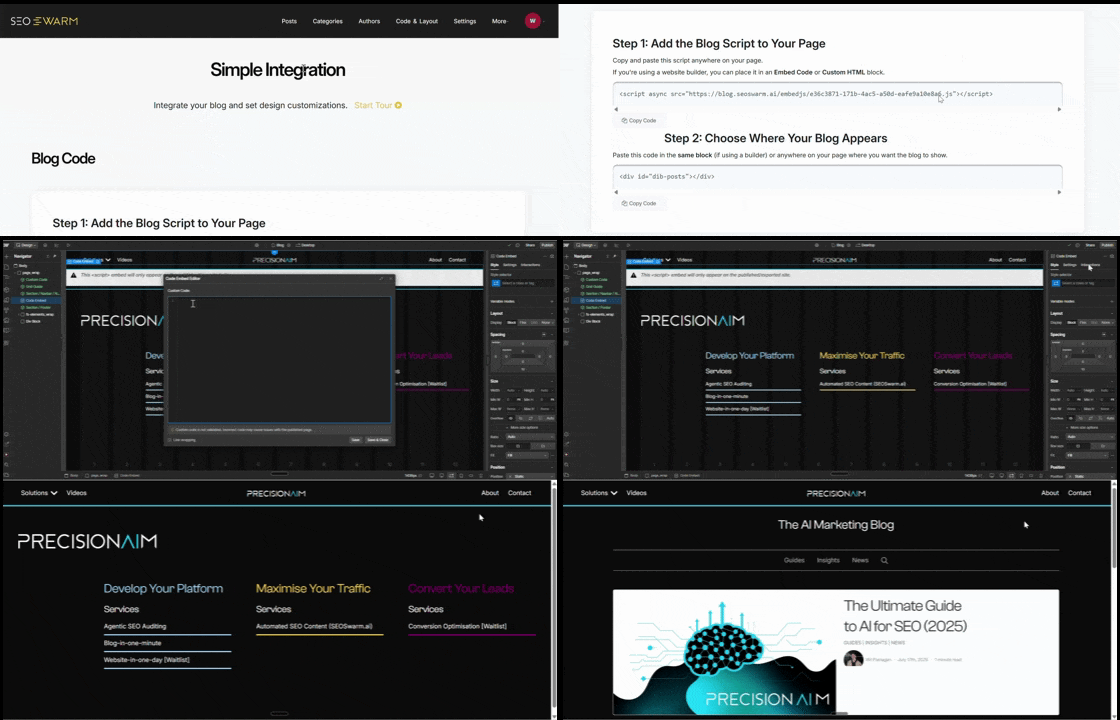
Pain Points and Solutions Table
Migration has its headaches, but here's how Semrush, Ahrefs, and Moz address the tough spots:
- Bulk keyword import (10k+)
Semrush uses API v4 and CSV uploads; Ahrefs delivers scriptable imports with rate limits; Moz handles bulk CSV in batches of 5,000. - Multi-site setup (10+)
Semrush offers wizard-driven batch setup; Ahrefs supports templates and API scripts; Moz goes with Sandbox for batch migrations. - Rebuilding dashboards
Semrush’s template library and auto-export ease setup; Ahrefs favours user scripts over templates; Moz offers campaign wizards and drag-and-drop imports. - Metric mismatches
Semrush provides a metric mapping process; Ahrefs leans on crosswalk guides; Moz includes DA/PA reminders and guided notes. - Rate limits/overage
Semrush features a quota dashboard; Ahrefs sends usage alerts; Moz has tiered caps and dashboard warnings.
If I were steering an agency migration, there are a few steps I'd never skip.
Export every historic report, keyword list, and automation config first—having backups always saves headaches down the road.
Moz’s risk-free Sandbox Mode is a standout.
Semrush whips through onboarding with its wizard, and Ahrefs appeals to technical teams with scriptable, custom migrations.
Just remember, rate limits in Ahrefs can turn into bottlenecks quickly.
Normally, seeing up to a 15% swing in metrics between platforms is expected.
Use onboarding crosswalk guides to keep KPIs accurate as the switch happens.
For seamless workflow, run both platforms in parallel for two to four weeks, comparing outputs before phasing out legacy data and finishing your transition.
Routine training and regular usage checks help bed in your new setup with minimal friction.
Automated dashboard health reports further smooth out the adjustment period for your team.
Once you've set up robust onboarding and migration, your team is ready to optimise campaigns with full confidence using whichever analytics platform you’ve chosen.
Ready for the next step? Now that the heavy lifting’s done, we'll look at how day-to-day platform use actually shapes campaign results and ongoing workflow in the real world.
Implementing and Maintaining SEO Content Strategy After Choosing a Tool
Translating Analytics into Campaign Workflows
After you’ve settled on Semrush, Ahrefs, or Moz, the next step is turning those detailed insights into real action. It’s all about making your keyword, backlink, and site audit data drive your actual priorities. Let’s say you’re using Semrush. You’d filter keywords by volume and difficulty in the Keyword Magic Tool, draft your blog calendar around high-value terms, and tackle any critical site issues flagged by the audit system.
With Ahrefs, you’d run Content Gap analysis to see which topics you’re missing, then automate rank tracking and use technical warnings to guide updates.
Moz users tend to cluster priority keywords, set weekly fix schedules, and manage their lists directly in Campaign Home. The main aim is to keep site health above 80%.
Automating Reporting and Recurring Tasks
Juggling reports, fixes, and benchmarks by hand gets old fast, so automation really helps. Semrush lets you schedule PDF reports, recurring audits, and assign technical fixes via its integrated task tool.
Ahrefs batch monitors multiple sites, and dashboard alerts flag new backlinks, ranking changes, or technical issues in real time.
Moz integrates technical and ranking reports straight into Google Sheets, plus sends notifications using Zapier every time your site’s health changes.
Staying on top of things gets easier when you automate most tasks.
Benchmarking Performance and Optimising Content
Want to know how you’re really doing? That means actively tracking keywords, rankings, and site health on your dashboard. Semrush’s Position Tracking offers daily keyword visibility, while Ahrefs alerts you quickly on any ranking drops. Moz supplies Domain and Page Authority checks monthly, and Google Analytics is always there to monitor steady traffic growth.
Refresh any blog post that’s lagging behind and adjust your optimisation based on audit feedback. Ideally, try for at least a 20% visibility bump on new campaigns in the first three to six months.
When to Move Beyond Analytics-Only Workflows
Complex campaigns can hit resource limits as you scale up. Typical triggers include:
- Keyword management overload
Handling 50–100+ keywords across many sites becomes chaotic. - Technical debt
Persistent issues in more than 15% of published posts can slow workflows. - Reporting/user caps reached
Regularly hitting platform limits (as seen in earlier plan tables) disrupts your reporting cycle.
When you consistently face these issues, it's time to consider a service solution that can handle both strategy and practical execution. This approach offers greater control and efficiency as your business scales or requirements become more complex.
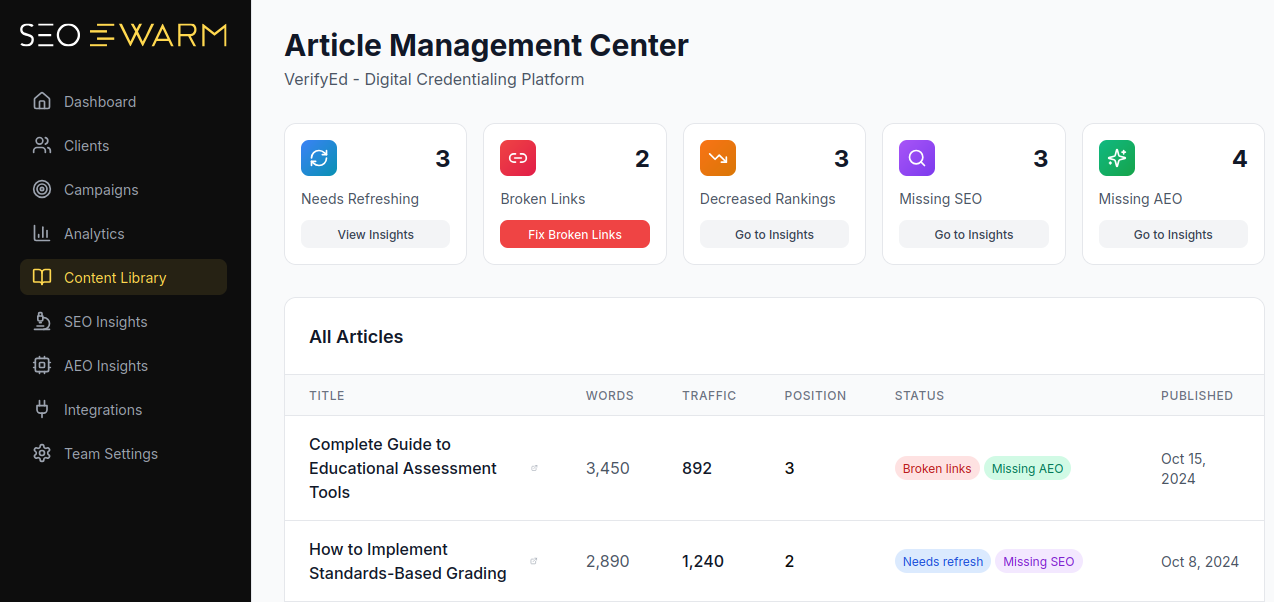
Our solution, SEOSwarm, supports agencies and organisations needing full-spectrum management. From automated technical audits to fast blog publication with schema and EEAT compliance, SEOSwarm keeps ongoing optimisation incredibly efficient.

AI-Powered
SEO Content Strategy
See the AI platform that's replacing entire content teams
(with better results).

Multi-site teams especially benefit—once platform project caps become a bottleneck, SEOSwarm streamlines workflows and technical upkeep, saving time and improving campaign consistency.
Actionable Guidance for Maximising Impact
Always anchor your workflow to your platform’s plan limits and reporting caps. Automate health tracking, reporting, and fix schedules so you never miss growth opportunities.
If you’re scaling up or facing resource strain, try scenario-testing service platforms like SEOSwarm. Compare post-launch time savings, technical health improvements, and organic growth against your manual efforts before fully switching. That way, you’ll know you’re achieving maximum impact, without unwelcome surprises.
My Take on Semrush vs Ahrefs vs Moz
Most SEO teams waste hours wrestling with platform limits and hidden upgrade costs. I’ve seen agencies hit reporting walls or scramble to add users, only to watch expenses spiral. The real win comes from mapping your actual workflow to each tool’s strengths—and knowing when to automate or switch.
Here’s my advice: List your projects, users, and reporting needs for the next year. Use the self-assessment and scenario tables above to spot upgrade triggers before they become headaches. Test each platform’s onboarding and migration tools with trial data, and automate reporting wherever possible.
If you’re scaling fast or juggling multi-site campaigns, don’t settle for manual fixes. Consider service platforms like SEOSwarm to streamline technical upkeep and content publishing. The best SEO results come from matching your platform to your needs, not the other way around.
- Wil