

SEO can be a headache for businesses with limited resources or fast-changing goals. Managing technical fixes, content, and analytics in-house often stretches teams thin and slows growth.
I've seen how outsourcing SEO can solve these challenges, offering instant access to specialist expertise, advanced tools, and flexible service models. In this guide, I'll break down exactly what outsourcing covers, who benefits most, and how it compares to keeping SEO in-house.
You'll get a clear look at provider types, cost structures, and the step-by-step process for finding and vetting the right partner. I'll also highlight common mistakes, legal considerations, and practical tips for smooth collaboration and reporting.
Whether you're considering full-service agencies, managed platforms, or freelance teams, this article gives you the facts and actionable strategies to make outsourcing SEO work for your business.
What does it mean to outsource SEO services?
What does outsourcing SEO actually cover?
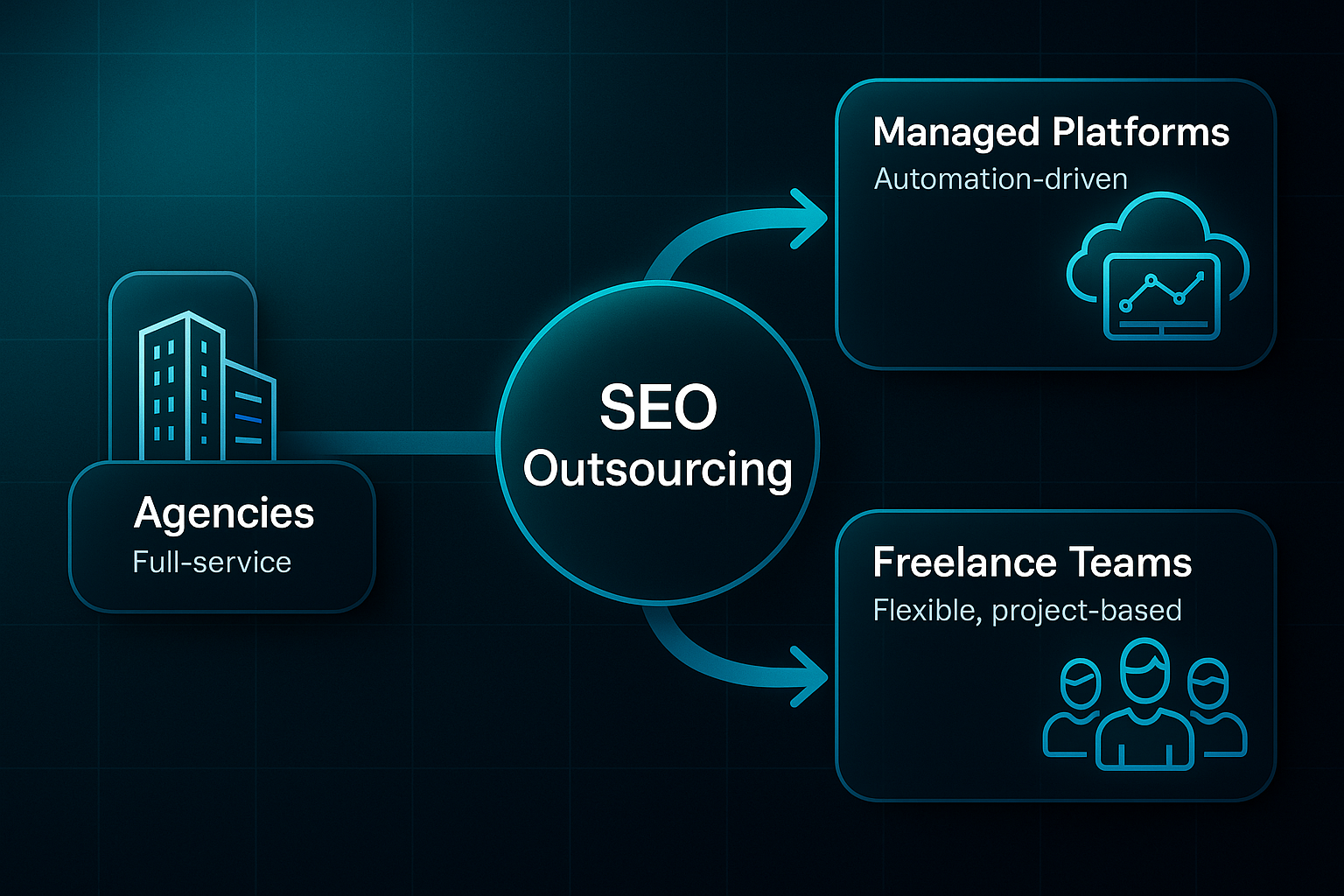
Outsourcing SEO means entrusting your search optimisation strategy—and its day-to-day running—to an external partner. This could be a specialist agency, a managed platform, or a tightly coordinated expert team.
They’ll take on everything: strategy, keyword research, technical fixes (metadata, site structure, mobile-friendliness), crafting website content, building links, digital PR, and performance reporting. Sometimes it’s a total hand-off; in other cases, you might just need targeted help, like a technical audit or a focused campaign.
What stands out is this: delivery and measurable results become your provider’s responsibility, with their expertise and benchmarks driving the process.
How to Outsource SEO (Step-by-Step)
Who benefits most from outsourcing?
So, who is this approach best for? Small and midsize businesses, start-ups, fast-growing e-commerce brands, and firms branching into new markets all turn to outsourcing.
If your in-house SEO skills are thin, you need to scale rapidly, or want your team focused on what they do best, outsourcing makes sense. It’s also often more cost-efficient than hiring a full SEO staff—and gives you access to specialist tools and industry know-how you might not get otherwise. For example, many retailers outsource to drive organic growth and free up their own time for customers.
By outsourcing to top talent in cost-effective regions, businesses can unlock a significant portion of their budget, freeing up capital to fund other growth projects.
Outsourced vs in-house: What changes?
Here’s the thing: outsourcing gives you instant access to wide-ranging expertise and quicker execution. But, you might give up a bit of day-to-day control.
The trade-off? Flexibility and a simpler path to scale resources as you need. Costs are more predictable, too—service fees replace multiple salaries and ongoing training. Some businesses mix the two, keeping their strategic direction internal but letting an external team deliver the work.
Quick comparison
| Aspect | Outsourced SEO | In-House SEO |
|---|---|---|
| Expertise | Specialist, up-to-date, broad | Limited by staff |
| Cost | Service fees | Salaries, training, tools |
| Scalability | Flexible, on demand | Slower, resource-bound |
| Control | Managed externally | Direct oversight |
Types of SEO providers
Provider options include agencies, managed platforms using automation, and organised freelancer groups under unified management. Stand-alone freelancers, “just the tool” SaaS, and DIY don’t count—they lack full-service strategic support. Your choice impacts everything: approach, collaboration, and accountability levels.
Why do businesses and agencies choose to outsource SEO services?
Top motivators for outsourcing
So, why do so many firms turn to outsourcing? Expertise is a huge driver. With agencies, you’re tapping into deep technical and strategic knowledge—far beyond what most in-house teams can quickly build. They obsess over every algorithm update and optimisation, staying ahead of the curve while you focus elsewhere.
Outsourcing to an agency provides access to a collective brainpower that's difficult to replicate in-house without a significant investment in hiring multiple specialists.
Let’s look at the numbers. Bringing in an SEO specialist in-house generally costs more than £9,00 a month. An agency, on the other hand, will usually deliver a wider skill set for £5,000. That’s a convincing 40-50% saving. Plus, all those premium SEO tools are rolled into your agency’s fee, so there’s no hidden expense for software licences.

In-house SEO vs Agencies - Real Costs EXPOSED
And then, there’s flexibility. You adjust your investment at will—going bigger for a campaign, or downshifting when things quieten off. No awkward lulls or lengthy contracts.
For businesses with changing needs, this agility is gold.
One more thing: offloading the everyday SEO allows your team to focus on innovation and customer success. Internal talent isn’t drained by routine—they’re energised for bigger ideas.
When is outsourcing the right fit?
Launching a new site, chasing a growth spurt, or stuck with flat results? Outsourcing is ideal for speedy execution, fresh thinking, and scaling fast—no extra hires, just instant expertise.
What are the benefits of outsourcing SEO services?
Access to advanced expertise and technologies
Outsourcing SEO connects you with specialist teams who live and breathe technical, local, and e-commerce optimisation. These experts deal effortlessly with sticky issues like keyword cannibalisation and link equity—challenges that overwhelm most in-house teams.
Here’s where things get interesting. Agencies arrive with AI-driven tools for auditing, keyword research, and content strategy, all out of reach for most internal budgets.

It’s not just talk, either. LurnAgile saw a 74% increase in web traffic in a year from switching to agency-led audits and campaign strategy. Planable quadrupled their organic traffic by relying on an agency’s AI content approach.
By implementing an AI-driven strategy using topical clustering and programmatic SEO, HR SaaS company Airmason achieved a 1300% increase in organic traffic and grew daily clicks by 17x in just seven months.
These providers also adapt quickly to shifts like AI-generated search results—so you’re always ahead of trends.
Operational efficiency and scalability gains
Outsourced SEO teams operate with speed and precision using streamlined workflows and automation. Even as client demands grow, they keep standards high.
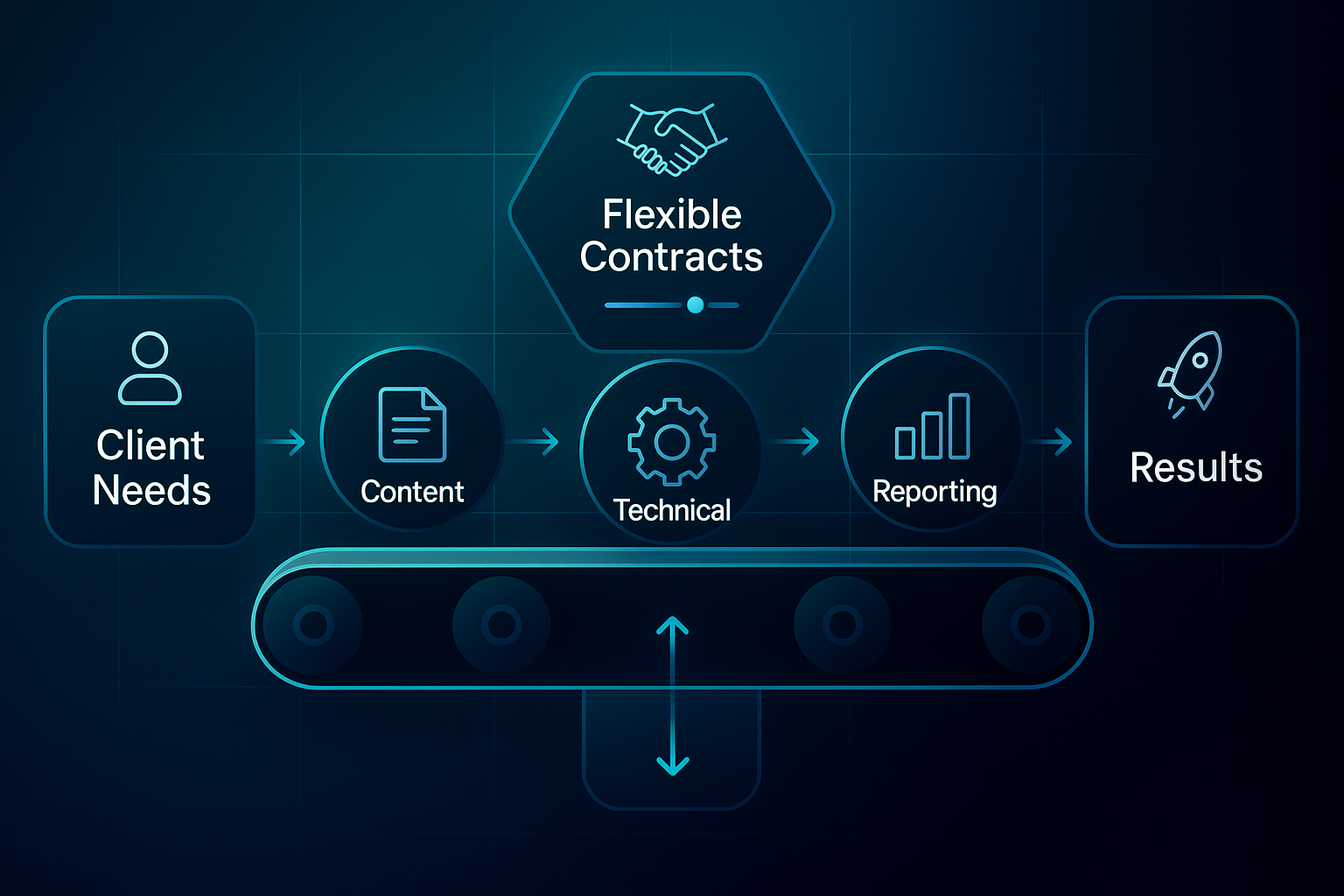
Flexible service models—retainers or project contracts—let you scale efforts seamlessly up or down. Randy Selzer is a great example: he saw a 50% boost in core keyword rankings in just four months after switching to external SEO support.
Comprehensive performance tracking and reporting
What stands out about agencies is their structured reporting. You don’t just get basic updates; you get detailed breakdowns on rankings, links, and conversions.
Automated analytics make results crystal clear and give your business exact ROI measurements for every campaign.

AI-Powered
SEO Content Strategy
See the AI platform that's replacing entire content teams
(with better results).

Enabling business focus on growth
Handing off SEO frees your internal team from technical routines. This means more time for innovation and strategic growth.
Planable’s team managed to focus on new product initiatives post-outsourcing, which lifted productivity and morale—and their bottom line benefited too.
What are the potential drawbacks and risks when you outsource SEO services?
Loss of direct control and communication challenges
Handing your SEO over to an external provider really does shift day-to-day decision-making out of your hands. That means you’re often relying on set communication schedules, which can slow things down a bit—especially when your business priorities change quickly.
And it’s not just timing. Time zone clashes, language differences, and an outsider’s take on your brand voice or compliance details can all get in the way. Sometimes, this leads to campaign launches being delayed, or internal teams needing to review materials more than expected, such as for fintech or e-commerce where accuracy is everything.

Exposure to low-quality or unethical providers
Ever worry about trusting the wrong provider? Here’s why you should. If you skip the vetting stage, you might end up with agencies using risky black-hat tactics, like paid links or keyword stuffing, or simply poor-quality content.
Providers offering “guaranteed results” at suspiciously low prices are often hiding these shortcuts. Not only does this put your site at risk for search engine penalties, but vague reports or hidden outsourcing can make it hard to spot problems before reputational damage hits.
Engaging with a low-quality SEO provider who uses black-hat methods is a significant risk that can jeopardize your entire online presence. The resulting damage to your site's authority and reputation can be difficult and costly to reverse.
Contractual and integration limitations
Contracts can get sticky. Proprietary platforms or tools might mean you’re stuck—if you need to switch providers, it gets costly or technically challenging. Some agencies even keep control of campaign data, so moving on might mean leaving valuable history behind.
Integration headaches can pop up too. Mismatched workflows or security standards could mean missed deadlines, or additional resource drain fixing unexpected hiccups.
Mitigation strategies
So how do you protect yourself? Set really clear SLAs outlining deliverables and deadlines, and make onboarding as complete as possible—think brand guidelines, objectives, and technical details.
Regular audits, open communication, and thorough reference checks will help you spot issues early. Most importantly, lock in contracts that spell out intellectual property terms and guarantee full data access, so your business remains protected if you ever need to transition.
What types of SEO providers can you outsource to?
Full-service and specialist SEO agencies
When it comes to outsourcing SEO, full-service agencies are often the first stop for many businesses. These teams handle everything—technical, content, link-building, analytics, and even digital PR—typically for a monthly retainer of £1,200 to £10,000. What sets them apart is full accountability and strategic oversight—a solid choice if you need simplicity or solutions for complex, ongoing requirements.
Here’s the catch: the price. And sometimes, a big agency may stick to a one-size-fits-all approach that doesn’t fully account for each business's unique quirks.
Specialist agencies take a different route. They focus on one area—local, technical, or eCommerce—offering deep expertise with packages starting at £99 and going up to £6,000 for more advanced help. They shine with targeted challenges, but juggling multiple specialists can complicate management and sometimes splinter your overall SEO approach.

Watch This Before Hiring a Marketing Agency
Managed SEO services and platforms (including AI-powered agency-managed models)
Managed SEO platforms, especially those blending automation and agency input, are popular with SMEs and eCommerce businesses. You get data-driven reporting, measurable results, and quick execution for £300 to £1,000 a month. Their biggest strengths? Efficiency and clear, transparent outcomes.
But the trade-off is less customisation. Standardisation means strategies sometimes lack a bespoke or unique feel.
Organised freelance SEO teams
Freelance SEO teams bring together vetted experts to handle projects or campaigns flexibly. Prices often start at just £50, with most campaigns reaching up to £600 monthly. Ideal if you need project-based support, but quality and results rely heavily on your own direction—and their capacity can be limited for bigger, longer-term goals.
What is not considered true outsourcing?
If you’re just using in-house staff, automated tools alone, or a freelancer for ad hoc jobs, that’s not really outsourcing. You’ll miss external accountability and cohesive strategy, often ending up with patchy outcomes and scattered responsibility.
How do you outsource SEO services—step by step?
Internal preparation and goal setting
First things first, make your SEO goals and measurable KPIs crystal clear—otherwise you risk wasted time and muddled outcomes. Are you chasing more organic traffic, stronger conversions, or better local visibility? Tie those ambitions to actual numbers, whether it’s rankings, leads, or domain authority. Audit your existing assets—analytics, campaign history, technical reports—and figure out where the gaps are. Set a practical budget upfront with a defined scope: technical SEO, content, link building, or even AI-powered optimisation.
How to Outsource SEO (Step-by-Step)
- Objectives + KPIs
Focused, defined targets - SEO audit
Highlight strengths and gaps - Budget
Fixed range - Scope
Specify exact needs
Clear planning means fewer hassles later.
Finding, shortlisting, and vetting providers
Look for SEO providers using trusted directories, peer tips, and reviews on platforms like Clutch or Trustpilot. Ask for solid proof: sector-specific case studies, certifications, and a breakdown of what’s included. When a provider avoids detail or offers only broad answers, treat it as a red flag.
- Case studies
Relevant project wins - Certification
Google, SEMrush badges - Process clarity
Transparent workflow - References
Service-backed testimonials
Smart vetting reduces risk before you commit.
Evaluation and contracting
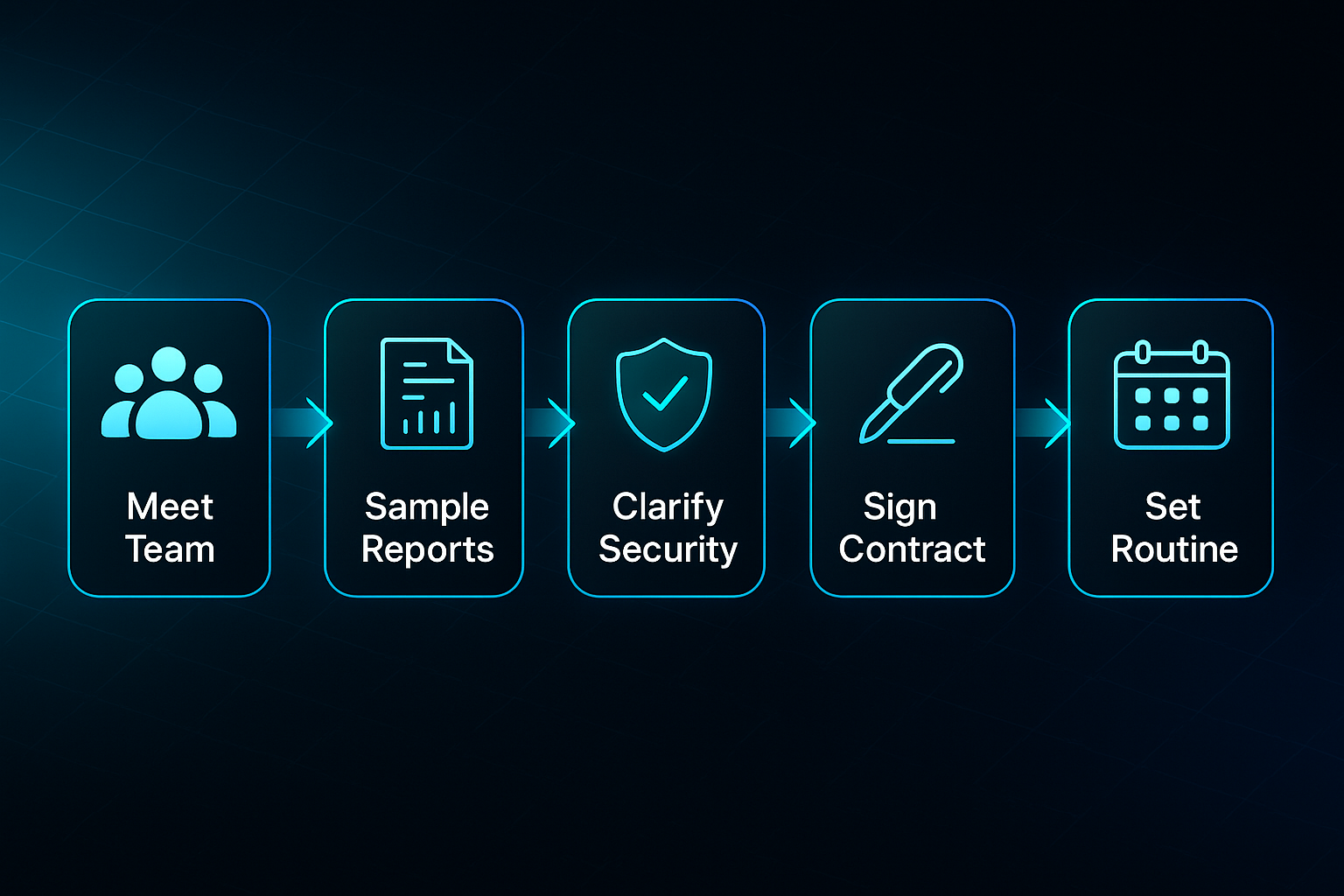
Talk to the actual team behind your account, not just the sales lead. Request sample reports and process details—plus clarification about communication, data security, and any AI methods. Beware of generic claims with no evidence behind them.
Contracts should lock in specific deliverables, KPIs, payment terms, and intellectual property rights. In onboarding, transfer credentials securely, share brand guidelines and confirm a reporting/feedback routine.
- Credentials
Secure transfer - Brand assets
Provided upfront - Routine
Approval/reporting schedule
A robust onboarding means smoother collaboration.
Collaboration, monitoring, and reporting
Schedule regular review meetings, expect clear KPI-driven reports, and benchmark progress. If reports grow unclear or performance stalls, challenge it straight away.
- Meetings
KPI review - Reports
Action-focused, transparent
Fast feedback helps keep campaigns on track.
Preparing for a provider exit
Protect your interests by including asset handover and credential return in contracts. Any stalling is risky.
- Transfer steps
Fully documented - Credentials
Returned promptly
Quick reference: key red flags
| Stage | Must-check | Example red flag |
|---|---|---|
| Preparation | Clear business goals | Undefined targets |
| Vetting | Proven case studies | No evidence offered |
| Evaluation | Sample reports/process | Only vague promises |
| Onboarding | Secure credential transfer | Requests incomplete |
| Reporting | KPI-driven updates | Unclear or missing data |
| Exit | Written transfer terms | Delay in handover |
The secret? Nail each step with precision, and outsourcing SEO becomes a genuine growth engine—not a gamble.
How do you choose the right SEO outsourcing partner?
Must-have evaluation criteria and fit assessment
Choosing the right SEO partner really starts with sector-specific experience, so get recent case studies from your industry—think legal, e-commerce, or whatever niche you’re in.
A solid partner should handle technical SEO, content, links, and analytics, all tailored to your goals.
Expect simple, regular reporting—monthly dashboards that make sense, not piles of jargon.
Don’t forget about working style. Does their workflow mesh with yours? Can you see yourself enjoying the way they communicate each week? Small details here shape your partnership.
Go after fully transparent pricing, no hidden extras.
GDPR compliance is essential if you’re UK/EU based.
Beware any provider offering generic pitches—a willingness to customise shows real flexibility.
Red flags and warning signs
If you see “guaranteed ranking” promises, rock-bottom prices, or unclear service details, that’s your signal to be cautious.
Patchy communication or light-touch onboarding? Also bad news.
Overdoing automation with hardly any human involvement, or big talk about vanity metrics instead of real results, are major risk flags.
Key questions to ask before signing
Ask for sample reports and find out who is actually running your account.
Clarify escalation, asset ownership, and GDPR protocols—plus what happens at exit.
Tough questions now set up a trustworthy, transparent relationship later.
What are common mistakes to avoid when you outsource SEO services?
Critical missteps in provider selection and onboarding
Picking the cheapest SEO provider—or one lacking sector experience—rarely ends well. If they can’t share up-to-date case studies or real references, you’re likely in for lacklustre results and wasted budget.
Set clear expectations early. Onboarding should cover secure access handover, agreed KPIs, and consistent reporting. Skipping these basics? That’s a recipe for confusion down the road.
Failure in communication, tracking, or campaign management
Ever noticed those updates just stop coming? You’re not alone. 40% of businesses miss their goals when reporting is inconsistent or communication drops off.
Monthly KPI reviews and straightforward reporting are essential. They help spot issues before traffic or revenue take a hit.
No transition or exit planning
This is where things often fall apart. Without a transition plan, losing access to key SEO data or credentials becomes a real risk.
Protect yourself with contracts that guarantee asset and credential return and clear data ownership. That way, if you switch providers, you stay in control—no lost rankings or nasty surprises.
What are advanced options in SEO outsourcing—AI-powered and agency-managed solutions?
AI-powered agency-managed SEO: How does it work?
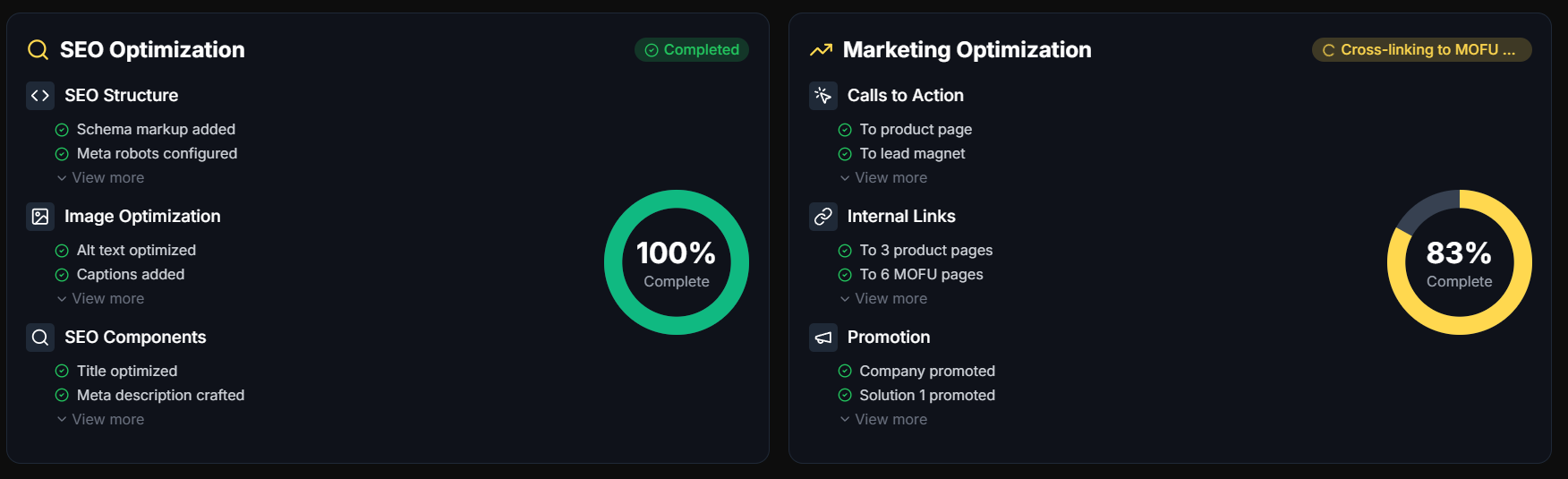
Now, here’s where outsourcing takes a leap forward. AI-powered, agency-managed SEO blends automation—a lot of the technical audits, keyword mapping, and fast content development—with specialist oversight from real people. The result? You get rapid, data-driven insights while experts shape strategy, ensure quality, and keep things compliant with your brand.
Routine updates, audits, and performance tweaks are mostly automated, which streamlines campaign cycles. For instance, SEOSwarm uses AI agents for research and writing, but their agency team reviews everything and publishes content straight to your site. Your input happens at onboarding and approval stages; analytics and maintenance are handled by the agency. Want to edit content directly? You’ll need the Blog-in-one-minute add-on for that.
Distinctive strengths versus legacy agencies and freelancer models
- Delivery speed and scale
AI gets technical and content tasks done in hours, enabling quick, large-scale rollouts. - Quality and precision
Automated checks keep details sharp and react fast to algorithm changes. - Proactive monitoring
AI tools spot and flag errors—like indexation problems—almost instantly. - Structured reporting
KPI-driven updates come frequently, replacing slow manual reporting. - Scalability
Effortlessly adapts for multiple brands, sites, or frequent publishing needs.
When are AI-powered, agency-managed platforms the best fit?
- Ideal scenarios
Best for e-commerce, publishers, or multi-location brands needing speed and ongoing updates. - Best fit limitations
Not designed for bespoke, regulated, or highly creative campaigns needing constant hands-on attention. - Integration questions
Integrates easily with WordPress and Shopify; legacy tech may need extra onboarding. - Client-agency relationship
Agency leads with delivery and approvals—content editing only possible with Blog-in-one-minute. - Add-on features
Blog-in-one-minute gives quick setup and direct editing if purchased.
Critical considerations before choosing advanced outsourcing
- Fit checklist
Confirm workflows, control, and tech compatibility up front. - Red flags
Be wary of black-box systems, rigidity, or vague onboarding. - Onboarding best practices
Share brand guidelines, clarify approvals, and set SLA and data agreements early.
When speed, precision, and scale are non-negotiable, these hybrid solutions truly shine—if they fit your actual needs.
Blog-in-one-minute
Add a fully SEO-optimised blog to your website with just 2 lines of code.
Learn more
How should you collaborate and communicate with an outsourced SEO partner?
Role clarity and workflow setup
Effective SEO partnerships rely on clear roles and smooth workflows. Use project management tools—like Asana or Trello—to keep everyone on track with deadlines and approvals.
Share up-to-date objectives, KPIs, and calendars, keeping everything transparent. Spell out responsibilities early: the agency handles technical SEO, outreach, and reporting; you focus on brand sign-off.
Clarifying this prevents confusion and keeps projects moving.
Effective communication and escalation processes
Set up regular video calls for updates and planning. Slack or Teams covers daily questions and quick clarifications.
Define a simple escalation plan—know who to contact and how fast they should respond if urgent site issues appear. Monthly leadership sessions keep KPIs and major concerns front of mind.
Knowledge transfer and revision management
Store documents and feedback in a shared cloud folder, like Google Drive or Notion. Limit revision rounds (one or two usually does it), and log all edits in your workflow tool.
A solid onboarding and occasional walkthroughs will keep everyone aligned—even when team members change.
How is performance tracked and reported when you outsource SEO services?
Performance tracking is at the heart of outsourced SEO. Agencies use clear metrics and structured reporting cycles—so you’re never left guessing about progress.
The approach is far more formal than typical in-house reviews. Your partner will translate analytics into plain language, always linking results to your business goals.

5 MUST-HAVE Dashboard Templates for Your Marketing Agency!
Key SEO metrics and KPIs
So, what do agencies actually measure? Organic traffic, keyword rankings, and conversion rates—from sales to sign-ups and bookings.
Backlink quality and engagement (like bounce rate and session duration) are big priorities too. E-commerce focuses on purchases; local businesses look at Google Business Profile activity and calls.
KPIs are set right at the start, so you can check progress against agreed targets.
Agency-managed reporting and optimisation
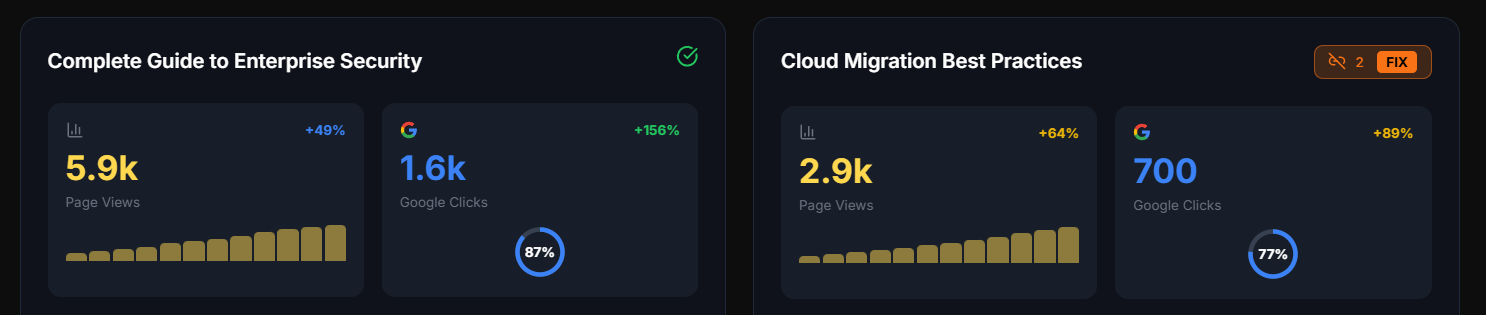
Agencies usually send monthly reports, with weekly updates for busier projects. Reports break down KPI charts, keyword shifts, technical checks, and straightforward recommendations.
Services like SEOSwarm highlight business insights over just stats, helping guide collaborative optimisation—and making decisions much easier.
What does SEO outsourcing cost? Understanding pricing models and contracts
Main fee structures explained
So, what’s the real story behind the cost of SEO outsourcing in the UK? There are four tried-and-tested fee models: a monthly retainer (anywhere from £300 to £4,000+), project-based fees (£1,000 to £30,000+), performance-based contracts (where you pay only if agreed KPIs are met), and the classic hourly rate (usually £50–£150).
Monthly retainers suit businesses needing steady agency support. If you just need a technical audit or a one-off campaign, project or hourly options are ideal. Now, performance-linked deals? They’re relatively rare, but budget-focused SMEs often love them. Keep in mind, though: strict KPI requirements and sometimes higher per-conversion rates balance the provider’s risk.
Your chosen model shapes budget certainty and flexibility. Those looser, less-defined set-ups often bring hidden costs—think unapproved extras or unexpected revision rounds.

How do SEO agencies structure their pricing?
What to clarify before signing
- Contract terms
Spell out agreement length, renewal, and termination rules to avoid unwanted automatic rollovers. - Scope boundaries
Clearly outline what’s included or excluded and how any extra work gets priced. - Reporting and deliverables
Agree on how often, in what format, and how assets/data will be handed over when the project wraps up. - Data and GDPR
Make sure data privacy, ownership, and GDPR compliance are addressed—especially important for UK/EU businesses. - Pitfall prevention
Watch out—vague wording can mean lost SEO assets or messy contract disputes when leaving a provider.
What legal and contractual considerations are critical when outsourcing SEO services?
Getting your legal and contractual groundwork sorted is crucial when you trust an external SEO partner. You’re aiming to protect digital assets, follow data privacy rules, and dodge any costly disputes if things go wrong.
Essential contract clauses and protections
Start with a thorough Non-Disclosure Agreement—covering agency staff and subcontractors, both during the contract and for five years after. IP clauses make sure you own content, reports, and materials after payment.
Next, Service Level Agreements (SLAs) set KPIs and reporting, plus provide service credits if targets are missed. Demand GDPR compliance, secure data handling, and spell out that assets must be returned or deleted if you leave.
Planning for flexible, secure transitions
You’ll want client-owned logins, security audits, clear notice periods, and penalties for missed deadlines. With smart handover plans, your SEO keeps momentum—no matter who’s managing it next.
How do you ensure a smooth transition to, from, or between SEO providers?
Onboarding essentials for new providers
- Credential handover
Quickly and securely share logins for your website, analytics, and SEO tools, then update permissions. - Historic asset sharing
Provide analytics, keyword rankings, backlink data, and technical documentation. - Access reviews
Remove access for any outgoing provider and check permissions are up to date. - Kickoff alignment
Schedule a meeting to cover goals, campaign history, and tech requirements. - Contract checks
Clarify asset ownership and the specifics of handover obligations.
Exit/transition best practices
- Document asset transfer
Tick off a checklist for content, metadata, plugin settings, and campaign files. - Single liaison
Have one person coordinate communication for clarity. - Overlap period
Let both teams work together during migration, up to 90 days if possible.
Post-transition priorities
- KPI tracking
Monitor rankings, traffic, and access every day. - Integrity validation
Check all analytics and content remain accessible. - Rapid escalation
Act immediately if anything is missing or SEO tanks.
What advanced considerations can optimize your outsourced SEO results?
Integrated content and SEO strategies
For outstanding results, choose agencies that blend content and SEO into a single workflow—not separate teams. Take Planable: by connecting SurferSEO insights directly with writers, they wiped out keyword overlap and matched content to real user intent, which led to a 167% leap in organic traffic.
Smart Buy Glasses is another powerful example. By outsourcing SEO-driven, medically accurate articles, they saw a 180% daily increase in organic visitors in just eight months.
The real magic comes from connected workflows—topic clusters, live, data-driven updates, and intent-based analysis. That means agencies can pivot quickly with search changes, ensuring brand consistency, flexibility, and growth you simply don’t get with disconnected teams.
Importance of ongoing maintenance and analytics
But remember—success is ongoing, not a one-off. CMA Exam Academy’s long-term partnership with Digital Commerce Partners brought 147% more users and 125% higher revenue in one year with ongoing tracking, fixes, and clear reports.
Analytics-led SEO picks up shifts, prevents dips, and finds growth opportunities—so you always keep a crucial step ahead of the pack.
A long-term, analytics-driven SEO effort resulted in an overall return on investment (ROI) of over 400% for a B2B client, proving that SEO is a significant revenue driver, not just a cost center.
Why Outsource SEO Services Makes Sense
Outsourcing SEO isn’t just about saving time—it’s about gaining access to expertise, technology, and flexibility that most businesses can’t build in-house. I’ve seen too many companies stall their growth by trying to do everything themselves, only to miss out on the strategic advantages an external partner brings.
Here’s my advice: Start with clear goals and KPIs, vet providers with real case studies, and lock in contracts that protect your assets and data. Use regular reporting and open communication to keep campaigns on track, and always plan for smooth transitions—whether you’re onboarding or switching providers.
SEO outsourcing works best when you treat it as a partnership, not a handoff. The right provider will help your business evolve, adapt, and grow—while you stay focused on what matters most. The difference between mediocre results and lasting impact is precision at every step.
- Wil