

Getting every business location to show up in local search isn’t easy—especially when you’re managing dozens or hundreds of branches. I’ve seen how small errors in listings or duplicate content can quickly snowball into lost visibility and missed customers.
In this article, I’ll break down the unique challenges of multi-location SEO and share proven strategies for keeping every branch visible and trusted. You’ll get actionable steps for auditing local listings, maintaining NAP consistency, building unique landing pages, and scaling your efforts with automation.
I’ll also cover the best tools for tracking rankings, managing reviews, and troubleshooting common issues across multiple sites. Whether you’re running a retail chain or a healthcare network, you’ll find practical workflows and real-world examples to help you stay ahead.
By the end, you’ll know how to build a scalable SEO system that keeps every location shining in search results—no matter how fast your business grows.
What is Multi-Location SEO?
Defining Multi-Location SEO
Multi-location SEO is about making sure every branch of a business—whether that’s a shop, office, or clinic—shows up when people in its community search online. The mission couldn’t be clearer: give every location a chance to shine whenever someone nearby types in “restaurant near me” or “chemist in Leeds.”
Unlike general SEO, which works to push a brand’s main website higher for broad searches, multi-location SEO treats each branch as a digital shopfront. Each one gets a shot to stand out in its own town.
Imagine looking at a map where every branch lights up like a star—that’s how search engines want it.

It’s fascinating that search engines view separate branches as distinct entities. So, what makes a specific branch pop up before the competition?
The Landscape and Context: Why Multi-Location SEO Matters
Here’s something striking: nearly half of all Google searches now have local intent. People don’t just want answers—they want them nearby and convenient. Searches like “coffee near Liverpool” or “yoga studio Bristol” are now the norm.
To effectively capitalize on local search intent, a business's strategy must encompass a multifaceted online presence, including the management of local listings, dedicated local pages, customer reviews and ratings, localized social media, and detailed local reporting.
That desire for local prominence has become a driving force for businesses large and small.
Think of a nationwide coffee chain. Their main website isn’t enough—every branch needs visibility in its own neighbourhood. Yet only a minority of businesses achieve strong, widespread local presence.
The ones that do enjoy steady foot traffic and a trusted clinic-style reputation: easy to find and reliable. Just imagine what that means for a busy retailer on the high street.
Managing multi-location SEO is a constant balancing act: every branch stands out locally but still fits neatly under the bigger brand umbrella.
How Multi-Location SEO Differs from Single-Location and Enterprise SEO
Running SEO for a single site is pretty simple—there’s only one set of details to nurture. Large enterprises, meanwhile, go for broad brand reach, not usually focusing on local signals.
With multi-location SEO, things are trickier. Every branch acts as a distinct digital storefront, with its own details, reviews, and local identity. Yet all remain unified under one brand.
Think of managing a football team: every player (branch) wants to shine on their own field but follows the same game plan.
Finding the right blend of individuality and unity really matters. Brand consistency builds trust, but reputation at the local level is what converts searches into visits.
Core Conceptual Components of Multi-Location SEO
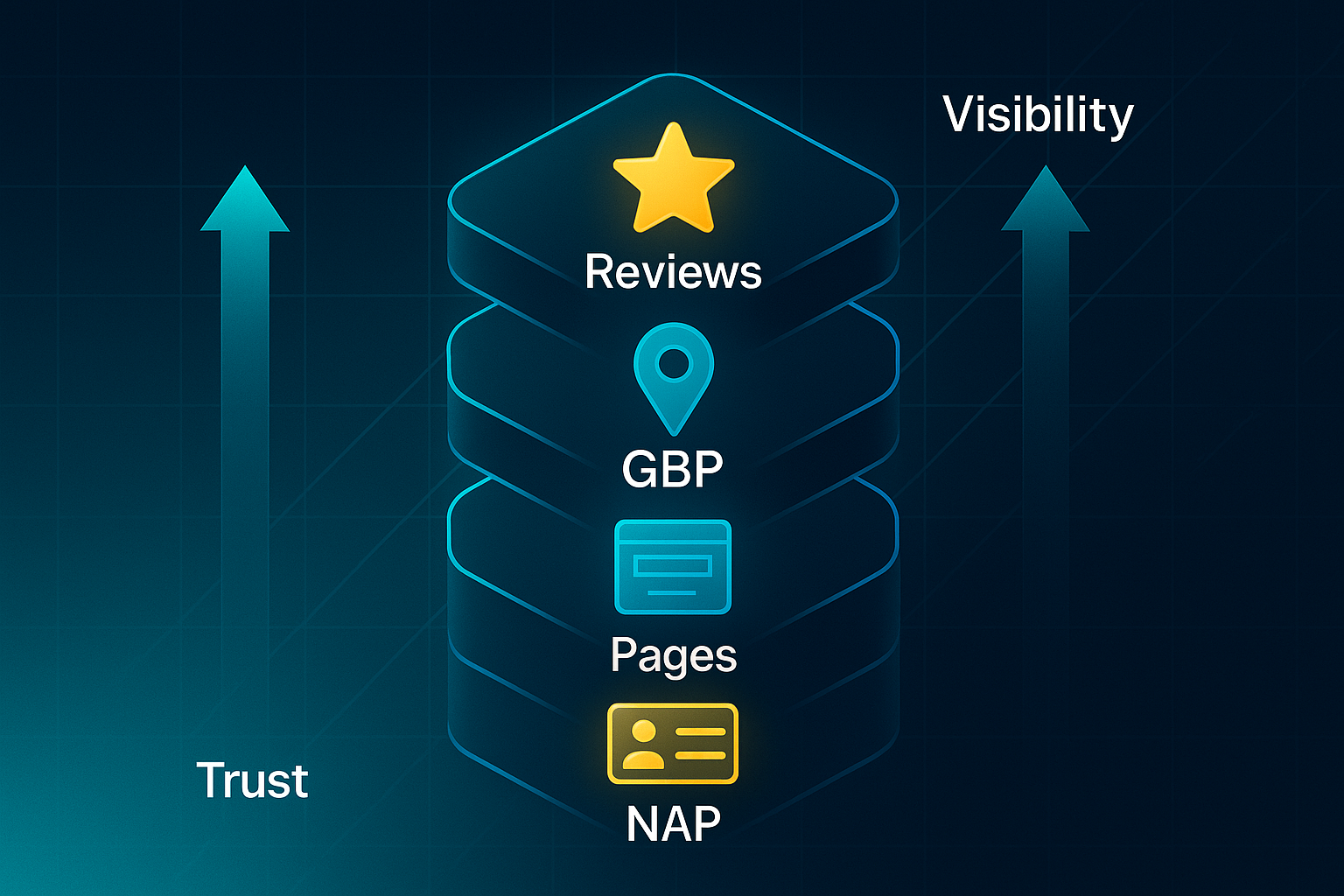
Success depends on several core elements that build each branch’s visibility and trust in local searches:
- Branch-Specific Landing Pages
Present unique local information so customers can find and contact the right branch. - Individual Google Business Profiles (GBPs)
Improve branch visibility and accuracy in Maps and local results. - Consistent NAP (Name, Address, Phone) and Citations
Build trust by maintaining identical business details across all platforms. - Review Presence and Information Stewardship
Strengthen trust and rankings by managing reviews and updating local branch details.
It’s like making sure every branch has a clear sign, pinpoint directions, and a good local reputation—so both customers and search engines can find it.
Key Industry Terms Explained
- Local Pack
Google’s map-and-list box for local searches. - Citation
A mention of business name, address, and phone elsewhere online. - Duplicate Content
The same information on several branch pages (which lowers rankings). - Hyperlocal Content
Content tailored to very specific neighbourhoods or streets.
When you consider these unique demands—combining local distinctiveness and brand unity, technical accuracy, and the reputation of every branch—it’s clear why multi-location SEO is so crucial. It’s the engine that gets every branch noticed, trusted, and visited.
Why Multi-Location SEO Is Uniquely Challenging
Auditing and Restoring Branch Visibility at Scale
Ever wondered how anyone keeps hundreds of branches visible in local searches at once? It’s not for the faint-hearted.
Minor issues get magnified quickly when you’re juggling dozens—or hundreds—of locations.
SEMrush Local and BrightLocal: These are lifesavers for tracking rankings across many locations.
They automate rank tracking and send up alerts if a branch drops out of the local pack or loses more than 15% in rankings.
Imagine your entire weekly workflow summed up in three streamlined steps:
- Export weekly “Location Tracking” reports
Pull current search visibility data for every branch automatically. - Flag branches missing from the local pack or losing >15% rank
Instantly highlight trouble branches for closer inspection. - Prioritise manual review; resolve within 1–3 days per 100 branches
Focus effort on dropped locations and get them back fast.
A dental franchise relied on SEMrush Local for visibility in 2024.
30% visibility crash: SEMrush Local highlighted a major dip across 100 sites.
Immediate action brought back over 80% of lost visibility within twelve weeks.
Thirty branches were accidentally locked out—an SEO’s nightmare.
Manual QA checkpoints now safeguard the process to prevent this kind of issue.
Maintaining NAP and Citation Consistency Across Directories
Managing contact details for one branch is tricky—multiply that by a hundred, and it gets even harder.
Name, Address, Phone (NAP) details must remain consistent across every directory, from Thomson Local to Trustpilot.
BrightLocal, Moz Local, and Yext: Essential platforms for bulk audits, quick fixes, and escalation.
A typical workflow for NAP and citation health:
- Bulk “Citation Summary” and “Duplicate Listings” exports
Audit all listings in one go for accuracy and duplication. - Automated corrections; escalate mismatches >10% to manual review
Auto-correct simple errors, investigate stubborn mismatches with hands-on checks.
A national gym chain learned the hard lesson in 2024.
Yext accidentally pushed the wrong phone number to half their branches.
Local rankings dropped fast, but BrightLocal caught and corrected the issue.
Quarterly QA now keeps accuracy high and close to 90%.
Auditing Duplicate Content Across Branch Landing Pages
Duplicate content risk gets harder to dodge as companies grow. Templates or AI-generated text can add to the problem.
Screaming Frog, Sitebulb, and ContentKing: These tools scan every branch landing page and flag concerns if more than 20% look too similar.
The auditing drill:
- Export “Duplicate Content” results
See which pages look suspiciously alike. - Queue flagged URLs for rewrite with unique bios or events
Revamp offending pages with distinct branch stories or local details.
One franchise found 80 nearly identical branch pages in early 2024.
Their local SEO suffered until unique content was added and duplication dropped below 20%.
Resource and Maintenance Constraints
Yext and ContentKing dashboards replace spreadsheet overload with sanity.
Less than 10 hours a month per 100 locations are needed for monitoring and updates.
95% of changes should go live in under a week. Reviews are answered within 72 hours.
Automation can backfire. Software once apologised to customers thrilled with their positive reviews—at 40% of outlets.
Now, every review response gets a human check to avoid mishaps.
Validation Steps and Emerging Pitfalls
Scheduled audits, automatic exports, and escalation occur if over 10% of locations have issues.
By 2025, new headaches emerge regularly: API limits, Google revising Business Profile processes, and reporting tools disagreeing with one another.
Ongoing QA checklists and manual spot-reviews are essential to scaling without chaos.
Once these systems are working smoothly, building strong landing pages and optimising every profile becomes possible.
The ultimate goal: keeping all branches shining bright in local search.
Best Practices and Essential Steps for Multi-Location SEO
When you’re juggling 10 or more branches, staying visible means having scalable, repeatable workflows that keep everything organised. Without these, even experienced teams struggle to keep every branch shining. Start by confirming admin access to the vital platforms:
- CMS login
Lets you update web pages for all branches efficiently. - Google Search Console (GSC)
Tracks indexing and technical site health. - Google Business Profile Manager (GBP)
Manages all local listings at scale. - Screaming Frog
Runs detailed technical audits on site structure. - Siteliner/Copyscape
Flags duplicate content across the network. - Moz Local/BrightLocal
Provides citation audits and review monitoring. - AgencyAnalytics
Centralises dashboard tracking for fast insights.
Never make bulk edits without these precautions: full site/content backups to ensure you can restore if anything breaks, and export all URLs, citations, and reviews to keep a clear baseline for validation. With these precautions in place, you can proceed confidently to scalable site architecture.
Scalable Site Architecture and URL Structure
A clear URL structure is the backbone of multi-location SEO. When in doubt, use subdirectories (yourdomain.com/location-name/); these boost domain authority and make analytics reporting easy. If you see rankings dipping or analytics splitting, follow this migration checklist:
- Export live URL lists
Keeps track of every branch page for quick rollbacks. - Test 301 redirects in staging
Prevents loss of traffic during site transitions. - Audit with Screaming Frog
Confirms ≥95% of locations indexed via GSC. - Locator plugin/manual fix
Adds branch maps if your builder lacks automation.
Some site builders lack locator plugins—here, manual development might be necessary to keep every branch discoverable. Once your site structure is optimised, shift your focus to the quality and uniqueness of branch landing pages.
Unique, Optimised Branch Landing Pages
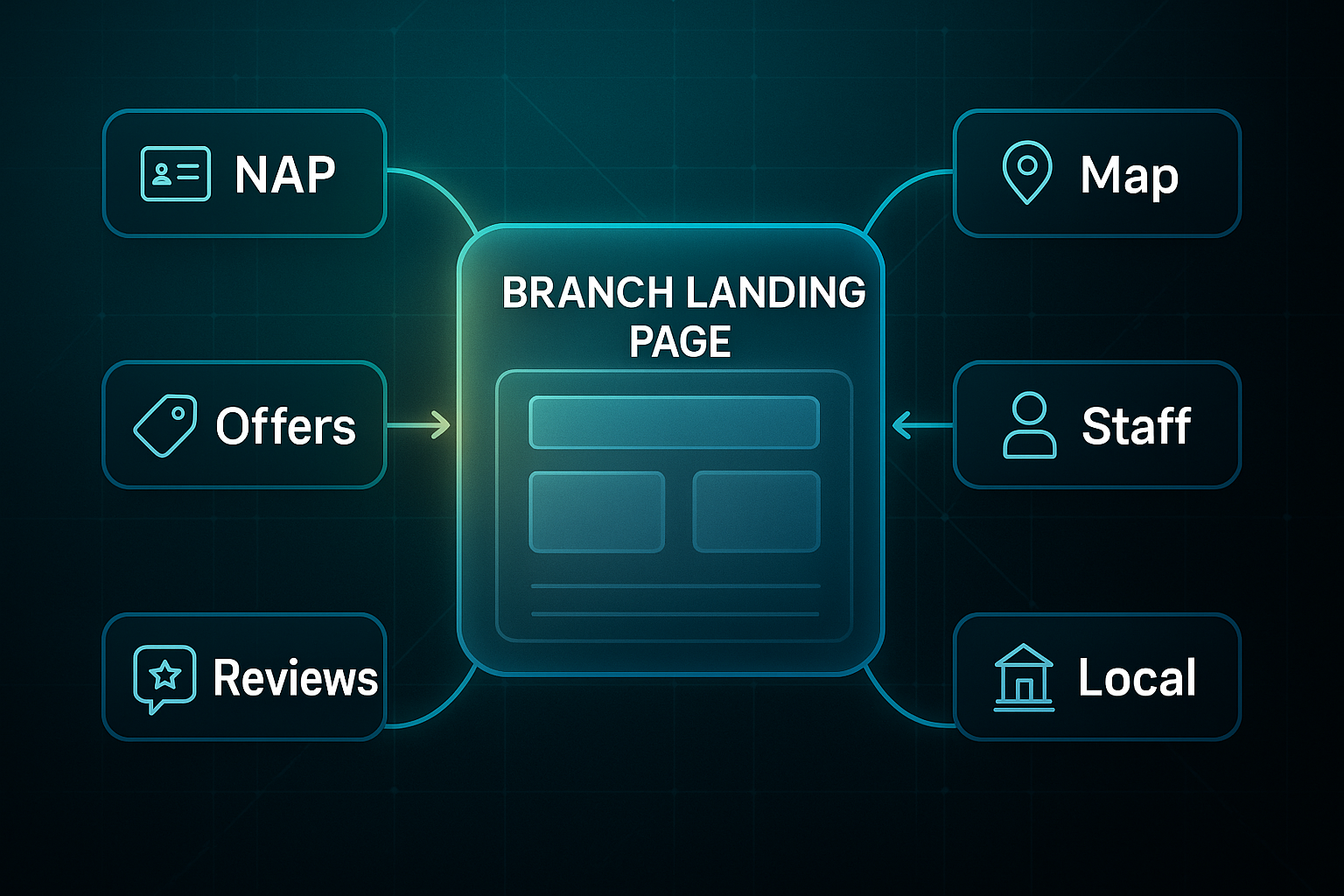
Google favours branches that genuinely stand out. For each branch landing page, include HTML NAP details to embed name, address, and phone in readable text; Google Map embed to build customer trust and easy directions; unique offers to list local promotions or services to attract nearby users; staff bios to connect visitors with real people; customer reviews to provide social validation with authentic feedback; and landmark/local references to highlight relevance to neighbourhoods.
Monthly, scan with Copyscape or Siteliner for duplicate content less than 8% to minimise ranking penalties for repetitive copy and 300+ unique words to show genuine relevance in search. A healthcare chain that used AI bios dropped duplication from 21% to 7% and pushed 80% of branches into the top 10 in six weeks. Always back up content before bulk edits.
Franchise locations that implemented unique local content saw a 111% increase in organic leads and ranked for over 1,100 more keywords in the top 10 search results compared to their previous templated pages.
Google Business Profile and Citation Management
With dozens of branches, the right tools and validation steps keep listings accurate: GBP Manager uploads 50+ locations via CSV with verification within 2–4 weeks; BrightLocal (£2/listing/month)/Moz Local ($129/year/100 branches) audits and syncs citations at scale; and Yext escalation fast-forwards persistent directory fixes. Validate every update by hand-checking ≥10% of GBPs to confirm listings show correct information online, achieving ≥98% live listings for complete branch coverage; export audit lists to provide a reference snapshot before edits; and make manual directory updates for verticals that require hands-on changes.
A hotel group used Merchynt and saw GBP views rise 30% within ten days by optimising updates. Once your profiles and citations are in good health, turn your attention to ongoing review management and content differentiation.
Review, Content, and Differentiation
Reviews influence rankings and conversion. To keep ahead, BrightLocal/LocalClarity (£49/month/50 locations) gathers and responds to all reviews efficiently, review response rate ≥90% in 24–48h ensures timely customer engagement (and Google’s approval), and copy uniqueness >90% keeps every branch’s voice purposeful.
Monitor these review health metrics: monthly review response percentage is the percentage of questions answered soon after posting, average star rating benchmarks customer satisfaction, and total review volume tracks engagement for each branch. One franchise leapt from 4.1 to 4.8 stars — and boosted map pack visibility by 13% — after hitting a 94%+ response rate. Building on this, extended optimisation for mobile and voice search increases every location’s performance.
Mobile and Voice Search Optimisation
Fast mobile and voice-ready pages dominate in 2025. Raise every branch’s performance by ensuring load time under two seconds to cut bounce rate and increase bookings, PageSpeed score over 90 to hit Google’s threshold for fast, efficient sites, click-to-call/maps to remove friction for mobile customers, and JSON-LD schema to improve visibility in “near me” searches and for voice assistants.
Dental chains who halved mobile load times saw 84% of branches in the map pack’s top three. Test and track with PageSpeed score for a direct Google metric of site speed, Core Web Vitals to measure real-world user experience, and voice query engagement to capture local users choosing voice over text. If performance lags, upgrade your hosting or compress images without delay.
Once the technical enhancements are routine, auditing and troubleshooting processes become essential for maintaining visibility.
Auditing and Troubleshooting
Regular audits prevent small errors from snowballing. Use BrightLocal or AgencyAnalytics (£49/month/100 branches) for monthly or quarterly checks: NAP/citation accuracy verifies every branch detail matches online, GSC indexation ensures all locations show up in search results, GBP live rate confirms active, visible listings, copy uniqueness protects ranking from duplicate penalties, review metrics monitor reply rates and scores, mobile/voice speed checks every branch loads fast, local ranking measures map pack presence across locations, and issue resolution speed escalates if 15% or more branches see issues. Never make changes without a log backup.
Apply these best practices, and you’ll see local visibility climb 40% or more within a quarter — with new walk-ins to match. Nail the basics, then get ready for automation and real scaling next.
Scaling and Automating Multi-Location SEO: Advanced Strategies
Automated Landing Page Creation Using Advanced Platforms
When you’re responsible for dozens, or even hundreds, of branch locations, creating or updating landing pages by hand just isn’t realistic any more. That’s where automation steps in, making those massive rollouts not only possible, but far less error-prone.
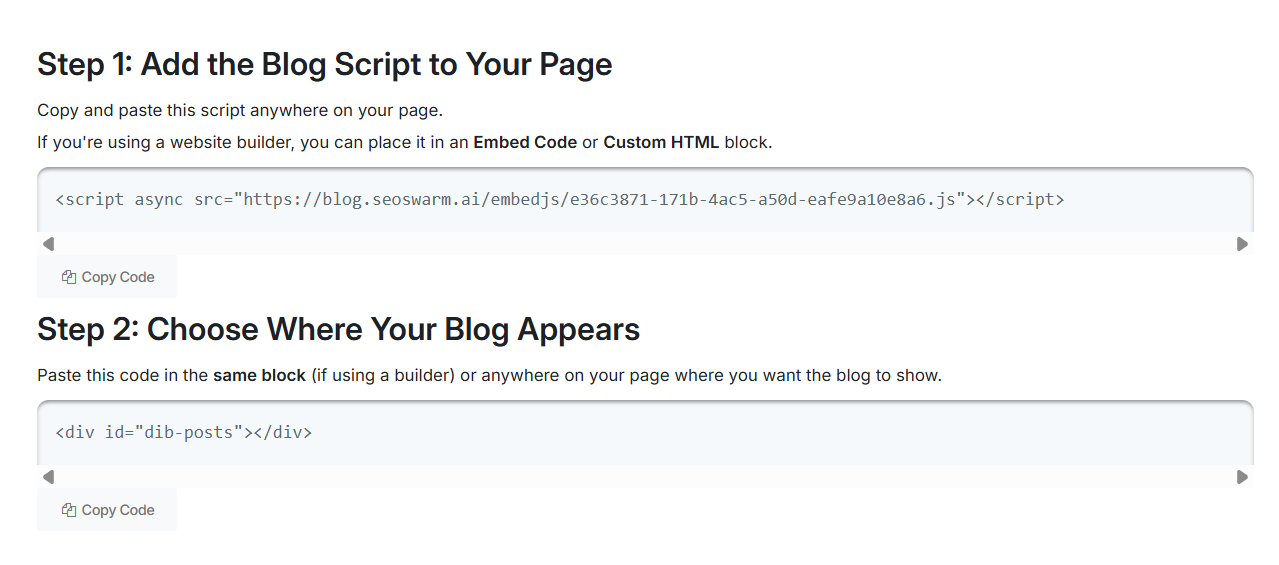
The best platforms do more than churn out bulk pages—they bake in SEO best practices and automate quality checks. This helps cut down technical mistakes and reduces the risk of duplicate content.
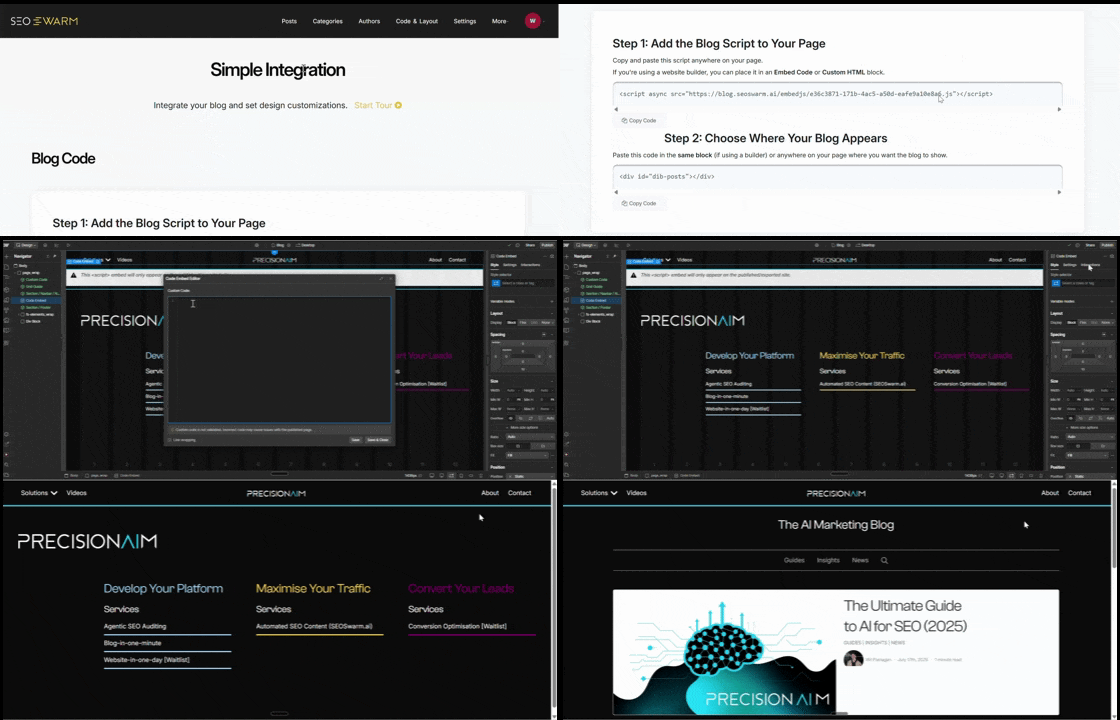
Automated builders now let you launch a hundred pages in minutes. You feed in branch-level details, map the right fields into a ready-made template, and these platforms handle the rest.
Built-in quality assurance scans every single landing page for accuracy before you hit publish.
Here’s a look at the leading platforms making this process possible in 2025:
| Platform | Pricing (2025) | Key Features | Speed | SEO/QA Automation |
|---|---|---|---|---|
| SEOSwarm | Per-article/package; bulk rates on enquiry | AI-powered instant branch/blog deployment, agentic audit, universal compatibility | <15 min/100 pgs | Automated SEO, schema, technical QA, 70–90% indexed in 48h |
| Instapage | $199+/mo | Templates, drag-and-drop, AMP (Accelerated Mobile Pages), analytics, AdMap | <15 min/100 pgs | Mobile/AMP, analytics; manual uniqueness checks |
| Swipe Pages | $29–149/mo | Unlimited pages (agency tier), drag/drop, AMP, AI Genie | <15 min/100 pgs | Bulk publishing, AMP, duplications flagged |
| Zapier Interfaces | $19.99+/mo | Automate workflow to builder, syncs between platforms | Varies—depends on integrations | Automation; lacks built-in page QA |
| Leadpages | $37–49/mo | Templates, conversion tools, manual mobile optimisation | ~20 min/100 pgs | Basic SEO, manual QA |
The top tools all hit rollout speeds under 15 minutes for 100 pages. This works as long as you come prepared with a well-structured CSV file, which is the trusty spreadsheet format for bulk moves.
For platforms with API integration, you can see up to 90% of those pages being indexed by Google in under 48 hours.
The automation advantage is hard to overstate. It cuts duplication risk by 50–80% compared to manual builds.
Most technical snags stay limited to the odd mapping error or hitting an API rate limit. These issues are flagged for rerun.
This means you are trading spreadsheet chaos for a slick, scalable system.
Once you’re set up, the workflow is remarkably smooth.
Export your data as CSV, run a bulk upload, and instantly scan any error logs.
Use Copyscape or Siteliner to catch any pages with over 10% duplicate content.
Always spot-check Name, Address, Phone details and special offers on at least 10% of your launches.
Verify with Google Search Console that you’ve hit at least 95% indexation after 48 hours.
If you’re expanding internationally, translate your template and adjust your import columns for each target market.
Choosing the right platform comes down to your scale, technical needs, and how your team actually works day-to-day.
SEOSwarm is best for those aiming for ultra-fast, agentic-scale launches and who need deep technical audit tools rolled right in.

AI-Powered
SEO Content Strategy
See the AI platform that's replacing entire content teams
(with better results).

Instapage works well for sharp visual campaigns and AMP-focused projects.
Agencies juggling huge client lists might prefer the flexibility of Swipe Pages.
Zapier is more for the data-driven crowd who want to orchestrate complex integrations.
Leadpages stands out for those needing a cost-effective, small-batch rollout.
To illustrate how effective these platforms can be, consider the following examples.
A real estate franchise launched 350 branch pages on Swipe Pages in barely 11 minutes. This cut duplication to 9%, and conversions rose by 17%.
These successes demonstrate how choosing the right platform and process can deliver rapid, scalable results.
A national chain paired Instapage local landing pages with its paid ads for a 27% ROI boost.
To summarise, double-check every data import, lean on automated SEO, and always perform spot QA on final pages.
When automation is set up right, you’re not just keeping pace—you’re unlocking serious potential for rapid, trouble-free growth.
With these foundations secure, you’ll be ready for the next wave of innovation: AI-powered audits and automated branch upkeep, which we’ll dive into next.
Pain Points and Solutions: Advanced Troubleshooting and Escalation for Multi-Location SEO
When you manage multi-location SEO, emergencies can hit suddenly—a sharp visibility drop across branches, a flood of citation errors, or a spike in negative reviews. The teams that recover fastest rely on clear escalation plans and disciplined processes.
Here’s how leading agencies in 2025 keep those crises from spiralling.
Emergency Visibility Loss: Triage and Recovery
When multiple branches disappear from Google’s local pack, structured response comes first. Teams use incident boards for status and GeoGrid mapping to pinpoint problems quickly.
- Incident board tracking
Log outages and responsible team members. - Cluster analysis
Identify if problems are localised or spreading. - Rollback protocol
Restore the last stable site or profile version. - Root-cause postmortem
Review the outage and improve playbooks.
NAP/Citation Drift: Crisis Management
If over 20% of branches show NAP (Name, Address, Phone) or citation errors, AI audit tools and process freezes help teams regain control.
- Severity matrix
Classify issues for urgent escalation. - Batch fixes
Correct errors quickly using audit tools. - Process freeze
Pause platform edits until causes are addressed. - MTTR tracking
Record repair time for better future response.
Duplicate Content: Bulk Rewrite Protocol
Above 10% duplication triggers rapid, automated interventions and indexation updates. Teams clarify URLs outside the list with rel='canonical,' the standard HTML tag for preferred pages.
- Trigger threshold
Launch fixes once duplication exceeds 10%. - AI bulk rewrite
Automate content replacement for flagged pages. - Temporary deindexing
Remove problem pages from results pending fixes. - Canonical tags
Mark original URLs for search engine clarity.
Coordinated Review Attacks: Reputation Escalation
A barrage of negative reviews needs instant communication and branch-level action. Alerts and quotas prevent damage from spreading.
- Automated alerts
Recognise unusual review surges in real-time. - Sentiment dashboard
Track reputation for each branch visually. - Role allocation
Assign managers to lead the response. - Campaign tracking
Monitor and report the recovery process.
Integrated Incident Logging and Postmortem
Large-scale incidents—those affecting more than 10% of sites—require every detail tracked: error, branches, owner, and fix timing. Postmortem meetings lock in lessons for future prevention. As these routines strengthen, your next incident response becomes smoother.
All recovery data then flows straight into your reporting dashboards—sharpening oversight and long-term strategy.
---
When choosing from the automated landing page platforms in our earlier table, context and workflow should drive your decision.
SEOSwarm remains ideal for enterprise teams needing quick, technically sound launches and built-in audits. Rapid indexation and quality checks make it especially effective where SEO visibility is essential.
For campaign-heavy brands, Instapage stands out with its AMP and analytics strengths.
Swipe Pages is a smart choice for agencies with many client locations—offering bulk rollout at lower monthly costs.
Choose Zapier Interfaces if platform integration and workflow flexibility matter most, but remember QA is manual.
Leadpages is the starter solution for smaller portfolios on a tight budget.
A practical strategy? Clearly prioritise speed, technical depth, and hands-on control as needed, rather than just price. Be sure to combine automation with manual spot checks and indexation validation—no tool guarantees perfection every time.
The strongest operators blend the right platform with robust QA and escalation routines, ensuring multi-location SEO success at scale.
Integrating Multi-Location SEO Analytics with Marketing Dashboards
Essential Field Mapping and Dashboard Set-Up
Pulling together SEO analytics for hundreds of branches is no small feat. Imagine wrangling all those rankings, NAP (Name, Address, Phone) checks, customer reviews, and traffic figures into one clean dashboard—if you miss structure and validation here, you’ll drown in data chaos.
The smart move? Standardise your core fields: branch name, location ID, precise address, phone number, and those key categories that help sort everything.
Get picky with NAP consistency—always use the same address format everywhere (think “Street” not “St”) and make sure phones have the right regional code.
Most teams pull from tools like BrightLocal, Yext, and Google Business Profile (GBP). You want every single source syncing reliably on a canonical location ID.
Here’s a sanity-saver: run automatic audits after every import or sync to catch ID mismatches or gaps before they snowball into trouble.
Here’s how those integrations play out in practice:
- GBP Insights Integration
Sync calls, direction requests, and views by using each branch’s unique ID for spot-on data mapping. - Citation Management
Plug in Moz Local or Yext and automate monthly citation audits to catch formatting bugs and coverage gaps. - Review Conversation Metrics
Gather each branch’s review counts, star ratings, and response times—field-mapped so every response gets logged properly. - Local Page and Traffic Data
Link all your analytics (traffic and on-page metrics) with branch IDs to pinpoint map-pack wins and conversion rates.
Set up permission levels that make sense: corporate leadership sees everything, while regional managers and branch owners only access what’s theirs.
Build in automated alerts—if NAP accuracy slips below 95%, or a duplicate GBP pops up, you’ll be the first to know.
Weekly dashboard backups and quarterly restore tests guard against data loss during major shake-ups.
Large-Scale Reporting, Recovery, and Troubleshooting
So what about those common headaches, like duplicate IDs or clashing listings? Run monthly audits on GBP and citations, and always check your imports after big changes.
Keep a 90-day log of every tweak to help you roll back quickly if something goes wrong.
If you have to update loads of branches—maybe changing hours for all sites—don’t rush it; pilot the edits on a handful of locations first and see how metrics shift.
Roll-up dashboards by region give senior leaders the big picture, while outliers stand out for fast fixes.
And let’s not forget disaster recovery drills.
Every month, test restoring dashboards and GBP/citation data on a sample group—otherwise backups are just wishful thinking.
A well-oiled dashboard isn’t just for show. It lets you benchmark results per branch, spot trouble in minutes, and handle compliance audits with confidence.
These practices mean your SEO analytics stay actionable, your permissions remain tight, and your team bounces back from unexpected data errors—ready for whatever new algorithm or reporting shifts might arrive next.
Emerging Trends and the Future of Multi-Location SEO
Adapting to Google’s Vicinity/Diversity Algorithm
Local search is evolving quickly. Google’s latest updates have made it harder for one brand to fill the Local Pack with multiple branches.
Now, every location has to prove local authenticity.
Let’s be honest, losing a map pack spot stings. To stay visible, every branch needs a unique landing page and a Google Business Profile (GBP) refreshed at least every two weeks.
Accurate NAP (Name, Address, Phone) details are essential. Monthly audits via BrightLocal (£39–£59/month) or Yext (£199–£999/year/location) are the smart way to prevent errors.
Target a 15–25% uplift in visibility for each branch in under six weeks.
If a branch falls out of the Local Pack, quickly reverify GBP, update images and info, and check NAP accuracy. Most recover within three weeks.
The following actions help keep you on track:
- Localisation recommendations
Hyperlocal landing pages, fortnightly GBP updates, monthly NAP audits, unique staff bios/events per branch - Troubleshooting action
If visibility drops: reverify GBP, refresh branch info, check NAP—track the outcome
Optimising for Voice and Map Pack Search
Voice and map queries now drive over 44% of local traffic. Every branch should use FAQ schema (LocalBusiness/FAQPage) tailored for spoken searches.
It is important to run Google’s Mobile-Friendly Test and PageSpeed Insights monthly to keep load times under two seconds.
Schema done right typically raises mobile engagement and direction requests by 20–30% within three months.
If map or voice visibility goes missing, a schema update in Search Console or NAP sync through BrightLocal or Yext often sorts it.
To make these improvements consistently, apply this checklist:
- Implementation steps
Embed FAQ schema, check mobile speed, batch NAP syncs - Validation measures
Monitor voice clicks and directions—look for uplift
Automation and AI for Scalable SEO
Manual updates can’t keep up with dozens of branches. SEOSwarm rolls out error-resistant pages (under 15 minutes for 100 pages), agentic audits, and 70–90% indexation in 48 hours.
Platforms like Birdeye (£299/month/location) and SOCi (£579/month/team) centralise GBP and review management.
For content, monthly QA checks via Copyscape or Siteliner (under 10% duplication) can cut manual effort by more than 70%.
Keep these priorities at your fingertips:
- Automation priorities
Fast launches, monthly audit checks, duplicate control, visibility metrics, automated error alerts
Quality Assurance and Trend Validation
QA routines set strong operators apart. Use BrightLocal or AgencyAnalytics for monthly NAP/citation audits to catch problems early.
Always verify uniqueness, update schema, and monitor alerts for declining KPIs.
Some chains have restored top rankings for 100+ branches in just two months through strict automation and QA.
Establishing these habits guards against sudden Google changes and supports fast troubleshooting in voice-first search.
Staying ahead of these trends ensures your branches remain discoverable and competitive as local search evolves.
Key Takeaways and Next Steps for Multi-Location SEO Success
Mastering multi-location SEO is all about discipline. The best agencies consistently achieve 70%+ map pack visibility, keep 98%+ NAP consistency, and maintain review scores above 4.5. Why does this matter? Small errors can spiral quickly when you scale up, turning minor issues into major messes.
That’s why routine, preparation, and efficient troubleshooting are the bedrock of lasting SEO success. It’s these practices—not luck—that keep every branch discoverable and trusted.
Start by locking down essentials: secure all admin logins, set up weekly dashboard backups, and integrate Google Business Profile, BrightLocal, and Google Search Console for seamless operations. With these foundations, here are the proven practices you’ll rely on:
- GBP management and validation
Update monthly, use Google Insights for 10%+ engagement uplift, maintain verified listings across branches. - NAP consistency
Leverage BrightLocal audits, review 15 top directories, achieve 98%+ citation uniformity. - Unique landing pages and technical health
Launch 300+ word pages, implement JSON-LD schema, hit 95%+ indexation, and aim for PageSpeed 90+. - Review rating and response
Respond to 90%+ reviews via Birdeye inside 48 hours, keep ratings above 4.5, and monitor for spikes. - Routine audit, backup, monitoring
Run quarterly SEMrush audits, maintain weekly backups, and check bulk edits for anomalies. - Tracking metrics and resource plan
Monitor conversion rates (5%+), citation growth, staff time, and dashboard alerts for every branch.
A healthcare group saw 27% engagement growth with weekly audits. No matter your automation stack, regular manual checks and robust backups are the best insurance for local search dominance.
Blog-in-one-minute
Add a fully SEO-optimised blog to your website with just 2 lines of code.
Learn more
My Final Thoughts on Multi Location SEO
Most businesses underestimate just how quickly small SEO errors can snowball when you’re managing dozens—or hundreds—of locations. I’ve seen a single NAP inconsistency or duplicate page quietly drag down visibility for entire regions. That’s why discipline and routine are your best allies.
Here’s my advice: lock down your admin access, automate what you can, but never skip manual spot checks and regular audits. Prioritise unique landing pages, consistent citations, and fast, mobile-ready experiences for every branch. If you see a dip in rankings or reviews, act within days—not weeks—to recover lost ground.
Multi-location SEO isn’t about chasing perfection; it’s about building resilient systems that catch issues early and keep every branch discoverable. The brands that win are those who treat local SEO as an ongoing discipline, not a one-time project.
- Wil