

Finding the right SEO agency for B2B growth isn’t as simple as picking the biggest name or the flashiest website. I’ve seen businesses struggle with generic strategies that miss the mark for complex buying cycles and technical decision-makers.
If you’re tired of vanity metrics and want real pipeline impact, this guide is for you. I’ll break down what sets true B2B SEO specialists apart, from sector expertise to CRM-integrated reporting and transparent contracts.
You’ll get a clear look at ten top agencies, including their onboarding processes, pricing models, and proven results for SaaS, manufacturing, and tech-driven firms. I’ll also share practical checklists and pitfalls to avoid, so you can confidently shortlist partners who deliver measurable business outcomes.
Whether you need international reach, technical depth, or content-driven authority, you’ll find actionable insights to help you choose an agency that fits your growth goals.
What Defines a B2B SEO Agency?
Context and Historical Evolution: Why B2B SEO Agencies Emerged
B2B SEO agencies didn’t just appear overnight. They developed because business purchasing became a digital-first process.
Buying journeys in B2B grew far more intricate—often involving whole committees and long technical evaluations. If you’ve tried to buy enterprise software, you’ve seen just how drawn-out things can get.
Now, over 80% of corporate buyers spend weeks researching online before speaking to a supplier. It’s like planning an expedition—every team member scrutinises the route before the first step.
Why does this matter? As research moved online, online visibility became vital for B2B suppliers. With stricter compliance and rising competition, broad consumer SEO strategies just couldn’t do the job.
That’s when B2B SEO agencies carved out their space. Rather than casting a wide net, these agencies aim for precision targeting—think laser pointer, not floodlight.
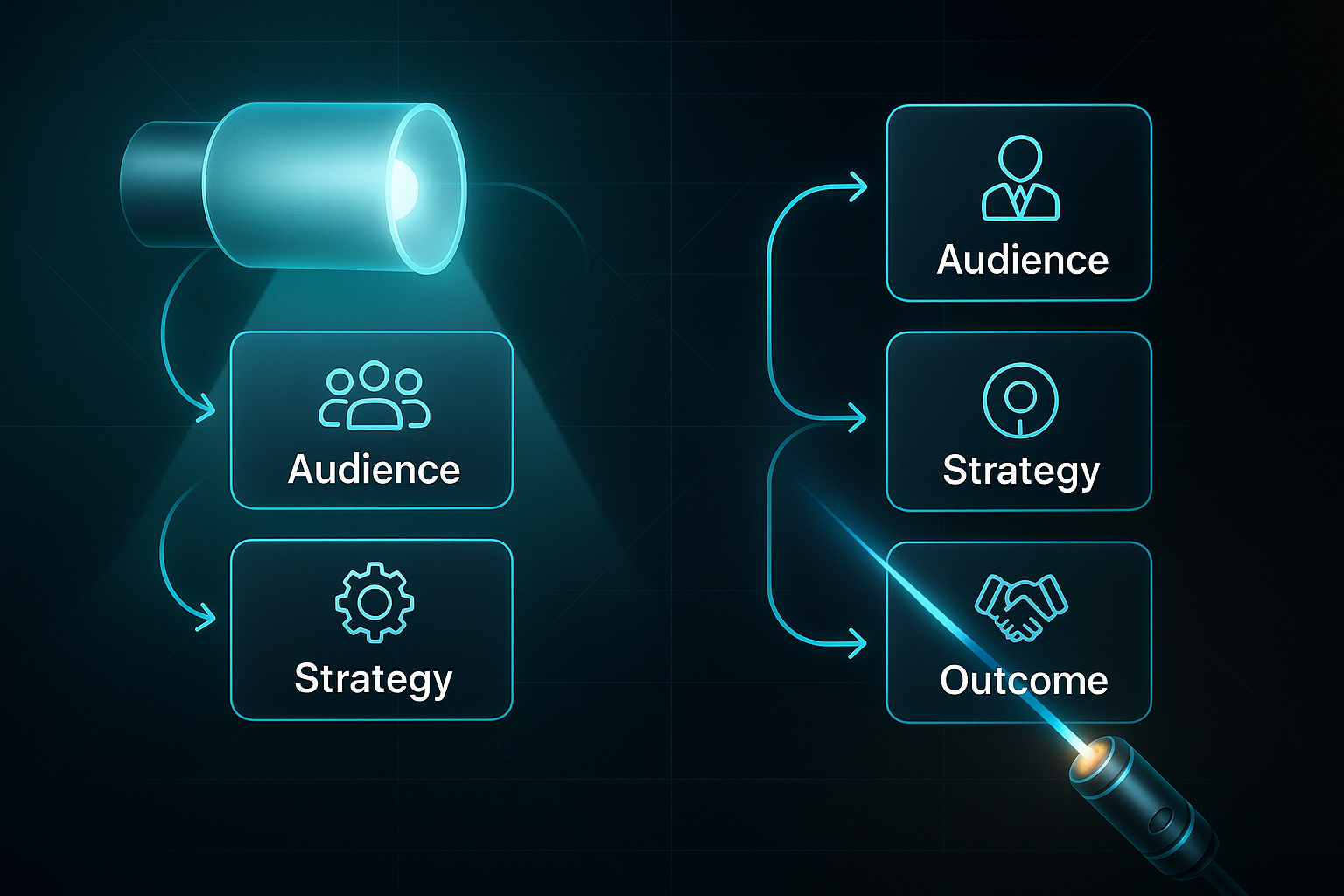
Definition and Scope of Modern B2B SEO Agencies
So what defines a B2B SEO agency? Their job is to get a business seen and trusted by decision-makers at other businesses, especially at moments that influence big-ticket sales.
It’s not about sheer numbers; the goal is qualified business leads nurtured across a long journey. If you imagine digital marketing as an orchestra, these agencies are the conductors guiding every section for the best performance.
In the complex B2B sales cycle, decision-makers seek to mitigate risk. Content that demonstrates genuine experience, expertise, and authority is crucial for building the trust needed to turn initial visibility into a high-value partnership.
Their work centres on three aims:
- Raising discoverability in the right business context.
- Creating leads for complex, high-value deals.
- Cementing true authority in specialist sectors.
So, how do they achieve this? Every service tackles a real B2B challenge.
Here are staple agency deliverables that help navigate the B2B maze.
- Intent-driven keyword research
Homes in on buyer-specific problems—aligning search strategies with real decision needs. - Technical website audits
Scrutinises infrastructure, handles compliance (think GDPR), and addresses complex setups. - Strategic content creation
Generates whitepapers and case studies—essential reading for cautious buying teams. - Outcome-centric reporting
Prioritises what moves the needle: pipeline contribution, quality leads, and ROI, not just visitor volume.
Sound exacting? It is—meticulous strategy is the difference-maker in B2B SEO.
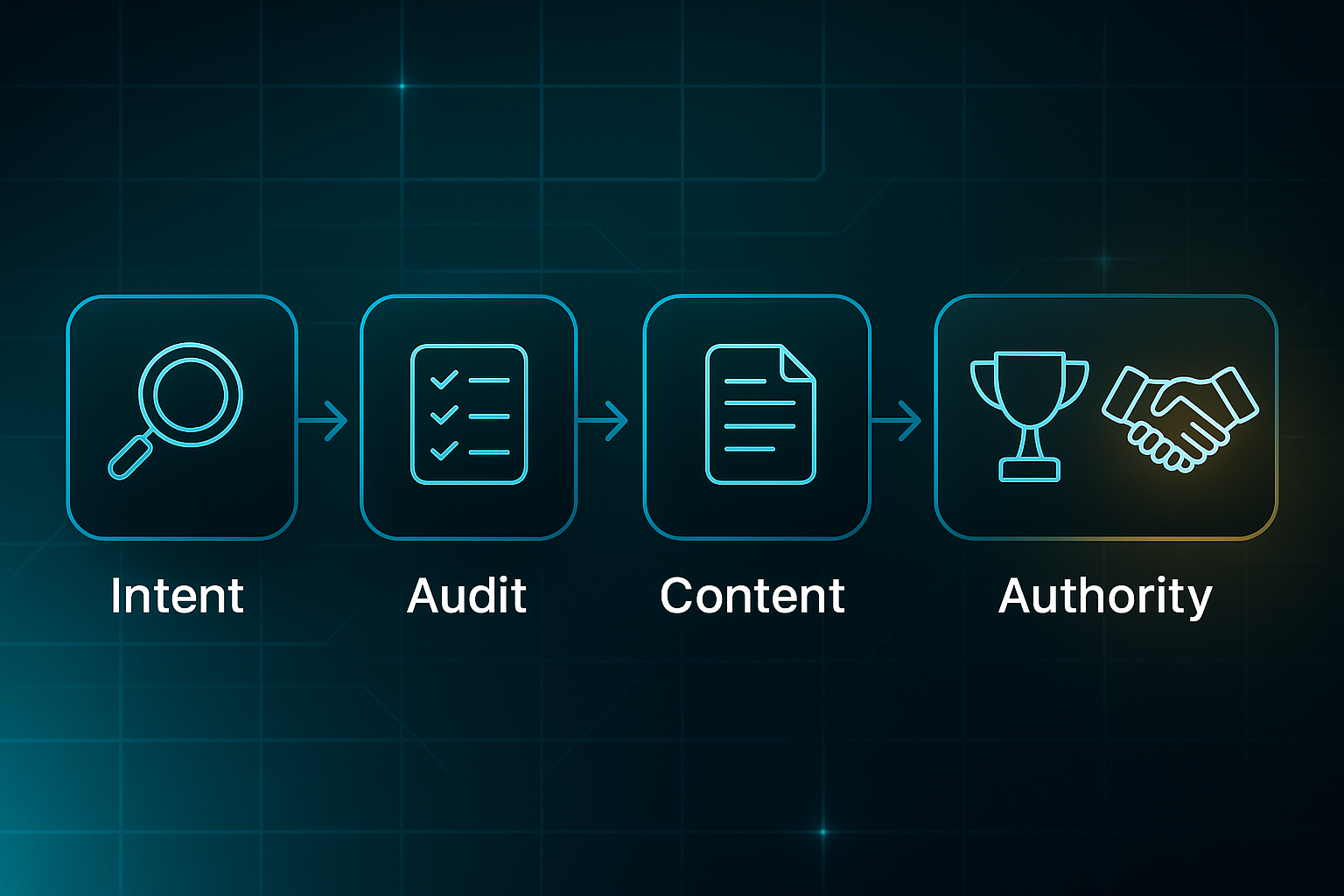
Key Distinctions: B2B SEO vs. B2C/Generalist Agencies—and Why These Matter
So, what makes B2B SEO noticeably different? Imagine B2B as a relay, each stage handled by different experts, every handover crucial. B2C, on the other hand, is often a one-person sprint.
Here are the standout differences:
- Audience and engagement
B2B targets groups—procurement, IT, finance—each needing technical detail and reassurance. - Keyword strategy
Uses specific, technical language like “enterprise cloud migration consultant,” not generic terms. - Conversion goals
The objective? Bookings for demos, whitepaper downloads, and in-depth consultations—each one progress in a longer cycle. - Compliance and process
Agencies navigate rigorous security standards and legal frameworks, rarely required for B2C.
Why does it matter? Only B2B specialists can properly manage this complexity—anything less is like using a basic toolkit when you really need a specialist’s set. Can you spot the difference in your own vendor search?
Ever been caught in decision deadlock because technical or legal details got missed? That’s when the right agency really earns its stripes.
The Impact of Sector Specialisation: Benefits and Pitfalls
Sector expertise can set an agency apart—or leave you stranded if it’s missing.
Here’s why expertise counts:
- Authoritative content
Real sector knowledge means messaging resonates with careful, technical buyers. - Effective frameworks
They build and support full-funnel buyer journeys using Account-Based Marketing (ABM) and similar tools. - Compliance and messaging
Their content meets strict regulations and speaks to each unique decision point.
What about non-specialists or template-driven shops?
- They generate off-target content that misses details and rarely convinces experts.
- Compliance gaps go unchecked—like using a generic tool on a complex job.
- Reporting often spotlights vanity metrics, leaving doubt about business impact.
Imagine hiring a tour guide who only covers tourist traps, never the hidden gems your company actually needs. Have you faced this challenge before?
Knowing these nuances helps B2B leaders focus on substance: sector experience, technical precision, and real business impact.
Of course, finding a genuine expert is an art in itself. Up next, we’ll dig into the signs that reveal proven agency expertise, helping you choose wisely for growth and credibility.
How to Evaluate and Choose the Right B2B SEO Agency
Choosing a B2B SEO agency is about much more than being wowed by impressive promises or shiny case studies. You need to look beneath the surface for sector-specific expertise, operational rigour, and clear reporting.
The B2B landscape is complicated, with multiple decision-makers and tough compliance standards. Only agencies that are truly embedded in B2B can deliver results that actually boost your business pipeline.
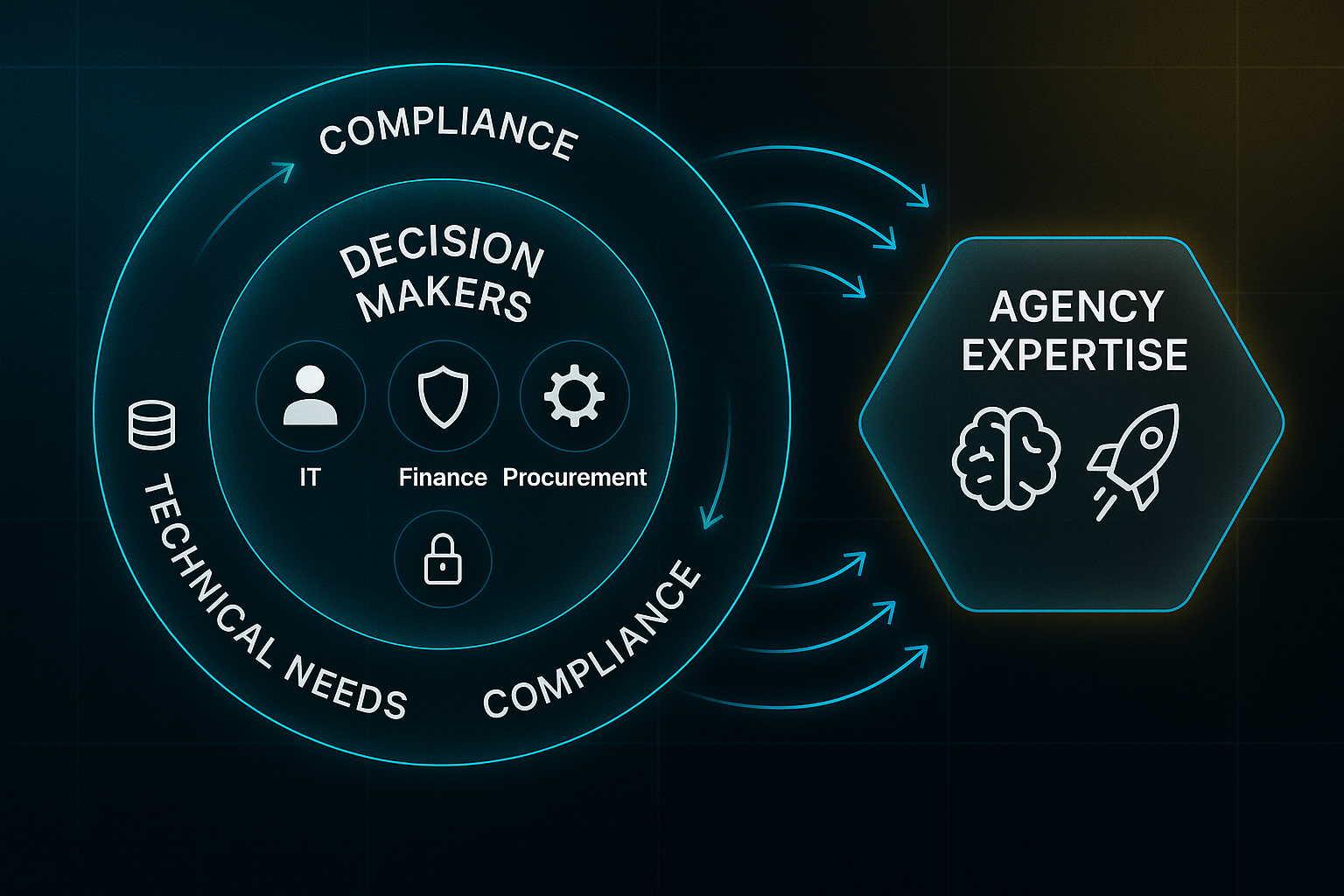
Essential Agency Selection Criteria for B2B
Start with proven industry track record. The strongest agencies back up their claims with genuine case studies—stories charting the full journey from first contact to closed deals in businesses like yours.
That means strategies proven to perform with complex buying cycles and technical buyers.
In a case study for Proterial Cable America, a targeted B2B SEO strategy resulted in a 147% increase in non-branded clicks, significantly expanding their organic reach to new potential customers.
Look for custom resources and technical documentation that show the agency understands your market.
Ask, have they researched your site’s current SEO posture and the competitive landscape before you even engage? That early diligence is a sign of an agency that’s serious about B2B.
Trust is key, so peer validation helps. Great agencies put you in direct touch with existing clients in your sector, letting you get honest feedback.
For onboarding, expect to see comprehensive SEO audits, deep competitor analysis, and mapping of all decision-makers and influencers.
A first-rate onboarding process nails down clear objectives and KPIs—like pipeline impact and lead quality—right from the start.
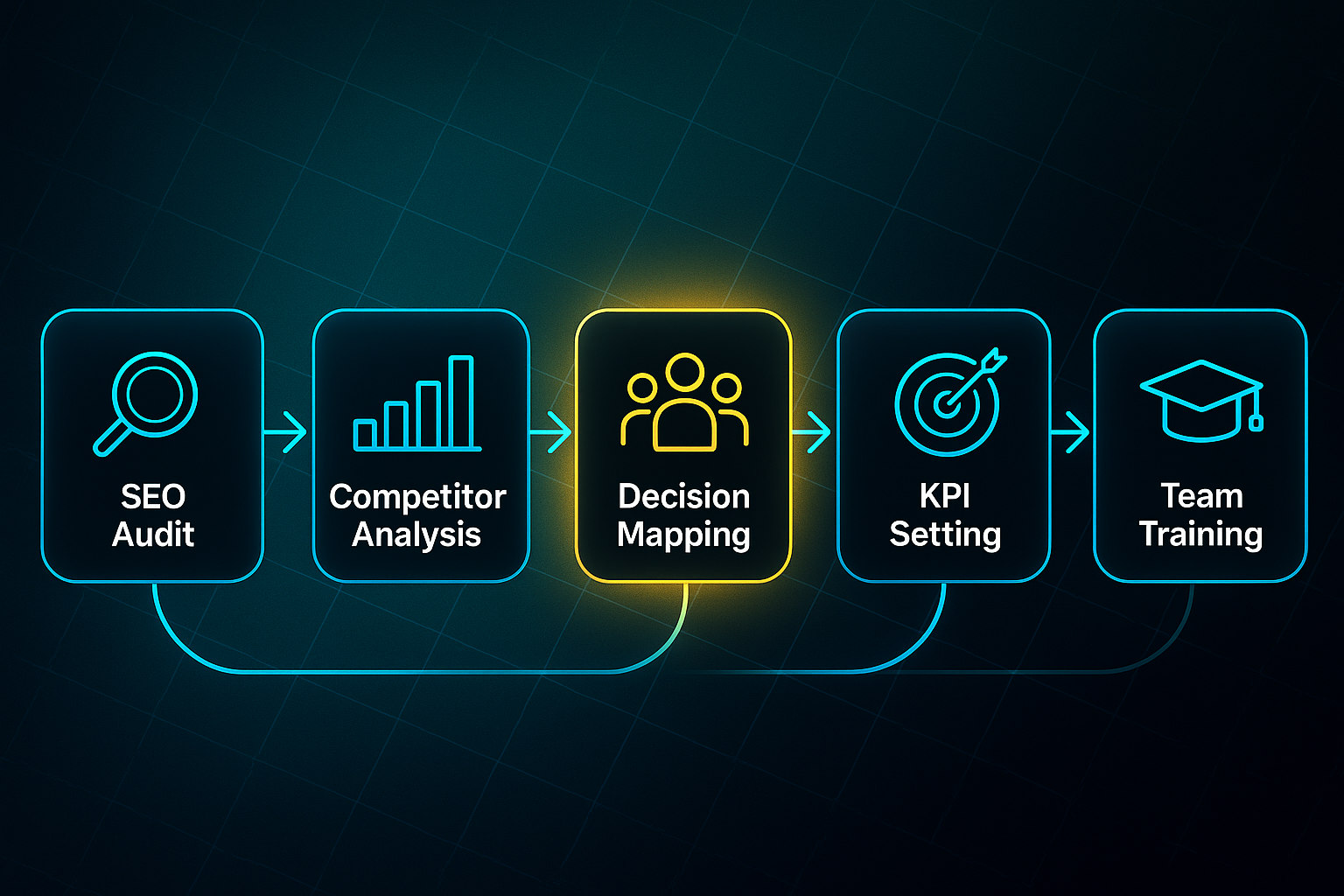
Agencies offering targeted team training and project management structures create a more collaborative and effective partnership.
Transparency and Reporting
Today, data-driven decision making is the standard. Leading B2B agencies implement integrated dashboards that connect SEO activity directly with CRM systems such as Salesforce and HubSpot.
The integration of SEO and CRM is fundamental to building a smarter lead pipeline, allowing businesses to move beyond surface-level traffic metrics to a full-funnel view of the customer journey.
That means you get visibility from first search impression all the way to Sales Qualified Lead (SQL), so every touchpoint is accounted for.
But don’t settle for vanity metrics. Real reporting ties SEO activity to business outcomes—showing things like MQL (Marketing Qualified Lead) to SQL progression, deal speed, and true pipeline contribution.
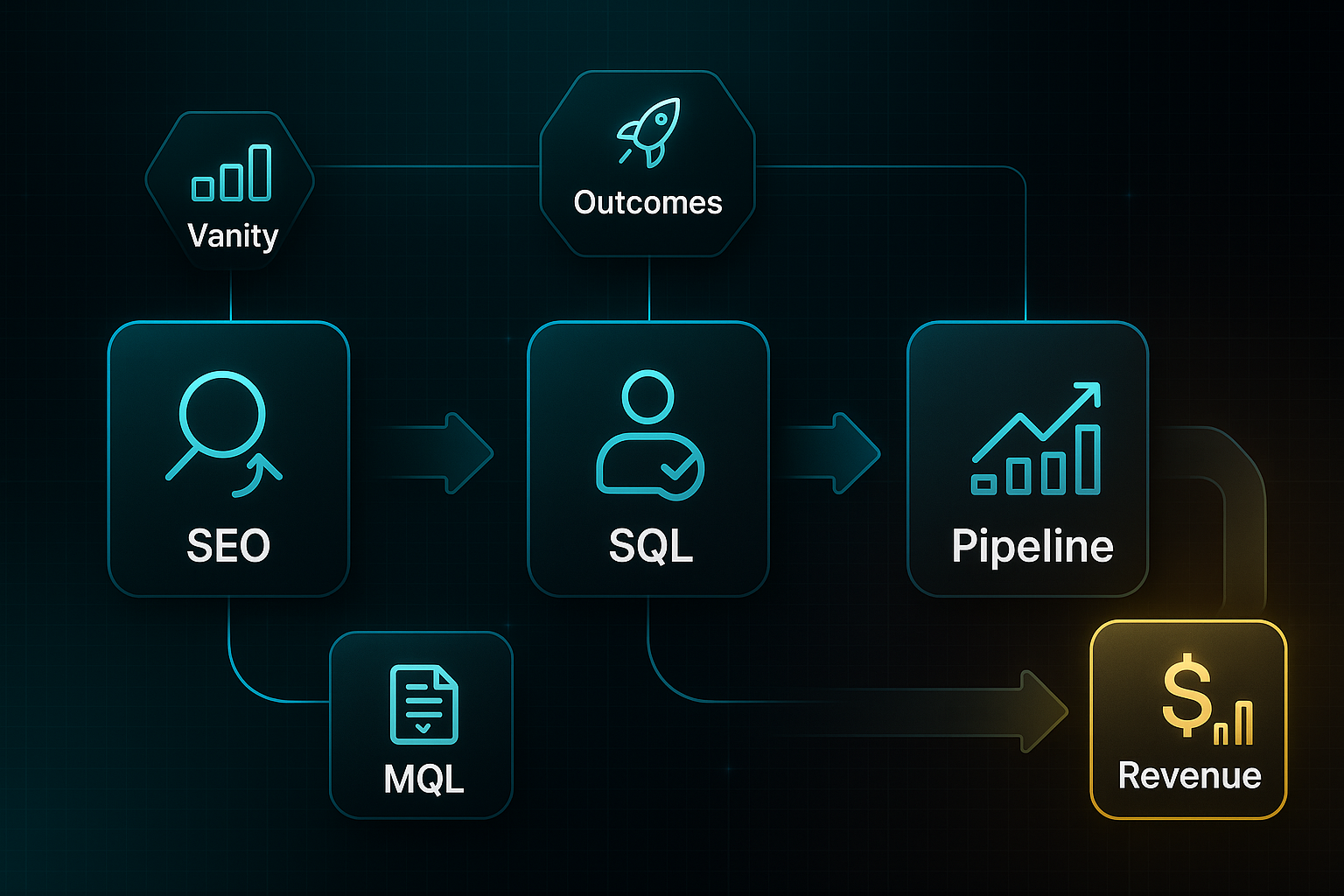
Regular custom dashboards (monthly or quarterly) keep you informed on performance and ROI.
If an agency can’t clearly link their results to your revenue pipeline, that’s a warning sign to keep looking.
Pricing, Engagement Models, and Scalability
For pricing, monthly retainers are standard—ranging from $2,500–$10,000 or more depending on project complexity.
Larger projects, like SEO audits or migrations, are often priced between $5,000–$30,000.
Some agencies offer performance-based contracts, but the best bring flexibility: KPIs in contracts, scalable services, and transparent exit clauses.
If your business is international or requires advanced technical work, demand evidence of scalability and technical skill.
This means prior experience with advanced architecture, attribution analytics, and international SEO (such as implementing hreflang tags for region and language targeting).
Weak onboarding or inconsistent reporting are red flags for complex projects.
Practical Checklist for Comparison and Selection
To streamline your agency evaluation, use this step-by-step checklist to compare candidates on objective, business-critical criteria:
- Map business outcomes and identify all decision stakeholders.
- Shortlist agencies with sector-relevant case studies and structured onboarding.
- Review proposals for actionable strategies, clear KPIs, and CRM-integrated dashboards.
- Require demo dashboards illustrating the full path from MQL to SQL.
- Check for clarity on deliverables, reporting cycles, and contract flexibility.
- Confirm the agency’s ability to scale solutions for technical and geographic requirements.
With this approach, you filter out generic agencies and zero in on the few who genuinely fit your growth needs.
All of which sets the stage to see how SEOSwarm’s hybrid agency-platform model addresses B2B SEO delivery for modern business.

AI-Powered
SEO Content Strategy
See the AI platform that's replacing entire content teams
(with better results).

SEOSwarm: Hybrid B2B SEO Agency Model for Scalable Performance
How SEOSwarm Accelerates B2B SEO and Removes Common Roadblocks
So, how does SEOSwarm tackle the old B2B headaches—think slow content launches, patchy quality, and technical SEO slip-ups? Here’s the secret sauce: its hybrid agency model combines human specialists with smart AI agents, making sure every campaign is grounded in real industry research and executed at lightning speed.
You get strategy, competitor mapping, and KPI setup handled by people who know your sector inside out, while AI automation accelerates research, optimisation, publication, and continuous improvement.
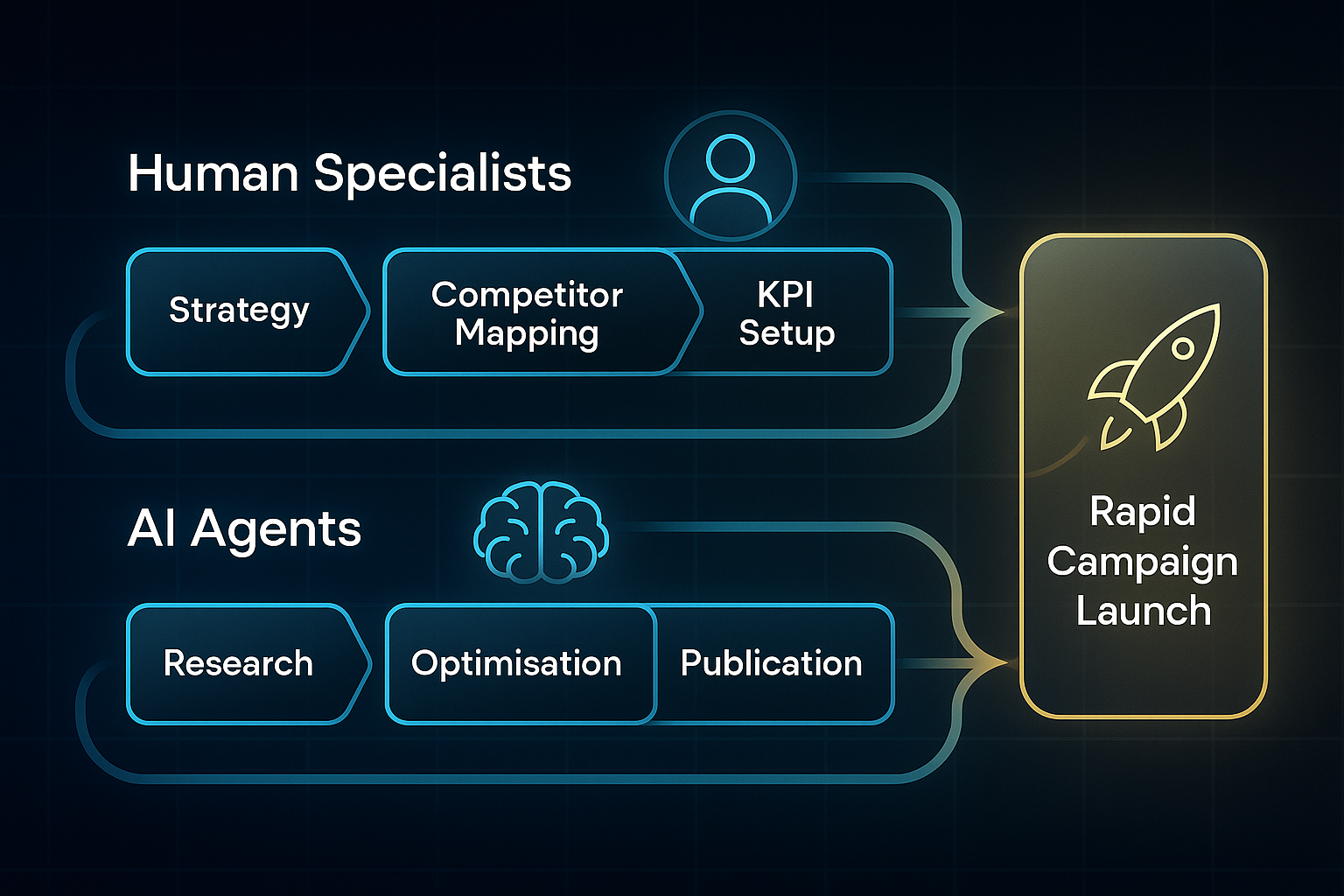
Take a typical SaaS firm joining SEOSwarm—after onboarding, they’re up and running with tailored campaigns and fully optimised content live in just days.
This mix isn’t just clever—it’s powerful. Each stage benefits from deep expertise, but nothing grinds to a halt.
B2B teams can scale up, tweak technical SEO, and avoid classic delays that come with template-only or manual agencies.
It’s like getting the best of both worlds—precise control and rapid execution.
Instant Blog Integration and Technical Optimisation
Launching your blog shouldn’t be a month-long ordeal filled with meetings and IT tickets.
Here’s where SEOSwarm stands out: you add two lines of code to your site—HTML, CMS, or custom platform—and your blog goes live in under five minutes, no developer needed.
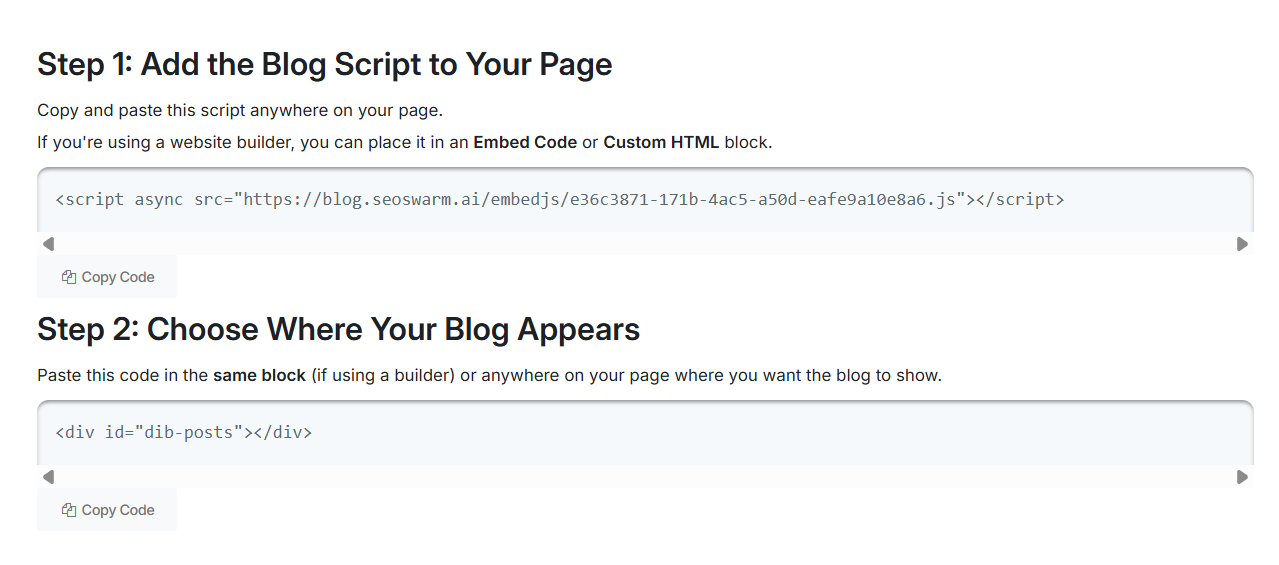
From that moment, your team accesses a cloud-based blog editor built for fast, effective content creation.
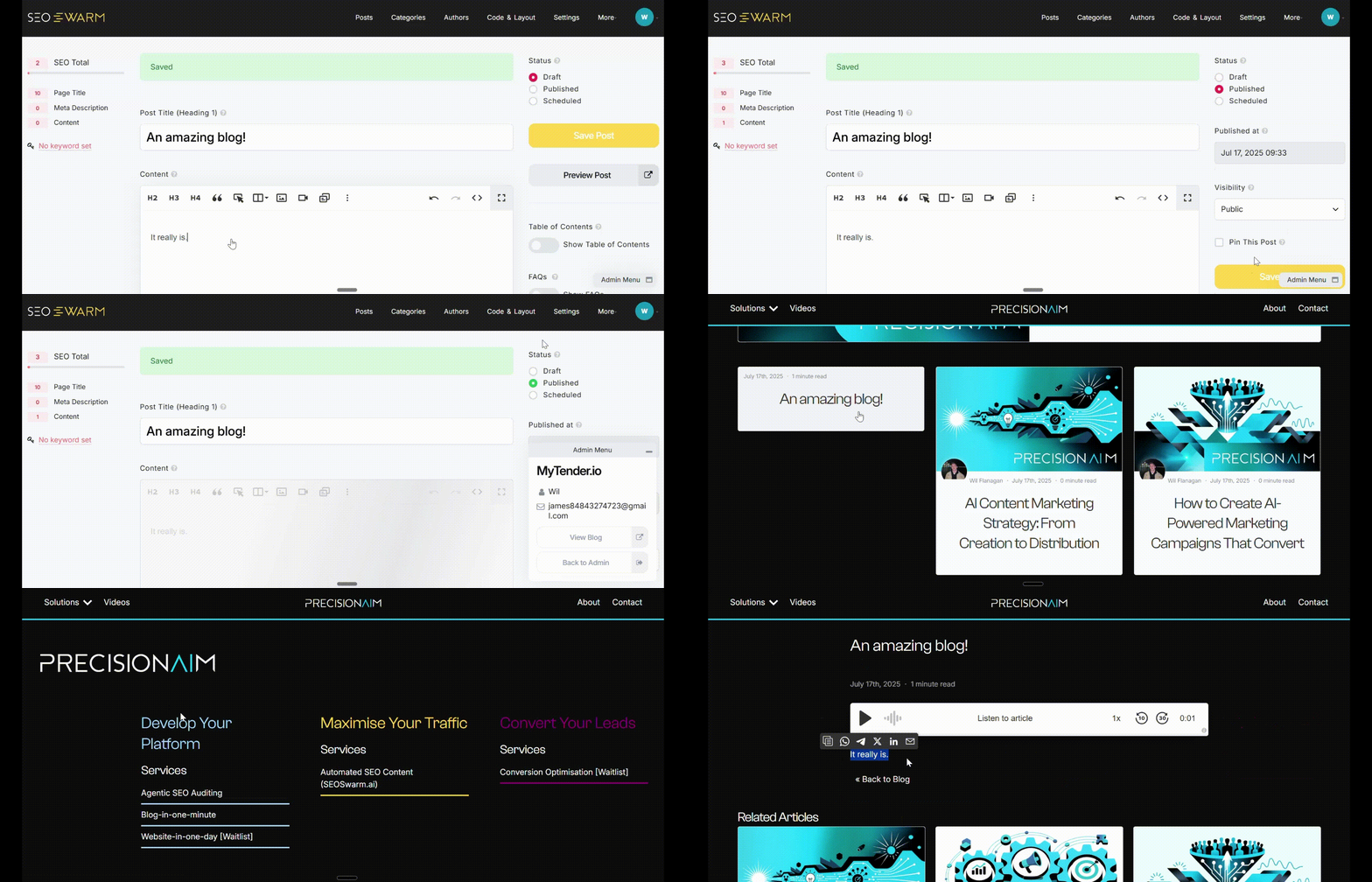
Every post comes with auto-generated schema, canonical tags, and AEO-friendly structure.
Technical SEO? It’s handled right away, so you can focus on topics that matter instead of worrying about best practice.
For marketers moving fast—maybe a product update, maybe an event article—this instant setup is a game-changer.
Content gets indexed in hours, not weeks, with zero IT bottlenecks in sight.
Data Visibility: Live Analytics and Rapid Indexing
Ever wish you could watch your SEO campaigns unfold in real time? SEOSwarm delivers exactly that, serving up live analytics dashboards with updates on launches, keyword journeys, and new pipeline leads.
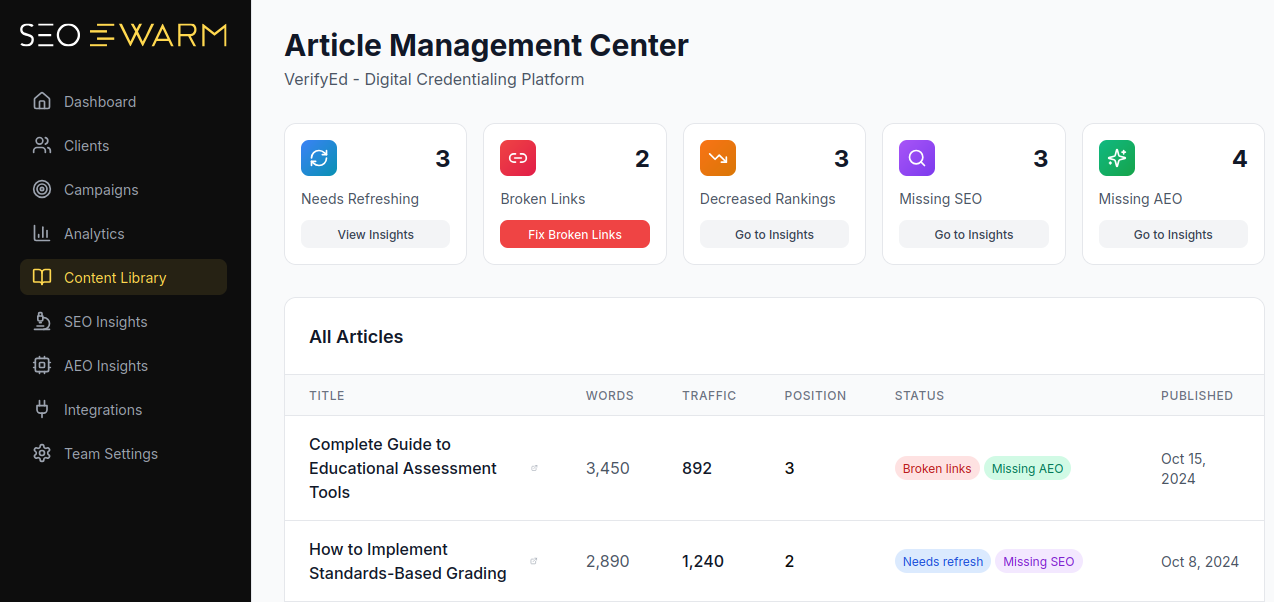
Everything’s hooked right into Google Search Console, so up to 2,000+ blogs a day can be indexed—blowing conventional agency limits out of the water.
B2B teams track every campaign step, moving from ideas to measurable impact with no manual delays.
It’s all about seeing results quickly and clearly.
Managed Onboarding and Flexible Pricing
Starting out with SEOSwarm won’t tie your budget in knots.
The onboarding process itself is fully managed: sector audits, strategy workshops, goal mapping, and campaign launches all happen without needing an in-house SEO team.
Pricing is straightforward: pay per article, with batch deals and custom packages available for objectives like high-intent SERP capture or launching new divisions.
This fits right into classic B2B procurement, giving granular control and milestone-based delivery without locking you into rigid contracts.
Where SEOSwarm Excels Over Traditional Agencies
This platform really shines for enterprise SaaS, manufacturers, and tech-driven firms that need page-level optimisation or that have huge portfolios.
By blending automation with expert review, SEOSwarm leapfrogs slow onboarding, inflexible retainers, and resource bottlenecks—delivering scalable, branded campaigns on demand.
The two-layer quality guarantee means ongoing optimisation and analytics-powered refreshes happen as standard, setting SEOSwarm apart from traditional agency models.
Its focus is on real, pipeline-driven outcomes for complex B2B teams—making sure the link between marketing and revenue is crystal clear.
And for those wondering how it stacks up against others, don’t worry; next up, we’ll look at SmartSites so you can compare SEOSwarm’s technical strengths and operational advantages head-to-head.
Blog-in-one-minute
Add a fully SEO-optimised blog to your website with just 2 lines of code.
Learn more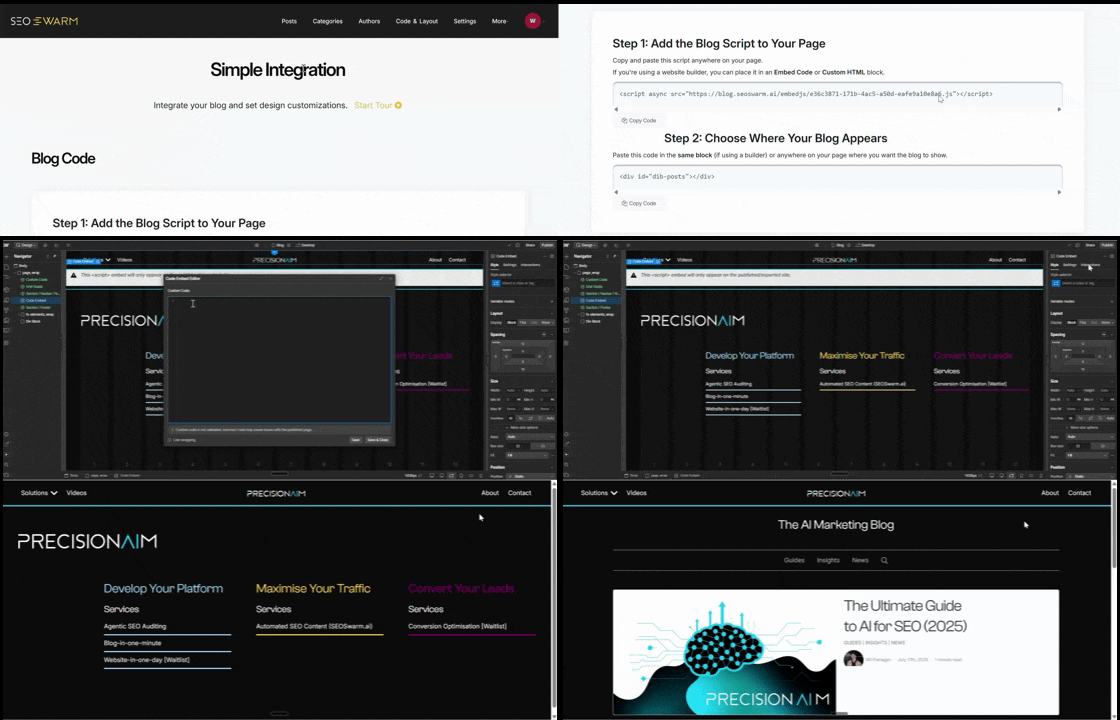
SmartSites: B2B SEO Agency Profile and Sector Strengths
Overview and Sector Expertise
SmartSites often pops up in rankings of the fastest-growing US agencies, and for good reason.
Founded in 2011 and based in New Jersey, it has grown into a major digital agency with over 350 team members.
What makes SmartSites stand out isn’t just scale.
Their Google Premier, HubSpot, and Microsoft Advertising Partner certifications give them real credibility among B2B clients.
The agency blends technical SEO (search engine optimisation), PPC (pay-per-click), content marketing, and custom web development—all with a sharp focus on B2B.
Crucially, SmartSites organises its teams by sector.
If you’re in SaaS, finance, manufacturing, or IT, they match you with specialists who know your industry inside out.
This means strategies are never generic—they’re guided by sector insights.
Core B2B Service Strengths
For B2B companies, technical depth, custom onboarding, and system integration often separate decent results from true success.
SmartSites’ core services are designed to address the unique challenges of B2B marketing, from regulatory compliance to long decision cycles.
Here’s how their offering supports complex business objectives:
- Technical SEO audits
Quarterly site reviews covering 80+ performance and compliance checkpoints. - Custom web development
Websites are built for SEO and high conversion from the ground up. - Content marketing and link-building
Campaigns target organic growth and higher authority across extended sales processes. - CRM and API integrations
Track leads in real time by connecting with Salesforce, HubSpot, and similar CRM systems. - Vertical onboarding
Sector-specific onboarding over 4–6 weeks ensures every client starts with an industry-aligned roadmap.
Notable B2B Outcomes
If you’re looking for concrete results, SmartSites highlights B2B clients who’ve turned SEO investment into major growth.
These examples show how their strategies drive both traffic and qualified leads over the long haul:
- AGA Truck Parts
Achieved a 1,057% jump in organic search traffic. - H&C Metals
Improved lead quality via full HubSpot CRM (Customer Relationship Management) integration. - Outdoor Gear
Reached 1,659% growth in organic visits through focused content campaigns.
Pricing and Engagement
When it comes to cost, SmartSites uses a customised pricing model.
Hourly rates run between $100 and $149, while SEO retainers typically fall in the $2,600–$5,200/month range.
Every agreement is shaped through direct consultation and tailored KPIs.
Reporting and Onboarding
Onboarding takes 4–6 weeks and features competitive benchmarking plus stakeholder mapping.
Once live, ongoing monthly reports provide transparency, tracking metrics such as UTM codes, MQL (Marketing Qualified Lead), and SQL (Sales Qualified Lead).
Sector Suitability and Limitations
SmartSites is ideal for mid-market and large B2B firms—particularly in SaaS, finance, manufacturing, or IT—who need technical precision and robust analytics.
A few considerations: smaller accounts may see less attention when workloads peak, and ultra-specialised projects may benefit from a boutique agency.
Also, you’ll want to review contracts for clear pricing and terms.
For B2B brands craving advanced SEO with best-in-class onboarding and analytics, SmartSites fits the bill.
Next, we’ll explore how Directive brings a growth-centric, full-funnel approach for SaaS and technology companies.
Directive: Advanced SaaS & Tech B2B SEO—Scalable ROI and Revenue Impact
Sector Focus and Client Specialisation
Directive is designed specifically for SaaS (Software-as-a-Service) and tech companies, ranging from Series A–C startups all the way up to enterprise powerhouses. Its expertise aligns with the extended buying cycles and the complex web of decision-makers you’ll find in sectors like product-led SaaS, cloud platforms, and professional services. Most of Directive’s clients manage multi-stage funnels and want scalable ways to fill their pipeline with genuinely qualified leads.
Technical Differentiators: GEO, Advanced Audits, and AI Content
When it comes to technical precision, Directive leans hard on tools such as Screaming Frog and DeepCrawl for in-depth audits. That means coverage of Core Web Vitals (Largest Contentful Paint, First Input Delay, Cumulative Layout Shift), intricate JavaScript rendering checks, and robust international SEO validation.
The standout here is Directive’s Generative Engine Optimization (GEO) methodology, which is all about nailing visibility in AI-powered search results—not just traditional rankings. Quarterly technical reviews keep everything sharp, while their Stratos AI platform transforms content creation and optimisation into a streamlined, fast-moving sequence for SaaS and tech campaigns.
Reporting, Analytics, and C-Suite Ready Dashboards
Directive’s reporting isn’t just comprehensive—it’s tailored for upper management. You get live dashboards pulling from CRM integrations, platforms like Looker Studio, and analytics tracking that zeroes in on organic growth, conversion rates, and pipeline contribution.
CFO-ready analytics connect specific SEO activities directly to revenue and ROI.
Many businesses grow tired of pouring time and budget into SEO efforts that yield little more than an increase in impressions, highlighting the critical need to connect SEO activities to tangible business results rather than vanity metrics.
Deliverables include interactive dashboards, clear monthly summaries, plus biweekly analytics calls and detailed quarterly reviews.
Engagement Model, Pricing, and Fractional Support
For onboarding and deep technical audits, prices start at $5,000+, with enterprise projects running above $10,000. Monthly retainers span from $5,000 to $20,000+ depending on what you need.
Their startup packages roll together SEO, paid search, CRO (Conversion Rate Optimisation), and ICP (Ideal Customer Profile) research—all delivered by a fractional marketing department: think dedicated strategists, technical SEO leads, and analytics experts, every client gets their own team.
Client Outcomes and Case Studies
So, what results are companies actually seeing? AltoVita drove $105,000 in fresh revenue with a 1029% ROI and a 100% conversion rate on SEO-sourced demo leads.
Another SaaS client jumped blog-driven organic traffic by 700% inside a year—over half of that traffic came from targeted content campaigns. Expect rapid keyword ranking wins (top spots in under eight weeks) and a 300%+ boost in qualified demo bookings.
Directive is the agency to consider if your SaaS or tech business needs serious financial modelling, full-funnel attribution, and visibility wired in at every stage.
Of course, you might be curious how this compares to broader B2B partners—next up, we’ll take a look at WebFX and its multi-sector approach, plus the special touches in its reporting technology.
WebFX: Large-Scale B2B SEO Agency—Technical Depth, Analytics, and Industry Breadth
Agency Onboarding, Platform, and CRM Integration
Let’s talk about how WebFX takes B2B onboarding to another level. With a team of more than 750 staff, they work across tech, SaaS (Software-as-a-Service), manufacturing, healthcare, and professional services.
You’re probably wondering how they keep everything coordinated for so many different industries.
It starts with MarketingCloudFX—their proprietary client portal, also known as SEO.com. When a new client comes aboard, the first 2–4 weeks are all about seamless integration.
You get a dedicated manager who links up your CRM (Customer Relationship Management, like Microsoft Dynamics) and pulls in historic and real-time lead, revenue, and phone data.
Suddenly, all your numbers are mapped in one dashboard, ready for round-the-clock reporting.
This unified data is more than a spreadsheet—the competitor intelligence module highlights your rivals, identifies keyword and content gaps (think “manufacturing ERP RFP templates” or specialised compliance queries), and immediately spawns new content projects with focused intent.
Technical Audit Workflow and AI-Driven Content
WebFX doesn’t just scratch the surface with technical audits. Their workflow uses Screaming Frog, Google Search Console, and their own platform for a sweeping review—covering 80+ checkpoints like indexation, schema markup, broken links, and compliance risks.
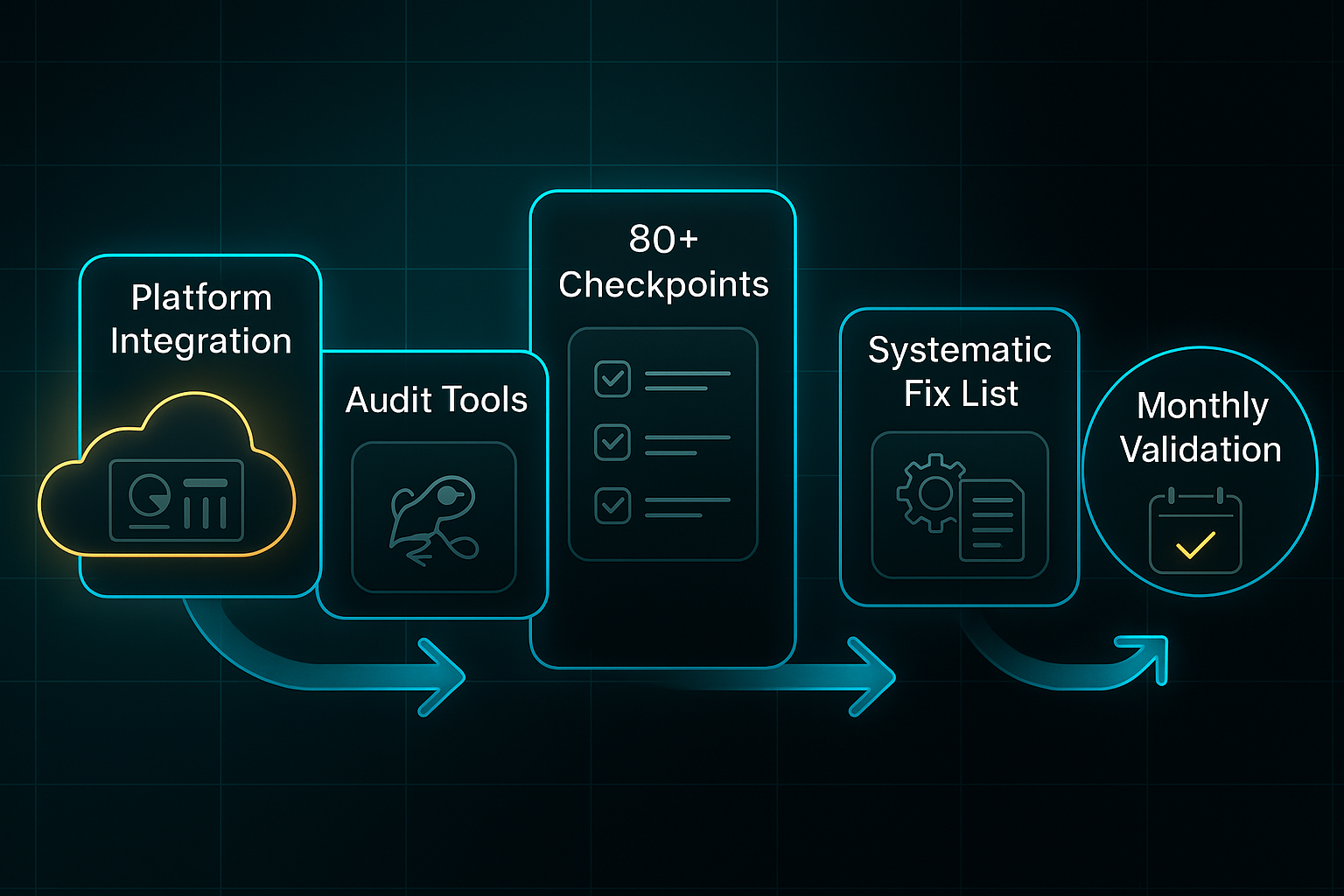
The output? A systematic fix list inside MarketingCloudFX, with monthly validations that adapt to search engine changes and competitor activity.
AI topic clustering shapes their content roadmap, allowing writers to deliver whitepapers and ABM (Account-Based Marketing) assets designed for Google AI Overviews and Bing Copilot.
Every piece—be it a guide, blog, or downloadable template—gets automated internal linking and schema setup.
Every lead and download is tracked right back to organic campaigns and mapped to MQL/SQL status.
That gap in your content, especially if it has over 500 searches/month? It’s typically filled within 30 days and revisited quarterly for re-optimisation.
Pricing, Bundles, and Review Cadence
Now for the costs: MarketingCloudFX starts at $675/month but agencies typically pay $3,000–$7,500/month for standard B2B bundles covering SEO, paid media, and reporting.
Global manufacturers with multilingual needs might see monthly budgets between $12,000–$20,000. There’s a six-month minimum for engagement.
Onboarding and setup wrap up within 2–4 weeks.
Monthly content cycles and technical audits keep your strategy sharp, with quarterly dashboard reviews for accountability.
KPIs, Case Examples, and Measurable Outcomes
WebFX lays out KPIs in plain sight. They track everything—organic visits, MQL/SQL flow, pipeline value, and direct SEO-driven revenue.
Here are some quick wins:
- A manufacturing client slashed PPC lead costs from $63 to $6.30 in just four months.
- Over five years, $4.9B in pipeline was generated.
- Healthcare Administrative Partners saw 63% organic growth and doubled demo requests within six months.
The real proof? Their dashboard flags healthy conversion rates (≥5% organic-to-MQL), surfaces drop-offs in the funnel, and highlights closed sales outcomes for review.
Each quarter brings reporting tweaks and strategy adjustments.
WebFX is designed for B2B teams chasing full-funnel attribution, technical mastery, and data-backed pipeline growth—especially if you’re in a regulated or fiercely competitive market.
Victorious SEO: KPI-Driven B2B Campaigns and Month-to-Month Flexibility
Sector Specialisation and Pipeline-First Strategies
Victorious SEO keeps its sights firmly on B2B verticals. If you’re in SaaS (Software-as-a-Service), finance (private equity, wealth management, B2B accounting), legal, manufacturing, or tech (cybersecurity, IT), you’ll get a sector-dedicated team—not just a generic service. Each client gets campaign playbooks tailored to industry ranking challenges, regulatory requirements, and those tricky, multi-person buying journeys.
What does that actually mean for you? Well, for finance, the focus is on compliance content and E-E-A-T (Experience, Expertise, Authoritativeness, Trustworthiness). But for SaaS, it’s about demand-gen clusters and mapping the funnel all the way from MQL (Marketing Qualified Lead) to SQL (Sales Qualified Lead). The aim? Getting in front of the right business buyers and clearing every hurdle along the way.
From day one, the priority is a revenue-alignment session and bespoke keyword research using Victorious’s proprietary tool suite. Search strategies are built around pipeline-driving intent, not just top-line traffic. Technical audits cover site speed, mobile optimisation, schema, and compliance gaps. They also handle answer engine optimisation for platforms like Bing Copilot or Google AI Overviews. Every content piece and schema tag goes through a specialist review for compliance and conversion.
Month-to-Month Contracts and KPI Guarantees
This is where Victorious breaks from the pack: contracts are strictly month-to-month. The minimum retainer is $4,999/month (custom packages can go past $20,000+), but there’s no annual lock-in or penalty—just a real, 30-day cancellation notice. That’s rare for B2B SEO, where most agencies insist on 6–12 month tie-ins.
And those KPIs? They’re written right into every agreement. Victorious promises growth in organic traffic, lead generation, pipeline value, and conversion uplift. Just look at these stats: organic growth of 287–312% in 12–18 months, 252–425% more qualified leads, and up to 50% shorter sales cycles on SEO-driven deals. If delivery falls short, clients qualify for partial refunds or extra service time as written in the contract.
Executive Reporting and B2B Results
Reporting is designed for board-level decision-makers. Dashboards in Looker Studio or Tableau show organic visits, MQL/SQL flow, technical SEO health, and year-on-year trends. Crucially, every KPI is mapped to ROI, so CMOs and CEOs can connect campaigns to results fast.
If a major search algorithm changes, clients are alerted within 48 hours with a recommended action plan. That level of proactive advisory helps teams stay a step ahead.
And the outcomes? Recent SaaS clients have logged 209–312% organic traffic growth and a 31%+ faster sales cycle in just 12–18 months. Finance and legal clients have achieved $1M+ in paid media savings, plus pipeline conversion rates jumping above 60%.
Victorious is best for mid-market or enterprise B2B teams seeking transparency, measurable guarantees, and flexibility—especially in sectors where compliance, technical SEO, or senior visibility matter most. Next, we’ll see how Titan Growth leverages patent-pending AI and international SEO for large, multi-location B2B operations.
Delante: International B2B SEO—Technical Depth and Global Reach
Agency Profile and Service Model
Delante is based in Krakow and works across more than 28 countries, bringing over a decade of experience serving global B2B companies. With 80% of their staff dedicated to SEO, they’re firmly grounded in technical expertise.
Their core services span technical SEO audits, advanced link building, content optimisation, and SEM (Search Engine Marketing, including PPC management).
What stands out here? Delante doesn’t just create strategies—they directly implement both technical and content changes, making delivery much more hands-on than most.
Technical and International Expertise
For sectors with complex sites—think SaaS (Software-as-a-Service), fintech, manufacturing, and broader tech—Delante’s approach is thorough. Their team is experienced with JavaScript-heavy websites and managing challenging site architectures.
Internationally, Delante leads with tailored strategies for each market, including hreflang configuration and optimisation across 20+ countries. Their onboarding covers every step: consultation, audit, strategy, execution, and monthly reports by specialists.
Pricing and Contract Structures
You’ve got options: choose project-based or ongoing retainers. Average rates are $150/hour, while typical engagements start at $3,500/month for mid-market programmes. Expanding into multiple regions? Large, fully-dedicated projects scale up to $15,000/month as needed.
Most clients sign for 6–12 months, with flexibility to adjust focus or scale by business priorities.
Notable Outcomes and Fit
Delante works with clients in 30+ industries, and results show. For instance, blockchain client Blufolio saw a 453% increase in search and 128,000 more impressions within six months of a site migration.
This case highlights Delante’s approach: each project includes a dedicated specialist, full transparency, and a step-by-step roadmap.
If you’re a B2B business with global plans, direct technical requirements, or operating in a high-complexity sector, Delante’s expert support can close the gap between regional silos and a unified international strategy.
These key features outline exactly who Delante best serves and what they offer:
- Best for:
B2B companies in SaaS, fintech, tech, or manufacturing seeking technical expertise and international expansion - Technical depth:
In-depth website audits, advanced JavaScript SEO, and strategic link building - International reach:
Specialist local/global keyword and hreflang strategies for over 20 countries - Transparent pricing:
$3,500–$15,000/month depending on project scope - Project structure:
Custom audits, detailed roadmaps, and hands-on implementation over 6–12 months
If I were planning expansion or restructuring in several markets, Delante’s blend of technical delivery, international experience, and visible support would make them a top choice—especially where monthly progress and direct execution matter. Next up, we’ll see how Brainlabs focuses on performance-driven SEO for high-growth B2B brands.
Delante: International SEO Excellence for Complex B2B Growth
Onboarding, Technical Workflow, Project Cadence, and KPIs
When it comes to structured B2B SEO for global brands, Delante doesn't leave success to chance. Their process is built for international and multilingual campaigns. Typical engagements stretch from 6–12 months, and for a multinational B2B rollout across three regions, you'll likely pay around $7,500/month—with a full range from $3,500 up to $15,000/month depending on how extensive the project is.
If you only need guidance, their ad hoc consulting comes in at $150/hour. From the get-go, clients are paired with a Head of SEO plus direct access to technical specialists—so you're never just chatting to an account manager. You've got real experts steering the campaign every step of the way.
With this hands-on approach, Delante orchestrates a typical project using a proven structure. Let's break down how a campaign flows from onboarding to ongoing improvement.
- Kick-off & Data Integration
CRM and analytics get integrated, baseline data gets collected, and communications are put in place so you have visibility right from the start. - Comprehensive Technical Audit
The team conducts full crawls using Screaming Frog, SEMrush, and Ahrefs, covering over 80 checkpoints—everything from indexation, hreflang, Core Web Vitals, duplicate content, to compliance issues. You get a dashboard that highlights errors and priorities specific to each country. - Multilingual/Rollout Strategy
KPIs are set for regional traffic, rankings, and pipeline growth. You get a custom roadmap mapped for 3–10+ countries or languages. - Live Dashboard & Project Management
Every client uses Delante’s DAP platform to track traffic, lead progression, crawl errors and milestones in real time. There’s a rhythm to their project meetings—standups on Monday and Thursday—with updates and progress visible in your dashboard. - Ongoing Optimisation & Reporting
Technical and content fixes roll out fast, with CerberAI flagging any weird anomalies or sudden rank swings in a specific country. More than 90% of crawl issues are fixed within 72 hours. You’re always in the loop via live dashboards, monthly or biweekly reports, and in-depth reviews.
Delante supports complex international projects beautifully. Here’s a quick rundown of what they deliver:
- Supported complexity
Handles 3–10+ regions and languages per campaign, with coverage for compliance across duplicate, privacy, and tech standards. - Key B2B outcomes
Sees a 210% increase in German sessions, gets 50+ region keywords into the top 3 in six months, slashes crawl errors by 80–90%, and brings measurable pipeline growth.
It’s the blend of DAP and CerberAI technology, structured standups, and dashboard tracking that powers Delante’s hands-on international workflow. For B2B brands needing cross-country SEO and constant technical attention, this approach is ideal.
But, what if your focus is purely local or your SEO is all about heavy content? In those cases, a broader agency may suit you better.
Of course, as each agency brings its own strengths to the table, next up we’ll see how Salt Agency goes deep into enterprise-level technical SEO.
Salt Agency: Forensic Technical SEO for Enterprise B2B
B2B Technical Depth and Edge SEO Approach
If you’re wrestling with a large, tangled B2B site—think SaaS, finance, manufacturing, or sprawling multi-region platforms—Salt Agency brings a level of technical scrutiny that’s hard to match.
Based in the UK, Salt doesn’t just run surface checks. Their proprietary 300+ point audit dives deep into the heart of your website’s infrastructure. They’re on the lookout for crawl traps, tricky indexation inefficiencies, schema issues, and the kind of international SEO gaps that quietly block business leads.
But here’s where Salt stands apart: edge SEO capability. Instead of waiting for internal developers (which, let’s be honest, can sometimes take ages), Salt uses Cloudflare Workers and similar tools to make technical changes instantly at the CDN or server level.
So whether you need redirects, fresh metadata, hreflang, or structured data fixes, Salt can deploy them right away—no queueing for IT tickets.
That makes a massive difference for B2B firms caught in endless migrations, facing regulatory surprises, or struggling with legacy tech stacks. Salt’s approach slashes time-to-fix and lowers risk for companies navigating complex digital environments.
Engagement Model, Pricing, and Measured Results
The Salt journey usually begins with a discovery call and hands-on scoping workshop. After that, clients receive their comprehensive technical audit within just two to four weeks.
You can work with Salt on a project basis, maybe for a single migration, or set up an ongoing retainer that covers quarterly technical reviews, competitor monitoring, and clear KPI reporting. Pricing, as you’d expect, is tailored to project complexity—it’s an investment focused on lasting improvements, not just surface changes.
Now, let’s talk results. Following Salt’s recommendations, a global SaaS company saw a 40% lift in organic sessions and 25% more qualified leads in half a year.
The combination of transparent reporting and a clear, actionable roadmap made it simple for marketing and IT to prioritise the right fixes.
When Is Salt the Right Fit?
Salt Agency shines when you need real technical credibility. If you’re battling technical debt, dealing with international SEO complexity, or stuck in compliance-driven SEO deadlocks, their model fits perfectly—especially for teams blocked by legacy platforms or slow-moving IT.
However, if your biggest needs are around content, PR, or you’re operating on a slim budget, you may be better served by an agency geared toward creative or outreach work.
So if you need scalable lead generation on a complex B2B site, Salt’s technical edge is a genuine strategic advantage. Curious about content and PR-driven growth? Up next, we’ll dive into how Fractl brings authority-building campaigns to B2B SEO.
Fractl: Data-Driven Content & PR for B2B Growth
Agency Model and B2B Methodology
Fractl’s approach focuses squarely on data-driven marketing. They blend technical SEO, content creation, and digital PR into one integrated B2B growth strategy.
Every project starts with thorough industry research, buyer persona mapping, and pinpoint keyword selection for your funnel.
What truly marks them out is their creation of original research assets—think bespoke surveys, interactive data studies, and expert-authored reports.
These pieces are engineered for high-value editorial coverage and strong backlinks.
On the technical side, Fractl fixes site structure, adds schema markup (structured data for search relevance), checks mobile usability, and prunes old content.
This keeps your site competitive in both organic and AI-driven search.
Sector Focus and Measured Outcomes
If you’re in B2B and your market values technical credibility—SaaS, fintech, cybersecurity, tech—Fractl’s approach really pays off.
Rather than standard link-building, they specialise in breaking through crowded, expertise-led sectors.
To give you a sense of impact, let’s look at a few standout results Fractl campaigns have delivered in recent years.
These examples highlight the measurable progress you can expect:
- SEO Traffic Growth
251% year-on-year increase, over 500 fresh backlinks. - Content Output
40 high-quality articles in six months and 15,000+ organic clicks monthly. - PR-Driven Spikes
40%+ monthly traffic boosts from major media coverage.
Their campaigns regularly mean better rankings, rising domain authority, and a steady increase in qualified B2B leads.
Engagement Models and Reporting
Fractl’s engagements are partnership-based, suited for mid- and large-scale firms where content and PR drive outcomes.
Most contracts run at least six months, with monthly retainers from $15,000 and flexible opt-outs if agreed milestones aren’t met in the first 30–60 days.
Before discussing reporting, it’s worth noting clients start with a step-by-step campaign roadmap, joined-up KPI setting, and a technical SEO audit.
This setup makes progress fully transparent.
Reporting is both proactive and practical. Their dashboards offer real-time clarity on a few essentials:
- Backlink Tracking
Tracks speed, new domains, and organic footprint. - Keyword & Rank Changes
Shows movement in top rankings and viral content with instant responses to algorithm shifts. - MQL/SQL Metrics
Records lead quality and pipeline progress for conversion growth.
Clients always know where things stand, and guided recommendations arrive before you even need to ask.
Ideal Fit and Selection Criteria
How do you know if Fractl is right for you? Having these characteristics helps unlock the full value of their research-driven partnership model:
- Premium campaign mindset
Committed to research-led, high-impact content and PR. - Authority building focus
Wants editorial links, data-rich content, and ongoing domain growth. - Collaboration and transparency
Prefers active management and open communication over hands-off outsourcing.
If your B2B brand is after quick fixes or basic outreach only, Fractl’s premium offering won’t fit.
But for those aiming for credible authority and sustained organic growth, their approach stands out as a proven choice.
Curious about what an integrated multichannel model looks like for B2B? Next, let’s explore Intero Digital’s approach.
Intero Digital: Integrated Multi-Channel B2B SEO with Technical Automation
History, AI Integration, and Service Breadth
Intero Digital sits right at the crossroads of technical SEO and scalable, cross-channel marketing. Its approach stands out due to deep automation and a strong focus on integration—both within the agency’s own teams and across client systems.
Founded in 2012 and now with over 350 staff, Intero Digital has built its B2B practice on marrying classic SEO expertise with automation and analytics.
The real headliner is their InteroBOT platform, which runs a fully automated technical audit and on-page issue detection.
For B2B teams dealing with sprawling sites or frequent technical changes, this bot means fewer blind spots, less manual triage, and faster fixes when search performance takes a hit.
Here’s what this actually looks like in practice: new clients typically get a technical audit within the first week.
The InteroBOT crawls tens of thousands of URLs to surface errors, schema gaps, and compliance risks.
Actionable tickets are automatically generated and assigned to developers or client-side IT, so the process never bottlenecks on reporting delays.
But there’s more than just clever tech under the hood. Intero Digital’s service roster covers content strategy, advanced link building, and full integration with paid media and email nurture campaigns.
Account teams are split by vertical—finance, SaaS (Software as a Service), tech manufacturing, and professional services all get a tailored touch.
All these services would be incomplete without robust reporting infrastructure.
B2B Reporting, CRM Sync, Results, and Fit
From a reporting and operations perspective, Intero Digital leans heavily on integration.
Every client is onboarded with a custom dashboard that ties Google Analytics, Search Console, CRM (like Salesforce or Microsoft Dynamics), and revenue platforms in one place.
The dashboard flags issues and triggers proactive management sessions—no waiting around for surprises or lags in performance.
It’s the kind of level-headed structure that B2B marketers want: You see keyword rankings and channel data, but also pipeline and closed-won revenue metrics pulled right from the CRM.
One finance-sector client tracked a pipeline uplift of 160% within a year.
SaaS brands have credited the approach for +200% organic leads in nine months.
That said, the model works best for mid-market and up, especially firms with technical buy-in and sales teams ready to link marketing directly to revenue.
If your site is small, or you’re mostly focused on creative content marketing, you may find other agencies a better cultural fit.
Now that you’ve seen how technical automation and true multi-channel alignment come together, next up we’ll spotlight Brafton—and what happens when creative content, SEO, and distribution work in lockstep.
B2B SEO Agency Selection Pitfalls and Best Practices
Critical Pitfalls and High-ROI Best Practices
Choosing a B2B SEO agency isn’t just about ticking boxes—it’s about digging deep into their sector expertise, onboarding approach, pipeline reporting, and transparent contracts. One of the biggest mistakes businesses make is picking agencies obsessed with vanity metrics—like higher rankings or website traffic—without tying any of it to the real business pipeline or revenue figures.
Say you’re in SaaS. An agency needs to have a grip on Core Web Vitals (that’s Google’s way of measuring technical site speed and usability) and must show they can map content for every funnel stage. If you’re in manufacturing? You’ll want agencies who understand geo-aware content, know how to boost your directory rankings, and have solid systems for tracking lead quality by region or vertical.
What you absolutely want to avoid: agencies that roll out generic, one-size-fits-all onboarding, or can’t back up their pitch with sector-relevant case studies that clearly link SEO work to deals actually closing.
Actionable Contract & Onboarding Checklist
So, how do you side-step budget drains and contract headaches? There’s a handful of non-negotiables every contract should feature:
- CRM integration for pipeline attribution
Reports must show how SEO activity generates or nurtures sales opportunities. - Clear QA and project workflow
Documented processes for implementation and regular updates to ensure accountability. - 30-day exit clause
Allow either party to end the agreement with 30 days’ notice, with full handover of assets. - Onboarding to include baseline audit and reporting dashboard
Delivered within 10 business days of contract start. - Verified industry references/case studies
Ask for recent results from companies like yours.
Key Reporting Metrics for SaaS vs Manufacturing
The proof is always in the reporting. Here’s how the reporting focus should shift depending on whether you’re SaaS or manufacturing:
| Reporting Metric | SaaS Focus | Manufacturing Focus |
|---|---|---|
| Pipeline Attribution | % of closed deals influenced by SEO content | Lead quality by region/industry |
| Technical Health | Core Web Vitals, content scale | Site speed, local SERP volatility |
| Sales Alignment | Sales team content usage | Specification/proposal page rankings |
If it were me shopping for an agency as a B2B SaaS brand, I’d be scoping out partners who can forecast pipeline, plug SEO straight into the CRM, and prove that over 60% of won deals engaged with organic content. For manufacturers, I’d want to see a breakdown of regional lead tracking and real analysis of SERP volatility—not just pageviews.
Whatever sector you’re in, the gold standard is clear: turn down agencies that lack real curiosity about your space, can’t verify their results with solid client references, or rely on automatic contract renewals. The best partners line up reporting, accountability, and flexibility with your actual business goals—helping you avoid lock-in and drive real pipeline growth.
My Final Thoughts on Choosing a B2B SEO Agency
Most B2B SEO agencies promise growth, but only a handful deliver measurable business impact. The difference lies in sector expertise, transparent reporting, and a willingness to tie their work directly to your pipeline—not just traffic numbers.
If I were choosing today, I’d shortlist agencies with proven results in my industry, demand CRM-integrated dashboards, and insist on clear contract flexibility. Here’s what I’d do next:
- Map your business goals and decision-makers - Compare agencies using sector-specific case studies - Require demo dashboards showing MQL-to-SQL progression - Confirm onboarding includes technical audits and KPI alignment
The right agency isn’t just a vendor—they’re a growth partner who understands your market’s complexity and can prove their value at every step. In B2B SEO, real authority is earned by connecting strategy to revenue, not just rankings.
- Wil