
Finding affordable SEO services that actually deliver results can feel overwhelming, especially when every agency promises the moon but few explain what you’ll really get.
I’ve seen small business owners struggle to compare packages, spot hidden fees, and figure out which agency offers genuine value—not just low prices. Many worry about ending up with bland content, vague reports, or risky shortcuts that hurt their site in the long run.
In this article, I’ll break down eleven agency-driven SEO services, showing exactly what’s included, how pricing works, and what results you can expect. You’ll get a clear side-by-side comparison, plus practical tips for onboarding, validating progress, and avoiding common pitfalls.
By the end, you’ll know how to choose a service that fits your budget, keeps you in control, and brings measurable improvements to your rankings and traffic.
Understanding Affordable Search Engine Optimization Services
Understanding Agency-Based Affordable SEO for Small Businesses
Affordable search engine optimisation (SEO) services are agency-built packages that help small businesses stand out online without stretching their budgets too far.
But is “affordable” just another word for “cheap”? Not quite.
It’s really about value. Agencies go beyond task lists; they offer strategic planning, expert management, and accountability over months rather than days. Pricing usually sits between £250 and £2,000 per month, but what you get is an engaged partner focused on improving online results.
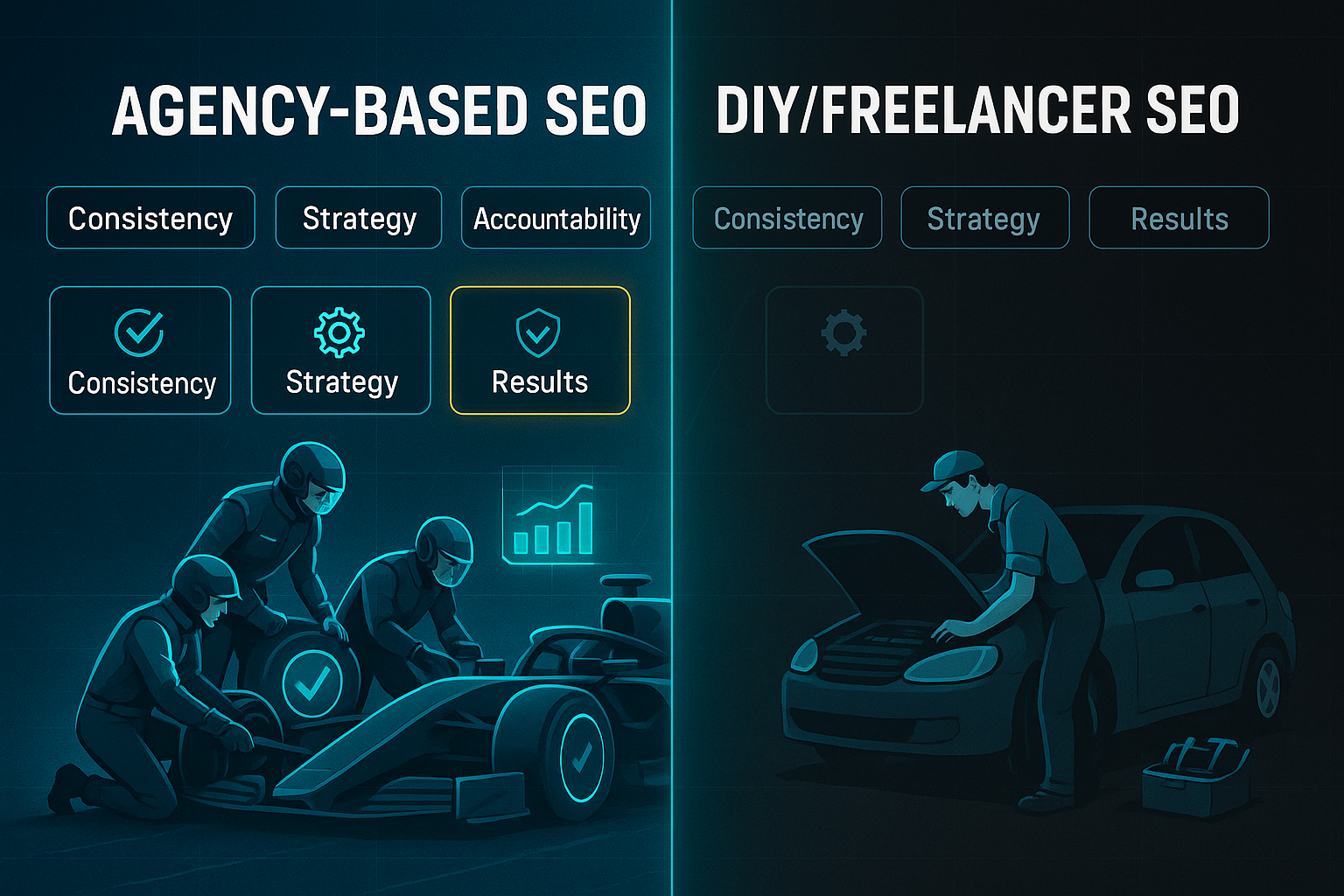
DIY options or one-off freelancers rarely match this consistency or depth. Agencies provide measurable boosts to rankings and traffic, acting as reliable guides through the maze of modern SEO.
Using Surfer, I was able to realize 100% growth in organic traffic, 150 new leads, and 3 sales for one of my clients in just 2 months.
Market Context: Why Agencies Became the Popular Choice
Why did agencies become so central for small businesses eyeing digital growth?
Plenty tried DIY guides or plugins, hoping for quick fixes.
But when Google’s algorithms got tougher and technical demands spiked, those easy options failed to deliver. Reports got confusing or feedback disappeared entirely, leaving many businesses in the dark.
Owners saw stagnation and technical errors pile up. That’s when agencies began to look more like a race team fine-tuning every aspect for speed, rather than just a single mechanic changing the tyres.
Even with the most well-intentioned approach, the tasks required for effective SEO can take a significant toll on a business’s bandwidth and internal resources.
Core Features Found in Affordable Agency SEO Packages
So what do these packages really include? Think of agency SEO as a tightly woven set of solutions:
- Keyword research
Connects your goals to what local customers are searching for - Technical audits
Checks site speed, mobile usability, and structure - On-page optimisation
Improves titles, headings, and internal links - Content creation
Aligns your website copy with SEO strategies - Local SEO enhancements
Improves visibility for location-based searches - Ethical backlink-building
Secures reputable links for credibility - Analytics dashboards
Provides clear, easy-to-read performance reports - Ongoing management
Adjusts tactics and supports clients continuously
All these elements work together. It's like turning a loose collection of tools into a full toolkit ready for any challenge.

Why “Affordable” Doesn’t Mean “Cheap”
Here’s something worth asking: is chasing the lowest price always the best plan?
Affordable agency SEO means ethical, well-rounded, and results-focused work. Agencies stick to proven paths, tracking actual progress and avoiding the risky shortcuts.
Cut-rate options may sound tempting but often lead to bland content, generic methods, or reports so vague you wonder what you actually paid for. In the end, it’s not just about price—it’s about getting real, lasting improvement.
A Google penalty can be devastating, causing your site to be de-indexed entirely. The cost to recover from a penalty far exceeds the initial savings from a cheap SEO service.

Scope Boundaries and Common Misconceptions
Let’s clarify one thing: this guide centres on full-service, agency-driven SEO for small businesses.
It doesn’t dip into freelance gigs, DIY platforms, or sprawling enterprise products. Some believe every budget SEO service offers similar quality—but in reality, structured agency support is what handles real-world technical challenges and cutthroat competition.
Picture your SEO choices like picking a relay team—you need specialists passing the baton cleanly, not solo runners tiring in the first leg. Seeing this difference is the first step to comparing your options and succeeding with SEO.

What Should You Look for in Affordable SEO Service Packages and Agencies?
Finding the right affordable SEO agency as a small business starts with clear preparation.
The first thing you'll want to do? Appoint a main contact—whether that's you, your manager, or a marketer—to keep communication on track and everything organised.
Before you sign up, gather the logins for your website’s CMS (like WordPress) and ensure your Google Analytics and Google Search Console (GSC) are set up.
If you’re missing access, ask your web host or agency—just know technical support usually costs £40–£160 per access point.
Most agencies also apply a one-off onboarding fee, typically between £300 and £2,400 based on package setup.
Package Pricing and What’s Included
You'll usually see agencies offer three standard service types for small businesses—each matches a different level of need and budget. Understanding these helps you compare what’s out there:
- Audit-only
£400–£1,600 one-off. Delivers a technical SEO audit and a fixes list—no hands-on updates included. - Audit + On-Page Optimisation
£400–£1,200 to onboard, then £400–£1,200/month. You’ll get an audit plus content, meta, and linking improvements. - Full-Service SEO
£1,200–£2,700 onboarding, £1,200–£2,800 per month. Adds blog writing, new website content, link building, local SEO, and ongoing updates.
Expect 30-minute monthly check-ins and ongoing involvement—plan for at least 1 hour onboarding and 5–15 hours per month to review reports and approve fixes.
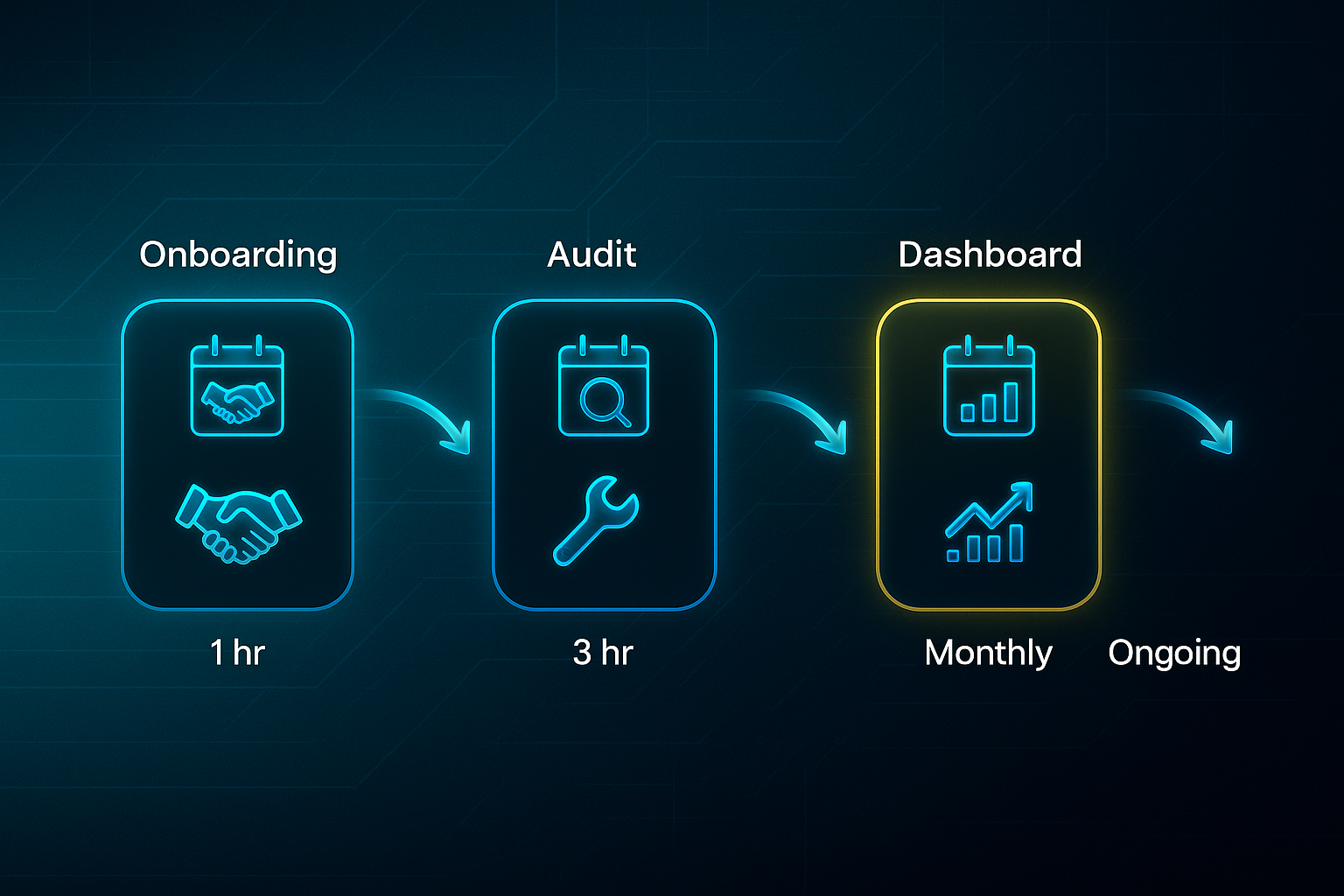
Step-by-Step: Actions, Timing & Proactive Solutions
Knowing the usual agency process ensures smoother collaboration and stronger results.
Each step in the sequence helps guarantee on-time delivery, clear validation, and maintains trust between you and your agency.
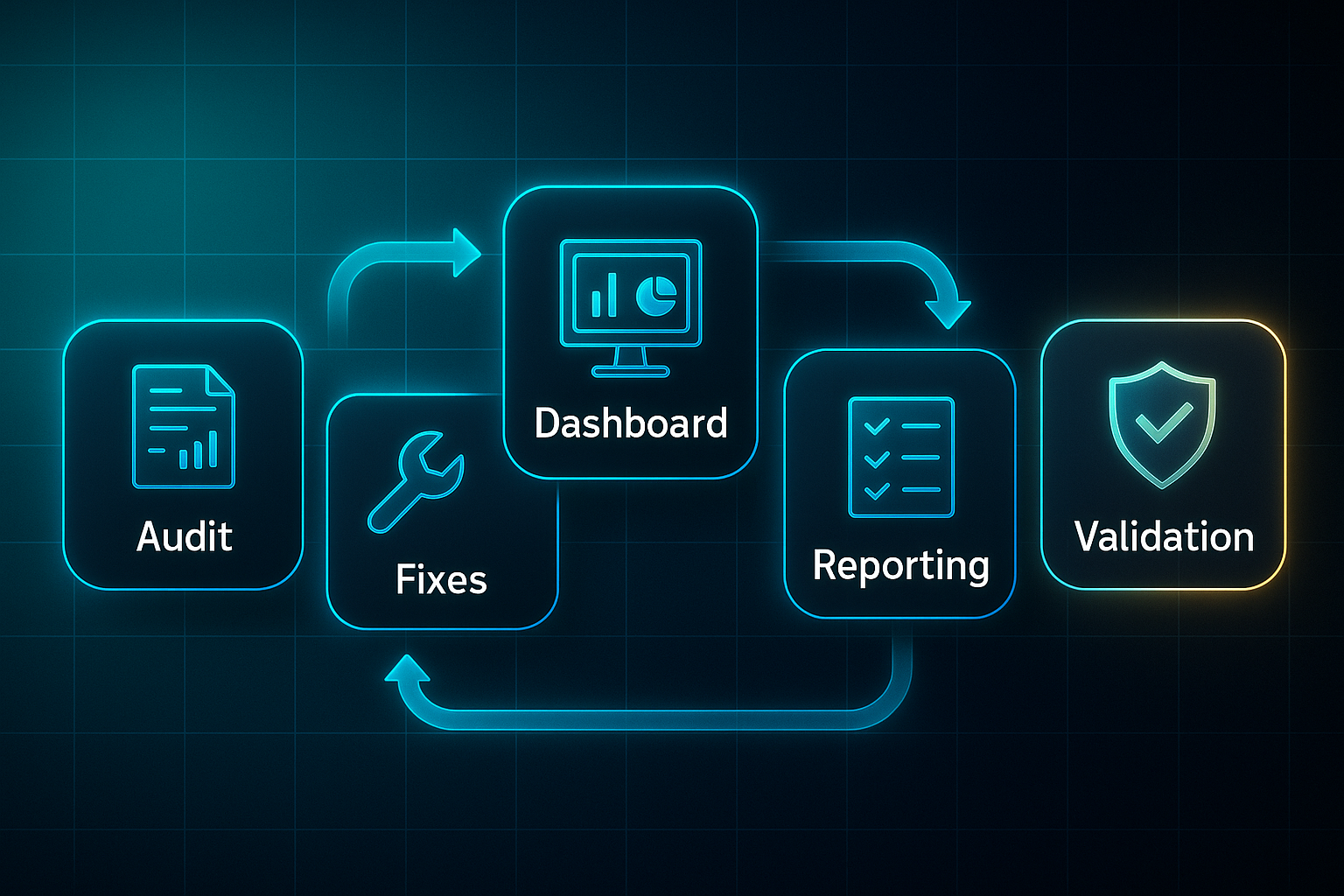
Let’s lay out what a typical small business engagement looks like, and how following this rhythm helps spot issues before they become real headaches.
- Audit Delivery
Usually within five business days, expect a report on crawl errors, site speed, mobile issues, and schema, often using Screaming Frog, Ahrefs, or Google PageSpeed Insights. - On-Page Fixes
By day 14 after your audit, core technical and content issues should be resolved. Check home page speed in PageSpeed Insights (target: under 3 seconds) and review GSC for fewer errors. - Dashboard & First Report
Look for dashboard access (GA4, DashThis, AgencyAnalytics) inside 48 hours of onboarding, so you can track organic traffic and keyword movement yourself. - Reporting
Every month, you’ll get an annotated “before and after” report with at least 10 tracked KPIs. Cross-check the stats via Google Analytics and GSC. - Troubleshooting & Escalation
If anything runs late, email your account manager summarising the issue, request a fix, and agree a timeline. Persistent delays? Pause payments or revisit your contract.
Onboarding Checklist and Avoiding Pitfalls
Stay organised: confirm CMS and analytics access, assign that point person, book your onboarding, and keep an updated spreadsheet of assets.
If you have unusual requirements—like multilingual, regulated, or custom sites—flag it early and plan for 2–3 extra weeks.
With preparedness, regular validation, and proactively addressing problems, you’re far more likely to enjoy a valuable agency partnership.
Once these basics are sorted, it’s time to compare agency pricing and see what each level brings to the table.
Affordable SEO Agency Pricing Benchmarks: Step-by-Step Package Selection and Validation Framework
Feeling overwhelmed by SEO pricing and agency promises? Let's walk through a clear, four-step framework to match your business needs, choose the right package, and keep agencies accountable.
1. Pinpoint Your Size, Scope, and Goals
Start with the basics: Is your website <20 pages, 21–50, or 50+? Are you running a local service, multi-location, e-commerce, or content-driven business?
Sharpen your objectives—whether building an SEO foundation, scaling, or launching a campaign. Double-check you’ve got CMS and analytics access sorted.
For most small businesses, an affordable agency SEO budget is £300–£1,500/month in the UK or $500–$2,000/month in the US. Expect to commit 5–20 hours each month alongside your agency.
2. Match Your Package to Your Needs
Packages aren’t one-size-fits-all. Choose based on your website’s size and complexity:
- Entry-level package (£300–£600/month, $500–$900/month)
For small/single-location sites and new digital ventures. Technical audit, 1–2 content pieces monthly, basic backlinks, dashboard access. - Mid-tier package (£1,000–£2,000/month, $1,500–$3,500/month)
Geared towards multi-location or content-heavy operations. Deeper audits, 2–6 content assets/month, account management, and detailed reports. - Advanced package (£4,000+/month, $5,000+/month)
Built for big sites (50+ pages) or complex demands. Adds competitor analysis, conversion rate optimisation (CRO), weekly dashboards, and leadership reviews. - Pay-per-article (£40–£160 or $50–$200 each; 1–5 day turnaround)
Only after content? This works, but always combine with periodic technical audits.
3. Validate Delivery, Results, and Accountability
Get the basics in writing: onboarding in 2–4 weeks, real-time analytics dashboard, written contract with exits/refunds. Confirm tracked keywords, scope of audit, and reporting frequency.
Regular checks are your safety net. Use SEO audits, keyword rankings, traffic, Core Web Vitals, and backlink reviews.
Most see traffic and rankings up by 10–20% in 6–12 months.
In a case study involving a local bakery, a targeted SEO strategy led to a 150% surge in website traffic and a 75% increase in online orders within six months.

4. Build in Flexibility and Safeguards
Don’t grab entry-level SEO for a sprawling site, or advanced for a simple business. Avoid pure pay-per-article plans without technical oversight.
Pilot contracts, flexible terms, and written escalation paths protect your interests. This approach lets you confidently shortlist agencies—setting you up for the next section, where we’ll weigh providers like SEOSwarm side by side.
In summary, knowing your needs and holding agencies accountable gives you real value—without falling for empty promises or paying for services you won’t use.
1. SEOSwarm (Precision AI Marketing)
Onboarding, Setup, and Owner Actions
SEOSwarm’s onboarding blends the skills of an agency team with AI-powered tools, so you get fast and hands-off results from day one. If you’re a small business owner, here’s how bringing SEOSwarm on board actually unfolds, step by step:
- Book a 30-minute onboarding call
Share your business goals, make sure the team has admin access to your CMS, Google Analytics (GA4), and Search Console, and fill out an onboarding questionnaire. - Agency completes site audit
Within 1–2 days, SEOSwarm's experts and proprietary AI agents review your site for technical snags—think site speed, mobile-friendliness, schema tags, and crawl issues—using tools like Screaming Frog. - Install SEOSwarm script on key pages
You (or your agency partner) add the script, usually in under 15 minutes, tick through a setup checklist, and confirm integration with the dashboard. - Validate integration and dashboard
Check that your dashboard says 'integration complete'. Early KPI data should appear within an hour, and you’ll want to double-check new content shows up in Search Console the following day.
Owners typically invest 30–45 minutes on initial onboarding and then 2–3 hours monthly reviewing dashboards and approving new content.
Everything technical runs in the background.
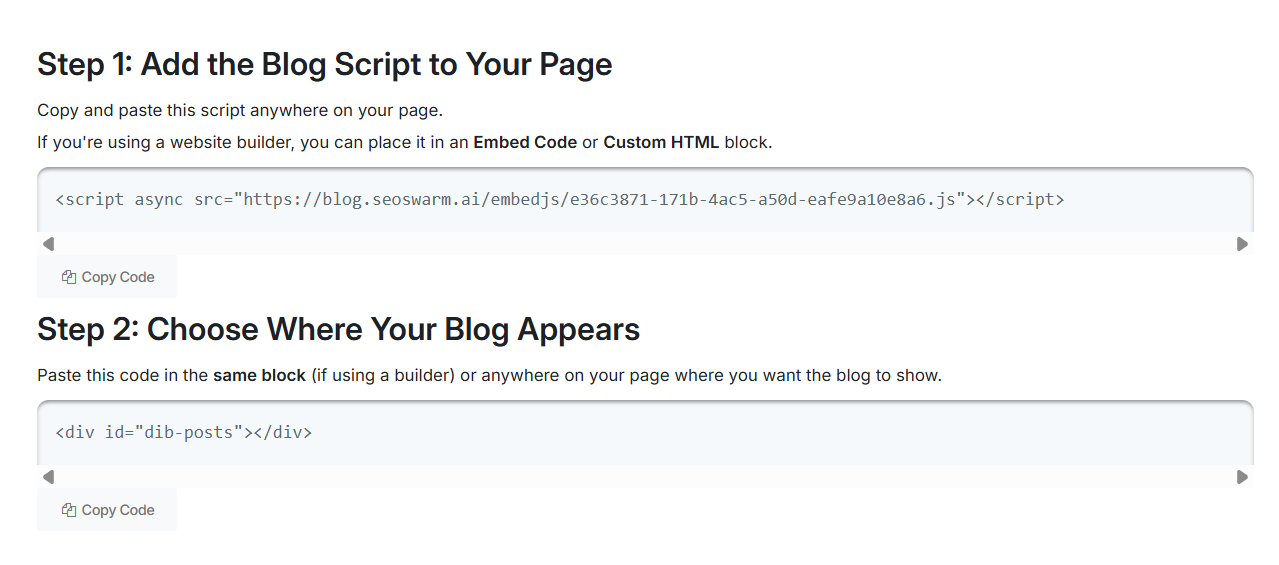
Pricing starts at $50–$300 per article, or $450–$2,500/month for batch packages.
All you need are basic admin details—so no technical background is required.
Troubleshooting and Edge Cases
Sometimes, dashboard data doesn’t show up after installation.
If that happens, clear your browser cache and double-check code placement. Still no luck? Reach out to the SEOSwarm team—they reply within 2 business hours.
Should indexation stall, the agency will re-link Search Console in a day.
For extra-challenging or regulated sites, manual setup via a sandbox or remote session takes care of hurdles.
Expectations, Limitations, and KPIs
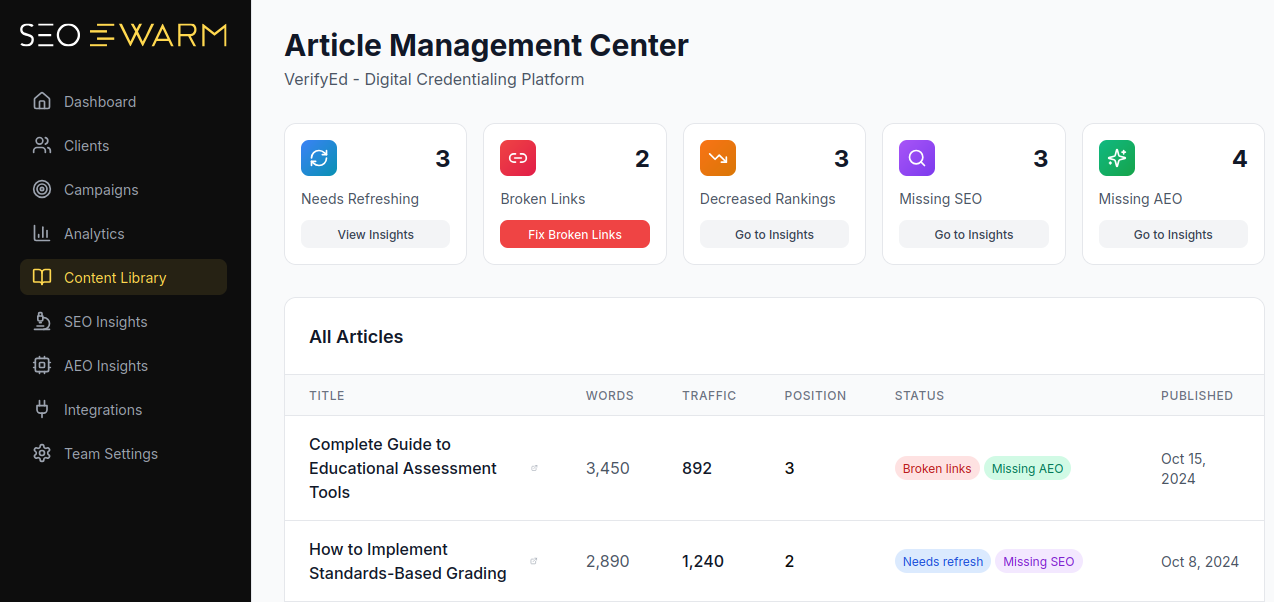
So, what results should you expect? SEOSwarm tracks organic clicks, keyword positions, schema coverage, site speed, citation status, and conversion actions.
You’ll receive monthly reports packed with 10–20+ KPIs, pulled live from the dashboard every five minutes.
Content typically hits Google’s index in 24–48 hours.
SEO improvements tend to show within 1–2 months, with a 10–20% jump in tracked keywords and organic clicks eight to twelve weeks in.
Don’t let common slip-ups like missing script installs trip you up—a setup checklist paired with dashboard validation keeps that in check.
Note that SEOSwarm won’t run without admin access, and regulated or locked-down CMS platforms may require an extra 2–3 weeks to bring online.
For owners craving real-time clarity, a hands-off workflow, and the option to go month-to-month, SEOSwarm’s automation and instant dashboard features can take a lot of manual work off your plate.

AI-Powered
SEO Content Strategy
See the AI platform that's replacing entire content teams
(with better results).

Now, let’s see how this compares to traditional or alternative options…
2. WebFX
Customising SEO Packages
WebFX takes a personalised approach, shaping SEO packages around the unique needs of small businesses.
Source: webfx.com
Technical Audit and Service Range
The starting point is a tailored technical audit—they scrutinise everything from site speed and mobile usability to website architecture and structured data.
Then, they combine industry-specific content plans with a basket of services: over 65 content formats, on-page and technical SEO, local optimisation for single or multi-location businesses, ethical link-building, and reputation management.
Account Management
What stands out is the dedicated account manager you get from day one.
They handle ongoing strategy updates, competitor monitoring, and support, making the experience feel tightly orchestrated.
Pricing Overview
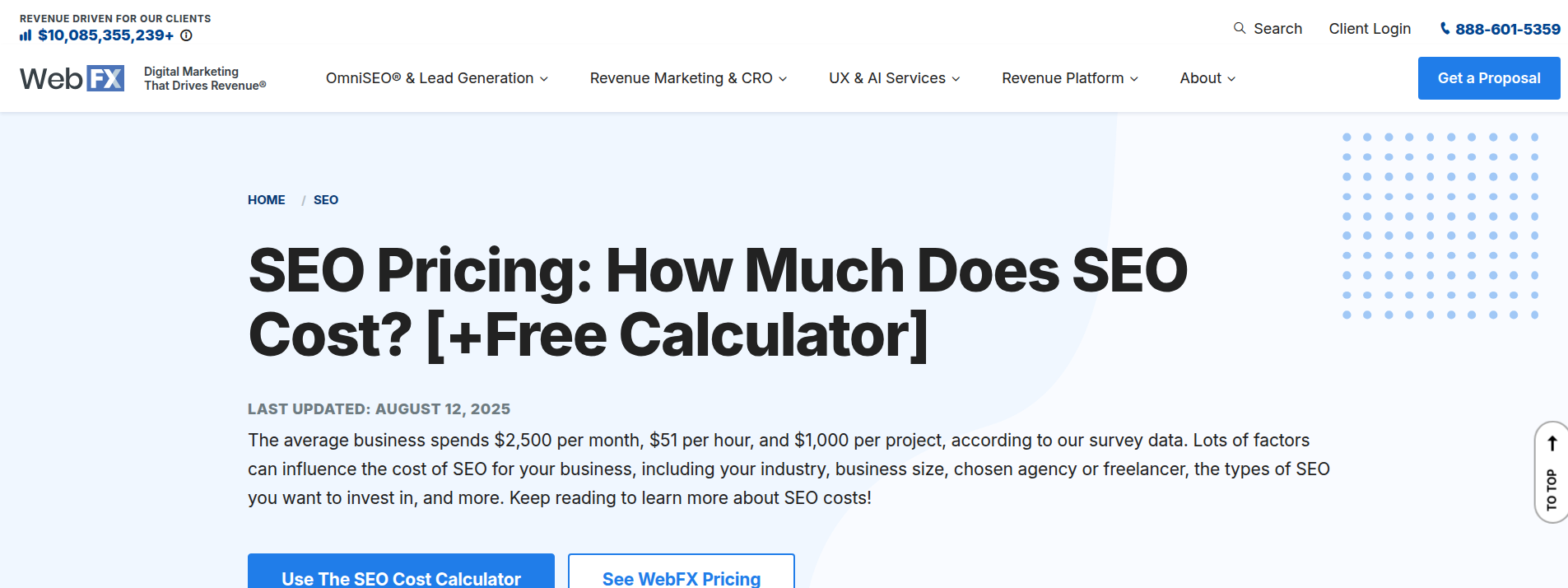
Pricing depends on what you need. Custom SEO plans start at $3,000 per month, while local SEO can kick off from $425/month per location.
Source: webfx.com
If you need advanced add-ons—such as conversion rate optimisation (CRO) or high-volume content production—those come in at $1,500–$3,000 per scope area, monthly.
For typical scenarios: single-location businesses often lean towards local SEO, whereas multi-location or content-heavy sites budget from $6,500 to $33,000 each quarter, based on how technical or expansive their requirements are.
Onboarding Timeline and Owner Preparation
Onboarding is structured and clear.
After signing up, owners share their CMS and analytics logins, clarify main objectives, and fill out a campaign questionnaire.
Week 1 brings dashboard access via RevenueCloudFX, so businesses can quickly validate goals.
By weeks 2–3, WebFX completes its technical audit and presents a custom campaign plan detailing site changes, content schedules, and key reporting dates.
Tracking Progress and Validating Results
WebFX delivers monthly annotated reports, alongside real-time tracking through RevenueCloudFX and LeadManagerFX dashboards.
These tools let you see organic traffic, keyword positions, phone leads, and all your ROI data at a glance.
There’s built-in anomaly detection to catch issues early, plus project logs and alerts that keep troubleshooting straightforward.
For real accuracy, joint review sessions are recommended.
Performance Outcomes and Contract Safeguards
Campaigns typically produce measurable gains within 3 to 12 months—think traffic and leads up by 10–20%, with some seeing even better revenue by year’s end.
WebFX supports risk management by rolling out changes in stages, keeping backups, and offering flexible contracts with staged terms (6–12 months), optional exit provisions, and validation checklists before renewals or upgrades.
If contract terms and measurable gains are key for your business, evaluating how other agencies manage quick starts or excel at local SEO can sharpen your choice. In the next section, you’ll see how HigherVisibility handles local SEO and onboarding pace—both of which can be pivotal for engagement and growth.
3. HigherVisibility
Package Overview and Key Features
HigherVisibility is all about affordable local SEO packages for small businesses eager to make their mark in local search. Each package brings together initial keyword research (think 5–12 keywords per location), technical SEO audits covering site speed, schema (structured data that helps search engines understand your content), and crawl errors (issues that keep your site pages from being indexed properly).
Source: highervisibility.com
There’s more: every package also covers on-page content adjustments, management of your Google Business Profile, and a solid batch of 30–50 directory citations to build credibility. Most of your communication happens through their dashboard, where you’ll review keyword targets, see content deliveries, and keep tabs on live progress for citations and audits.
Onboarding and Owner Actions
Onboarding kicks off with a call where your account manager checks your goals and dashboard access. Owners supply admin logins for the website, analytics, and directory panels. Within five days, the dashboard lights up with keyword lists, content calendars, and your starting citation status.
Owners have a few hands-on tasks: approve the chosen keywords and check every week that new blog posts or site updates—about 2–4 a month—have hit ‘Published’ in the dashboard.
You'll also want to keep up with these specifics when working with HigherVisibility:
- Technical audit tracking
Approve recommended fixes—at least one major technical issue should be 'Resolved' inside two weeks. - Citation health monitoring
Track 30+ citation updates in the dashboard’s citation tab during the first month. - Monthly KPI review
Join a 1-hour call to go over dashboard metrics and clarify progress.
After completing those steps, keeping an eye on dashboard warnings, missed posts, and audit fixes ensures progress flows smoothly.
Validation, Troubleshooting, and KPIs
If the dashboard shows technical fixes have been open for more than seven days, or scheduled citations and posts haven’t appeared, alert your account manager so issues are handled quickly. Complex onboarding—for regulated or multilingual sites—can push the account into ‘Manual Review’ mode, where setup could take up to three extra weeks. Owners, however, aren’t left with extra technical chores during this period.
Benchmarks include a 10–25% increase in keyword rankings and 5–20% more local traffic within four months. You also get a checklist of updated citations and published content. If milestones are missed, that opens the door to a review or contract tweak.
Packages for one or two locations tend to cost $750–$1,500/month. If you need more locations or add-ons, expect prices to increase.
Overall, HigherVisibility offers clear validation, minimal manual work, and solid reporting for businesses who want visibility without endless admin. Next, Boostability’s entry-level pricing and onboarding approach will be explained for budget-conscious businesses.
4. Boostability
Stepwise Package Selection and Onboarding
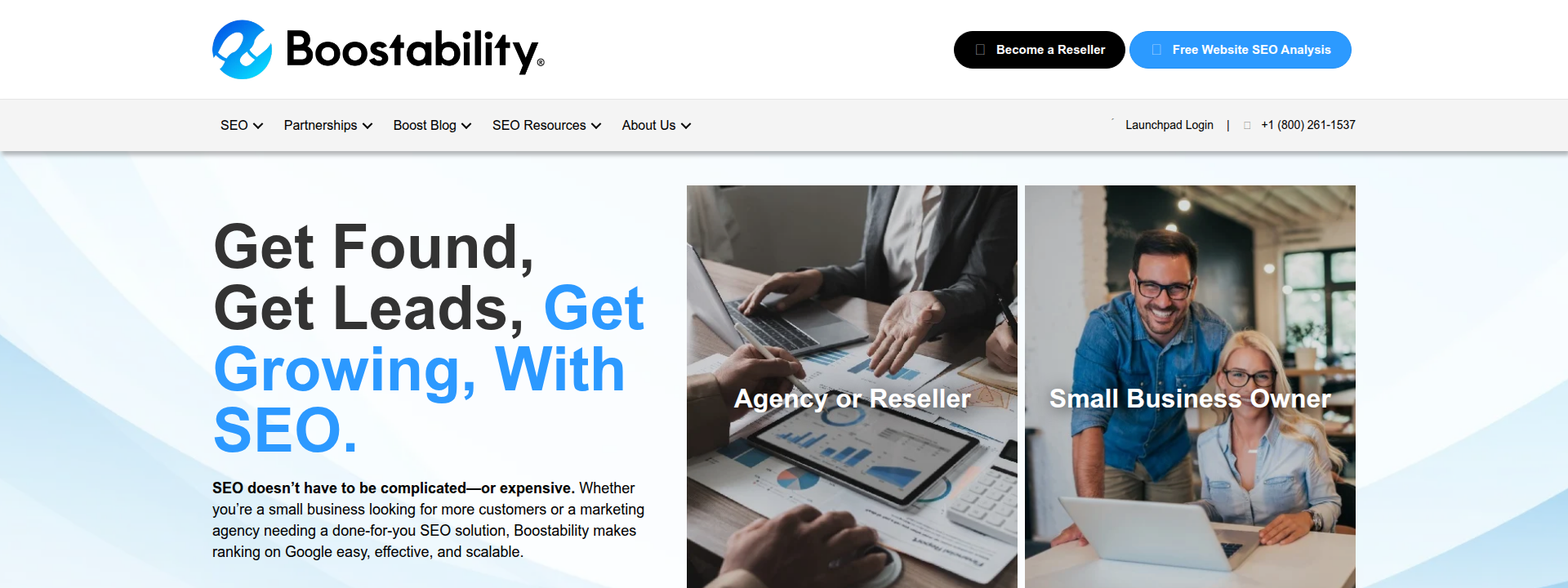
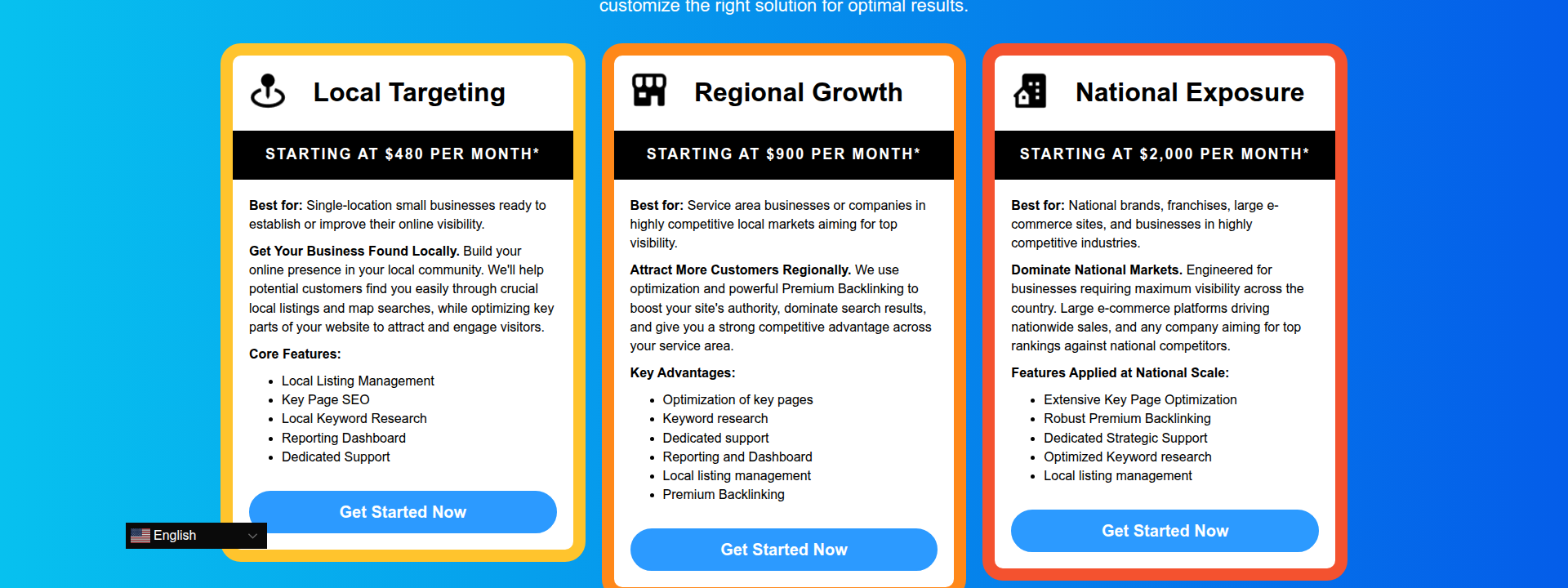
Boostability is known for flexible SEO packages shaped for small businesses, starting at $399–$480/month if you’re running a single-location operation.
Source: boostability.com
Owners pick from Starter, Grow, or Premium plans—each one matched to the scale of their business. Onboarding is direct: it kicks off with a website audit, then moves to a 20–60 minute setup call for you to share admin logins (CMS, Google Analytics, directory access).
Within 48 hours, you’ll see your custom action plan and keyword strategy live on the LaunchPad client dashboard.
From here, the onboarding follows a clear sequence:
- Complete onboarding
Provide all logins and business details. The Partner Success team sets up your dashboard and launches the initial campaign milestones. - Validate progress
By week 2, you check directory submissions—expect 10+ for Starter and at least 20 for Grow or Premium. Initial keyword rankings should start to move. - Review monthly KPIs
Download/export campaign reports from the dashboard, check new content/blog updates, and verify Google Analytics integration.
Campaign Validation and Troubleshooting
Boostability’s LaunchPad dashboard gives you real-time updates on citations, content publishing, and keyword movements.
If any directory or content milestone falls behind, watch for NAP (Name, Address, Phone) error flags; you can resubmit corrections and usually have them fixed inside seven days.
If something gets lost in onboarding, delays crop up, or assets show errors, escalate to the Partner Growth Manager. They’ll sort out a reviewed action plan within five business days.
Advanced Packages for Multi-Location and Regulated Needs
Premium campaigns are designed to handle compliance issues and multilingual requirements.
Owners just hand over their location and asset lists before launch, and Boostability rolls out regional or translated citations, aiming for 90% live status by week 4.
Asset approvals and compliance checks are managed with a 2–3-day buffer plus segmented reporting for every branch.
Contract Flexibility and Key Resource Requirements
All campaigns work month-to-month, offering no lock-in contracts for absolute flexibility.
Owners or their marketers allocate 1–2 hours monthly for reviewing dashboards and milestone checklists.
Every asset, audit log, and KPI is exportable, so you can double-check results or share reports easily.
KPIs to expect? 10–100+ directory citations per quarter, 2–30 backlinks each month, 10–25% traffic growth, and better keyword rankings, all depending on your chosen package.
Source: boostability.com
Blog-in-one-minute
Add a fully SEO-optimised blog to your website with just 2 lines of code.
Learn more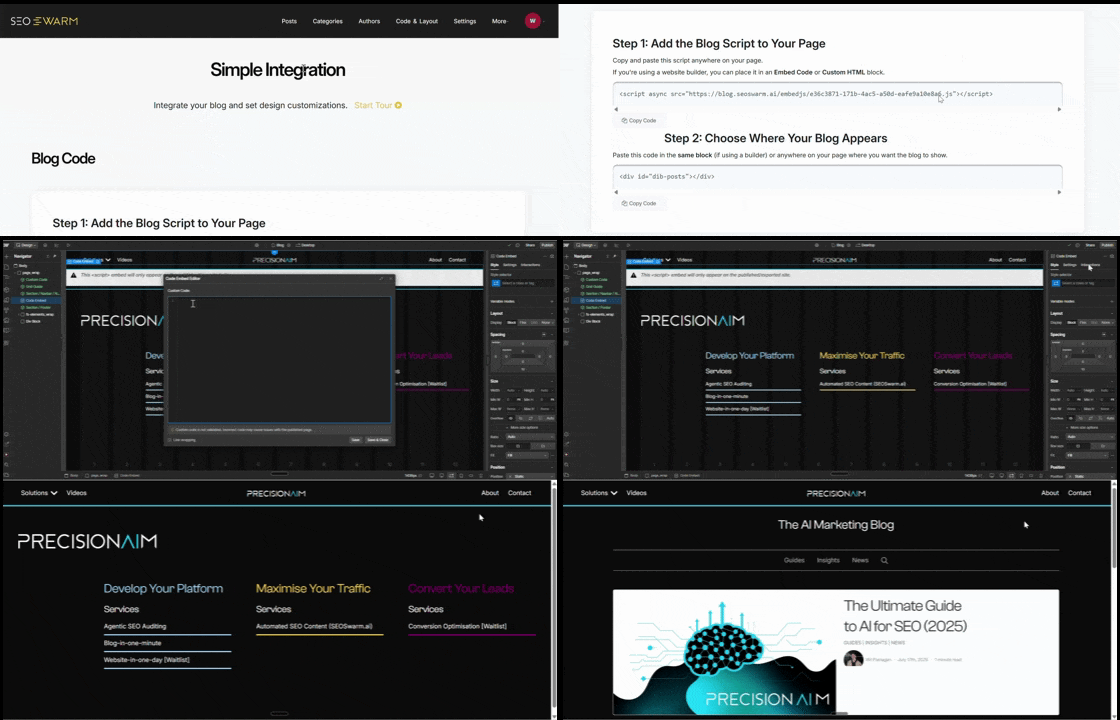
What makes Boostability stand out is its instant dashboard transparency, clear reporting, and quick troubleshooting—making it well suited for small businesses that want adaptable, reliable SEO.
As you compare options, straight ahead we’ll see how Straight North measures up with national and local SEO strategies, onboarding, and reporting.
5. Straight North
How Straight North Supports Small Business SEO
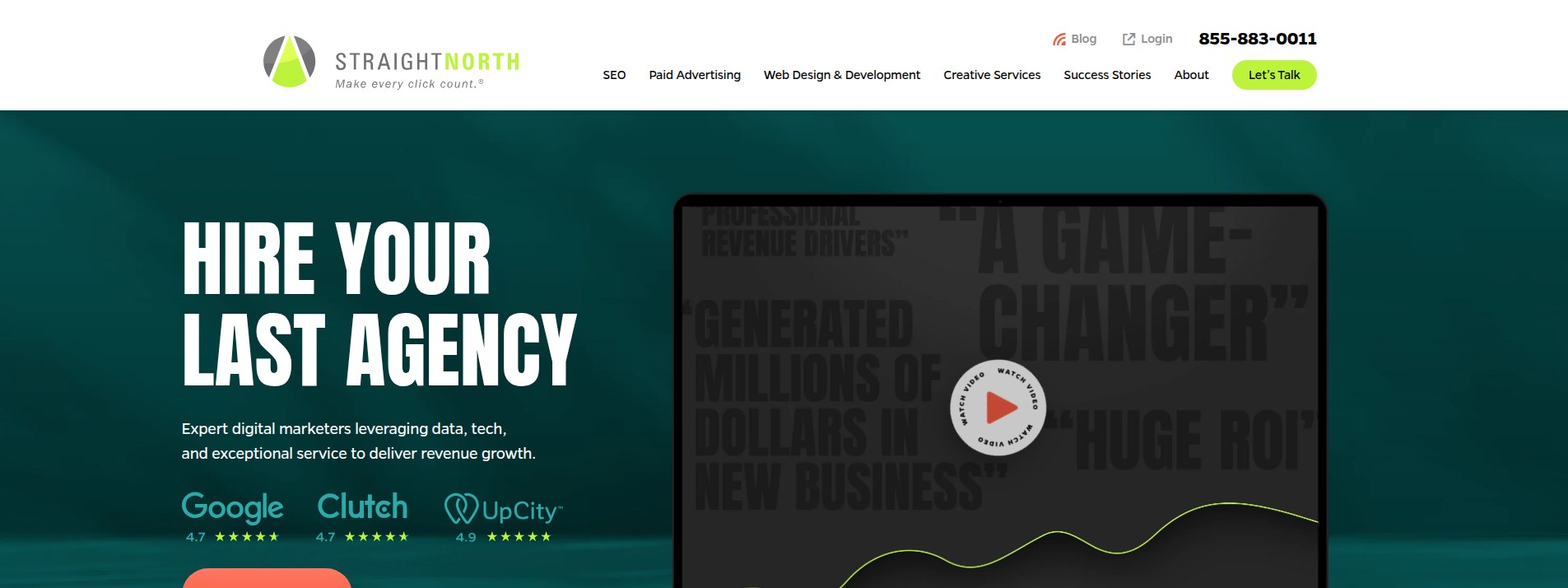
Straight North is geared towards small and medium-sized organisations that want clear search visibility—locally, nationally, or even in e-commerce. They focus not just on traffic, but on measurable lead generation and solid performance metrics.
Source: straightnorth.com
Transparency is a big deal here. Businesses get to keep tabs on every aspect of their SEO via live tracking for leads and traffic.
Service Features and Package Options
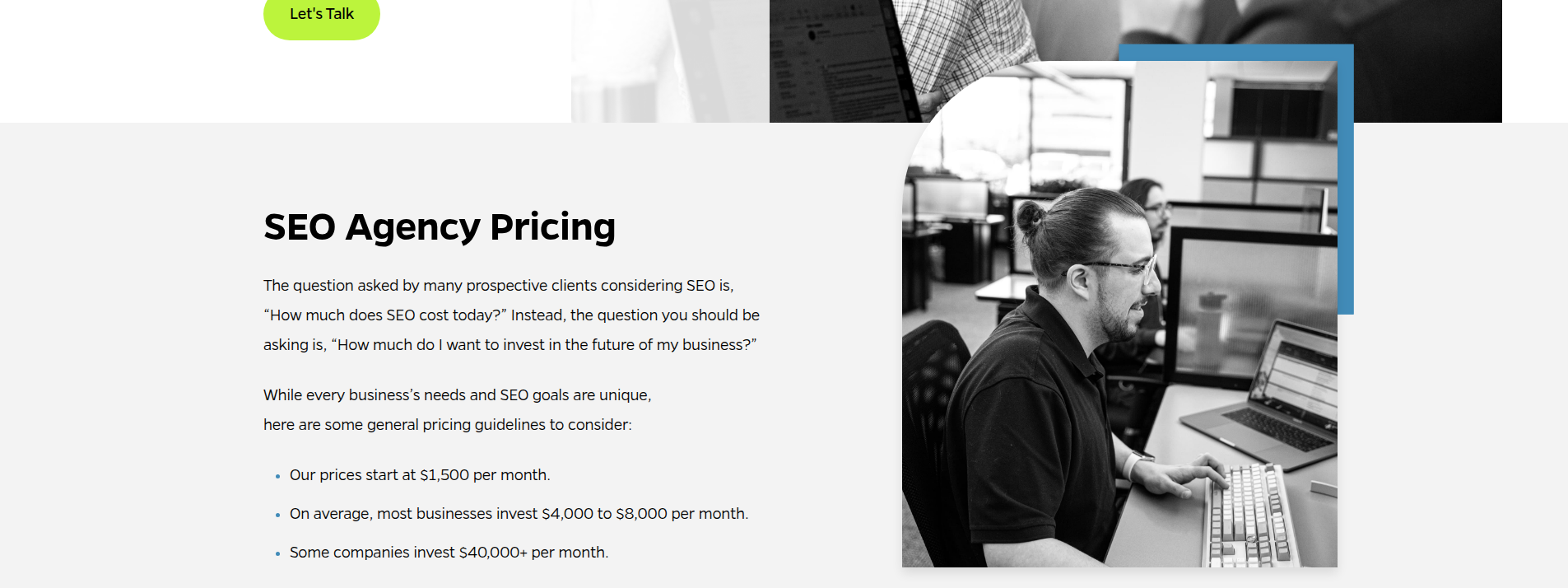
Their SEO packages come in several shapes and sizes, matched to whichever goals and scale you’re working with. Pricing begins at $1,500 per month for entry packages. The typical small business might opt for $4,000–$8,000 monthly, while big enterprise campaigns can exceed $40,000—so there’s room to scale as you grow.
Source: straightnorth.com
Each package includes customised strategy design, ongoing site audits, keyword targeting, on-page fixes, content production, and high-quality backlinks.
You can expect the following range of features to back these up:
- Local, national, and e-commerce SEO
Packages adapt to your business and its reach. - GoNorth! reporting platform
See keyword rankings, traffic, and lead attribution in one dashboard. - Monthly technical audits
Get regular check-ups on site health with errors resolved in under 14 days. - Responsive support
Get questions answered or feedback handled within 1 business day.
Onboarding and Owner Actions
Setting things up is a straightforward process that puts you in control. First up: a discovery session where your goals and pain points are mapped out. You sign off on strategy and budget, then hand over CMS, Google Analytics, and Search Console access.
After that, Straight North gets to work—handling audits, site fixes, and publishing content. Your GoNorth! dashboard starts updating with fresh metrics within two weeks.
Here’s the sequence most owners follow:
- Discovery call
Talk objectives and business challenges with your account manager. - Strategy and proposal approval
Check the proposed SEO plan and pricing. - Access provision
Supply those admin credentials. - Check dashboard updates
Watch for early shifts in traffic and leads on GoNorth!
Validation and Reporting
Owners use GoNorth! to keep real-time tabs on core KPIs: organic traffic, keyword positions, and lead growth. Every month, annotated reports show which technical issues were fixed, what content went live, and how SEO is moving the needle.
Benchmarks? Entry packages often bring a 10–15% boost in ranked keywords and a 5–10% lead increase by month three. Bigger campaigns see 15–25% lead growth and 10–20% more traffic over three to six months.
Using Surfer, I was able to realize 100% growth in organic traffic, 150 new leads, and 3 sales for one of my clients in just 2 months.
Is Straight North Right For You?
So, how do you know if Straight North matches your needs? If you value detailed lead tracking, combined SEO, PPC, and web design, plus quick response times for support, it’s a strong contender. Each package scales to fit your business size—entry, growth, or enterprise.
- Measurable lead tracking
Spot on for businesses focused on conversion data. - Comprehensive support
Handles SEO alongside PPC and design, so you’re covered. - Responsive action
Rapid error resolution and same-day support help keep things running. - Scalable packages
Tailored plans for sites big or small.
If basic local visibility is your only goal, there are simpler—and cheaper—options out there.
Still, for those who want precision reporting, conversion-focused SEO, and reliable support, these features provide real value.
Up next, we’ll use this same action-based framework to dive into Ignite Visibility’s custom onboarding and reporting process, and what owners should expect.
6. Ignite Visibility
Owner-Focused SEO Packages: Onboarding, Pricing, Real-World Value
Ignite Visibility is built for those small or mid-sized business owners who crave active involvement in their SEO campaigns—folks who want more than just passive dashboards or formulaic emails.
Source: ignitevisibility.com
If you value regular checkpoints and strategic oversight, this agency’s staged approach might hit the mark.
Here’s how it all plays out. Packages start at $2,000–$3,500/month, with a setup cost of $1,000–$2,000.
Looking for something more advanced? Their mid-tier options ($4,500–$5,500/month) ramp things up: you’ll target over 40 keywords, gather 4–8 DA50+ backlinks monthly, add conversion rate optimisation (CRO) features, enjoy biweekly review calls, and get enhanced technical reporting.
Prefer an audit-only route? That’s $1,500–$3,000.
Content-only campaigns start at $700+/month.
Onboarding, Timeline, and Prerequisites
Owners kick things off with a consultation call to set goals and provide CMS, Google Analytics, and Search Console access.
If you’re missing access, the agency steps in—though there’s a $40–$160 charge per item.
Next comes a comprehensive audit (typically a 120–200 point check). Over seven days, they review site speed, schema (that structured data for better search visibility), backlinks, and more—using tools like Screaming Frog and Google Search Console.
Owners then review the action plan by day 14, sign off on keyword targets and the content calendar.
Nothing goes live without explicit approval.
Dashboard access lets owners see live KPI updates, keeping everything transparent—no auto-publishing, and every change is tracked.
Expect to put in around 45 minutes upfront plus 2–3 hours monthly for reviewing and approving.
Want more scale? High-frequency packages deliver up to 8–12 content assets a month, while international plans (with translation, local KPIs) simply add a couple of weeks to onboarding.
Validation, Troubleshooting, Mistake Prevention, and Safety Nets
Here’s the thing—validation is upfront and ongoing.
Owners must review annotated dashboard reports and take part in biweekly or monthly calls before any update gets pushed live.
If anyone drags their feet approving things or can’t supply logins, the campaign pauses (billing stops until sorted).
Still stuck? The account manager steps in to resolve issues under a strict SLA.
Every change runs through a staged process, with reversible site edits and weekly backups.
Daily dashboard monitoring helps nip anomalies fast.
Common slip-ups—like missing access, delayed approvals, or citation errors—get picked up thanks to onboarding checklists, set deadlines, and speedy escalation.
Owners need to verify all access at the start and jump on dashboard alerts.
Edge cases? Regulated and multilingual sites do need longer onboarding and usually cost 10–20% more.
Enterprise clients or international content get custom workflows with dual KPI tracking.
Ignite Visibility isn’t built for ultra-low budgets ($1,500/month) or business owners wanting a hands-off, dashboard-only approach.
But for those who want real collaboration and visible progress, the safeguard-heavy, owner-focused workflow brings confidence, control, and solid SEO outcomes.
Ready to see how these practices compare with other industry leaders? Up next, we’ll use this same action-based framework to profile OuterBox and their e-commerce-led, national SEO approach.
7. 180Fusion
Milestone-Based SEO for Low-Touch Growth
180Fusion’s SEO services work best for owners who want predictable, milestone-driven progress but don’t have time to monitor every detail. Their model revolves around clear goals, handy dashboards, and packages you can scale as your business grows.
Instead of drowning clients in technical detail, 180Fusion offers a streamlined way to watch your SEO’s impact unfold—without constant back-and-forth or admin headaches.
Package Selection: Matching Tiers to Your Needs
Let’s break down the options. Entry packages start at $1,000/month, covering up to 25 tracked keywords—ideal for smaller businesses focused on local impact and basic site optimisation.
The mid-tier bumps content up to 12 assets per month, adds more technical improvements, and broadens keyword targeting, all starting from $1,200/month.
If your strategy calls for deep optimisation and over 50 keywords, advanced packages begin above $2,000/month. Owner commitments are light—expect only 1–2 hours upfront and then per month to review dashboards and approve deliverables. Need less content or a lower budget? You might find other agencies better suited.
Onboarding and Reporting: Steps and Owner Actions
Here’s the typical sequence: things start with a discovery call to nail down goals. After handing over site and analytics credentials, 180Fusion conducts an audit and builds your custom campaign.
Inside a week, you get dashboard access to track real-time results—no complex set-up or manual updates needed.
Every month, you’ll review annotated reports and key metrics. Milestone slips or deliverable delays show immediately in the dashboard; support steps in fast if something goes awry.
Validation, Troubleshooting, and Success Benchmarks
You don’t have to guess—10+ monthly KPIs lay out performance clearly. Dashboard problems or missing reports get resolved with one business day turnaround.
For complex sites (like multilingual), onboarding could stretch two or three weeks.
Entry packages typically deliver 10–20% quarterly traffic growth, whilst advanced plans have seen up to 70% increases.
Fit, Limitations, and What Makes 180Fusion Stand Out
What sets 180Fusion apart? SEO and PPC integration, dashboards built for owners, and a clear milestone process that keeps things simple.
It’s not a fit for businesses with budgets under $1,000/month, those needing daily technical collaboration, or sites with niche CMS requirements.
For most service and retail SMBs wanting a managed, validation-focused workflow, 180Fusion offers search growth that’s both transparent and stress-free.
So for those chasing results and simplicity, this approach keeps SEO improvement on track, without unnecessary hassle.
8. SEOReseller
Choose and Configure the Right White-Label SEO Package for Your Agency or SMB
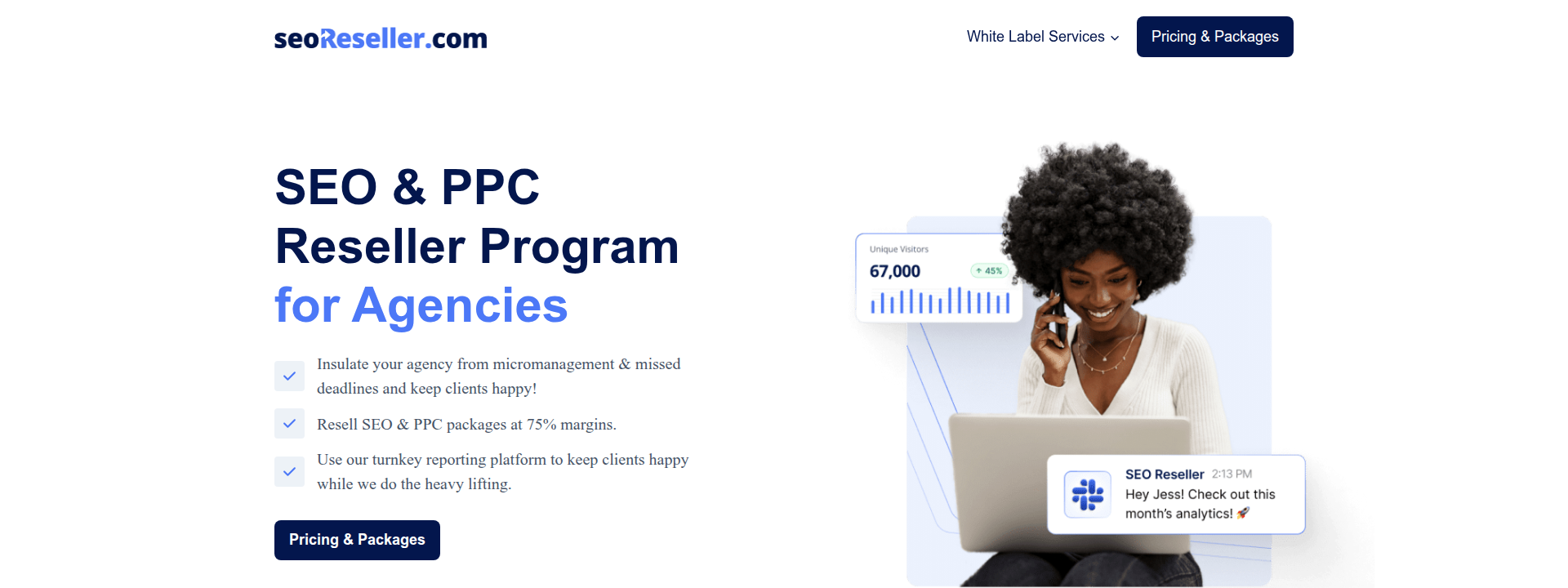
SEOReseller—a white-label SEO platform for agencies and SMBs—builds its offering around three core packages: Plus, Premium, and Prime. Each one fits different business sizes and technical needs, so there’s no time wasted guessing what’s included.
Source: seoreseller.com
Here’s what you’ll find in each package—broken down for quick comparison:
| Plan | Keywords Tracked | Guaranteed High-DA Links/month | Content Included | Technical SEO Hours | Key Feature Support |
|---|---|---|---|---|---|
| Plus | ~10–15 | 0 | Core pages, meta, audit | ~20–25 (on-page only) | Directory Sync: Citation management tool, dashboard branding, PDF reports |
| Premium | ~20–25 | 4 | Keystone content, blog, citations | ~40 (on/off-page + links) | White-Label Download Centre: Agency report portal, branded dashboards, Keyword Tracker Widget |
| Prime | ~30+ | 6 | 10+ pages, advanced outreach & content | ~60+ (technical, speed, GSC, 301/404 fixes) | Compliance Archive: Secure backup tool, White-Label Branding Wizard, dedicated support |
So, which package matches your goals? With Plus, you focus on core on-page optimisation, basic audits, and automated citation accuracy using Directory Sync (which keeps Name, Address, Phone records tidy).
The Keyword Tracker Widget (dashboard ranking tracker) helps you spot gains early.
Premium is popular for ongoing ranking improvement and reporting. Here, four high-DA (high domain authority—trustworthy backlink) links per month are bundled with advanced content and the White-Label Download Centre (for branded client reporting).
Reliable monthly KPIs and audit trail features strengthen stakeholder trust.
For agencies managing multiple brands or compliance tasks, Prime is a time-saver.
Expect six high-DA backlinks, all technical fixes, asset automation with White-Label Branding Wizard (custom report builder), and secure storage in Compliance Archive (file backup and audit trail tool).
You get dedicated support for tricky cases or regulated sectors.
Onboarding, Launch, and Validation: Step-by-Step
- Onboarding and audit
Set goals and analyse site health via dashboard tools. - Directory Sync setup
Enter NAP details, confirm all listings “green”. - Keyword assignment
Track rankings with Keyword Tracker Widget. - Customise assets
Build ready-to-use reports via White-Label Branding Wizard. - Archive reports
Save files in Compliance Archive for audit or regulation.
Monthly Validation Checklist
Consistent monthly checks are vital—think of them as the safety net for SEO results, audits, and stakeholder updates. Skipping one step can lead to lost rankings or compliance headaches.
Before moving forward, make sure you complete these checks each month:
- Directory Sync status
Listings must show green tick—fix NAP errors. - Keyword Tracker Widget
Log monthly ranking changes for every campaign. - Compliance Archive
Save all audit reports and regulatory documents securely. - White-Label Download Centre
Send branded client updates and summary kits.
Troubleshooting, Dashboard Alerts, and Support
Alerts & Remediations module (dashboard error notifier) flags NAP, sync, or campaign issues in real-time.
For swift fixes, click Error Details—or escalate issues using the Live Chat Escalation Widget (24-hour help).
Dedicated support, file backup, and custom-branded portals combine for a bulletproof audit trail and straightforward asset management.
Table Analysis and Recommendations
If you’re watching your budget, Plus gets you started, builds confidence, and sets up accurate tracking.
Move to Premium when you need monthly link campaigns and advanced dashboards—especially handy for growing agencies.
Prime shines where compliance, audit trail, and advanced asset management can’t be compromised.
Sound a bit overwhelming? It’s surprisingly easy once your dashboard and validation tools are in place.
Ever wish compliance and reporting were this simple and secure? SEOReseller puts those answers right in front of you, minus headache.
Next up: Victorious SEO’s audit-led approach for fast-moving agencies and brands hungry for growth.
9. Victorious SEO
Victorious SEO makes life easier for small to medium businesses wanting a hands-off SEO strategy with full visibility and genuinely quick fixes.
Source: victorious.com
You only need to hand over CMS (Content Management System), Google Analytics, and Google Search Console logins at onboarding.
After that, owners typically spend just one hour per month reviewing dashboards or signing off strategy calls—everything technical stays with the agency.
So, what’s the actual setup process? Here’s how Victorious SEO guides owners step by step:
- Goals and access collection
Set objectives, supply credentials, and get going within the first two days. - Comprehensive audit
By Day 7, receive technical and competitor analysis featuring 200+ audit points along with a prioritised fix roadmap. - Urgent fixes and dashboard setup
Expect critical site errors solved in 1–3 business days; a live dashboard launches soon after for round-the-clock progress checks. - Ongoing tracking and reporting
Monthly reviews, annotated KPIs, and auto alerts keep everything running smoothly.
Wondering how these features stand up against typical agencies?
Technical Benchmarks and Outcomes
Victorious SEO delivers strong results—beating benchmarks for crawl errors, schema updates, indexation rates, and Core Web Vitals (LCP (Largest Contentful Paint) under 2.5s, FID (First Input Delay) under 100ms, CLS (Cumulative Layout Shift) below 0.1).
Link building means 4–10 DA40+ links (Domain Authority 40+) each month.
Owners usually see a 10–20% boost in organic traffic and 15–25% more keywords ranking within 3–6 months.
One retailer recorded 12% growth in traffic and 17% more keywords four months post-onboarding.
| Feature | Victorious SEO | Typical Agency |
|---|---|---|
| Audit Points | 200+ | 60–100 |
| Fix Speed | 1–3 days | 7–28 days |
| Reporting | Live dashboard | PDF reports |
| Link Quality | DA40+ | DA20–30 |
If dashboard data stalls or errors crop up, immediate support tackles issues in 24 hours.
Every edit is version-controlled and easily rolled back.
Real-time tracking depends on API (Application Programming Interface) access; regulated or complex sites might need up to four weeks to onboard and validate.
Mistake Prevention and Owner Tips
Avoid these common slip-ups, and your campaign stays strong:
- Delayed asset transfer
Send all credentials promptly so onboarding isn’t slowed down. - Missed dashboard alerts
Enable reminders to ensure you catch crucial updates. - Unreviewed recommendations
Respond quickly to approval prompts to maintain momentum.
Owners typically only spend one hour per month, with the agency handling the technical burden.
If KPIs lag for over a month, a strategy review or contract update is automatically triggered.
Standard pricing lands between $1,000–$2,000/month.
Clear FAQs and an escalation channel mean help is never far away.
10. Searchbloom
Milestone-Driven Local and Ecommerce SEO: Owner Workflow and Value
Searchbloom isn’t just about technical SEO—it’s a process-led provider that brings together content optimisation, technical fixes, and constant owner involvement.
Source: searchbloom.com
Everything operates on clear milestones. Every technical fix, content upload, backlink campaign, or reporting cycle is tracked in real time, with the business owner’s approval needed before progress continues. That means no surprise changes and every step feels accountable.
Entry packages for small businesses start at $1,200/month. That covers up to 20 tracked keywords, 1–4 content pieces, 4–8 optimised pages, and a monthly campaign for high-authority backlinks. For those with multi-location sites or bigger ambitions, the advanced packages begin around $1,500–$2,000/month, stacking up more locations, deeper dashboard segmentation, and extra keywords. Enterprise solutions take things further, adding custom analytics and dedicated quality assurance for maximum control.
Onboarding is methodical. It begins with a strategy call and the handoff of site credentials—think CMS, analytics, and business profile. Within three days, you’ll be inside a live milestone dashboard and full campaign calendar. Delay with credentials? The system doesn’t just wait; it sends repeated reminders and books a backup call by day five, keeping everything moving.
Owners also have a roadmap call in the first week (plan for 45–60 minutes), where audit results and campaign targets are jointly reviewed with your strategist.
As monthly cycles roll on, you’ll get requests to sign off new content, technical upgrades, and all backlink reports. Usually, that’s 1–4 assets needing approval per cycle, expected within 48 hours. If signoffs lag, escalation triggers an account manager’s intervention, so projects never fall behind.
The dashboard keeps tabs on organic traffic, the number of new keywords ranked (often 5–10+ monthly), and the status of each campaign milestone. Most small business clients see at least a 10–20% jump in organic visibility by their third month.
Daily dashboard updates and urgent alerts are Searchbloom’s answer to static monthly reports—if anything breaks, backup options (PDF/email) and live support fire up straight away. If your main contact isn’t available, you can assign backup reviewers so nothing gets stuck waiting.
This process truly suits owners who want transparency, tight validation, and constantly tracked results—not the “set and forget” style.
But if your budget is much tighter, or you need assets reviewed by legal, sometimes a lower-commitment agency works better.
Ready to see how SEO.com designs its packages for clarity and fast onboarding? That’s what’s coming next.
11. SEO.com
Let’s talk about SEO.com – a full-service agency tailored for small and midsized businesses seeking hands-on validation, transparent reporting, and step-by-step onboarding you can actually control.

Source: seo.com
Service Model and Package Breakdown
SEO.com’s approach is all about clear guidance and predictable delivery. Packages are split by business size and technical demand—so there’s no guessing what level fits your site. Entry-level options begin at $995/month, designed for local or single-location businesses, while advanced packages run up to $6,500/month, ready to support multi-location or high-volume e-commerce.

Source: seo.com
For every tier, you get a fully documented technical audit, initial keyword research, site speed fixes, schema updates (structured data for better Google indexing), and ethical link-building campaigns.
Onboarding, Timeline, and Owner Actions
Onboarding starts with a 30-minute call to clarify objectives, supply admin logins (CMS, Google Analytics, Search Console), and confirm business details.
You’ll receive your first technical audit within 2–3 days, followed by a fix plan with deadline milestones for every action.
Owners can track real-time progress on a live dashboard, review monthly annotated reports, and approve each completed milestone before moving forward.
Expect to spend 1–2 hours on initial review and then roughly 2–3 hours monthly checking reports and validating campaign outputs.
Validation, Troubleshooting, and Safety Nets
SEO.com’s dashboard tracks organic traffic, keyword rankings, conversion events, and site speed. If data stalls or a milestone slips, an automated alert triggers follow-up from support.
Issues not resolved inside one business day re-escalate to the campaign manager for review.
They back every campaign with monthly backups, version control on changes, and detailed audit trails for compliance.
Owner Journey: Choosing the Right Package
Imagine an owner with a 15-page local website and modest budget. They opt for the entry package—hand over logins, confirm KPIs, and see their first dashboard update in week one.
Over the next month, they approve audit fixes, watch 10–15 keywords move, and review monthly links built.
If they need extra compliance support for a regulated industry, advanced packages add deeper audit reporting, multi-level approval, and documentation tools.
Key Features Snapshot
- Transparent pricing
Packages scale by business size and needs. - Stepwise onboarding
Milestone-based fixes and owner validation. - Real-time dashboards
Track progress, KPIs, and backups. - Fast support response
Issues flagged and managed within strict SLAs. - Actionable compliance
Version control, reports, and audit trails.
For SMB owners who want predictable improvement without technical firefighting, SEO.com’s method brings clarity, control, and real results—setting up the next section’s deep dive into head-to-head agency selection and checklist strategy.
How to Choose and Validate Affordable SEO Agency Services: Step-by-Step Playbook
- Define and Document SEO Goals
Kick things off by clearly outlining your top SEO objectives—these could be local leads, more appointments, or ramping up online sales. Make sure every agency proposal you receive maps measurable deliverables (like “20–30 local citations/month” or “2–4 blogs/month”) right to your own goals. If a proposal looks generic or doesn't tie directly back to your outcomes, that’s a serious warning sign. If your business is regulated or operates in multiple languages, demand custom goal mapping at the start. - Set Budget and Flexibility Limits
Next, decide exactly what you can spend—starter budgets usually land between $500–$1,000 a month, with most small businesses falling in the $1,500–$2,500 range. Top-end, advanced needs may run up to $5,000 or more. Double-check all onboarding fees ($300–$2,400) and monthly add-on costs are spelled out for you. Steer clear of contracts with rigid, long-term lock-ins—you’ll want flexibility to upgrade or scale back monthly. If every agency comes in too high, look for audit-only options or trim your campaign scope. - Shortlist and Quantitatively Compare Agencies
Always gather at least three specific proposals. You’ll want to see exact content targets (like “2–4 pieces per month”), an audit calendar, monthly or quarterly link-building and citation volumes, and transparent timelines—onboarding to a live dashboard in under two weeks is the gold standard. Watch out for missing numbers, vague timing, or “PDF-only” reporting. If you have advanced requirements, push for a custom onboarding plan. - Require Dashboard Access and Support Guarantees
Before signing anything, request a dashboard walkthrough or temporary login showing real data—organic traffic, rankings, links, and conversions—with updates daily or even live. The dashboard should be up and running within 14 days and backed by a written 24–48-hour support SLA. Agencies skipping this step or slow to grant access are another red flag. - Secure Flexible, Owner-First Contracts
Insist every contract lets you exit monthly, with 1–3 month minimums and clear refund policies. Any changes, pauses, or cancellations require only 30 days’ notice. Avoid anything with hidden fees, vague terms, or annual obligations. - Validate and Track KPIs Monthly
Export your data each month, aiming for 10% gains in key KPIs (traffic, rankings, conversions) every quarter. Book regular review calls. If things plateau after two months, it’s time for a strategy check—or use those pause clauses. - Conduct Quarterly Third-Party and Reference Checks
Every quarter, survey agency reviews online and speak to a current client with similar goals. Any negative patterns or poor references mean it’s time to reevaluate your relationship. - Avoid Common Process Mistakes
Steer clear of agencies guaranteeing rankings, refusing dashboard demos, or missing onboarding by over two weeks. If nobody meets these standards, hold off—sometimes audit-only or pausing the search is the smarter move. Special situations, like regulated industries or international rollout, require extra validation and vetting from the start.
By following these steps, you’ll keep your SEO efforts secure, flexible, and fully measurable.
Up next: what to do—and what to expect—when performance stalls and you need to escalate.
Affordable SEO Agency Success: Month-by-Month Tracking, Validation, and Troubleshooting ROI—Benchmarks, Outcomes, Owner Workbook (2025 Research-Validated)
Sticking to a structured validation process each month is how owners consistently achieve stronger SEO results.
In 2025, all the leading agency case studies and top performers in the SERPs are saying the same thing: using a research-backed workbook—with crystal clear benchmarks and a plan for when things go wrong—translates agency activity into real business growth you can see on the bottom line.
Key Monthly and Quarterly Benchmarks (2025 Reference Data)
So, what sort of progress should you expect? Here’s a table of owner-ready SEO progress benchmarks for a typical small business:
| Milestone | Organic Traffic | Conversion Rate | Targeted Keywords |
|---|---|---|---|
| Month 1 | +10–20% | +2–5% | +5–10% |
| Month 3 | +30–50% | +5–10% | +20–30% |
| Month 6 | +50–70% | +10–15% | +50–60% |
| Month 12 | +100–150% | +20–25% | +100%+ |
This 2025 data comes from peer-reviewed agency research—so it genuinely reflects what real businesses see from affordable campaigns.
Segment-Specific Validation Tools and Infobox KPIs
Want to make your reviews frictionless? Pick the right tools and focus on core KPIs for your business type.
- Local SEO
GBP views/calls—BrightLocal, CallRail. Looking for 50–100% more views by Month 6. - Retail/Ecommerce
Product/category rankings, conversions—SEMrush, Shopify Analytics. Aim for 40–80% conversion growth after six months. - Service
Monthly leads/calls—AgencyAnalytics, GMB. Target doubling your leads within a year. - Regulated
Make sure legal reviews occur monthly after each change. Log reviews directly in your audit workbook.
Monthly Owner Workbook: Four-Step Validation
Let’s walk through a monthly owner routine that works:
- Export New Data (Days 1–3)
Log in, export last month’s traffic, leads, conversion, and keyword stats, and record results in your KPI workbook. - Compare Results to Benchmarks (Days 4–5)
Use the table above. If your KPIs match or beat targets, you’re “On Track”. If you’re seeing less than 5% growth, it’s time to escalate. - Troubleshoot Issues (Days 6–8)
Growth in traffic but not conversions? Check content quality, site speed (under 2.5 seconds), mobile-friendliness, and call-to-action placements. - Escalate If Needed (By Day 10)
For any underperforming KPI, file a support request and log the action taken. The agency should reply within two business days.
Beyond your monthly routine, it’s just as important to step back and measure bigger trends on a quarterly basis.
Quarterly Success Infobox (Months 3, 6, 12)
Once each quarter, ask yourself a few big questions:
- Has organic traffic jumped by 30%, 60%, or more?
- Are conversion rates and leads up by at least 10% each quarter?
- Is every KPI live and exportable from a dashboard?
- Is your contract actually as flexible as promised?
- If the answer is “No” to any of those, escalate and review—don’t let things coast.
Following this owner workbook and timeline gives you the same validation and results as industry leaders.
You’ll catch roadblocks early, measure ROI confidently, and make sure your SEO investment really pays off.
My Take on Affordable Search Engine Optimization Services
Most small businesses waste months chasing cheap SEO, only to find themselves stuck with vague reports and little progress. I’ve seen firsthand that real value comes from agency-driven packages offering clear milestones, transparent dashboards, and measurable results—not just low prices.
Here’s my advice: shortlist three agencies, demand live dashboard access within two weeks, and insist on flexible, owner-first contracts. Track your KPIs monthly, export your data, and escalate quickly if results stall. The agencies compared above each offer distinct strengths, but your success depends on proactive validation and clear communication.
SEO isn’t a one-time fix—it’s a process that should evolve with your business. The right agency partnership turns technical complexity into growth you can actually see. Cheap SEO fades fast, but accountable, well-structured campaigns build lasting visibility and real business impact.
- Wil